
Founded by Max Farndale 1947 - 2018

Metal fabrication is essential to the green energy industry’s production of solar panels, natural gas lines, and wind turbines. How can we make the metalworking industry more environmentally friendly?
sheet metal fabrication, fabrication metal, metal fabricator, eco friendly, eco friendly products, sustainable, sustainability, sustainablity, sustainabilty, sustanability, sustainibility, welding, vacuum soldering, solder vacuum, soldering vacuum, friction welding, friction stir welding, linear friction welding, friction welder, diffusion welding, green technology, green technologies, green technolgy, metalworking, metal fabricationIf you’re familiar with the metal fabrication industry, you know that it’s a world steeped in tradition, forging fires, and the clanging of metal on metal. There are sparks and smoke, and sometimes risks from fumes or open flame.
No matter how you slice it, the creation of metal can be a messy business.
But now, it doesn’t have to be. With the invention of new technologies that help with the “greening” of the metal fabrication industry—along with a worldwide shift towards sustainable products and production—welding is moving more towards becoming what’s known as a “green collar job.”
It’s a pursuit that’s considered to be more ecologically friendly than ever before, plus it’s a trade with a bright future for those thinking about a career in welding.
Combine that with the fact that the green movement can actually save metal fabricators money in the long run, and there’s little reason not to embrace a sustainable initiative.
This is no small thing for an industry that’s been around for centuries.
Green-Collar Jobs
There are actually two ways for a job to be green: either it can produce eco-friendly products, or it can use manufacturing that’s environmentally sustainable, even if the final product itself can’t be considered green.
The Bureau of Labor Statistics explains that the former is referred to as the output approach—which “identifies establishments that produce green goods and services and counts the associated jobs”— and the latter is the process approach—which “identifies establishments that use environmentally friendly production processes and practices and counts the associated jobs”.
The process approach can be used in any industry, which makes it much easier to implement. Yet when it comes to metal fabrication, companies can have the best of both worlds.
A welding business can use the process approach if it incorporates environmentally friendly welding techniques, which could include vacuum soldering, friction welding, and diffusive welding. These may be cutting-edge techniques now, but in the future they could become more commonplace.
Still, you’re more likely to find metal fabrication companies utilizing the output approach: as the world moves towards more eco-friendly initiatives, there’s going to be more demand for metal that can help support green technology. We’ll touch on that more in the next section.
It’s also beneficial for metal fabrication companies to consider switching to green initiatives (e.g. change the process approach). There are numerous government agencies looking to provide support through assistance programs to help move more fabrication and manufacturers towards eco-friendly production.
For example, Fabricating & Metalworking mentions the Green Suppliers Network, established by the U.S. Environmental Protection Agency along with the U.S. Department of Commerce, which has a mission “to help small and medium-sized manufacturers stay competitive and profitable while reducing their impact on the environment.”
| Continue to full article | Dec 14, 2016 |
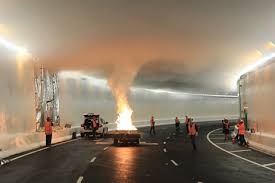 A look inside New Zealand's longest road tunnel and Auckland's Harbour Bridge alternative
Weekly OverView with Tony Alexander
KiwiRail responds to TAIC report on Aratere
$200 million dairy factory proposed for Otorohanga
NZTE Export News - 15 December 2016
NZ manufacturing softer in November: PMI
What happens when Australia's construction dries up?
Fonterra arranges $300m facility with Bank of China
Pioneering Taupo company goes into liquidation
While you were sleeping: Fed hikes, signals more ahead
Call for talks on manufacturing

President-elect Donald Trump's threat to slap punitive tariffs on Chinese goods is a worry for firms that trade with the country in the US Midwest, a decisive region in the Republican's election triumph.
Strong support across America's "Rust Belt," and frustration at lost industrial jobs blamed on globalization, carried Trump to victory last month in key battleground states, including Michigan and Ohio.
But some companies in the region that benefit from global trade are worried about early signs the president-elect plans to take a hardline stance with China.
"We export a lot of products to China," said David Shogren, president of US International Foods. "My fear is whatever changes Trump makes ... that China will retaliate in some ways."
The St. Louis company depends on China as a key export market for peanut butter, mustard, nuts, cereals and other items. About 50 percent of its revenues are tied to China, compared with just five percent to its home market.
"Our customers may switch from US products to other countries: Europe, Australia, New Zealand or Japan, or other exporting countries," Shogren said.
Shogren said his company is trying to build markets in Southeast Asia, including Vietnam, Malaysia and Singapore.
Trump during the campaign threatened to impose 45 percent tariffs on China, saying the world's second biggest economy has stiffed the US with currency manipulation and illegal subsidies.
"China will take a tit-for-tat approach," said an editorial in Global Times, a Chinese newspaper that is close to the government.
"A batch of Boeing orders will be replaced by Airbus. US auto and iPhone sales in China will suffer a setback, and US soybean and maize imports will be halted," it warned. "China can also limit the number of Chinese students studying in the US."
China also responded sharply to Trump's decision to accept a phone call from Taiwan President Tsai Ing-wen and to suggestions he is rethinking the decades-old US "One China policy."
The One China policy is the "political bedrock" of relations with the US, Chinese foreign ministry spokesman Geng Shuang said.
If it is "compromised or disrupted" cooperation in major fields would be "out of the question," Geng added.
- Writing to Trump -Ohio-based Progressive Molding Technologies imports tooling from China that enables it to compete with Chinese rivals.
"My fear is we will lose access to China's cheap tools," said president Laird Daubenspeck. "At that point, I will anticipate the our customers will start to slow down new product launches and we will see less growth."
Daubenspeck has written twice to Trump, once after he was elected and a second time after the Taiwan phone call.
"My biggest fear is he doesn't understand the impact his words have."
Among big manufacturers, Boeing is especially vulnerable. About one out of three Boeing 737 planes delivered in 2015 was destined for China. The company just announced Monday that it will reduce production of its 777 starting in August, which will have an impact on employment.
General Motors also could see its business disrupted in a trade war. China is GM's biggest market for cars, with 2.38 million vehicles sold in the first eight months of 2016, compared with 1.96 million in the US. GM also manufactures the Buick Envision in China, which is exported to the US and could suffer under US tariffs.
A GM spokesman said it was too early to comment on any potential shifts in trade policy, but noted that GM chief executive Mary Barra agreed to participate in Trump's strategic and policy forum, along with other top chief executives.
The century-old National Foreign Trade Council on Monday said it will work with the new administration but will fight protectionism.
"And we're prepared to argue against the use of trade restrictions as a way of achieving greater economic growth -- history has shown that really isn't an effective way of doing that," Rufus Yerxa, head of the 300-company NFTC, whose members export about $3 trillion a year.
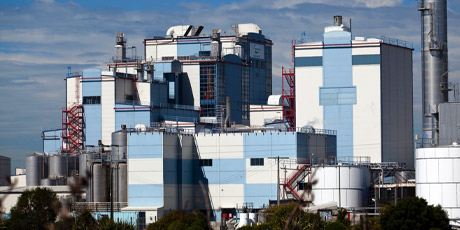 Mozzarella plant landmark for dairy industry
Craig Foss to quit at next election
Renewable energy strategy open for consultation
While you were sleeping: Record ride continues
Head of innovative global tech incubator in Lower Hutt this week
Whisky Co still hopes for distillery
December 2016 edition of NZManufacturer released
Third party trademark agency receives warning from ComCom
Manufacturing sales continue to rise
Ultra low fares for ultra long route - $1259 to London on Qatar Airways
Rocket Lab Completes Major Technical Milestone Ahead of Test Launches
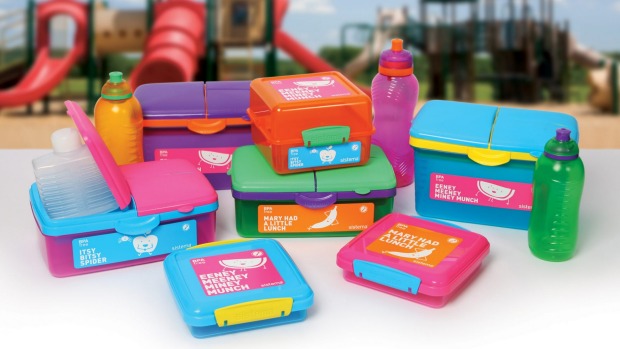
USA giant Newell Brands buys Sistema Plastics and commits to manufacturing in NZ for twenty years
Third party trademark agency receives warning from ComCom
Manufacturing sales continue to rise
Ultra low fares for ultra long route - $1259 to London on Qatar Airways
Rocket Lab Completes Major Technical Milestone Ahead of Test Launches
While you were sleeping: Oil rallies
Southern real estate sells at fastest rate in country
General Cable confirms closure, 170 to lose jobs
Manawatu milk equipment shop to close after three generations
Ex-factory workers take trip down memory lane

Textile Clothing and Footwear (TCF) Council of Fiji has received a grant of $100,000 from the ministry of industry, trade and tourism to develop the manufacturing sector. The aid will help TCF sector to establish more industries especially in the western division to explore new markets, said Shaheen Ali, industry, trade and tourism permanent secretary.
The initiative by the government will help establish service and manufacturing zones that will attract investors, said Ali during the $100,000 grant handover ceremony at the ministry. The trading can improve as the manufacturing zone is also closer to Nadi international airport and international port.
TCF industry is one of the major contributing factors to Fiji’s gross domestic product. Australia and New Zealand are main export markets for Fiji’s TCF industry. The financial assistance will allow TCF Council to promote business in North America, Europe, Pacific Island countries and Asia, Fijian media reports said.
“The readymade infrastructure in Nadi will have manufacturing companies including IT and business process outsourcing operations that will also increase the scope of employment for young graduates,” said Ali. “The same concept is being followed in China, India and Singapore. It will take us some time, planning and investment to implement it.”
The grant has allowed the industry stakeholders to come under one umbrella, said TCF president Kaushik Kumar.
The TCF industry has received a grant of $850,000 in the last eight years from the government under the National Exports Strategy grants, said Ali.
Nearly 7,000 people are employed with the TCF industry with nearly 90 per cent of them being women. (RR)
| Fibre2Fashion | Dec 9, 2016 |
In one corner, there is the United States; in the other, China.
The sole superpower trying to maintain its top position versus a dormant giant now increasingly ready to assume what it deems its rightful place in the world.
Or so the popular narrative goes.
It sees both nations vying for influence in the region by binding other countries to them through trade deals: the Trans-Pacific Partnership (TPP), which the US is a part of, and the Regional Comprehensive Economic Partnership (RCEP), which China is in.
This impression has been reinforced by rhetoric from both sides.
US President Barack Obama, in championing the TPP, argued that if the US did not take the lead in setting trade rules, other countries would have a chance to set less stringent standards.
When it was signed by its 12 member countries - Australia, Brunei, Canada, Chile, Japan, Malaysia, Mexico, New Zealand, Peru, Singapore, the US and Vietnam - the TPP was hailed as a landmark trade deal setting high standards in labour and environmental regulations.| Continue to full article | Published Dec 11. 2016 |

Non tariff measures (NTMs) are becoming increasingly worrisome for New Zealand exporters. Our firms know these NTMs impose considerable costs, reduce trade volumes and eat into margins posts John Ballingall, Deputy Chief Executive, NZ Institute for Economic Research (NZIER) on TradeWorks.
NTMs are regulatory tools, other than standard border tariffs, that can have potential economic effects on trade – either a decrease in quantities traded, an increase in their price, or some combination of both. Common examples are quotas, technical standards (TBT), registration processes, labelling, sanitary and phyto-sanitary (SPS) measures and biosecurity procedures.
NZIER wanted to estimate just how serious these costs are. NZIER’s recent paper presents a number of key findings. Here are the top 5:
1. Not all NTMs are born equal; all impose costs but some deliver benefits
NTMs may be imposed by a government for genuine policy reasons, such as protecting human, plant or animal life or health (mainly SPS measures) or protecting the environment and consumer safety (mainly TBT) or even national security. These measures can be seen as delivering benefits in terms of domestic welfare gains.
Yet they also distort trade: this can harm both domestic consumers and firms (i.e. they must pay higher prices or have less choice) and the welfare of other economies (because exporters can’t fully exploit their comparative advantages).
NTMs are also used for more nefarious purposes – largely to protect domestic producers from international competition, much in the same way that punitive tariffs do. These are often referred to as non-tariff barriers or NTBs, and are the most trade-distorting and expensive NTMs.
2. NTMs cost Kiwi exporters billions every year
The overall cost of NTMs imposed by other governments on New Zealand’s primary sector exports to APEC economies is NZ$6.7 billion (based on 2011 trade). For our overall export portfolio, the cost is NZ$8.4 billion.
The vast majority of these costs are imposed on the dairy (NZ$3.9 billion), beef (NZ$1.1 billion) and food products (NZ$ 1.0 billion) sectorsn – precisely the things New Zealand is good at exporting.
3. Governments’ use of NTMs is growing significantly
As tariff levels have fallen over time due to bilateral and regional trade agreements, the use NTMs has become more common in the Asia-Pacific region. The total number of NTMs imposed by APEC governments APEC has increased by 74% from 814 in 2004 to 1,414 in 2015.
4. NTMs are three times as costly to APEC firms as tariffs
If you convert NTMs to tariffs, NZIER estimates that the tariff equivalent of NTMs in APEC is 9.7%, compared to an average APEC tariff of 2.9%. That means these measures add almost 10% to the costs of doing business in APEC.
NTMs cost APEC economies some US$790 billion each year, around three times as much as tariffs.
5. NTMs are complex to negotiate away
The delineation between an NTM and an NTB is nearly always blurry. One country’s legitimate policy justification is another’s protectionism in disguise. This makes establishing the costs and benefits, and apportioning them across economies, especially challenging. In turn, this makes any rational ‘exchange’ of offers to reduce NTMs in trade negotiations very tricky.
New Zealand’s suite of free trade agreements makes a start to putting in place more effective rules for NTMs. That said, given the very high cost to consumers and firms of NTMs in the APEC region, any regional initiatives to reduce NTMs would be hugely valuable, and very much welcomed!
| A TradeWorks release | Dec 9, 2016 |
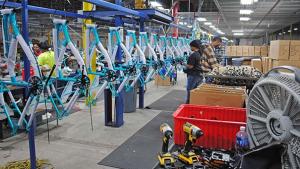
From hand-crafted boutique brands to high-volume manufacturing and assembly, dedicated U.S. bicycle makers are reshoring bike production to the U.S. A confluence of factors including rising offshore costs, the benefits of a “local for local” business strategy, the growing popularity of bikes in expanding urban areas and patriotism are giving rise to new opportunities for an “old” mode of transportation.
The move of American-made bicycles offshore began with industry leader Schwinn shifting manufacturing to Asia in the 1980s. In an effort to take advantage of low wages, other large bicycle manufacturers like Huffy and Trek soon followed, at least in part. “By 2015 only 2.5 percent of the estimated 12.6 million bikes sold in the U.S. (not including those for children) were made here, according to the National Bicycle Dealers Association.” However as offshore wages began to rise, bicycle manufacturers began to rethink their offshore manufacturing and sourcing decisions. Driven by rising offshore costs, the cost savings of automation and innovative processes, and the benefit of “Made in USA” branding, reshoring bike manufacturing and assembly began to make good economic sense.
U.S. Domestic Bike Production
According to the International Bike Organization, the U.S. was in the top five for bicycle production in 1990 at 5.6 million units. As more offshoring occurred, U.S. bike production fell to a low of 200,000 units in 2015 but the trend is looking up. The U.S. is on track to produce over half a million bikes this year.
Continue to full item | Published Dec 8, 2016

Andrew Little would be mad not to run in Mt Albert
General Cable confirms closure, 170 to lose jobs
Manawatu milk equipment shop to close after three generations
Ex-factory workers take trip down memory lane
Importers more positive than exporters on outlook for the kiwi
NZ dollar falls vs greenback on US confidence survey, reaches 19-month high vs euro
International Construction Conference 'to showcase the future'
Motueka company Coppins wins fifth international award for sea anchor system
All I want for Christmas is something that works
Kiwi software firms eschew 'growth at all costs' for a more sustainable approach
Anadarko gives up Pegasus Basin permit
John Key Fades Away-– a Market Trader Quits his Position at The Top

Palace of the Alhambra, Spain
By: Charles Nathaniel Worsley (1862-1923)
From the collection of Sir Heaton Rhodes
Oil on canvas - 118cm x 162cm
Valued $12,000 - $18,000
Offers invited over $9,000
Contact: Henry Newrick – (+64 ) 27 471 2242
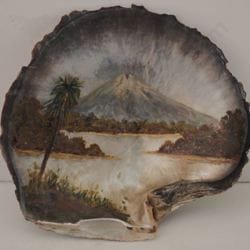
Mount Egmont with Lake
By: John Philemon Backhouse (1845-1908)
Oil on Sea Shell - 13cm x 14cm
Valued $2,000-$3,000
Offers invited over $1,500
Contact: Henry Newrick – (+64 ) 27 471 2242

|
|