
Founded by Max Farndale 1947 - 2018
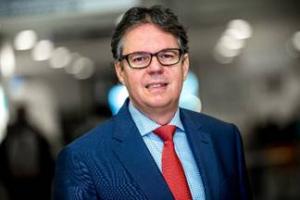
7 Nov - Sustainable finance and central banking expert Professor Dirk Schoenmaker from the Netherlands is giving a free public lecture at Victoria University of Wellington later this month, as the 2017 Reserve Bank of New Zealand Professorial Fellow in Monetary and Financial Economics. His lecture, ‘Climate Change and Financial Sustainability’, will examine the global financial implications of transitioning to a low-carbon economy.Keeping global warming below 2°C will require substantial reductions in global greenhouse gas emissions. Professor Schoenmaker will consider a benign scenario where the transition to a low-carbon economy occurs gradually, adjustment costs are manageable and the repricing of carbon assets is not likely to entail systemic risk. In an adverse scenario the transition occurs late and abruptly, affecting systemic risk via various channels. Professor Schoenmaker will consider how policy could aim for enhanced disclosure of the carbon intensity of non-financial firms. The related exposures of financial firms could then be stress-tested under the conditions of an adverse scenario. What: ‘Climate Change and Financial Stability’ Reserve Bank of New Zealand public lectureWhen: Wednesday 15 November 2017, reception from 5.30pm, lecture 6-7pmWhere: Lecture Theatre 2, Rutherford House, 23 Lambton Quay, Victoria University, Pipitea CampusRSVP: email Jay Curtis on This email address is being protected from spambots. You need JavaScript enabled to view it. or phone 04-463 5188. Professor Dirk Schoenmaker bioProfessor Schoenmaker is a Professor of Banking and Finance at the Rotterdam School of Management, Erasmus University, and a Senior Fellow at the Brussels-based think tank Bruegel. He is also a member of the Advisory Scientific Committee of the European Systemic Risk Board at the European Central Bank, and a Research Fellow at the Centre for European Policy Research. He has published in the areas of central banking, financial supervision and stability, European financial integration and sustainable finance. About the Professorial Fellow in Monetary and Financial EconomicsEach year, Victoria University and the Reserve Bank of New Zealand bring a Professorial Fellow in Monetary and Financial Economics to Wellington to enhance the development of monetary and financial policy in New Zealand by advancing thinking and public debate.
| A Victoria University release || November 7, 2017 |||

Nov 7, 2017 - A Carterton business which produces a third of the country’s bacon could bring more jobs to the region after it undergoes a development worth more than $10 million. The expansion of the Premier Beehive factory is scheduled to be completed in November next year. Managing director Dene McKay has worked with Premier Beehive for nine years but has not seen anything like the upgrade that is planned for the factory on Moreton Rd.
“We’ve outgrown the space that we have in regards to the footprint and capability.”
The planned development was a “big investment” and would take just over a year, he said.
“We have no plans to go anywhere else, we are committed to our staff in the area.”
It naturally follows on from the “rapid growth” the company had seen over the past six or so years.
In that period business had doubled and it was “timely” to now expand the facilities.
The company has a turnover of more than $100 million and was forecasted to sell more than 13,000 tonnes of product this year.
Premier Beehive exports a small amount of products to Hong Kong, with the vast majority of ham hocks and streaky bacon strips feeding the hungry domestic market.
“Our streaky bacon is the number one selling bacon in the country,” Mr McKay said.
The company’s shaved ham products were also market-leading products, he said.
“Our bacon share, at the moment, is about 34 per cent of the market and our prepacked ham share is about 37 per cent of the market.”
Over a year ago, the company invested in some sausage manufacturing equipment and the planned expansion would assist in growing that category, he said.
During the lead up to Christmas there would be more than 300 employees in the factory.
Mr McKay said he was proud of the company’s progress and that it echoed the efforts of the staff.
“The effort that’s gone into the production of these products is reflected in our position in the marketplace.”
Carterton Mayor John Booth has been one of the main port of calls during the resource consent process.
“Some of the machinery is outside and there has been a bit of noise attached to it,” he said.
“They have made a really conscious effort in their building programme to house a lot of that machinery inside.
“It just shows you it’s a responsible business.”
It was good to have a business like that expanding because it showed confidence in the district, Mr Booth said.
“They are buying into what Carterton is and the progressive way we approach things.”
It would add to the positive feeling in the district at the moment, he said.
The business started life as a family-owned pig processing company in 1991.
The Reid family sold their business on in a move that would create the Premier Beehive brand.
It has changed hands twice since, and is now owned by global brand JBS Australia.
| A Wairarapa TimesAge release || November 6, 2017 |||
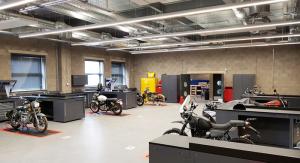
7 Nov - Royal Enfield has inaugurated its new Technology Centre in Bruntingthorpe Proving Grounds, Leicestershire. The brand new facility, located at the heart of the central Midlands area of UK, is housed at the largest privately owned vehicle test track facility, thereby ensuring ease of access to a host of vehicle development, engineering and testing-related facilities. The choice of location suits the iconic motorcycle manufacturer considering Bruntingthorpe Aerodrome and Proving Ground first opened in 1942 for the Royal Air Force (RAF) and hosted both the RAF and US Air Force.
In line with its aim to expand and make gains in the fast-growing global midsize motorcycle segment (250-750cc), Royal Enfield says it has been investing extensively towards increasing capacities, infrastructure and product, and as well as people capabilities. The new technology centre in the UK was set up with a view to bring a more global approach towards product and technology. Also, the fact that the UK is the birthplace of the brand which made its first motorcycle in 1901, made it an obvious choice.
The UKTC (UK Technology Centre) acts as the innovative hub and global headquarters for product strategy, product development, industrial design, research, programme management and analysis for Royal Enfield. The facility boasts state-of-the-art equipment and modern workshop facilities that enable engineers to develop authentically styled and accessible motorcycles and future concepts.
Seeing tomorrow todayUKTC, which has a contemporary and futuristic industrial look, is spread across 3,000 square metres and over two levels. It essentially is a modern workspace for employees, with an Industrial Design Studio, Engine, Electrics, Chassis Build, Spray-shop, Model-shop, Metal work and Part store on the other floor.
The spacious Industrial Design Studio has variable-height modelling platforms and a suite of workshop facilities to bring the majority of model preparation in-house. The Engine Test building, spread across 470 square metres, houses the latest dynamometers and emissions equipment for testing.
Since commencing operations in January 2015, the UKTC now has over 120 employees working on multiple projects, that includes development of future products and platforms. The first modern Royal Enfield 650 twin and the new range of motorcycles has been developed between the teams at UKTC and Chennai, India.
Back to the futureWikipedia has it that Royal Enfield was a brand name under which The Enfield Cycle Company of Redditch, Worcestershire sold motorcycles, bicycles, lawnmowers and stationary engines which it had manufactured. Enfield Cycle Company also used the brand name Enfield without Royal. The first Royal Enfield motorcycle was built in 1901. Enfield's remaining motorcycle business became part of Norton Villiers in 1967 and that business closed in 1978 after which Royal Enfield, as we know it in India, began manufacturing motorcycles in Chennai.
Riding a wave of demandRoyal Enfield currently is witnessing a surge in demand for its products and with its new manufacturing base in Chennai, the company has been able to grow its production rapidly. Since the past five years, it has notched over 50 percent growth every year. Royal Enfield’s product line-up in India includes the Bullet, Classic and Thunderbird models in 350 and 500cc displacement along with the Continental GT 535cc café racer and the purpose-built Himalayan adventure bike powered by the new LS410 engine.
The company operates through 17 company-operated stores and over 705 dealers in all major cities and towns in India, and exports to over 50 countries across the world including the USA, UK, several European and Latin American countries, as well as the Middle East and South East Asia.
| An AutoCarPro release || November 7, 2017 |||

6 Nov 2017- The Worldskills New zealand Team won gold and five medallions of excellence at World International Competition hed during October in Abu Dhabi. Air New Zealand aircraft engineer, Jarrod Wood, won the gold medal in the aircraft maintenance skill competition of the 44th WorldSkills International Competition that was held 15-18 October 2017 in Abu Dhabi, United Arab Emirates. Wood was also awarded Best in Nation, for having the highest marks amongst all Competitors from New Zealand.
Malcolm Harris, CEO of WorldSkills New Zealand, says, “I am thrilled with the performance of the NZITP Skills Team at the recent WorldSkills International competition held in Abu Dhabi Oct 14-18. The team competed in 13 of 51 Skill categories in the competition attended by over 1300 of the world’s finest young skill apprentices.”
He adds that, “A Gold medal won by Jarrod Wood in the Aircraft Maintenance category sealed a very good team performance with another five competitors winning Medallions of Excellence for top scores.”
Wood, for his part, shares his experience on the Competition:“The competition skill of aircraft maintenance was full of professionals. It is a very good reflection of the people in our trade. Everyday was a challenge. But Mike [Naus, the NZ Skill Expert on aircraft maintenance who coached Wood throughout his training] and I took it day by day and that seemed to work well.” “I was so humbled to be standing on the stage next to Finland and Korea. Winning gold was such a shock. It still hasn’t sunk in yet. But I feel privileged and proud to be bringing back NZ’s second ever gold medal. I’m also proud to have been awarded Best in Nation.”
Wood, nonetheless, stresses, “But the whole NZ Team deserved that award. They’re such amazing professionals in their respective trades, and can all be proud of their performance.”
The five Medallions of Excellence won by the New Zealand Institutes of Technology and Polytechnics (NZITP) Skills Team were the following:
1,300 young people from 59 WorldSkills Member countries and regions showcased their talent across 51 skillscompetitions, between 15-18 October. This was the first time that the WorldSkills Competition has been held in the Middle East and North Africa region. At the Closing Ceremony at the du Arena in Abu Dhabi - with around 10,000 international visitors and a global audience more than 825,000 online - watched Competitors discover who had won coveted gold, silver, and bronze WorldSkills medals.
In addition to the presentation of medals, the Closing Ceremony provided an opportunity to reflect on the success of WorldSkills Abu Dhabi 2017, the largest WorldSkills Competition to date, which attracted more than 125,000 visitors.
Held in conjunction with the Competition were the WorldSkills Conference 2017 and the first International TVET Youth Forum. These provided a unique opportunity for young professionals, Ministers, and other global policymakers to debate the major issues that the vocational education sector faces.
The Closing Ceremony of WorldSkills Abu Dhabi 2017 ended with the handover of the WorldSkills flag to the next hosts, WorldSkills Kazan 2019. The 45th WorldSkills Competition will be held on 29 August – 3 September 2019 in Kazan, Russia.
The WorldSkills International Competition occurs every two years and is the biggest vocational education and skills excellence event in the world, reflecting global industry practice. Competitors will represent the best of their peers and are selected from skills competitions in 78 WorldSkills Member countries and regions. They demonstrate technical abilities both individually and collectively to execute specific tasks for which they study and/or perform in their workplace. Skills competitions showcase and inspire world-class excellence in skills and introduce the youth to a variety of skilled career options.
One of the main legacies of the WorldSkills Competitions is to give visibility and importance to professional education, as one of the true tools of socioeconomic transformation.
The Competition also provides leaders in industry, government, and education sectors with the opportunity to exchange information and best practices. New ideas and processes inspire school-aged youth to dedicate themselves to technical and technological careers and towards to a better future.
| A WorldSkillsNZ release || October 24, 2017 |||

New Zealand’s 52nd Parliament will meet on Wednesday 8 November to hear the Speech from the Throne by Governor General Dame Patsy Reddy, says Prime Minister Jacinda Ardern.
“We promised we would be a government of action so I’m pleased to announce the opening of Parliament next week.
“The Speech from the Throne will set out our vision for a fairer, better New Zealand and the measures we intend to introduce over the next three years to achieve that.
“Our priorities are to take action to reduce child poverty and inequality, help Kiwis to live in affordable, warm, dry homes, restore funding to our health system so all can access it, expand jobs and opportunities in our regions, make post-secondary school education more affordable, clean up our rivers and play our part in tackling climate change.
“The opening of Parliament means we will be able to start making progress on many of the key elements of our 100 Day Plan and start delivering real change to improve the lives of New Zealanders.”
Background
The opening of Parliament consists of two ceremonies – the Commission Opening on Tuesday 7 November and the State Opening on Wednesday 8 November.
The Commission Opening will take place at 11.00am on Tuesday 7 November. The Chief Justice, acting as a Royal Commissioner, will open Parliament so that members can be sworn in and a Speaker elected.
The formal State Opening will be on the next day, Wednesday 8 November at 10.30am.
The Speech from the Throne takes place at the State Opening when the Governor-General Dame Patsy Reddy sets out the Labour-led Government’s intentions for the next three years.
The public can watch both ceremonies in Parliament grounds or live on Parliament TV and RNZ.
| A Beehive release || October 30, 2017 |||
Fading of established church ushers in new druidic epoch believes Mediaeval era authority.
Antiquity authority Gordon Strong points out that the current surge of accelerated ethical mass hysteria centred now on an extended Hollywood – Westminster axis amounts to nothing more than an electronic replication of such collective expressions of righteousness in ancient times.
The main difference between such outbreaks in the pre-media age and the current version is that now it is an underclass seeking to diabolise a superior or over-class.
In the current and resurgent trans-Atlantic outbreak this targeted superior strata is represented by those in power in two cooperative and linked categories –the electronic entertainment class and the political class.
In the current outbreak this represents those who control the capital, and thus the jobs in the visual mass media, and to an only lesser extent those in politics deemed to be exercising a similar style of economic power upon those beneath them.
Mr Strong is considered Britain’s leading specialist in ancient superstitions and their outcomes and has authored many books on the subject.
The current Hollywood- Westminster axis outbreak, contrary to a widespread notion in academia, had more in common with mob behaviour than with the witch hunt manifestation, he said.
Witch hunts , he said were levied by a superior class on members of an under class deemed to be the source of a community problem such as still-born children, plagues, and famines.
The contemporary version in contrast he pointed out is reversed in that it is being levied by an underclass on a dominating overclass.
The purpose is to excoriate those considered to have failed to deliver on an undertaking made to their accusers.
These accusers also believe themselves to have been humiliated in the course of achieving that same undertaking from those in power over them..
In all instances the accused had been considered to have been operating from a consented and superior position of trust, and one confirmed and promoted by the same electronic media now being applied to their condemnation.
One similarity between the current outbreak and those of ancient times was the accelerator in the shape of the same core mob, drawing in more participants and more strength as it rolled along.
The presence of the mob in ancient times and now currently supplied the key to understanding the syndrome, said Mr Strong.
Regardless of the epoch the mob transcended the constituted authority of the era in defining its own targets, its own malefactors, and challenged the authorities of the era to do something about them.-
Otherwise the mob would take the law into its own hands, and in doing so make the authorities look weak and thus vulnerable.
The mob effect was clearly visible in its current incarnation as those on the sidelines and observing the snowball effect now joined it for fear of themselves incurring its wrath.
Marching on its fingertips now rather than on its clogs the individual power vested in the population by electronics meant that this virtual mob can criss-cross frontiers and oceans in seconds.
The “virtual mob” would become increasingly powerful and increasingly prevalent, assured Mr Strong.
The reason was the collapse over the past 50 years in the respect for, and thus the fear of, institutions – notably the established church.
Filling this vacuum noted Mr Strong was the re-appearance in the English-speaking world of the Druid, an official whose role it was in ancient times to intercede and generally mediate between the people and their unseen deities.
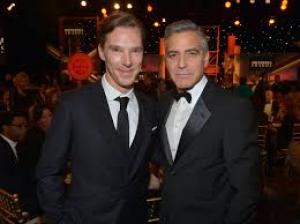
.He cited show-business exemplars such as George Clooney and Benedict Cumberbatch (pictured) as two such revenants who from their position of recognition and trust had sought to arbitrate during the current resurgence and generally to “exercise a calming influence.”
| From the MSCNewsWire repporters' desk || Sunday 5 November 2017 |||

4 Nov _ As blockchain and IoT converge, the push to commercialize applications leveraging both technologies grows. The latest industry to embrace this confluence is the transportation and logistics industry. In late August, the Blockchain in Trucking Alliance (BITA) launched with 150 or so member organizations — including transportation management companies, brokers, carriers, shippers and technology vendors. BITA’s stated goal is to create standards and educate industry stakeholders about the promise of blockchain. And at last week’s Connected Fleets USA event in Atlanta, BITA co-founder Craig Fuller, CEO for TransRisk, stressed that the combination of IoT and blockchain in logistics and transportation will be a formidable one.
Blockchain “has the power to transform almost every element of this industry,” said Fuller, whose company develops products to help stakeholders in the transportation industry manage price risk. In the future, blockchain systems will work in tandem with data from IoT devices used in transportation and logistics. Business transactions surrounding the shipment of freight will be automated using blockchain-based “smart contracts,” which improve upon traditional contracts by enforcing the rules controlling the transfer of currency or assets under specific conditions. In simplified terms, blockchain systems use a chain of cryptographically protected records to expose the details of transactions to all participants and distribute records across the network of participating “nodes,” or computers, thereby eliminating the need for a central authority to maintain records, which makes processes more efficient and cuts costs.
The benefits according to Sandeep Kar, chief strategy officer for Fleet Complete, include:
But there are, of course, challenges to blockchain in logistics and transportation, which Kar summarized as:
To help the industry get past the obstacles and reap the rewards of blockchain, BITA is attempting to address the education gap, as well as help develop standards that are specific to the transport industry. Education is critical, Fuller said: “People don’t understand the use cases for it. They know the buzzwords, but they don’t know how it’s actually used in the market.” Fuller said he’s been on the receiving end of a number of questions about how to create commercial uses of blockchain in logistics and trucking. Questions like those are what led to the formation of BITA. “We’re bringing disparate, sometimes competitive parties together to create a common framework to solve problems. … We’re trying to bring together the folks [who] can actually have an impact,” he said.
Performance history records. Potential use cases for blockchain in trucking include maintaining accurate performance history records. When a truck enters the secondary market (that is, gets sold as a used vehicle), questions come up around how the vehicle was maintained. “In a blockchain environment, you can have a trustless record” of that maintenance, Fuller said. Because blockchain transaction records are considered immutable and transparent, parties in a transaction don’t need to have established trust with one another beforehand. “The beautiful part is, I don’t have to trust the other party, the seller or an intermediary. The data is flawless.”
“The analog [to the performance history use case] in the consumer car industry is Carfax,” Fuller said. “Except [with blockchain], there’s no reporting agency. [The records] are distributed [across the nodes in the blockchain system built for this purpose].” All records pertaining to the truck would be recorded to the blockchain, from the moment it rolled off the assembly line until it entered the market as a used vehicle — using IoT sensor data as well as other transactional data related to the vehicle. A potential buyer of the truck therefore would be able to make a purchase decision with full knowledge of the vehicle’s history.
[Blockchain360, co-located with IoT Security Summit and Cloud Security Summit, investigates how blockchain can scale to meet the IoT's needs across industry and enterprise, accelerating widespread adoption. Get your ticket now.]
Capacity monitoring. Another potential use of blockchain in the trucking industry is capacity monitoring. One of the factors determining the cost of shipping freight relates to cargo volume. IoT sensors can be used to detect the amount of space a particular party uses; that info is used in determining cost associated with shipment. In the future, pouring that data into a blockchain-based system, enabled by a smart contract, will mean self-executing payments against the amount of space used by the freight, as measured by the IoT sensors. In other words, a much more efficient process than what exists today.
Gray trailers. Blockchain also could level the playing field between truck owners and third-party logistics companies when it comes to “gray trailer pools.” Today, Fuller said, truck owners have an advantage over third-party logistics companies because they own access to freight trailers. Blockchain could enable a business model whereby “the trailers will be owned by a third-party entity and shared collectively with fleets. … You can have a fleet of gray trailers and use blockchain to not only know who had access to that equipment but also charge for it. And you can tie a contract to it and settle it in real time so there is no collection process,” Fuller said.
Dispute resolution. Blockchain will also have a role resolving disputes, he said. “Every single day, there’s $140 billion tied up in disputes for payment,” Fuller said. “The shipper says, ‘You didn’t send me a proper bill. … Your rate is $1.90, but [the bill] says $1.89.” And guess what? The shipper … doesn’t pay it until that price is exact.” Such wrangling creates a strain on the trucking payments environment, he said. With a blockchain system and a smart contract, the transaction would be handled according to the smart contract terms and the contract would be executed and the transaction cleared at the same time, eliminating the current back and forth between parties as they hash out the finer points of their agreement. “In a blockchain environment, you have a transaction standardized and anonymized, and [it’s subject to] what we call smart arbitration,” in which disputes or controversy related to the contract are settled immediately according to the blockchain system’s arbitration rules. And because the facts of the transaction are viewable by all parties, fewer disputes are likely to occur.
Fraud detection. Blockchain will also be useful for fraud detection. The example Fuller cited was the practice of “factoring” in trucking, or assigning unpaid freight bills to a third-party company for less than — perhaps 60% to 90% of — the value of the bill. Trucking companies use factoring to improve their cash flow since it gives them access to the money right away, but it costs them a percentage of the bill. “One of the reasons factoring companies charge so much [is because a significant portion of] factoring receivables end up getting duplicated, [when trucking companies] send multiple bills of lading to multiple factoring companies, or [a company might] create a false bill of lading.” Factoring companies charge a very high rate because a portion, which Fuller said was likely low, of transactions it engages in is fraudulent. With blockchain, as long as the sensor data itself is not falsified, the transactions represent what actually happened as opposed to what someone says happened. But perhaps more importantly, factoring itself would become less necessary since a blockchain system with smart contracts would govern the payment for transactions in an automated way.
Making all these use cases a reality, of course, will require the various stakeholders in the process to work together. “True implementation of blockchain involves both the shipper and carrier using this platform and so far what we have seen is a few shipping companies using it,” Kar said. “The real market pull, not push, will start … once the shippers start demanding carriers to start using this platform.”
When will that happen? At this point, it seems too soon to tell. Kar said, “I believe we’re at least two to five years out, or maybe sooner.”
| A IOT release || November 4, 2017 |||
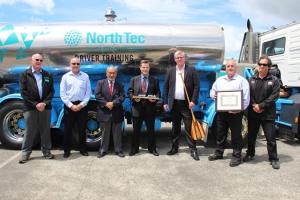
3 Nov - Driver training in the North received a boost when Fonterra officially handed over a decommissioned milk tanker to NorthTec’s commercial transport department. The tanker was blessed at a special ceremony held at the Future Trades Centre in Dyer Street, Whangarei. NorthTec kaumātua, Hohepa Rudolph, welcomed officials from Fonterra, NorthTec, other stakeholders and students, and performed the blessing of the new “waka”, naming it Uruao. The name means “tail of the scorpion” and refers to one of the first great ocean-going waka, built for the earliest migrations to New Zealand.
In return, NorthTec Chief Executive, Mark Ewen, presented Barry McColl, Fonterra’s National Transport and Logistics Manager, with a carved wooden paddle.
Mark Ewen said: “We are concentrating on outcomes for our stakeholders and making sure we deliver on those outcomes. It isn’t always easy for us to have the right resources to deliver for all our stakeholders, but now we have a truck and trailer for the next three years.
“It is a very generous investment in us – it’s an investment because we need to be producing more drivers from our region and employing more drivers in our region. It’s an investment in us to deliver fully trained drivers back to the industry for the next three years and beyond.”
Barry McColl said: “We’re really proud to be able to support initiatives that help develop communities and give back to the regions where we operate. These are the communities that our farmers and our people are part of, so being able to help out with resources that bring new opportunities is important to us.
“Here in Northland there are lots of young people who are seeking employment, and we hope this truck gives them a tool that they can use to gain experience and a springboard into a new career.”
Darrin Rhodes, Fonterra’s Regional Transport Training Manager for the North Island, said the company had often discussed the shortage of drivers in the industry, and decided to work with polytechnics to address the issue, providing the trucks to enable driver training. He presented Mark Ewen with a model of the milk tanker and trailer unit, in acknowledgement of the new partnership.
The tanker, which is now on long-term loan to NorthTec, will be used for training for students earning their Class 4 and Class 5 Truck Licences. It can also be used for completing driver competency tests and assessments, and other training opportunities like safety inspections, mechanical inspections and truck safety days.
The tanker handover was initiated by Keith McGuire, Regional Executive for the Road Transport Association NZ (RTANZ), and came about through discussions with Barry McColl and NorthTec’s commercial transport department. Uruao is the third tanker and trailer unit loaned by Fonterra to tertiary institutes in New Zealand.
| A Northtech release || november 3, 2017 |||
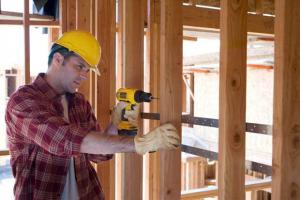
3 Nov - More than $100bn of infrastructure works are planned but country doesn’t have enough local workers to fill the gap. New Zealand has launched a campaign to lure thousands of UK construction workers away from their wintry building sites to deliver the country’s biggest ever infrastructure and housing program. An estimated 65,000 new construction workers will be needed over the next five years to meet demand, forcing the industry to work with the government to create what is the largest ever recruitment drive for UK workers.
The recent downturn in British construction activity had created an ideal employment environment to attract potential migrants, said Greg Edmonds, Auckland Transport’s chief infrastructure officer, as Brexit’s uncertainties continues to take their toll.
A package created by a recruitment consortium, called LookSee Build NZ, offers “experiences”, including fishing, surfing and cultural events, to entice construction professionals. Interested and qualified candidates would then be matched with appropriate employers.
The new Labour-led government wants to spend NZ$2bn (£1bn) building 100,000 new homes over the next 10 years as part of its election promise to improve housing affordability. There are also massive infrastructure works planned during that time, which the industry says will cost about $125bn. However, there aren’t enough local workers to make it happen.
The government forecasts New Zealand’s construction needs will reach a peak in 2020. But despite 11,000 apprentices learning the trades, the industry training organisation says New Zealand still needs many more to meet demand and replace those who retire or leave.
Prime Minister Jacinda Ardern is introducing a scheme that would fast track 1,000 to 1500 visas to specifically attract construction workers from abroad.
Craig West of engineering company Downer, which is part of the LookSee group, said the need for top talent was acute. “Our construction sector is very competitive and this kind of inter-industry cooperation has never happened before but the need for staff requires us to take an all-of-industry approach.”
Aaron Muir, a LookSee Build NZ spokesman and construction consultant, said he did not think the free experiences such as fishing and surfing would by themselves persuade people to make the move. “What it will do is give them a genuine taste of the lifestyle that is on offer in New Zealand,” he said.
The recruitment schemes come as the Labour party also promises to cut net migration to New Zealand by between 20,000 and 30,000 people.
| A TheGuardian release || November 3, 2017 |||

Nestlé has today set a goal to source only eggs from cage-free hens for all its food products globally by 2025. This includes all shell eggs and egg products directly sourced as ingredients by Nestlé.
In Europe and the U.S., Nestlé will make the transition by the end of 2020. For the rest of the Americas, the Middle East, Africa and Oceania it will happen by 2025, with the move in Asia to be completed in the same transition period, as conditions allow.
In some parts of the world, such as in Europe, over 40% of eggs used by Nestlé are already from cage-free sources.
Nestlé’s purpose is to enhance quality of life and contribute to a healthier future. This includes ensuring decent welfare standards for animals that are reared for the ingredients used in its products.
| A Nestlé release || November 3, 2017 |||

Palace of the Alhambra, Spain
By: Charles Nathaniel Worsley (1862-1923)
From the collection of Sir Heaton Rhodes
Oil on canvas - 118cm x 162cm
Valued $12,000 - $18,000
Offers invited over $9,000
Contact: Henry Newrick – (+64 ) 27 471 2242

Mount Egmont with Lake
By: John Philemon Backhouse (1845-1908)
Oil on Sea Shell - 13cm x 14cm
Valued $2,000-$3,000
Offers invited over $1,500
Contact: Henry Newrick – (+64 ) 27 471 2242

|
|