
Founded by Max Farndale 1947 - 2018
A slightly softer growth forecast is the main feature of largely unchanged Pre-election Fiscal Update compared to the Budget forecasts three months ago, Finance Minister Steven Joyce says.
“The softer growth New Zealand has experienced in the six months to March flows through to a lower starting point in the 2017/2018 year,” Mr Joyce says.
“The net effect is that growth is slightly lower through the forecast period – averaging 3.0 per cent over the next four years rather than the 3.1 per cent predicted in the Budget.
“The other notable change is that Treasury expects the labour market to be tighter over the next four years, with lower unemployment and stronger nominal and real wage growth.
“Treasury forecasts unemployment to drop to 4.3 per cent by June 2020 and for the average annual wage to increase from $58,900 at March 2017 to $65,700 by 2021, a $1300 per annum improvement on the Budget forecast.”
Other changes to the forecasts include:
Most other elements of the forecast remain very similar to budget predictions, with nominal GDP, migration levels and budget surpluses largely unchanged, although the timing of budget surpluses has changed.
“The Budget surplus is expected to be $2.1 billion higher in the year just finished,” Mr Joyce says. “However Treasury expects the lower growth forecast to result in surpluses that are $1.8 billion lower over the next four years. The net effect is about even.
“The Government’s strong fiscal management means that New Zealand is one of the few OECD countries to be posting fiscal surpluses. This hard-won position is underpinning the Government’s strong economic plan which is delivering jobs and steady real wage growth for New Zealanders.”
The large infrastructure spend committed to in Budget 2017 means that residual cash remains broadly in balance until the 2019/20 financial year.
“There is limited room for any additional expenditure beyond what is already proposed in these forecasts until the 2020 financial year when there is expected to be a $1.7 billion cash surplus. Anything significant in the meantime would involve more borrowing or raising additional tax revenues,” Mr Joyce says.
The PREFU forecasts include the following budget spending commitments:
• $7 billion in additional operating expenditure over four years in Budget
2017 which commenced on 1 July 2017.
• $1.7 billion per annum ($6.8 billion over four years) operating
allowance to be allocated for Budget 2018, increasing by 2 per cent
each subsequent budget.
• $32.5 billion in total capital infrastructure investment between 1 July
2018 and 30 June 2021.
• $6.5 billion over four years ($2 billion per annum in out years) for the
Government’s Family Incomes package commencing on 1 April 2018.
“Government annual operating expenditure in these forecasts increases from $77 billion to $90 billion over the next four years, which is sufficient for significant ongoing improvement in the provision of public services,” Mr Joyce says.
| SA Beehive release || August 23, 2017 |||
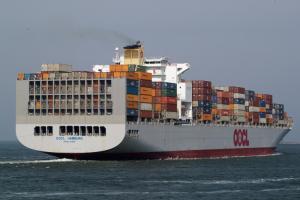
National is promising to deliver New Zealand's boldest-ever trade push if it wins the election, creating "shiploads of jobs" and giving the economy a multi-billion dollar boost.
Trade spokesman Todd McClay says a National-led government will work to unlock markets with 2.5 billion new consumers for the benefit of large and small exporters in every region.
"This new trade access will create shiploads of jobs and be worth billions of dollars to our economy and businesses across the country," he said on Tuesday.
Most of the initiatives Mr McClay is committing to following through have already been announced and some, including TPP11, are under negotiation.
National leader Bill English, who was with Mr McClay to make the announcement in Auckland, said it was the first time the entire list of trade initiatives had been brought together.
"We hope to have significant success to help the export sector," he said.
"Labour wants to renegotiate TPP11 - if that happened, it would mean the end of it."
The list of targets for "high-quality and comprehensive" free trade agreements include:
* The European Union
* The United Kingdom (following Brexit)
* Sri Lanka
* Brazil, Argentina, Paraguay & Uruguay
Negotiations to be completed are:
* The Trans Pacific Partnership 11
* Mexico, Chile, Colombia and Peru (The Pacific Alliance)
Existing agreements to be upgraded with:
* China
* Singapore
* The Association of South East Asian Nations.
Mr McClay told reporters the European Union FTA negotiations could start later this year and he wanted to complete all those that are underway within the next three years.
"We can't say we will take five or 10 years to negotiate deals... this isn't too ambitious."
| A Beehive release || August 21, 2017 |||
New regulations for New Zealand’s fuel specifications will support the growth of lower-emission fuels that are better for people, the environment and cars, Energy and Resources Minister Judith Collins announced today.
The Regulations set out minimum standards for fuel performance, and change incrementally over time to keep up with new technology and international best practice.
“There are four significant changes – three that enable greater fuel supply choice and market-led innovation in the fuel mix; and one to reduce harmful emissions:
· Introducing a total oxygen limit, which potentially allows a wider range of fuel blends;
· Increasing New Zealand’s limit for methanol in petrol from one to three per cent volume;
· Raising the biodiesel blend limit in diesel from five to seven per cent; and
· Reducing the sulphur level allowed in petrol from 50 to 10 parts per million.
“The changes carry multiple benefits for consumers and for our environment.
“Three of the changes – the introduction of a total oxygen limit, increasing the biodiesel blend limit, and increasing the methanol blend limit – could potentially allow more flexibility in fuel mixes, a reduction in harmful emissions and increased diversity and enhanced security of local supply.
“The other change of reducing the sulphur level in petrol is specifically targeted to reduce harmful emissions, which will have health and environmental benefits. This is consistent with the most stringent fuel standards in the world, most notably in Europe, Japan and the United States,” says Ms Collins.
All of the amendments will take effect from 2 October 2017, apart from the change to the maximum sulphur level, which will come into effect on 1 July 2018.
More information is available at: http://www.mbie.govt.nz/info-services/sectors-industries/energy/liquid-fuel-market/reviewing-aspects-of-the-engine-fuel-specifications-regulations-2011
| A Beehive release || August 22, 2017 |||
Dunedin will get a new $1 billion plus hospital, in what will be the largest build of its type in New Zealand’s history, Health Minister Jonathan Coleman says.
Dr Coleman made the announcement with Prime Minister Bill English at Dunedin Hospital today.
“The Government is committed to ensuring the people of Dunedin and the wider Southern community receive quality hospital care,” Dr Coleman says.
“We have been assessing the options around refurbishing the existing site and building a new hospital. The decision has been made to rebuild.
“This would maximise the opportunity of having a purpose-built, state-of-the-art facility, while also minimising disruption to patients and staff.
“Given the scale of the project it is estimated to cost between $1.2 billion - $1.4 billion, making it the largest hospital rebuild in New Zealand history.
“The original plan was to simply rebuild the services block, but the indicative business case has determined that the ward block also needs replacing and that has increased the cost significantly from the original $300 million estimate.
“The Ministry of Health is working to secure an appropriate site for the new hospital, with a strong preference for a central city location. Depending on the location the new hospital will be opened in 7 – 10 years.
“Given the size of the project the Government will consider all funding options including a Private Public Partnership model.
“We are also taking steps to support the existing Dunedin Hospital while the rebuild takes place with an extra $4.7 million being invested into the Interim Works programme, taking the fund to $27.2 million.
“The programme includes the expansion of ICU to 22 bed spaces over the next 12 months. Taking the unit to eight ICU beds, 10 High Dependency beds and 4 beds which are flexible to be either as demand requires.
“Increasing the number of co-located beds in ICU will greatly improve efficiency and enable more effective care of patients.
“The programme also includes the expansion of the Gastroenterology Unit, which will support the roll-out of the National Bowel Screening Programme to the DHB.
“This is a once in a generation opportunity to build modern and sustainable health facilities that will meet the future needs of Dunedin and the wider Southern community.”
The new Dunedin Hospital will follow on from the completion of the new $77.8 million Grey Base Hospital on the West Coast, as well as the almost $1 billion hospital redevelopment programme in Canterbury.
The Indicative Business Case for Dunedin Hospital can be accessed here.
| A Beehive release || August 19, 2017 |||
The sale and manufacture of wash-off products containing plastic microbeads will be banned in New Zealand earlier than previously expected, Associate Environment Minister Scott Simpson announced today.
“Microbeads pose a high risk to our aquatic and marine environments. They are too small to retrieve or recycle, do not biodegrade, and are mistaken by marine life for food, causing long-term damage to marine animals,” Mr Simpson says.
The ban will take effect six months after World Trade Organisation notification, which will take place when the regulations are gazetted in November. Microbeads will be fully banned in New Zealand by May 2018.
“We consulted in January 2017 on a proposal to ban microbeads in personal care products like facial cleansers and toothpastes. We received over 16,000 submissions that all supported a ban. Many submitters urged the Government to broaden the scope of the proposed ban to include other products containing microbeads.
“In response, we have widened the scope of the ban to include all ‘wash-off’ products for visual appearance, exfoliating, cleansing or abrasive cleaning purposes that contain plastic microbeads. As well as personal care products, this includes household, car or other cleaning products.
“Foodstuffs have already removed products with plastic microbeads from their shelves. Major manufacturers are also phasing out plastic microbead ingredients.
“This ban is part of a global initiative to reduce the amount of plastic ending up in oceans. The New Zealand ban parallels similar initiatives in the United States, United Kingdom, Canada, the European Union and Australia to ban or phase out plastic microbeads in products.
“New Zealand is a small consumer of plastic microbead products by international comparison but this initiative is important for maintaining New Zealand’s good name in marine stewardship. We have responsibility for one of the largest areas of ocean, we have one of the best fishery management systems, we are leading with conservation measures like the Ross Sea Marine Protected Area and this initiative on microbeads will enhance our clean, green reputation.”
| A Beehive release || August 18, 2017 |||

The Government has today outlined new measures to promote a more competitive economy, Commerce and Consumer Affairs Minister Jacqui Dean says.
“Competition is one of the key drivers of economic success which is why the Government is focused on creating a competitive economy which delivers results and choice for New Zealanders,” Ms Dean says.
“The Business Growth Agenda Paper, Promoting Competition, which I am releasing today sets out what actions we’re taking to lift competition for the benefit of New Zealand’s consumers.”
The Government has agreed on three broad areas of focus:
“New Zealand’s competition law and our Commerce Commission are important contributors to domestic competition, and are well regarded internationally and we are continuing to build on that.
“Other recent measures include passing the Commerce (Cartels and Other Matters) Amendment Bill last week which deters anticompetitive cartel behaviour.
“And following a review of the Commerce Act, the Government is progressing legislation to allow the Commerce Commission to undertake market studies to ensure markets are operating effectively,” Ms Dean says.
Read Promoting Competition here: http://www.mbie.govt.nz/info-services/business/business-growth-agenda/pdf-and-image-library/2017-documents/promoting-competition.pdf
| A Beehive release || August 15, 2017 |||
New Zealand’s new Ambassador to the Islamic Republic of Iran is Hamish MacMaster, Foreign Minister Gerry Brownlee announced today.
“New Zealand has a long-standing trade and economic relationship with Iran, established with the opening of our Embassy in Tehran in 1975,” Mr Brownlee says.
“Since the easing of United Nations sanctions in 2016 there has been increased interest in the Iranian market by New Zealand exporters.
“Exports last year were $151 million and the first export of New Zealand lamb in decades was sent to Iran in May.
“There is real scope for the further diversification of our trade relationship with Iran and New Zealand’s new Ambassador will play a key role in supporting this,” Mr Brownlee says.
Mr MacMaster is currently the New Zealand Ambassador to the Kingdom of Saudi Arabia, and has previously been posted to Turkey and Iran.
Mr MacMaster will also be accredited to Pakistan and Afghanistan.
| A Beehive release || August 15, 2017 |||
New Zealand will host APEC in 2021, with Leaders’ Week to be held in Auckland from November 8 to 14, Foreign Minister Gerry Brownlee says.
“With Auckland also set to host the America’s Cup, 2021 will be a big year for the country’s biggest city,” Mr Brownlee says.
“We are announcing the dates as early as possible to provide some clarity for planning, which is already under way.
“APEC 2021 will be the largest event ever hosted by the New Zealand government and is a wonderful opportunity for New Zealand to shine on the international stage.
“APEC will bring world leaders to New Zealand and create significant opportunities to promote our economic interests with trading nations including China, the US and Japan.
“The Asia-Pacific is the fastest growing economic region in the world and APEC is its leading economic forum.
“APEC member economies account for almost half of all global trade, and more than 70 per cent of New Zealand’s goods and services are exported to APEC economies.
“It is expected that APEC will attract up to 22,000 international attendees to the 12 significant APEC-related events held throughout the year, with around 10,000 attendees expected for Leaders’ Week.
“While Auckland is confirmed to host the Leaders’ Week, we intend to spread meetings and events across other large cities, including Christchurch, to showcase the very best of New Zealand’s capability, innovation, culture and amazing landscapes,” Mr Brownlee says
| A Beehive release || August 15, 2017 |||
The Government’s planned investment in Defence over the next 15 years represents a huge opportunity for New Zealand companies, says Defence Minister Mark Mitchell.
Mr Mitchell told Defence industry representatives last night that the country needs a Defence Force that is equipped and supported to respond to a rapidly changing strategic environment.
“This requires investment. Over the next 15 years, the Government will invest up to $20 billion in new and upgraded military capability, including replacement of all our major platforms and the regeneration of the Defence estate.
“We have many companies in the Defence sector who are themselves investing and innovating in their areas of expertise. The Government’s investment in Defence promotes growth in the sector, creates jobs and means that the industry will have every chance to build on its achievements.
“While we are not builders of warships or military aircraft, New Zealand companies can support those capabilities with world-class products and systems, and also support them through life,” Mr Mitchell says.
“For every dollar spent on a new capability, four is spent supporting it through life, the bulk of which is spent locally.
“Each year the New Zealand Defence Force spends $600 million on maintenance and repair, training, and other commercial services.
“The Government is committed to ensuring New Zealand companies are given every opportunity to compete for a share of the investment in Defence.
“The products and services New Zealand companies produce are recognised as world-class, and where they can reduce the cost ownership for the Government we need to support them,” Mr Mitchell says.
| A Beehive release || August 11, 2017 |||
Revenue Minister Judith Collins has welcomed a second round of negotiations between China and New Zealand tax officials aimed at updating the current double tax agreement signed between the two countries in 1986.
“The aim is to agree a new treaty, adopting modern treaty language and concepts, including agreed measures to deal with base erosion and profit shifting,” Ms Collins says.
New Zealand tax officials will meet with Chinese officials in Beijing next week for the second time since 2014, to discuss a new treaty.
Double tax agreements are an important facilitator of trade and investment between countries because they ensure businesses don’t get taxed twice.
They provide greater certainty for both taxpayers and tax administrators about how cross-border investment income will be taxed. They reduce compliance costs and lower tax on some income.
Tax agreements are also used in the global fight against tax evasion, with signatories agreeing to share more tax information under the global standard set by the G20 and OECD.
China is New Zealand’s largest trading partner in goods and second largest overall including trade in services.
“In this context, it is vital to ensure our double tax agreement with China is up to date and follows best practices,” Ms Collins says.
| A Beehive release || August 11, 2017 |||

Palace of the Alhambra, Spain
By: Charles Nathaniel Worsley (1862-1923)
From the collection of Sir Heaton Rhodes
Oil on canvas - 118cm x 162cm
Valued $12,000 - $18,000
Offers invited over $9,000
Contact: Henry Newrick – (+64 ) 27 471 2242
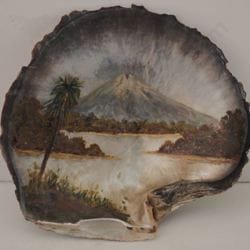
Mount Egmont with Lake
By: John Philemon Backhouse (1845-1908)
Oil on Sea Shell - 13cm x 14cm
Valued $2,000-$3,000
Offers invited over $1,500
Contact: Henry Newrick – (+64 ) 27 471 2242

|
|