
Founded by Max Farndale 1947 - 2018

Covert surveillance in New Zealand hampered by layers of privacy ethics compliance
New Zealand security agencies have long been vigilant in following up insurgency and from any source or ethnic category.
This had become evident during the 1990s when the agencies had been notably vigilant on any indication of entering New Zealand anyone in the supremacist category, claimed National Press Club president Peter Isaac talking to Greytown Lions.
In this the New Zealand agencies followed the lead of their United States homeland security counterparts which had become preoccupied by the emergence during the 1990s of the survivalism threat most notably in the form of the Unabomber and also the one from the alienated supremacists of which the most horrific outcome was the Oklahoma federal building bombing.
This focus on alienation and survivalism had obscured the developing series of events which led to 911 and the destruction of the World Trade Centre.
When the first attack on this structure was launched in 1993 the trail was insufficiently followed just because at this time the focus was on disaffected whites.
This same diversified focus came to light only much later here following events surrounding Kim Dotcom.
Kim was, and still is, wanted by the United States on copyright infringement grounds
Yet he had sustained a military style assault on his Auckland home and it was proved that he had been investigated by the government’s eavesdropping agency, the GCSB.
The Kim Dotcom affair can be viewed now as causing security agencies to become enmeshed in a web of ethical restraints in regard to the surveillance of locals and those from overseas residing in New Zealand.
The episode with its continuing consent consequences had though demonstrated the willingness of New Zealand’s counter insurgency agencies to work with their foreign counterparts.
Even so this advantage was neutralised in regard to the Christchurch mosque shootings simply because the suspect had no previous brushes anywhere with law enforcement authorities beyond road traffic notices.
This close cross-surveillance had yielded no clues on the mosque suspect Brenton Tarrant just because he had no police record anywhere in terms of violence or threatened violence.
The only tangible footprint was the photo Tarrant had posted of himself in North Korea with what appeared to be his official guides (see above).
Only this rendered him as a person of interest.
Isaac noted that investigators will follow Tarrant’s money trail conundrum centred on how someone from a self-admitted everyday background and without any job had been able to criss-cross the world at will and in some comfort and been able to pay for things like rent and cars and computers and also weaponry and club memberships.
He cautioned the medley of media commentators on dwelling upon any imagined security agency failings.
The Security Intelligence Service and Government Communications Security Bureau could in fact have already intercepted and foiled insurgency attacks from any quarter, but be prevented from crowing about it in order to protect their channels.
Isaac advised the media gallery and associated “commentariat” to pull back from encouraging let alone “stoking” any notion at all that the vast and genuine outpouring of grief somehow exempted the nation as a whole from a perception of involvement with the mosque atrocities here, and thus collective involvement.
Isaac concurred though with the media concensus to the effect that the nation’s lax regulations on guns of all description needed to be drastically tightened up.
But he pointed out that gun regulation was often regarded by the gun owner population which is considered to be around the quarter million mark as a single-issue electoral matter.
Knowing this, politicians trod gingerly around imposing draconian restrictions, a delicacy also engendered by the sporting popularity of firearms.
He disagreed on grounds of unenforceability with imposing restrictions on social media a category that in the aftermath of the mosque atrocity has found itself sharing the same obloquy as automatic rifles.
Social media could not be “squeezed back into the bottle,” he said. As a consumer technology it could only be replaced by “something else.”
Social media he noted followed the path of all new technologies of following a 40 year development time trajectory from initial acceptance to a pervasive presence.
This had been the case with electricity, telephones and cars among others and was replicated by social media which had begun in the United States as DARPANET, a military networking research project and which underpinned the file sharing that enabled social media.
.Isaac, who compiled an early computing text book, “Computing in New Zealand,” noted his own amazement at the righteous indignation of “otherwise perfectly sensible people” when they discovered that their “proudly posted” travel details, shopping outings, restaurant meals, pet photos, school sports days and office outings had all been subsequently acquired in the service of market research.
Isaac had been due to talk to the Lions club about pioneering Greytown newspaperman Richard Wakelin now acknowledged as New Zealand’s first professional journalist in that he had no political or pamphleteering axe to grind.
Wakelin’s successor running the Wairarapa Standard was William Nation, who founded Arbor Day in Greytown, and thus the Green movement.
Nation died in 1930.
Had he lived to practise half a century later, in 1980, Nation would still have been at home with the technology at that time and also with its also application, conjectured Isaac.
Isaac sheeted home the advent of the “pervasiveness” of social media to the epoch between 2004 and 2006 which saw the rapid fire appearance of Facebook, YouTube and Twitter.
This trio of “disruptive” technologies had conclusively ripped away from the hands of career journalists the last restraining gateways to mass access.
This technologies washed away the journalistic guarantor status held since Richard Wakelin’s era just because practitioners found torn out of their hands their traditional responsibility of quality control in the matter of verifying and calibrating degrees of truth.

China-Antarctic global authority chilled out of Women anniversary Pantheon
Off-message academic professor Anne-Marie Brady found herself out in the cold at the official celebrations centred on International Women's Day.
Professor Brady challenges and questions the policy of successive governments over China.
This China fixation the professor claims represents a posture that puts New Zealand in danger of following in the footsteps of Albania, the Balkan nation which remains impoverished in spite of long being under the economic aegis of China.
Professor Brady points out that China’s policy is to use its resident nationals to influence governments in seeing things from the Beijing point of view.
Internationally, and especially at the Woodrow Wilson Centre research base in Washington, she is acknowledged also for her work in Antarctic geopolitics.
Recent books include The Emerging Politics of Antarctica (Routledge) and China as a Polar Great Power (Cambridge University Press, 2017)
In a series of investigative treatises Professor Brady discarded the conventional tautology common to such published endeavours and in plain language revealed chapter and verse on Beijing’s tactics applied in New Zealand in order to secure favourable political influence.
Having staked its economic future on China this is a policy interpretation that the current New Zealand government wishes to distance itself from.
Professor Brady believes that as a consequence of her China activity revelations that her home and office have been burgled and her car sabotaged.
She has asked the New Zealand government to provide extra security for herself and her family.
She is a full professor and her status as a fellow of the Woodrow Wilson Centre, part of the Smithsonian Institution, means that in her additional capacity as a linguist she is listened to where it matters.
Professor Brady remains a lightning rod for contrary views about economic reliance on China at a time when the New Zealand government must straddle the United States – China chill on Huawei’s presence as a telecoms supplier.
It must also keep the faith with Beijing over for example Chinese fresh water bottling operations in New Zealand at a time when water activists seek to close them down
Labour governments until now could rely on university academics for unquestioning and unreserved approbation in foreign policy..

Former NZ premier redux---back in The Conversation
The arrival of former New Zealand premier and United Nations topsider at the helm of her own foundation confirms the suspicion of many that she has been the hidden hand in a number of policy directions implemented by the governing Labour coalition led by her protégé Jacinda Ardern.
One of these is considered to be the declaration of the ban on oil & gas accreditation.
More recently still the releasing of the deliberations on a capital gains tax.
The capital gains debate, a perennial one in New Zealand political life, came at precisely the correct time to divert attention away from coalition over-promising notably in public housing.
The oil and gas ban had the effect of reinforcing the allegiance to the governing coalition of the parliamentary Green minority member.
These suspicions were still further reinforced when it became known that the priority of the Helen Clark Foundation is in the field of climate change.
Climate change is the over-arching article of adhesive faith in the Labour and Green coalition components of the government.
It is the centrepiece of a creed slate package that incorporates also such abstract objectives as diversity and multiculturalism along with the more tangible distrust of anglo saxon males as authority figures.
The Helen Clark Foundation has also indicated a preoccupation with “drug policy” which is code for the de-criminalisation of cannabis in various forms.
It was Helen Clark during her nine year stint as New Zealand prime minister who implemented and enforced a variety of smoking-in-public bans and who set the nation on its path to become utterly smoke-free.
Meanwhile New Zealand’s Taxpayers Union is fearful that the foundation will become a New Zealand version of the Clinton Foundation and will thus become the repository of public funds overt and covert.
The Taxpayers Union operates a mass email samizdat designed to by-pass the mainstream media’s enchantment with progressive policies and a corresponding reluctance to cast them in anything other than a rosy light
In outlining the role of their patron, Helen Clark, the foundation emphasises on its web site Miss Clark’s leadership in “inclusive and sustainable” development, “poverty eradication” along with the “full inclusion and empowerment of women in development.”
Helen Clark, the foundation site says “advocates for sexual and reproductive health rights, an end to violence against women and for LGBTI rights.”
The foundation points out that it is a broad church and its website invites the public at large to put their shoulder to its improving wheel.
The launching of the Helen Clark Foundation relatively early in the Labour–led coalition’s first term inevitably draws attention to the foundation’s stated determination to be politically independent, “non partisan.”
While it will be treated with kid gloves by the established media the acid-tongued and self-appointed public expenditure watchdog Taxpayers Union has put the funds-seeking foundation on notice.
The climatist priority agenda indicates a wanderlust, a jet-fuelled and publicly-funded one to faraway places, expensive ones, at which take place the international convocations which experience indicates are such an integral component to cutting back on carbon dioxide.

Old policy plank diverts in its shiny new moralistic packaging
New Zealand’s governing coalition led by the Labour Party and incorporating minority parties in the form of the centrist New Zealand First and ideological Greens blinded those who challenge it with a dazzling diversion in the form of a public debate on the introduction of a capital gains tax.
This piece of legerdemain had the effect of scattering all the slavering wolves about to board the Labour government sledge and had the effect too of cementing in its own far left wing.
Her Majesty’s Opposition tearing chunks happily out of the government’s collapsed mass house construction scheme took the bait and now chased the tax instead of the government.
So did the mainstream media, never truly at home with tax lore anyway, and which proceeded to tie itself in knots seeking to explain the inexplicable.
Obliterated like footsteps in a snowstorm was the nation’s hydro carbons lobby.
The hapless Petroleum Exploration and Production Association known as PEPANZ chose this very moment to release its report on the effect of the Labour coalition’s major introductory policy which was to impose a sinking lid on oil and gas exploration and production.
PEPANZ pointed out now the many billions of dollars in income the nation would not have available to spend because of the cloture on oil and gas.
The report, a weighty affair, after one or two passing mentions sank like a stone in a forest lake -- and just as fast.
The Labour coalition describes things like debates, consultations and discussions as conversations and with precision it introduced on cue the one scheme designed to repackage and redirect the conversation away from the troubled topics of public housing and the hydrocarbons slapdown.
The diverting issue?
The family home.
Once the capital gains tax “working group” released its deliberations and once it was understood that the family home was exempt from any such tax the conversation about it became just that –a conversation.
Like an upscale dinner party the conversation in Auckland and Wellington’s leafier suburbs now segued into the wisdom or otherwise of excluding art collections from the mooted tax.
Only in the blogosphere was the slickly timed “conversation” evaluated for what it was and is which is a diversion away from the barely graspable reality.
This is that the university-isation of the job market and the resulting student loans indebtedness, coupled with officially encouraged high immigration, and the low wages due to globalisation mean that the family home, taxable or not for so many is an ephemera.
Move to the provinces then, the areas away from the universities and thus part of the nation’s productive backbone.
Taranaki for example?
Here the Petroleum Exploration & Production Association whose timing was as skewed as the governing coalition’s was precise buried its own message which was that the coalition’s own de-industrialisation of the nation’s most economically balanced province would perforce shrivel the job opportunities in an affordable housing region.
The capital gains tax working group and the scheduling of its deliberations deserves rather more than a footnote in any treatise of any scope at all in the proliferating field of political science.
The lesson is this and it deserves to be repeated.
In politics timing is everything.
It is not what you do. It is when you do it.
The Labour government coalition leadership knew that the Opposition, which, like Labour governments had for so long danced around capital gains, kicked it down the road, would be wrong-footed.
It knew too that the mainstream would entangle itself in thickets of detail.
So the well-trodden policy plank now re-emerges and this time repackaged in a moral glitter wrap of equality and kindness.
As a conversation piece it now drowned out the babble from government critics about everything from tree-planting, to public housing, to resources development.
The coalition knew the futility of sinking into factual arguments such as the one about in spite of having capital gains taxes Spain and Ireland’s house prices spiked higher than New Zealand’s in the last bust.
So it keeps to broad uplands, the moral high ground which says “we care.”
As the oil and gas people, the Opposition, and the mainstream are now in the process of re discovering--- in politics simplicity always prevails over complexity.
Especially when it is presented in a framework of contemporary morality.
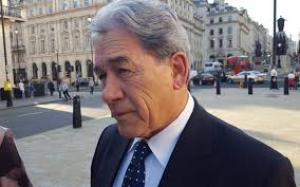
Deputy Prime Minister foresaw perils of trade fixation on East
AN extraordinary and unforeseen series of global trade crises means that New Zealand foreign minister Winston Peters can return the agrarian products exporter to its original bulk market which is Great Britain.
Chief among these crises are:-
- The United States – China trade war the armistice of which ends this week
- Brexit due at the end of March which hard or soft sees New Zealand as a central beneficiary
- President Trump’s turning his back on collective free trade agreements such as the EU
- The failure in its objectives of the Trans Pacific version of the free trade agreement boycotted by the United States
Mr Peters recalibrating New Zealand trade back toward the United Kingdom has been conducted in stealth.
This is because the New Zealand parliamentary Labour government has tilted determinedly toward Asia.
In addition there is the ideological wing of the governing coalition which views Britain as the embodiment of colonialism, and therefore of the evils it believes it bestowed.
Still another factor propelling New Zealand to the Occident is the stalled trade agreement with the Gulf States of the Middle East.
It now lies in a collection of ISO containers in dockside Napier, where it will stay.
The six containers hold the kitset factory promised to Saudi Arabia interests as the final tranche in compensation and appeasement for the start-go-stop policy on live shipments by successive Labour and National governments.
Yet no single event has provided quite the intensity of focus on the re-creation of the imperial preference trade epoch as the emerging perils of the long term strategic trade expectation with China.
When Mr Peters prior to the advent of the coalition government, of which he is also deputy prime minister, toured Britain’s House of Lords several years ago positing the possibility of a return to the preference era the gesture was regarded in New Zealand as quaint rather than purposeful, an exercise in music hall nostalgia rather than mercantilism.
President Trump’s ascendancy caught by complete surprise Commonwealth governments as well as the EU’s, and turned it into something deadly serious.
It now became in practice possible in fact for Britain to implement its referendum and quit the EU simply because there is no United States pressure to stay in it.
Few still recall President Obama’s only partially veiled threat to the UK that outside the EU it would find itself relegated to the “back of the queue.”
At first president President Trump’s raucous invocations about the China – US trade imbalance seemed to governments such as New Zealand’s a higher octane version of the usual rhetoric about China’s ability to filch innovations then implement them in volume standardisation and production scale and then send them back to the West in general and the United States in particular.
All this changed with the detention in Canada of Huawei heir Meng Wanzhou.
North America had awoken to the chilling realisation that Chinese manufacturers were overwhelming their combined high end industry which is telecommunications.
This is painfully so in its process applications such as the one in the underpinning technology in the pending era of driver-less vehicular transport and thus the next step to the new industrial age.
It was now that the Chinese-United States chill made the transition from an ideological contest involving consumer durables and commodities into the industrial survival freeze-over it has just become.
It is in this standoff with its potential collateral damage to United States allies that the UK emerges as the alternate bulk buyer which gives New Zealand the diversification to adjust to and counterbalance its China weighting.
Avant garde panics such as the food miles one, a modish reprise on the old “tyranny of distance” mantra, have evaporated.
Data has demonstrated that the main cost and main contributor to carbon dioxide emissions are those involved with getting the produce on and off the ship and thus remain constant regardless of the distance travelled by the cargo vessel.
In the end it was the belated discovery of the true extent of the inroads by the Chinese into its telecommunications sector (Nortel, a faint memory, and can anyone still remember Research in Motion the Blackberry supplier to Western parliaments and also to Capitol Hill?) that prompted Canada’s government to toss aside its vaunted identity niceties and grab a high flying glass ceiling cracking ethnic Vancouver housewife known to her neighbours as Sabrina.
In just a matter of weeks, days almost, Winston Peters’ long held doubts about the durability and reliability of the Chinese market were starkly visible.
His hedge into the old UK market was there as an exhibition of trade common sense, insurance even.
He shunted his coalition colleagues and the orientalists in the bureaucracy who in common with Kipling’s soldier savoured the mysteries of the East to the exclusion of anything beyond it, toward a comprehension of the scope of the UK re-opening for business again.
Mr Peters always knew that the United States – China trade picture at some stage was going to turn even nastier and that the secondary participants such as New Zealand however they sought to play the two sides were going to get scorched.
He has always viewed his role as more than that of a retail politician cuddling up to voters with things like travel discounts for the ageing.
Now, at this very late stage in his long career a flurry of unforeseeable shifts across the globe throws open the door to his long incubated appointment with destiny.
Brexit, Mr Peters, then in opposition, told his British audience in February 2016 represented “an excellent opportunity to heal a rift dating back to 1973.”
This was a scant five years before Mr Peters entered Parliament.
He knows as do the Eastern mystics that what goes around, comes around.

North America bickered over dairy tariffs while China swamped their Telecoms manufacturing sector
Canada’s detention of Meng Wanzhou, the daughter of the Huawei founder indicates a non-negotiable priority by the United States to exclude the Chinese equipment supplier from any network backbone installations within the Western alliance.
Canada’s own priority on identity and diversity affirmative action would normally have stayed its federal hand in apprehending any such female in any such claim at all.
Meng Wanzhou (pictured) is also said to be the financial supremo of Huawei.
Huawei is the nosecone of the Chinese strategy of installing the nation at the forefront of world telecommunications.
Coupled with China taking over as the pre-eminent global supplier of nuclear power utilities, the rapid emergence of the Chinese in short and long haul telecommunications came as a surprise to the Western alliance which on instructions from Washington has now erected stumbling blocks to China securing this particular advance.
China is pushing out North American suppliers and closely allied ones as Japan’s NEC which has for example dominated New Zealand for a generation, and which used the South Pacific nation as the test-bench for its NEAX series
Britain though has left its door ajar to Huawei (means “can-do”) which operates in the UK as a sincerity of purpose showcase a proving establishment to demonstrate that its equipment is free of taps and the capability of subsequently inserting them.
In networks one organisation’s spyware is another’s customer research analysis tool.
Eavesdropping is a contingency.
Signals interception however is priced into any wide area network from any supplier from anywhere just because its components are drawn from so many sources, notably from the United States.
This includes Huawei’s which however under China’s national plan intends to become totally self sufficient in the medium to longer term.
From a national security point of view and rather more relevant there remains the threat of a wide area network supplier from a potentially hostile nation disabling it should its government call upon it to do so.
Spark is now one of several telcos competing in a deregulated New Zealand.
It is though the inheritor of the old technology-led state controlled sole operator and as such has special value to technology suppliers as a reference site.
The Huawei imbroglio as far as the Western alliance is concerned turns also on China’s known policy of picking up technology tips wherever, and whenever it can and also by whatever means available.
There remain in all this the confusingly unacknowledged linguistic vacuum between China and the West.
The Chinese constant national and avowed purpose of identifying and then lifting western innovation however obtained in order to transfer it into its own technology is often interpreted in a wider espionage context.
A local example of this in an applied industrial lift was during the era in which New Zealand’s Hutt Valley industrial zone was a global leader in digital screen formatting.
Here, the Chinese in the shape of a number of its agencies were very much in evidence as prospective technology acquirers and obtained underpinning technical data under the guise of buying the finished product.
One nation’s pirating is another’s technology transfer.
Japan’s NEC in becoming the central supplier to the former New Zealand state-owned Telecom Corporation established a flourishing local joint venture company developing applications for the then ground breaking NEAX equipment.
The research and development gathered by this local subsidiary will not be discounted by the Chinese in seeking the Spark contract
The intransigence of the United States and its severity of purpose in causing to be apprehended in Canada Meng Wanzhou and its indifference to the inevitable subsequent counter detention tit-for-tat reprisals from China indicates that New Zealand is trapped inextricably in a great power squeeze.
One that occurs at an already strained time.
The New Zealand free trade agreement with China, the signature achievement of the Helen Clark led Labour government, was starting to show signs of fraying at a number of edges and even before the US inspired Huawei fracas.
New Zealand in recent times has acquired a reputation for innocence bordering on cupidity in its dealings with China.
An example was the loss of an approximately half billion dollar dairy processing investment in China.
This occurred when it was discovered that there was no corresponding inward financial investment to counterbalance it and thus no asset to be recovered in the ensuing default.
Regardless of the price performance of the Huawei equipment over anyone else’s it is hard to see the United States easing its pressure on its allies in acquiring it and this especially applies to New Zealand which has already driven the US to distraction in technology terms with its no-nuclear stand.
Meng Wanzhou, who was arrested Dec. 1 last year and who remains under house arrest in Vancouver, is facing U.S. charges related to possible violations of trade sanctions on Iran
Canada’s willingness to antagonise its huge Chinese population in Vancouver along with what many view as the kidnapping, if not the taking hostage, of the heir to a company the size of Huawei indicates that there is a shared North American interest in the warning shot across the bows of Huawei.
China shimmied up the value chain from whiteware and consumer electronics through automotive and machine tools to the point at which it now confronts North America in the key area of telecommunications.
In the past the United States and Canada from a trade point of view have publicly bickered about things such as dairy exports.
While this spat was going on Huawei eased its way past the telecoms technology manufacturing leaders, the ones in Scandinavia, Germany, and France.
Then crossing the Atlantic Huawei became not so much the enemy at the gate, but one securely and even comfortably yet not showily established inside it.
The incursion by the Chinese into mainstream telecommunications in which the United States and Canada have long staked out such huge claims now looks like the common interest, the external threat that caused the two neighbours to bury the trade hatchet.
The arrival of telecommunications in the strategic category introduces a new element in the trade war just because it vaults it over and above the usual tactics, cut-and-thrust, of customs duties, tariffs, quotas and licenses, and even embargos
A mystery in all this is why the two North American nations, United States and Canada, were preoccupied with each other over things like milk filtration quotients while their combined telecom equipment manufacturing sectors were being quietly swamped by the Chinese.
In the meantime smaller members of the Washington-based western alliance, notably New Zealand, are in the helpless position of someone inside a Chinese-manufactured domestic washing machine in full rotation of the type that president Trump wants to keep out of American households.
In the lost in translation sphere there also is the matter of the generalised accusations about this or that Chinese company being close to the government if not actually part of it.
This holds little water as far as China is concerned.
United States EXIM Bank is but one example of government intervention in the West.
Locally, Telecom Corporation, the monopoly supplier within comfortable career memory, is one such governmental example on the New Zealand side, Solid Energy much more recently another example of state participation, and there remain of course the official State Owned Enterprises.
One interpretation is solid though and it is that in 2019 the year in the integration of the free trade agreement between New Zealand and China the unexpected has intervened in the form of the United States.
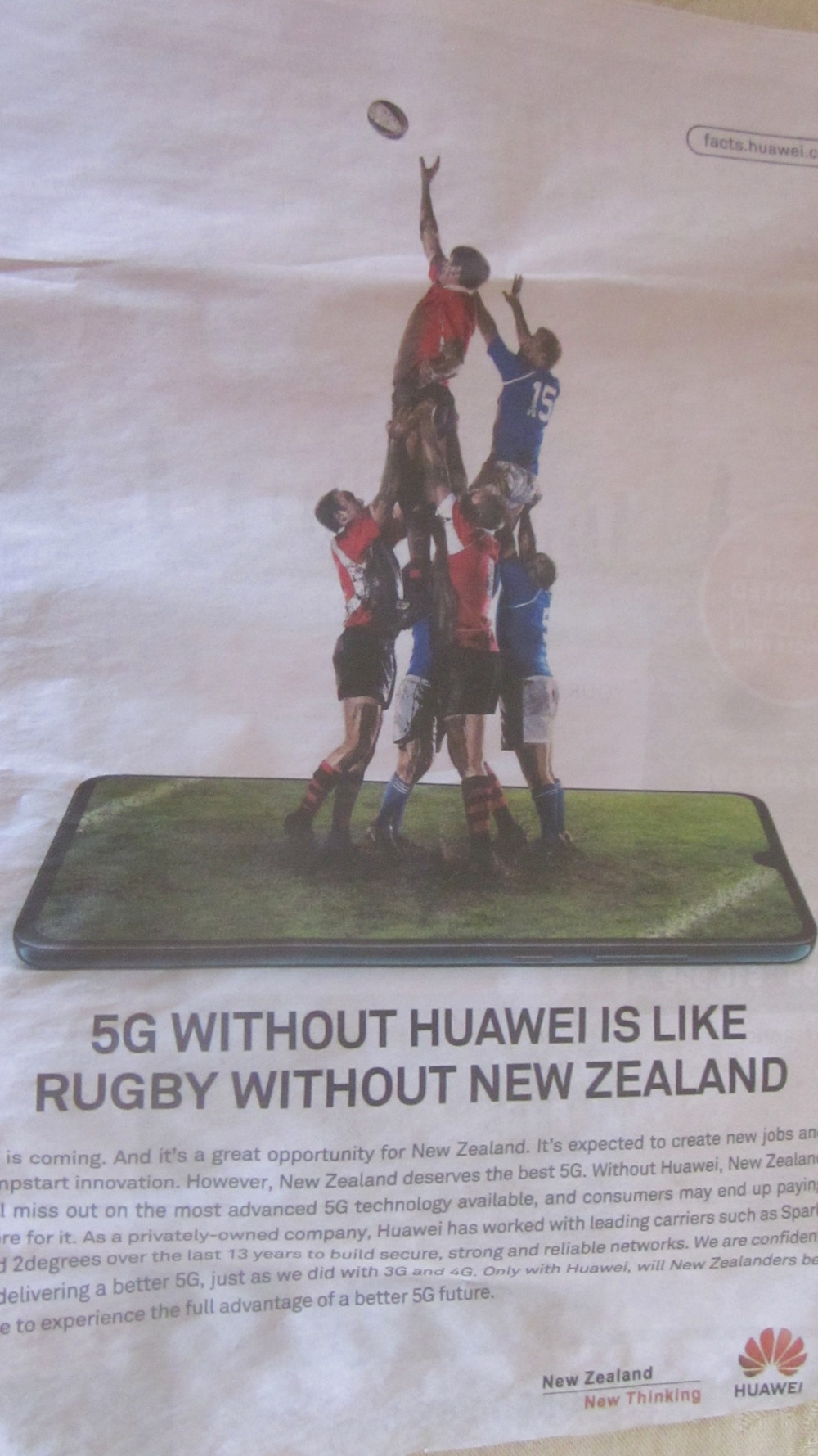
Huawei meanwhile reinforces its generic status by going straight to the public by proclaiming in folksy vernacular full page adverts (below) that denying the nation the Huawei product line “is like rugby without New Zealand.”
In the ensuing techno-diplomacy the challenge, a real one this time, will be to sidestep any obvious offside position with any of the opponents.

Great Great Granddaughter of slaves says that beyond Beltway, coastal enclaves, there is continuing strong and diverse support for President
President Trump can win a second term in the White House proclaimed United States broadcaster Victoria Gaither speaking to the National Press Club
Miss Gaither who revealed that she was the great great granddaughter of slaves said that historic ties with Democrats were now diminishing and very largely because the Democrats had taken the electoral relationship as being permanent and thus had taken it for granted.
Miss Gaither, speaking in Wellington, New Zealand, cleared up a misconception in the English-speaking sphere to the effect that the ties with Democrats started with the emancipation of the slaves.
In fact she reminded her audience, the Republicans under president Lincoln freed the slaves in the United States.
However, the Democrats had subsequently exploited the situation and forged the ties that the party was currently unable to accept were increasingly wearing thin.
Miss Gaither said that audiences in the Commonwealth were on the receiving end of a distorted picture just because the news and opinion feeds from the United States were usually derived from the US mainstream media which largely ignored a bulk of the population in the nation’s interior.
Instead, it dwelled, almost exclusively on a narrow focus in the form of opinions derived from the coastal enclaves in which dwelled the political classes.
In regard to the Trump ascendancy, the mainstream media, she observed, collectively wrung its hands in a disbelieving chorus of “How did all this happen?”
Emmy award-winning Miss Gaither began her broadcasting career at ABC with Ted Koppel in Washington and then went on to cover the nation, notably in the Midwest.
Describing the Midwest now she observed that in practical media terms it was becoming increasingly “voiceless” due to the closure of daily papers.
The sense of non-participation in such regions in political terms was compounding with the confusion over what was being broadcast to them.
“You have all these new jobs now creeping into television and there is this uncertainty about what role the people on screen are supposed to be doing.
“Are they real reporters, lobby contributors, or pundits?”
Miss Gaither cautioned policy-makers in countries such as New Zealand when it came to formulating policy around opinions and forecasts emanating from these narrow-focus news sources.
President Trump from the outset, she said, had understood the sense of abandonment in what she described as the “quiet segment” of the United States electorate, the one far away from the Beltway and political classes.
This same segment of the electorate still supported him, she said, and contrary to the widespread belief within the United States and outside it, this segment was diverse.
“Hispanics – you name them – they are solidly behind president Trump,” she stated.
Adding to the confusion, she noted, was the relatively recent compression of the news cycle from days to a mere two to three hours.
President Trump’s focus on MAGA offered clarity within the blur of confusion.
This tectonic shift in attitude had been grasped by the alternate media which detected the emergence of this hitherto unheard segment of the electorate.
But not by the mainstream which, for example, had also wrongly forecast that president Trump would shatter the still very much intact Republican Party.
Miss Gaither, who is a member of the Washington and Wellington National Press Clubs, is involved in developing private radio in Oceania.
(Additional reports see www.nationalpressclub.org.nz)

Manufacturer British GW Pharmaceuticals dominates world medical cannabis
Specialists have warned about the little-understood health consequences of cannabis and the generalised confusion emanating from New Zealand parliamentary circles about its true effects and even current medical availability.
They specifically cite as one rarely-comprehended danger the vulnerability to addiction of children and adolescents considered “four to seven” times greater than the long term addiction at the same age of tobacco users.
One gap in the information emanating from the Parliamentary Precinct, according to the scientists, was the absence of discussion about the authorised existence of the cannabis by-product the spray called 'Sativex'.
It is available on prescription in New Zealand and many other nations.
It was initially approved under prescription in Canada.
Sativex is derived from actual cannabis. It is made from the whole plant and is not synthetic.
It is made from a concentrate and delivered as a mouth spray. This means that it is chemically consistent in every batch.
Sativex is a whole plant-based mouth spray. It is made by British manufacturer GW Pharmaceuticals.
It is currently available in 25 countries, according to the drug’s manufacturer
The British public company’s claim is that it is “the global leader in developing cannabinoid-based medicines.”
GW Pharmaceuticals plc is also listed on NASDAQ.
Bio-scientists question the political mixed message communiques on cannabis and health to the effect that consumption of it carries medical benefits.
They challenge exactly how the beneficial effects of cannabis plants can be touted when from a scientific-medical point of view these vary considerably given the provenance of the plant in its organic, raw material form.
A vacuum both political and medical in the present public debate centred on the pending referendum remains that there is little data regarding the range of potency of the various strains along with the other ingredients needed for the desired medical effects.
The specialists advised that it cannot be predicted how medically helpful any such plant material will be without scientific analysis on each sample.
From a public health point of view they also questioned how a Parliament officially engaged in curbing tobacco consumption can reconcile simultaneously being engaged in anything that increases public access to another such carcinogenic drug.
Reviewing the plethora of bush bio chemistry advice radiating from Wellington, the scientists observed that cannabis can have undesirable effects because:-
• It leads to disorders. Those before the age of 18 are four to seven times more likely to develop it. In the US 17% of that age group in the will become dependent.
• The long term effects of cannabis on the developing brain are serious and worrying for this age group, as stated in the US National Institute of Drug Addiction research report in February 2018.
• There are reasons to believe that smoking marijuana is probably much more likely to cause lung cancer than tobacco.
• Why is self-medication with NZ cannabis touted when there is little idea what is in it?
Meanwhile GW Pharmaceuticals has developed an oral formulation of cannabis known as Epidiolex for drug-resistant epilepsy. This is the first cannabis plant-derived medicine, the company claims, approved by the United States Federal Drug Administration.
The chairman of the 20 year old GW Pharma is Lord William Waldegrave former British secretary of state for health.
Skilled Diplomacy in Europe contrasts with Great Leap Forward stumbles at home
The Labour coalition’s mainstream doctrinal base-reinforcing schemes such as the hydrocarbons shutdown, the mass housing build, and the mass afforestation scheme now have the Great Leap Forward dream-over-reality look. In contrast though the coalition’s less dogma-cluttered handling of the Brexit opportunity demonstrates a clarity of intent and thus of management.
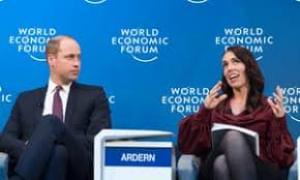
In Brexit the conflicting doctrines are self-balancing and this has allowed the Labour coalition a free field of fire to do what it does best which is to resonate sincerity of purpose and keep on the right side of the angels, or as premier Jacinda Ardern told Davos position itself on the “right side of history.”
It is here that foreign minister Winston Peters, the least angelic of the coalition galaxy, has been at the helm in navigating the correct course for the onetime Empire food supplying nation to resume its historic role.
Indeed, the Labour government’s own base, now largely comprised of people who have never held proper jobs in a productive sense, are mercifully unaware of the practical and mercantile course that Winston Peters, now a latter-day Great Helmsman himself, has followed.
The appearance at places such as London and Davos of New Zealand Labour government representatives has been a godsend to British premier Theresa May and all other Brexiteers.
The reason is that the prospect of a starving Britain outside the EU is the main ballistic missile in the armoury of the Remainers.
The presence of these New Zealand politicians, and especially of an increasingly avuncular-looking Winston Peters, is proof that there is an ample larder awaiting Britain outside the EU.
In other words the New Zealand presence, and rather surprisingly to a rather greater degree than that of Australia, neutralises Project Fear.
It is here that the nation’s official virtue signalling and among such archangels as Sir David Attenborough and Prince William at places like Davos has applied economic value.
The Labour coalition is prevented from showboating its deft handling of the Brexit opportunity. It must for example signal an impression of indifference as to whether Britain stays or leaves, or has another referendum.
It knows that Britain will have to quit, and if necessary operate under WTO rules which are designed exactly for this type of contingency.
It knows too that the China market is becoming increasingly uncertain, and even dangerous as the Fonterra experience in the Beingmate project has demonstrated.
Indeed as far as the UK is concerned, officials in recent times have pointed out to the coalition the accelerating over-production of foodstuffs from the EU exacerbated by staples coming off the once tightly-maintained EU production quotas.
A Britain outside the EU has for the Labour coalition exactly the same appeal and possibilities that China once had in the Helen Clark era.

A group or collection of females described in the singular as “woman,” has emerged as the most obvious flaw in the diction of professional broadcasters according to a survey by MSC Newswire, the affiliate site of the National Press Club.
The other most discernible mangled word was vulnerable which frequently emerges as “vunerable,” according to the panel.
Also selected was “summision” for submission.
In vowel handling the panel identified as a continuing articulation problem the sounds of the letters “a” and “e” in which for example weeks of time became “wakes” of time and the Southern Alps became the Southern “yelps.”
Other examples among many was the word flash being delivered as “flesh” and vice versa. Someone called Alice was frequently described as “Ellis,” and again vice versa.
This was mentioned by the panel in a range of other such transposition which included the word (bus) fares emerging as “fears,” and vice versa.
Other such jumbled locutions were the words beer/bare/bear noted the panel.
The panel remained though much exercised about the delivery of more than one female as “woman” and it warned that especially when rendered on the state stations it exhibited what it described as an indifference to standards.
This single-as-plural colloquialism was unique to New Zealand and it existed in isolation from any other English language argot or slang such as Cockney.
It was of relatively recent derivation.
It was due according to the panel to the New Zealand Woman's Weekly first published in the depths of the great depression,1932, and which once had the highest print saturation per head of population in the world.
It was and remains Woman’s Weekly rather than being entitled the plural Women’s Weekly as it was in every other country including Australia (see illustrations) in which the same formula magazine was launched shortly after the pioneering New Zealand version.
Even so, counselled the panel, slipshod standards in professional broadcasting reflected adversely on every other professional endeavour in anything at all in the nation at large.
The panel stated that it reviewed only the delivery of professional broadcasters and those who put themselves forward as such.
The panel observed also that those responsible for mainstream broadcast media delivery should bear in mind the nation’s accelerating role in ESOL.
Curiously, the panel accommodated and even discounted the discarding of the present participle ing in favour of ‘in or the more specialised New Zealand rendering ‘een. as in “walkeen, talkeen” or doin’ and thinkin.’
“We are not ‘worry-een’” quipped the panel.
This was because the termination minus the “g” was standard among US broadcasters and was notably becoming so now in the BBC.
The BBC, the onetime arbiter of vocal English standards, was being forced politically to adopt more and more regional accents and patois and do so regardless of its central role as a universally comprehensible communicator.
Even so and bearing in mind New Zealand tertiary education’s increasing revenue dependence on English as a second language for Asian students, the panel cautioned state broadcasters over the use of what it described as “institutionalised” slang such as choppers for helicopters and “the ditch” for the Tasman Sea.

Palace of the Alhambra, Spain
By: Charles Nathaniel Worsley (1862-1923)
From the collection of Sir Heaton Rhodes
Oil on canvas - 118cm x 162cm
Valued $12,000 - $18,000
Offers invited over $9,000
Contact: Henry Newrick – (+64 ) 27 471 2242

Mount Egmont with Lake
By: John Philemon Backhouse (1845-1908)
Oil on Sea Shell - 13cm x 14cm
Valued $2,000-$3,000
Offers invited over $1,500
Contact: Henry Newrick – (+64 ) 27 471 2242

|
|