Continuing Social licence to motorbike gangs imperils control legislation
New Zealand’s numerous motor bike gangs represent the remaining stronghold of an accepted and even encouraged male dominated hierarchy, and one that is known to be singularly brutish.
These gangs are actively encouraged by progressive society for their adherence to tribalism.
These same gangs will now seek to spike the nation’s drastic new gun laws in the aftermath of the Christchurch mosques shooting catastrophe.
Successive governments have stepped as cautiously around the motorbike gangs as they have stepped with hitherto extreme trepidation around dealing with the nation’s gun proliferation.
Attempts to strengthen New Zealand’s gun-control laws have failed in parliament four times over the past 20 years.
Similarly, these same parliaments have shied away from imposing common law on the gangs since they began flexing their outlaw sinews in the early 1970s and prompted a placatory instead of an enforcement response.
Between then and now these gangs generated a service industry dedicated to divining their deeper purpose in a parallel growth sector in the social sciences.
New Zealand has more gang members than it has members of the professional military.
In the international gang context they share a similarity to their Mediterranean counterparts in being as rooted in rural areas as they are in cities.
This dispersal gives them another shared characteristic with that of the cosa nostra in that they abide by their own laws with the common law intruding only in extreme instances in which the public demands that steps be taken.
The artillery of the academia-based socio-political support base is at some variance with the horror that the gangs in full echelon inspire in the rest of the population.
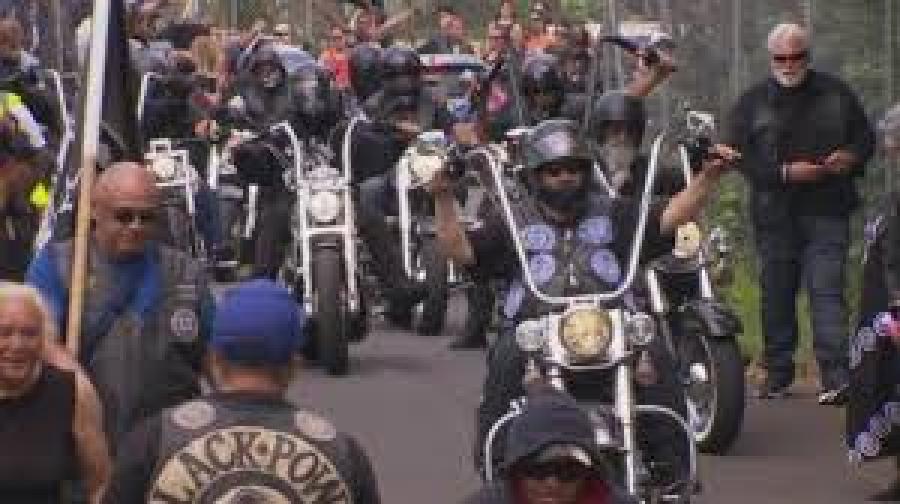
With their full head and sleeve tattoos and gunning the unmuffled engines of their big capacity motorbikes the road gangs are the antithesis of the nation’s underpinning method and order.
Neither is the gang involvement in quasi-militia roles reassuring, notably their recent one in ringing Christchurch’s besieged mosques in the immediate aftermath of the catastrophe.
When the gangs began to hit their straps in the 1970s, the official view was that the outbreak was transient, that participants would tire of it, and that the television lights would dim.
In the event much that officialdom did instead fuelled the gangs including the highway law enforcement transition from British to Japanese motorbikes which flooded the market with well- maintained second hand Nortons.
It is now said that the gangs are sidelining their standover ways in favour of migrating their activities into business enterprises of various descriptions.
This prospect reinforces another tacit exculpatory reason for the official social licence extended to the gangs which adds up to the notion that “at least they are visible.”
The government knows that its time frame of atonement, its bringing-together moment, is a diminishing asset in legislative terms.
An indicator was that within the same month as the Christchurch catastrophe a gun importer buying group saw it timely for a mass mail drop promoting repeating firearms.
The government knows that it treads on a common law minefield in extending any more slack to the gangs, or even upholding the present degree of social licence to them.