
Founded by Max Farndale 1947 - 2018
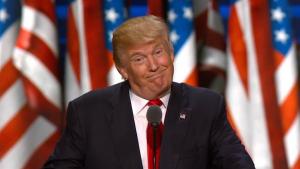
President Trump has finally done it. After nearly a year of threatening to upend global trade, he has announced sweeping tariffs on steel and aluminum writes Heather Long in The Washington Post.
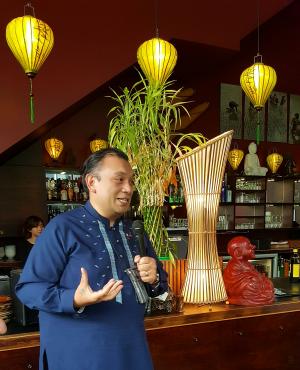
Envoy underlines value to Westminster zone of specialisation in caring services, agri-processing.
Philippines Ambassador Jesus Domingo talking to the National Press Club in Wellington drew a direct parallel between his country and New Zealand, pointing out that they were both “Cinderella” nations in that they were constantly overshadowed by their more powerful neighbours.

26 February 2018 - Institutional, municipal pension funds shunning oil now pressures Saudi Monarchy to accelerate IPO----Russia-China consortium prowling, waiting.
The monarchical determination by the end of this year to run a test flotation of 5 percent of Saudi Aramco with a view to realising $100 billion can now be seen as a race against time to beat the clock before more Western funds and banks turn their faces against oil.

A Clue is need to repatriate Saudi Funds.
He emerged from his unexpected and unwanted seclusion looking thinner than before and rather more grey and describing the entire ordeal as if it were business as usual, another day at the office. The sequestration of prince Al Waleed Bin Talal, grandson of Ibn Saud the founder of Saudi Arabia, continues meanwhile to raise more questions than it did answers.
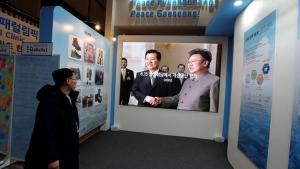
PYEONGCHANG/GOSEONG, South Korea (Reuters) – When South Korean businessman Park Nam-suh was forced to abandon his factory in a North Korean industrial complex two years ago, he thought his business was finished. Now, he dares to hope.
The Kaesong complex, funded by South Korean firms and manned by workers from the North, shut in 2016 after the South accused North Korea of taking workers’ wages to fund its arms programme.
But now South Korea is in the mood to re-engage with its old enemy, using its first Winter Olympics this month to attempt a thaw in relations — and giving Park and other former investors in Kaesong some hope that the industrial park can be revived.
(Inter-Korean commercial ties – http://tmsnrt.rs/2Eq1akx)
“I hope the Olympics will be a turning point in achieving inter-Korean peace and speeding up the reopening of the Kaesong complex. It should be,” said Park whose factory produced plastic toys, clothes hangers and cups.
He was one of 124 former Kaesong factory owners who set up a a booth at South Korea’s Olympics venue of Pyeongchang this week, screening videos to passers-by and featuring the slogan: “We need to go back”.
Continue here to read the full article by Hyunjoo Jin for REUTERS || February 08, 2018 |||

Meguerditch Bouldoukian is considered in the West the leading Arabic-language authority on banking in the Middle East. He now takes our Five Questions on the pending flotation of Aramco and the economic circumstances in which it will take place……
The Saudis appear to have valued Aramco at US$2 trillion. Western commentators have claimed that it is over valued?
The issue of valuation of a company in investment banking criteria has more than six methods. We can say here though that if the two or more sides agree on a method to value ARAMCO then we can wish them good luck. From a conservative approach to the most liberal, its market capitalization is reported to extend from $1.5 trillion to $10 trillion.
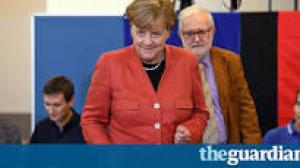
Here is the introduction to the TheGuardians summary of the election:

Tattoos and piercings are emblems of tribal allegiances
The re-emergence of the North-South divide in the United States supplies further evidence of the way in which the English-speaking zone is being overtaken by tribalism.
This fresh evidence of tribal divergence follows on the heels of the determination of the previous United States presidential dynasties to fight their supplanter, President Donald Trump.
The continuing politicking of the Clinton, Bush and Obama families campaigning seamlessly against the victorious candidate is classic tribal activity in that it cuts across constitutional political transitional processes, writes our roving reporter National Press Club president Peter Isaac.
The advent too of the presidency as a presidential family collective is still further evidence of this tribal drift.
The magnetic pull of tribal resurgence though is most evident now in the United Kingdom..
There the continuing Scottish secession agitation seeking to break away from England remains the most obvious example in the English-speaking zone.
The UK tribal factor became more evident now that any remaining economic underpinning of this breakaway movement has evaporated with Scotland’s bankrupt banks now being controlled from London.
The retribalizing of the English-speaking zone is taking place through stealth, and very largely because the institutions that exist to monitor such a development remaining mute about it.
University socio-political faculties deliberately choose to ignore this increasingly manifest development for fear of upsetting politicians and thus their own funding..
Universities refuse to see such every day and human evidence of tribalisation as the tattooing and other examples of self-adornment and self-mutilation of the entire socio-economic spectrum from show-biz types (pictured) to the industrial and administrative middle class.
This practice once confined to practitioners of virile callings, notably sailors, is now exploding into the elites, notably females whose tattoos are now so much bolder than those once displayed by sea farers, and those in other such danger-prone occupations..
Only Australia according to a covert European evaluation of tribally-inspired fractionalisaton possesses the equivalent of the United States 19th century melting pot, and was thus free of the threat of this resurgence.
New Zealand in contrast has deliberately nurtured tribalism through its parliamentary electoral system, a state of affairs now being actively challenged by the New Zealand First Party and also by Dr Don Brash’s Hobson’s Pledge movement
Official action within New Zealand to curb its tribally-based gangs is deliberately muted in order to appease an elitist political class.
This views and even encourages these anti-social collectives replete with their tribal markings and paraphernalia as evidence of repression inflicted on adherents during and after the imperial era, and thus living emblems of a collective guilt.
Canada is another example.
The largest English-speaking nation geographically must appease its French-speaking minority regions, and must do so with increasing emphasis and intensity.
Tribalisation in this English-speaking zone is now taking the form of a pulling away from a concerted national collective direction and instead reverting to an atavistic romantic blend centred on a notion of an oppression-stoked grandeur of times past.
Another element pointing to the institutionalised pandering to tribalism in the English –speaking zone remains the Westminster Green Paper on broadcasting and its stated need for mass access i.e. customisation to cater to these sectorised and evolving tribal patterns.
In other words Whitehall is accommodating and acknowledging this accelerating tribalisation drift and is accordingly setting about installing the policies needed to appease it.
Universities and other publicly-funded institutions indicate a deliberate and harmonised complicity in ignoring in spite of the evidence this gathering tribal momentum
Indeed, academic institutions supposed to measure the growth of the practical expression of the tribal instinct are often filled with individuals themselves emblematically part of it.
These are their operatives consciously or unconsciously succumbing to the resurgent tribal pull in the form of neck and sleeve arm tattoos and expandable ear lobe insertion devices among the other physical adornments associated with traditional tribal allegiances.
| From the MSCNewsWire reporters' desk || Wednesday 13 September 2017 |||
Writes Allan Golombek a Senior Director at the White House Writers Group for Real Clear Markets.
The scene in the Hamburg supermarket was stark. Row after row of empty shelves, dotted by a few products made domestically. Edeka supermarkets, the largest supermarket chain in Germany, emptied one store of every last imported good on a weekend. They were making a point. Rather than a protest against openness and diversity, it was an object lesson in the benefits we all derive from those two values. It was a defense of tolerance, but also a reminder that openness to goods and services, people and ideas is not just something we engage in to help others, but to help ourselves, directly and every day.
It is not surprising that this case for openness was made in Hamburg, a city that used to serve as a major port of departure for German immigrants to the United States, and the place widely believed to be responsible for the development of the hamburger, one of many foreign dishes that achieved enormous international popularity. Stripping the shelves of foreign-made products didn’t just demonstrate the advantage of drawing people from around the world through liberal immigration policies, as valuable as that is. It also illustrated the indispensable advantage of being free to import, utilizing resources and skills that can be found around the globe. While pro-trade politicians often try to sell free trade as a way of encouraging exports to create jobs, far more important is the fact that it makes it possible to import, enhancing choice – which is the economic purpose of working in the first place..
The ghost town image of the Edeka supermarket helped make it clear just how much we benefit from imports, of food and other goods, and how important they are to us. In the United States, the amount of imported food continues to increase as Americans consume more products that are either not locally available or not grown fast enough to meet demand. Americans import a wide variety of foods, literally from fish to nuts. Some are not grown in the United States, such as bananas and coffee. Many are made a lot more cheaply in other countries. Many are seasonal, and many new entirely to Americans (as pizza, bagels and felafel once were). Rather than a source of economic decline, two of the driving forces behind the growth of food imports are the desire to cut back on the cost of one’s food budget, and rising incomes spurring a wider desire for choice. Next time you sit down to a meal or grab a snack, ask yourself if it would be available to you if it wasn’t for global trade. No lamb from New Zealand, salmon from Norway, or pasta from Italy.
And next time you hear a politician criticize NAFTA, bear this in mind: The two largest sources of agricultural imports to the United States are its trading partners, Mexico and Canada. That includes most sugar and tropical products, such as coffee, cocoa, and rubber, and animals and animal products, including beef and veal. If your doctor has told you to eat your veggies, bear in mind that Mexico dominates vegetables imported into the United States, supplying peppers, cucumbers, tomatoes, corn, pinto beans, broccoli, and cabbage to name a few. Canada supplies carrots, cauliflower, asparagus, mushrooms and potatoes. NAFTA is good for you, physically as well as economically. And if you’re worried about the trade deficit with China, bear in mind that it includes billions of dollars worth of seafood each year, including farm-grown tilapia, shrimp, salmon and catfish.
The value of eating globally, not locally, undermines the core arguments of a growing anti-trade movement: Locavorism, which is based on the flawed premise that a diet of locally grown food offers environmental, economic and social benefits. In fact, the opportunity to import food extends our food supply chain, enhances competition and choice, delivers lower prices, and provides greater variety – the spice of life, literally as well as figuratively.
Over the years, we have been shaping a global diet. The brief removal of imported food from a supermarket’s shelf in Hamburg demonstrates its economic and cultural value to us.
Allan Golombek is a Senior Director at the White House Writers Group.
| A RealClearMarkets release || August 25, 2017 |||
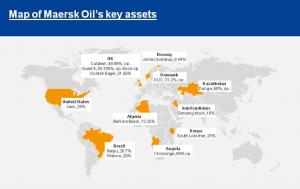
Paris – Total is pleased to announce that the Boards of Total and A.P. Møller – Mærsk have both approved the acquisition of 100% of the equity of the E&P company Maersk Oil & Gas A/S (Maersk Oil), a wholly owned subsidiary of A.P. Møller – Mærsk A/S, by Total in a share and debt transaction.
Under the agreed terms, A.P. Møller – Maersk will receive a consideration of $4.95 billion in Total shares and Total will assume $2.5 billion of Maersk Oil’s debt. Total will issue to A.P. Møller – Maersk A/S, 97.5 million of shares, based on the average Total share price on the 20 business days prior to August, 21 (signing date) which will represent 3.75% of the enlarged share capital of Total. Underpinning this share based partnership, subject to Total shareholders’ approval, Total has also offered the possibility of a seat on its Board of Directors to A.P. Møller Holding A/S, main shareholder of A.P. Møller – Mærsk.
The proposed transaction is subject to the applicable legally required consultation and notification processes for employee representatives and to approvals by the relevant regulatory authorities. The transaction is expected to close in first quarter 2018 and has an effective date of 1st July 2017.
The combination with Maersk Oil offers Total an exceptional overlap of upstream businesses globally which will enhance Total’s competitiveness and value in many core areas, in particular through some high quality growing assets and through the delivery of synergies. Specifically the transaction will bring the following benefits to Total:
Around 1 billion boe of 2P/2C reserves, 85% of which are in OECD countries (more than 80% in the North Sea), contributing to Total’s continuous balancing of country risks of its portfolio to enhance shareholder value The addition of 160 kboe/d of mainly liquids production in 2018, acquired at an average price of 46 k$/boepd, offering high margins with an estimated free cash flow break-even of less than $30 per barrel and growing to more than 200 kboe/d by the early 2020’s further strengthening Total’s leading production growth outlook Total expects to generate operational, commercial and financial synergies of more than $400 million per year, in particular by the combination of assets of Total and Maersk Oil in North Sea, an area of excellence for both companies The transaction is immediately accretive to both earnings and cash flow per share underpinning Total’s dividend profile.
At closing of the transaction, in order that Total’s shareholders benefit from the accretive impact of the acquisition of Maersk Oil on earnings and cash flow, the Board of Directors of Total will consider removing the discount offered on the scrip dividend.
Commenting on the transaction, Patrick Pouyanné, Chairman and CEO said, “This transaction delivers an exceptional opportunity for Total to acquire, via an equity transaction, a company with high quality assets which are an excellent fit with many of Total’s core regions. The combination of Maersk Oil’s North Western Europe businesses with our existing portfolio will position Total as the second operator in the North Sea with strong production profiles in UK, Norway and Denmark, thus increasing exposure to conventional assets in OECD countries. Internationally, in the US Gulf of Mexico, Algeria, East Africa, Kazakhstan and Angola there is an excellent fit between Total and Maersk Oil’s businesses allowing for value accretion through commercial, operating and financial synergies.
We are also very pleased that we will have a new anchor point in Denmark which will host our North Sea Business Unit and supervise our operations in Denmark, Norway and the Netherlands. We intend to build on the strong operational and technical competencies of the Maersk Oil teams in the same way we managed to do it in Belgium with the teams of Petrofina in the refining & chemical businesses."
Patrick Pouyanné concluded : “This transaction is immediately accretive to both cash flow and earnings per share and delivers further growth over coming years. It is in line with our announced strategy to take advantage of the current market conditions and of our stronger balance sheet to add new resources at attractive conditions. By adding such a portfolio of growing conventional offshore North Sea assets, we confirm our strategy for value creation of, on the one hand, playing to our core strengths in order to grow further and, on the other hand, to constantly seek to lower our break-even by delivering significant synergies. This transaction will deepen and accelerate this strategy significantly, as Total will become a 3 Mboe/d major by 2019 to the benefit of all Total shareholders.” Key Themes of Transaction - Acquisition transforms Total’s North West Europe outlook.
Excellent overlap internationally enhances Total’s regional businesses.
The transaction also will strengthen other core Total regional businesses due to clear complementary positions between Total and Maersk Oil including:
To listen to Chairman and CEO Patrick Pouyanné’s live webcast at 13:00 today (London time) please log on to total.com or call +44 (0) 20 3427 1909 in Europe or +1 212 444 0896 in the United States (code: 5091367). For the replay, please visit the website or call +44 (0) 207 984 7568 in Europe or +1 719 457 0820 in the United States (code: 5091367).
| A Total release || August 21, 2017 |||

Palace of the Alhambra, Spain
By: Charles Nathaniel Worsley (1862-1923)
From the collection of Sir Heaton Rhodes
Oil on canvas - 118cm x 162cm
Valued $12,000 - $18,000
Offers invited over $9,000
Contact: Henry Newrick – (+64 ) 27 471 2242

Mount Egmont with Lake
By: John Philemon Backhouse (1845-1908)
Oil on Sea Shell - 13cm x 14cm
Valued $2,000-$3,000
Offers invited over $1,500
Contact: Henry Newrick – (+64 ) 27 471 2242

|
|