
Founded by Max Farndale 1947 - 2018

In a year where the international Master Judge said the quality of New Zealand-made cheese has never been better, the top two awards have gone to small, independent cheesemakers.
The announcement of the world’s first self-driving electric air taxi being piloted in Christchurch is just one of the examples of New Zealand becoming a living tech laboratory, NZTech chief executive Graeme Muller said today.
The Zephyr Airworks aircraft, financed by Google co-founder Larry Page, is a great testimony to responding to a global challenge around traffic and congestion, Muller says. “New Zealand is a living laboratory and we see many other examples of Kiwi ingenuity being attractive to the global tech market, such as the Incredible Skies autonomous drone testing space in Northland where they are testing the delivery of medicine to isolated areas. “Look at Rocketlab and its launches from Mahia Peninsula turning New Zealand into one of just a handful of nations to successfully put satellites into orbit. “New Zealand is filled with innovative problem solvers who are growing in numbers and playing significant roles in the development of world-class technology. It’s in our DNA.
“Some of the world’s largest tech firms see New Zealand literally as a living laboratory. “Facebook often carry out tests in New Zealand first before introducing new features. “Fairly recently we have seen Apple purchase Kiwi company Power by Proxi for a seven-figure sum and continue to retain their research and development facilities here due to the depth of New Zealand has developed in wireless power. “Christchurch-based Trimble, an international company headquartered in the US, listed on the NASDAQ stock exchange, with an annual revenue of about $US2.3 billion and they have around 8500 employees worldwide yet continue to maintain a large R&D presence in New Zealand due to our world leadership in GPS and location data systems. “The top 200 New Zealand tech exporters are now selling more than $7 billion a year into offshore markets while employing thousands of Kiwis here in New Zealand. “New Zealand’s global reputation for technology leadership in space, GPS, artificial intelligence, IoT, agritech and creative technologies like AR/VR is strong and growing. “Such is the attraction of our living laboratory that some of the AI leaders from the world’s biggest tech companies - such as Amazon, IBM and Microsoft - will be in Auckland on March 28 to talk about artificial intelligence at AI-Day,” Muller says. This will be followed in May by Techweek, a showcase of New Zealand best technology, attracting hundreds of international delegates and investors as well as an expected 30,000 locals. Techweek runs from May 19 to 27 and includes nearly 400 events in more than 30 centres all over New Zealand from Northland to Otago.
| A MakeLemonade release || March 15, 2018 |||
Mar 15, 2018 - Good financial performances were reported in Auckland, Tauranga, and Taranaki. Solid financial performances have been reported by the ports of Auckland (PoAL), Tauranga, and Taranaki during the six months to December 31st, 2017, Port Strategy reported.

In Phoenix, Arizona, cars are self-navigating the streets. In many homes, people are speaking to digital assistants, with the machines responding. Smartphones and apps can now recognise faces in photos and translate from one language to another, to name a few other examples of artificial intelligence (AI). A leading New Zealand geo-AI company, Orbica, says AI is here and it’s bringing exciting new possibilities. But how quickly will they overhaul the way people live and change the way they do business? Much of the work that’s going into AI is behind-the-scenes with applications for organisations and robotics in the health sector, Orbica chief executive Kurt Janssen says. Janssen is one of the speakers at the big AI Day event in Auckland on March 28. “There are a few notable AI trends in the public eye though. Take for example Air New Zealand’s chat-bot Oscar and Ohmio’s self-driving buses. We’re going to see more companies taking advantage of this technology now and in the future. “We can take advantage of AI solutions that are creating efficiencies around the world. But it’s more than that. New Zealanders are good at innovation and we have an opportunity to lead the world in the development of AI solutions. That’s what Orbica is doing. “Environment Canterbury has supported Orbica’s research and development. They’ve been a test-bed for us and supported our vision. “As Kiwis, the environment is always at the forefront of our minds whether it’s the built environment or the natural environment. Our geo-AI solution takes imagery collected by planes, drones and satellites and detects and classifies features such as building outlines, water bodies, trees and roads. “It can be trained to identify pretty much anything. That means it’s possible to measure water bodies over time, forestation, desertification, informal settlements, roads. Imagine if you could map out the nameless roads of Africa or identify how to get disaster relief supplies to remote areas. You can’t manage feature detection of that scale without AI.” AI Forum NZ executive director Ben Reid says AI will continue to make incremental inroads into the daily lives of all New Zealanders, saving people time and effort. “We’re seeing things like shopping and movie recommendations which will get faster and even more accurate. “Doorbell cameras can now automatically let delivery drivers into homes based on facial recognition. “Right now, New Zealand needs to continue to invest in our talent pool: not just technical AI skills but also a digital literate workforce with soft skills, empathy and critical thinking.” “Machine learning is the most in-demand skillset in the workforce right now and commands a premium salary. New Zealanders may not be aware that they can take world-class online AI courses for free? For example, Google launched their Machine Learning Crash Course a few weeks ago. AI Day is being organised by NewZealand.AI and the AI Forum NZ, which is part of the NZ Tech Alliance, bringing together 14 tech communities, over 500 organisations and more than 100,000 employees to help create a more prosperous New Zealand underpinned by technology.
| A MakeLemonade release || March 15, 2018 |||

Mar 14, 2018 - Construction is underway on an advanced plant that will reduce the amount of groundwater extracted for Fonterra’s Darfield manufacturing site by around 70 per cent. Darfield is already a world leading facility and the $11 million investment in water processing technology will have a significant impact on its environmental footprint. “Thanks to the new plant we’ll save the equivalent of around 100 tanker loads of water every day,” says Robert Spurway, Head of Fonterra’s Global Operations. “As well as reducing water use, the new technology also decreases the amount of water the site discharges for irrigation. It’s a win-win situation.” The new plant uses a reverse osmosis technique to purify the water extracted from cow’s milk during the manufacturing process. Water is passed through a membrane filtration system which makes it drinkable and suitable for use in a range of onsite activities such as cooling, heating and cleaning. The Darfield development aligns with Fonterra’s six water commitments to help improve the quality of New Zealand’s waterways. “We’re prioritising investment to reduce water consumption. Last year we announced our 2020 target to reduce the amount of water we use across our 26 New Zealand manufacturing sites by 20 per cent. “The new plant will go a significant way towards helping us achieve our target, creating a manufacturing site that’s more self-sufficient.” The new plant is expected to be up and running by October this year, in time for the 2018/2019 milk season.
| a Fonterra release || March 14, 2018 |||
Mar 14, 2018 - WorkSafe has announced the appointment of Paul Hunt as Chief Inspector Extractives in the High Hazards Unit.
Mar 14, 2018 - BusinessNZ has welcomed the release of the Tax Working Group background paper The Future of Tax.
Mar 14, 2018 - New Zealand's seasonally adjusted current account deficit widened to $2.0 billion in the December 2017 quarter, Stats NZ said today. The $407 million increase in the deficit was mainly driven by New Zealand importing aircraft and other transport equipment, and crude oil.

Palace of the Alhambra, Spain
By: Charles Nathaniel Worsley (1862-1923)
From the collection of Sir Heaton Rhodes
Oil on canvas - 118cm x 162cm
Valued $12,000 - $18,000
Offers invited over $9,000
Contact: Henry Newrick – (+64 ) 27 471 2242
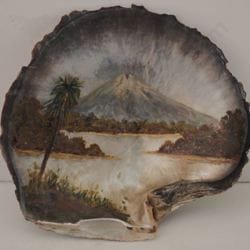
Mount Egmont with Lake
By: John Philemon Backhouse (1845-1908)
Oil on Sea Shell - 13cm x 14cm
Valued $2,000-$3,000
Offers invited over $1,500
Contact: Henry Newrick – (+64 ) 27 471 2242

|
|