
Founded by Max Farndale 1947 - 2018
Dec 5, 2017 - High profile businessman and social entrepreneur, Tenby Powell, who chaired the government appointed Small Business Development Group for five years, is leading a call for the new Government to establish an Institute for Small Business.
The idea for a step-up from government in support of small business is resonating in New Zealand and farther afield says Powell who also represents New Zealand on the APEC Business Advisory Council (ABAC). “New Zealand needs to do much more to support our small business ecosystem. Small and medium-size enterprises (SMEs) account for 97 percent of all enterprises and are the engines of growth and innovation in the APEC region. For these companies to make an even bigger impact on the economy we need a dedicated Government entity focused on better understanding and supporting small business owners,” says Powell.
Early next year, coinciding with the first ABAC meeting for 2018 to be held in Auckland, he is gathering 100 top thinkers, business owners and entrepreneurs together to plan a road-map to future value creation for SMEs. Discussion at what’s being called The SME LEAP (Leading Enterprise Acceleration & Productivity) will include how an Institute of Small Businesss could work in New Zealand. High profile keynote speakers from other APEC nations will also share deep-seated knowledge citing examples from other APEC economies.
Small and medium-size enterprises (SMEs) employ over half the workforce across APEC economies and contribute significantly to economic growth, with GDP contributions ranging from 20 to 50 percent in the majority of APEC economies; New Zealand is circa 28 percent. However, according to Powell they only account for less than 35 percent of the direct exports, “New Zealand SMEs are particularly affected by this.”
Powell believes New Zealand is perfectly positioned to lift our SME performance and capture the value that will come from the recently signed Comprehensive and Progressive Trans-Pacific Partnership; the agreement signed by eleven APEC leaders, including Prime Minister Jacinda Ardern, in Da Nang last month.
“New Zealand’s physical Internet infrastructure is world class, following the rollout of the Ultra-Fast Broadband network and the continuation of the Rural Broadband Initiative. This positions us amongst the best network infrastructures in the developed world, and it’s an important enabler for small business to compete in overseas markets under the CP-TPP.”
Powell says the ABAC SME & Entrepreneurial Working Group which he co-chairs is a work stream with a high profile within APEC. “It is more socioeconomic than just economic per se. It acts as a superset for the subsets of cross-border liberalization, market access and the removal of non-tariff barriers for SMEs, financing for business expansion and capability development, integrating green SMEs into the global value chain, leveraging the digital economy, and greater support for women-in-business.”Powell believes establishing a Government Institute is the sort of big thinking required to ensure the Government better understands and delivers support to small business owners.
“An entity focused on delivering value to small business would be charged with developing well researched policy advice aimed at enhancing the ecosystem and environment in they operate, facilitating education for owner-managers, making access to the digital platforms more accessible, and working with banks to develop ways to fund SMEs without mortgaging the family home.”
Support for the idea has come from far and wide, including from business leaders from the Maori, Asian, Indian and New Zealand European economies.
Billy Te Kahika, Cultural Ambassador for Kingitanga says, “This is exactly what Maori small business owners have needed for some time. While larger Maori business can develop relationships with big overseas players, like Chinese funding partners, it’s the SME business owner who needs greater support and recognition. A well led government Institute has the ability to empower this support.”
Oceania Silk Road Network’s, William Zhao and Jerry He, agree. Mr He, who served on the Small Business Development Group with Powell says, “Chinese business owners who have made New Zealand their home are committed to the country’s development and see many opportunities under the new multi-lateral free trade agreement, the CP-TPP, signed in Da Nang.”
Founder and CEO of Indian radio network Tarana, Robert Khan who also served on the Small Business Development Group, is another avid supporter. “The Indian community will fully support any initiative that enables SME business owners to grow domestically and as exporters. It is as though an idea and its time has come together and we welcome discussion on the establishment of a Government Institute for SMEs.”
High profile Chinese business woman, Diane Wang, founder and CEO of DHgate, is speaking at the Summit. Wang, who represents ABAC China will travel to Auckland ahead of ABAC 1 and deliver a keynote address that Powell says will “resonate with any small business owner and particularly with women who are disadvantaged in terms of access to finance and global supply networks.”
Other speakers include incoming ABAC Chair, David Toua, who will coordinate the 21 nation ABAC agenda for 2018, and leading Malaysian business woman, Dato Rohana Mahmoud, Chair and Founder of RM Capital Partners.
Powell says, “Malaysia is an example of targeted resources in action to support small business through a government entity called the SME Corporation. The SME Corp is a central coordinating agency under the Malaysian Ministry of International Trade and Industry that formulates policies and strategies, and coordinates the implementation of SME development programmes across all related Ministries and Agencies. A similar entity, in the form of a government Institution, would work in New Zealand.”
| A Hunter Powell release || December 5, 2017 |||
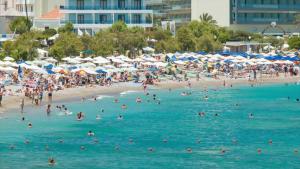
Dec 5, 2017 - Millennials are taking more expensive holidays because they believe saving enough money to buy a house is unrealistic, a travel expert has said. Holiday firm Contiki reported a 10% increase in the average amount of money people aged 18 to 35 are spending on trips this year compared with 2016.
It found that young travellers are taking more adventurous and so-called bucket list trips, with increased year-on-year demand for destinations such as New Zealand (up 83%), South America (up 71%), Bali (up 56%) and Vietnam (up 50%).
With a typical first-time home buyer in the UK aged 30, Contiki sales and marketing director Donna Jeavons has noticed a trend in young people prioritising experiences including travel over getting on the property ladder.
She said: "With housing being so expensive, many young people are opting to live in the moment and pursue other goals first, knowing that buying a house could be a little further down the line than it was for previous generations.
"Saving a bit here and there isn't really scratching the surface for millennials, so many are choosing to have the best holiday they can afford instead."
The average age of Contiki customers is 26 and earlier this year the firm introduced specially themed trips to Canada for "avid Instagrammers".
This was in response to research which showed that a section of the youth market is drawn to destinations from where they can upload popular social media posts.
Several other companies have also started selling products aimed at younger travellers.
U by Uniworld will be Europe's first river cruise brand exclusively for young people when it launches in April 2018 with craft beers, mixology classes, street art tours and vintage motor bike rides.
The firm's chief executive Ellen Bettridge said: "We are targeting an active traveller between the ages of 21 and 45, with everything from the decor, dining and cocktail service to the land activities thoughtfully curated to meet the needs of this audience."
Air France's new subsidiary airline aimed at young people, Joon, began operating from Paris on Friday.
It is "designed for our millennial customers" with features such as the ability to stream movies and television shows using smartphones and tablets, crew uniforms with a "chic sportswear look" and a partnership with travel site Airbnb Experiences.
Dominique Wood, an executive vice president at Air France, said: "With Joon, we have created a young and connected brand that will give the group a new impetus."
| An Evening Standard release || December 5, 2017 |||

FIJI - $299 KIDS’ DEAL! Radisson Blu Resort Fiji Denarau Island Flights + Hotel + Breakfast Daily
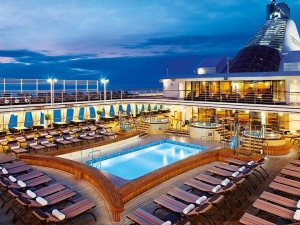
Are you considering a cruise, but are unsure of which cruise line to book on? Our blog may help you


Who's keen for a Star Wars hotel??????

Published: December 4, 2017 2:48PM
New management team at Corson focused on extending its maize-based product mix.
NEW BOSS: Daniel Prenter became Corson chief executive in July, after 19 years in food production and food packaging for the meat, horticulture and dairy sectors. He is originally from Hawke’s Bay. Picture by Liam ClaytonThe continuing trend towards healthy, safe food is helping to propel Gisborne-based food ingredients company Corson into the future.
Armed with a new management team and dedicated product development manager, Corson plans to capitalise on the immense opportunities in new maize-based products and markets, says chief executive Daniel Prenter.
Eastland Community Trust would like to distribute $4.5 million to economic development projects this financial year, effectively doubling the fund it makes available for economic development in the region.
The announcement, made in August, represents a step change for the organisation, which has streamlined its approach to economic development following a review of its funding process and the amalgamation of Activate Tairawhiti. But the trust needs good opportunities to back.
ECT chief executive Gavin Murphy says the trust is entering exciting times.
“There’s a commonly held aspiration for our community – one where business thrives, whanau have access to sustainable and well-paid jobs, and communities prosper. Whether working at a regional, community or hapu level, our region is blessed with a community-held fund that can support real transformation.”
There are two funds that organisations can apply to.
The Economic Investigation and Research Fund is designed for those who have a new or innovative business idea but need to test its viability, feasibility or impact further. It’s a contestable fund with $30,000 per initiative and up to $500,000 available for distribution.
“With this fund, we hope to empower smaller or new business to make outstanding decisions and to support those initiatives that incrementally improve the business environment,” says Mr Murphy.
“We are looking to fund research and reports that enable local businesses to minimise risk, and identify and quantify opportunities for growth and job creation further down the track.”
Meanwhile, the Regional Economic Growth Fund is designed to allow ECT to deliberately intervene by investing in or supporting new and growing businesses — creating jobs and increasing GDP. The trust has made $4 million available in this fund.
In recent times organisations such as Hikurangi Bioactives have benefitted from these funding pools, with ECT supporting early-stage research and clinical trials on the Coast.
“In the long-term, these funds have the potential to ensure our community can take charge of its economic future, particularly when combined with the efforts of organisations like Hikurangi Bioactives and with the support of critical regional partners — Activate Tairawhiti, the council and iwi.”
The trust is actively seeking applications for both funds and is looking for projects with the potential to create sustainable, well-paid jobs, enhance business diversity and increase GDP, and align to the region’s key economic drivers.
Those interested can find more information at: www.ect.org.nz
“Developing new food ingredient products is our real focus.
“This will extend our current product mix supplying into the cereal, snack and bakery categories.”
Corson's a household nameCorson has been a household name since Thomas Corson senior shifted here from Hawke’s Bay in 1902, in the belief Gisborne would develop faster.
The company began as a one-man grain and seed broker and manufacturers’ agent, and developed — after adding a major Queensland maize products company to the mix in 2003 — into reputedly the largest maize miller in Australasia.
Corson remains family-owned and has two family members on the board.
Mr Prenter took up the role as chief executive in July. Originally from Hawke’s Bay, he has 19 years of experience in food production and food packaging for the meat, horticulture and dairy sectors.
He was attracted to the role because of consumer trends towards healthy food choices and healthy products, and the potential maize products have within this wider trend.
“Our relatively new team is fortunate to have inherited a strong business that has been well-managed by Thomas and John Corson over many decades.
“We are extremely appreciative of the support from our loyal grower base from Wairoa and Gisborne to Tolaga Bay, which supplies 100 percent of our New Zealand maize,” Mr Prenter said.
“And we’re fortunate we have an experienced, loyal workforce of 25 in Gisborne.
“That loyalty, and skill base, enables us to consistently produce a quality product. We also enjoy strong customer relationships with New Zealand domestic and multinational markets.
“We are a business-to-business supplier.
“We don’t make consumer products ourselves, but there are some segments we don’t currently participate in. Part of our new product development agenda is identifying and filling the gaps.
“Gaining access into new markets will involve further processing of our current mill range.”
Mr Prenter said new product development manager Nicky Solomon, who has a PhD in food science, will help the company capitalise on recognised new-product opportunities.
“We have to make sure our investment decisions position us well for the evolving market.
“For instance, there is a market trend away from traditional breakfast cereals towards snack-style breakfast eating like Up&Go and snack bars. This is a something we have to move with.
“We need to stay relevant within that breakfast and snack space.”
Popcorn, Mexican food and bakery products were also growth areas, he said.
“Popcorn is a $22 million category in New Zealand. It has come into vogue and is seen now as a healthy snack food because it’s popped dry. Ready-to-eat, popped popcorn is a growth category on supermarket shelves.
“The development of the Mexican category is particularly good for us, with corn chips and tortilla being maize-based. Our grain ingredients go into products like Doritos and GrainWaves.”
Mr Prenter said one of the company’s strengths was that it mills a single variety of grain.
“So we can guarantee we are wheat-free, for instance. All our products are free of allergens, gluten and genetically modified organisms. It is a safe option from that perspective.”
'It's good for us and it's good for Gisborne'The international focus on food safety and place of origin will continue to benefit Corson.
“Food safety is an important part of our ability to build strong relationships, a strong point of difference and definitely a lever for developing opportunities in Asia. Gisborne’s — and New Zealand’s — isolation will play a strong part in the future.
“We’re exporting more from New Zealand and Australia.
“There’s huge growth and excitement for us in the Asian bakery market as people there aspire to a more Western-style diet.
“In Seoul there’s a bakery on every second corner. Five years ago, they did not exist.
“People are eating less rice and more cereals, burgers, and bakery and pastry products.”
Mr Prenter said dietary change and concern for food safety, coupled with an enormous population, equates to huge potential.
“It’s good for us and good for Gisborne.”
| Source: Gisborne Herald || December 4, 2017 |||
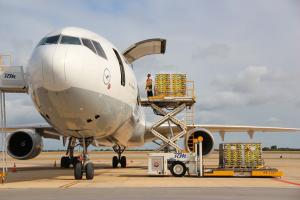
Dec 04, 2017 - Eagle-eyed planespotters are noticing increasing visits by cargo planes to Christchurch Airport at the moment. This signals the start of the key export season and highlights the valuable contribution local producers and exporters make to the local economy. Tasman Cargo Airlines National manager Gerry Bray says the company's Boeing 757 Freighter came into Christchurch last Sunday, bringing a variety of goods to the South Island.
He says it left with a range of high value fresh produce bound for Auckland, Sydney and beyond.
"The B757F has a payload capability of 32,000kgs and the aircraft moved nearly 24,000kgs of Sydney-bound general and perishable cargo on the first service" he says.
"The charter flight operated we operated last weekend was the first of many we hope to operate over the coming summer months," he says. "The aircraft will visit Christchurch at least weekly through December.
"It signals the start of the South Island's peak perishables export production season, with air freight in high demand for all primary producers from dairy, to fresh meat, to stone fruitand more," he says.
Christchurch Airport's Chief Aeronautical and Commercial Officer, Justin Watson, says in the year ended June 2017, more than 30,000 tonnes of air freight transited through the airport.
"Indications already suggest a bumper season of South Island exports," he says. "Our international airline partners, including Air New Zealand, Singapore Airlines, Qantas, China Southern Airlines, Emirates and Cathay Pacific, are also taking freight out every day to some of the world's leading hubs, such as Sydney, Hong Kong, Singapore, Dubai and Guangzhou.
"We anticipate a repeat of peak demand for high quality South Island produce for Chinese New Year, with extra flights this year taking cherries, chilled meat and live crayfish, among other things, to dinner tables across Asia."
| A Christchurch Airport release || December 4, 2017 |||
Dec 4, 2017 - Uncertainty over Brexit means New Zealand needs to urgently focus on developing brands and differentiating our agricultural exports. Senior lecturer in Agribusiness Management, Dr Nic Lees, said New Zealand produces some of the best fruit, wine, meat, seafood and dairy products in the world but around 70 per cent reaches the consumer with no identification that is sourced from here.
“Sudden changes such as Brexit remind us that relying on undifferentiated commodity exports leaves us vulnerable to sudden changes in government policies,” Dr Lees said.
“When consumers demand a branded product, it is difficult for governments to shut it out of the market.”
Forty-four years ago, Britain joined the European Common Market. At the time Britain took approximately 90 per cent of our butter, 75 per cent of our cheese and about 80 per cent of our lamb exports. Britain had to adopt the European “common agricultural policy” which imposed tariffs and quotas on non-European agricultural imports
This meant New Zealand was effectively shut out of our largest agricultural export market. At the time, most of these products were being exported as commodities, frozen lamb carcasses and blocks of cheese. The only branded product was Anchor butter.
For the next thirty years the New Zealand economy suffered as we searched for new markets and attempted to develop alternative industries. China has replaced Britain as our largest market. However, 70-80 per cent of our food exports are still sold as commodity products.
“We need to develop differentiated and branded products that consumers demand,” he said.
“We can learn a lesson from Anchor butter, as it is a brand that is still strong in the British market.”
However, he said, New Zealand has never been good at marketing our food products.
“Despite our reliance on food exports, Lincoln University provides the only specialist food marketing degree in New Zealand. The Bachelor of Agribusiness and Food Marketing was developed due to a call from industry for graduates who understand the specialised nature of producing and marketing our food products.
“It is an integrated degree covering agribusiness management, food science, supply chain management and food marketing. This provides students with a unique set of skills specifically focused on preparing them for marketing the unique features of New Zealand food products.”
He said Zespri kiwifruit and New Zealand wine have led the way in developing strong brands that consumers demand.
“Unfortunately, most other industries still focus primarily on commodity trading.”
The development of synthetic alternatives to meat and milk also calls for stronger branding.
“Developing a culture of marketing and meeting consumer demands for natural health foods provides New Zealand with a way to capture more value from our exports.
“To do this we need graduates going into the industry with an understanding of the whole value chain and who are passionate about positioning New Zealand food as a premium product branded and targeted at specific consumers.,” Dr Lees said.
| A Lincoln University release || December 4, 2017 ||||

Palace of the Alhambra, Spain
By: Charles Nathaniel Worsley (1862-1923)
From the collection of Sir Heaton Rhodes
Oil on canvas - 118cm x 162cm
Valued $12,000 - $18,000
Offers invited over $9,000
Contact: Henry Newrick – (+64 ) 27 471 2242
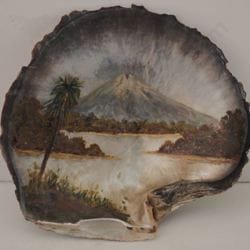
Mount Egmont with Lake
By: John Philemon Backhouse (1845-1908)
Oil on Sea Shell - 13cm x 14cm
Valued $2,000-$3,000
Offers invited over $1,500
Contact: Henry Newrick – (+64 ) 27 471 2242

|
|