
Founded by Max Farndale 1947 - 2018
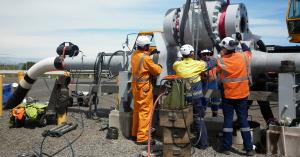
Nov 30, 2017 - Pipeline technology specialist, STATS Group (STATS), has formalised an agency agreement with OSD Pty Limited, New Zealand’s largest independent pipeline service company. OSD is a leading engineering, operations and commercial services provider to the oil and gas, pipelines and facilities, process, refining, water and hydro-transport sectors.
Kintore-based STATS Group specialises in the provision of pipeline isolation, repair and integrity services, including the design, supply and provision of specialised test, intervention and isolation tools, to the international oil and gas industry.
The agreement follows recent collaboration between the two companies in which STATS have completed three pressurised pipeline isolation projects for major operators in New Zealand on behalf of OSD, allowing for the safe replacement and installation of valves.
The deal has the potential to significantly increase exposure of STATS’s patented pipeline isolation technologies in the southern hemisphere and will complement recent growth in the Asian and Chinese markets.
STATS DNV GL type approved isolation tools provide fail-safe double block and bleed isolation allowing sections of pipework to be vented, creating safe worksite conditions for repair and maintenance to be carried out, often without affecting production.
STATS Group regional sales manager for Asia Pacific, Gareth Campbell, said: “This is an ideal partnership for STATS which opens up new markets and provides opportunities to showcase our expertise in pipeline isolation, hot-tapping and valve replacement services.
“We share the same ethos as OSD in seeking to offer world-class engineering across the asset lifecycle, with a focus on technical and commercial innovation. This alliance has enjoyed an excellent start with three successful isolation projects in New Zealand and we believe our joint capabilities offer a compelling proposition for operators in the New Zealand pipeline sector.”
OSD’s general manager, New Zealand, Shane Hamnett, said: “We are delighted to be able to announce this partnership with STATS as it further supports our drive for excellence in providing world class engineering, technical and innovative solutions to industries toughest challenges.
“Jointly, our outstanding relationship and organisational alignment provides a unique opportunity for pipeline operators to efficiently implement solutions that improve the overall operations, maintenance and growth activities across their asset base.”
| A STATS group release || November 30, 2017 |||
Nov 30, 2017 - The ITF has participated in the WIMDOI (women in male dominated occupations and industries) conference in Australia, setting out the tools and strategies needed to build stronger campaigns and organise women working in such transport workplaces. The biannual conference has been going for 22 years and this year’s, from 21-23 November in Brisbane, was the biggest.
More than 130 women from Australia and New Zealand took part – including firefighters, paramedics, electricians and plumbers, alongside workers from the maritime, road, rail, forestry, construction, meat and manufacturing industries.
Train driver and RTBU (Rail, Tram and Bus Industry Union) member Renee Thomasson said: “Because of gender constructs in male dominated industries and the pressure on women to blend in with men, in my workplace there are still major barriers between women accepting other women and solidarity amongst women.
“So my experience at WIMDOI has been extremely empowering. It was inspiring to see women supporting each other and it has equipped me with skills and information to take back to my workplace to share with other women.”
See participants’ message of support to Nemin Al-Sharif.
Participants discussed campaign experiences and topics including training and skills development, gender injustice, pensions and economics. They shared union gender strategies, and strategies to build women’s confidence and influence in overwhelmingly male unions and workplaces. They also discussed the We Won’t Wait campaign and equal access to toilets.
ITF women transport workers’ co-ordinator Jodi Evans commented that this event gave many women a unique opportunity to share their experiences and find solutions to common problems. Importantly, it reinforced that they were not alone in their struggles and that the ITF union family is building a programme to support women working in male dominated occupations and challenge gender-based occupational segregation.
WIMDOI is organised by a committee of seven women, which includes Mich-Elle Myers, (ITF Asia Pacific women’s representative and Maritime Union of Australia national officer) and ITF union the RTBU.
| WIMDOI release || November 30, 2017 |||

Nov 30, 2017 - Amazon's arrival in Australia brings with it opportunities for New Zealand firms writes Wellington consultant Hamish Conway in his company, Sell Global blog. Amazon is in 11 marketplaces around the world, with 123 fulfilment centres, and buying customers in 189 countries. The States is the biggest, with the UK able to fulfil to the other 26 European countries. They’re in Japan, and China but they’re having a tough time in China. AliBaba and the WeChat Group just dominate the Chinese market, with Amazon only having something like a 5% share of the market and consistently struggling there.
So, that’s all interesting, but obviously they are about to arrive in Australia. I was recently in Australia meeting with Fabio, from Amazon, who’s setting it up and running it, and they’re hiring now, looking towards a late November/December launch. Initially this is going to be a soft launch. They don’t want to over promise and under deliver around Christmas time.
Certainly a Q1 start is when it’s going to be happening. But, they have been building the catalogue over the next few months. They are getting their catalogue full, so when they do launch, this is a great opportunity for New Zealand companies that want to really stamp their mark on the Australian market, using Amazon as a channel.
Getting in early on Amazon, and getting on that page one should be the goal of all product selling companies in NZ. 86% of sales come from being on a page one search. Getting in first, and putting your stake in the ground and going, “right, I’m going to claim the peanut butter category on Amazon,” or whatever that category might be is going to be a huge advantage. Getting there and keeping it is far easier than coming in late and trying to claim that spot.
There are all sorts of categories that’ll just be open for business. According to a recent survey, one third of Australians who shop online, which is millions of people, they have said that they will switch to Amazon. They’ll definitely be looking at Amazon when it arrives. I suspect it would be more than that once it does launch, and they start to prove their worth.Amazon is going to really change the landscape. Not only in Australia, but in New Zealand as well. They look at Australia and New Zealand as one. New Zealanders will be buying from Australia.
Amazon has its own products that they sell, largely the tech products, like Alexa and Kindle. They will also buy products from you, like wholesale. So, if they like the look of your product, they’ll go we’ll buy that. They’ll pay you as little as possible, and take for as long as they can to pay you. But enough people do that because they just think that that’s the right way to go. Actually Amazon doesn’t really look after it that well, but they do it. If you look at some products on Amazon, it’ll say “Ships and sold by Amazon” even though it’s a brand you might be aware of. Or, you can be a third party seller, of which any third party sellers can go and set up their products on Amazon.
The products that are currently in America don’t necessarily end up in Australia, so it’s going to be a whole lot of new products that are Australia and New Zealand centric. People from the States or from Asia will be sending products down to Australia into the Australian warehouses there for purchase. People probably still could shop in America for awhile, but once the inventory and catalogue builds up over time, as more suppliers or third party sellers put product in, that’s when it’s going to become bigger and bigger, and a really great opportunity for New Zealand and Australian businesses.
What is the impact from that? If you are a retailer, a brick and mortar retailer, it’s absolutely a problem. If you are a brand owner it’s good news. Being on Amazon gives you so much free traffic, and free brand awareness. For small companies breaking into Australia, it has previously been quite a tough gig, going through the traditional approach and maybe trying to get into supermarkets or through big pharmacy chains, or whatever it might be with what you’re selling. Being on Amazon, people are searching and if you’re there then they’re seeing your brand.
If you control your brand, and the distribution of it, and you’ve got your own e-Commerce store as well, Amazon is going to be a major support for that. If you’ve got products that you don’t control the distribution of then you’re in trouble. The bottom line is that it’s a huge opportunity for any business, whether they’re small and just getting going, or bigger businesses, who will need to be there, and be protecting their brand on that platform. If you aren’t selling your products on Amazon, other companies, other people, other distributors might start selling it there instead.
| Source: Sell Global || November 30, 2017 |||
Nov 30, 2017 - (BusinessDesk) - BioNona, which markets skin treatment creams developed by biochemist and chief executive Iona Weir, says it has gained US Food and Drug Administration approval for its Atopis eczema cream treatment, giving it access to a market worth as much as US$6 billion.
It marks the first such FDA approval for a New Zealand-developed over-the-counter (OTC) pharmaceutical skincare cream and is a culmination of more than 30 years of research and pharmaceutical development by Auckland scientist Weir, whose other projects have included the kiwifruit-based Phloe laxative product produced by Vital Foods Processors, where Weir was chief scientific officer until 2014.
Weir said the US market for OTC eczema creams amounts to about US$2 billion, or one-third of the total market. BioNona plans to sell online via Amazon on its eczema treatments page which only allows FDA-approved products. She said in the US about 50 percent of OTC sales now occur online through approved USFDA outlets such as Amazon.
"I suspect it will be our biggest product, though consumers use the eczema cream and then buy the other products," she said. "So it is more of a lead product that draws consumers in."
The Atopis eczema cream is already for sale but to date has been marketed as Dry Itchy Skin Relief Cream. The FDA approval means they can be re-branded as an eczema treatment. BioNona plans to seek FDA approval for its acne-prone skin care next, Weir said.
According to BioNona's website, Atopis contains myriphytase, a patented novel compound "developed for use in the treatment of eczema, psoriasis and acne." Myriphytaseis is created through a patented process called Peptilization, which "fuses together plant, bacterial and insect components."
The work grew out of Weir's Ph.D. in 1997 on programmed cell death in plants known as apoptosis. Her research showed apoptosis in plants was reversible, unlike in animals, and she was able to extract "critical reactions" in plants that could be put in a cream as a topical application for skin conditions in humans, such as eczema and acne. The extract encourages the body's immune response to attack affected areas and repair damaged cells, she told the International Conference on Clinical and Experimental Dermatology in Chicago last year.
The acne cream also contains the myriphytase extract "but it has gone through a different enzymatic fermentation reaction so that it has the bioactive properties required to treat acne," she said today.
Weir has a holding of about 33 percent in Decima Health, which owns the patents and did the research. Decima, in turn, owns 75 percent of BioNona, which was set up to handle manufacturing and distribution.
The company's chair is Paul Dallimore, who also owns about a third of Decima and was the original angel investor in the business, having been given a sample of the cream by Weir which he tried on a grandchild. Dallimore was the founder of National Property Trust and is chair of the Highgate Group.
Weir said the company hopes to have the eczema cream on sale to US consumers from the start of February next year.
Weir won an international award for her original Ph.D. and was able to continue her research with a grant from the Marsden Fund. A grant from Callaghan Innovation helped fund the double blind placebo controlled clinical trial completed by Southern Clinical Trials Group at the end of 2015.
(BusinessDesk receives funding to help cover the commercialisation of innovation from Callaghan Innovation.)
| A BusinessDesk release || November 29, 2017 |||
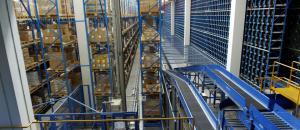
Nov 30, 2017 - In a manufacturing plant at Dongguan, a nondescript town about an hour outside the southern Chinese city of Shenzhen, a robot arrives to collect the latest box of Huawei smartphones rolling off a production line writes Mark Jennings for Newsroom.
Stand in the robot’s path and it politely tells you (in Mandarin) to move aside. The robots are busy here – this plant produces 1.3 million smartphones a month; some will likely end up in New Zealand.
Huawei sold 139 million phones last year and ranks third behind Samsung and Apple.
Robots are steadily replacing people in Huawei’s Chinese plants.
“They are more efficient and the quality is better," New Zealand journalists being shown through the plant were told.
According to Huawei, only three phones out of every million fail the rigorous quality control tests.
Humans still have a role - there are 28 of them on each Huawei production line, mainly putting cameras into the phones and testing functionality - but their days are numbered.
Word is that the nearby Foxconn plants (which make smartphones for Apple and Samsung) have 250 people on each production line.
“That’s because people are still cheaper (than the sophisticated robots) for now.”
But, it is clear from the smile on our guide’s face that Huawei doesn’t think the cost difference will last much longer.
Continue here to read the full srticle by Mark Jennings for Newsroom || November 30, 2017 |||

Nov 30, 2017 - A major tourist attraction that will include a cable car, toboggan rides, zip wire, as well as a restaurant and event venue on Kilvey Hill in Swansea has taken a step forward. Board directors of New Zealand-based Skyline Enterprises have given the green light for the company to start the detailed design process and begin legal discussions for the attraction the will overlook Swansea Bay.
Representatives from Skyline Enterprises will now work with Swansea Council to move the deal forward and get it approved.
Once an agreement is in place, Skyline Enterprises will start working towards its planning application.
Should the scheme go ahead it will be funded entirely by private money, with no funding required from taxpayers.
Cllr Robert Francis-Davies, Swansea Council's Cabinet Member for Culture, Tourism and Major Projects, said: "This is great news for Swansea, for Swansea's tourism industry and for Wales.
"Thanks to a 'Team Swansea' approach and the backing of a number of local businesses who have been supportive of the Skyline proposal, we were able to convey to Skyline Enterprises our enthusiastic support for the scheme during their recent visit.
"This decision is a great vote of confidence in Swansea as a tourist destination and builds on the great work being done through the City Deal and our bid to be the UK's City of Culture in 2021."
Skyline Enterprises already runs two resorts which feature cable car rides and other attractions in New Zealand, as well as luge rides in Canada, South Korea and Singapore.
The cable car attraction set for Swansea would be the company's first outside New Zealand.
Representatives of the company have been to Swansea twice in recent months to check out the potential of Kilvey Hill as a tourism hotspot capable of attracting tens of thousands of visitors a year.
The latest visit included meetings with Swansea Council and major local businesses at the Liberty Stadium to advance Swansea's case for the attraction, which would further build on plans to regenerate the River Tawe corridor.
Cllr Rob Stewart, Swansea Council Leader, said: "Kilvey Hill, standing 193 metres tall, enjoys spectacular views over Swansea Bay, the marina, SA1, the Liberty Stadium and the historic Hafod Morfa Copperworks site.
“It's been an underused resource, and has huge potential to be transformed into a fun visitor destination for local people and hundreds of thousands of visitors a year.
"We were determined to do all we could to help bring this project to Swansea because it would also attract additional investment and benefit local businesses by generating more spending and supply chain opportunities."
Geoff McDonald, Skyline Enterprises chief executive, said: "Skyline Enterprises is very excited about the potential opportunity to partner with the Swansea community to create what we believe will be a significant and vibrant attraction for the area.
“We are encouraged by the enthusiasm and interest in our gondola and luge operation, and look forward to on-going discussions."
The cable car attraction would add to the work Swansea Council and Swansea University are continuing to do to breathe new life into the historic Hafod Morfa Copperworks site.
With support from the Welsh Government, Cadw and European funds, progress on site has included clearing vegetation, stabilising buildings at risk, improving access for visitors, community archaeology fieldwork, new pathways, an audio-visual trail and new information panels.
| A bqlive release || November 30, 2017 |||
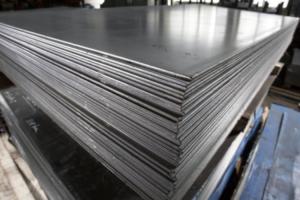
Nov 30, 2017 - Raw material availability is a cornerstone of the U.S. industrial sector, and clearly vital to its growth. So as positive economic indicators continue to point towards manufacturing gains through 2018, it makes sense that the steel industry continues to experience growth as well. The benefits of which are being felt from Willmar, Minnesota to Conroe, Texas.
West Central Steel in Willmar has entered the final stages of its ninth expansion since transitioning from salvage yard operations in 1968. Officially starting last fall, the company has demolished its previous facilities totaling about 55,000 square feet to make room for a new 85,000-square-foot manufacturing facility. The new structure is scheduled to open in December, allowing for the installation of several pieces of new equipment.
This equipment includes a 30’ wide, 1,100-ton Ursviken press brake built in Sweden for bending steel and a Tanaka 6,000-watt CO2 laser cutter from Japan. A Kinetic plate processor from New Zealand, PythonX steel shaping system from Canada, and two Behringer saws will also need to be installed. These investments will be key to preserving the company’s two-day delivery times.
The company, which focuses on custom-fabricated steel parts utilized by manufacturers across a range of industries, will also be adding as many as 20 new employees to the current workforce of 150.
Falcon Steel America in Conroe also has a connection to the number 150. In announcing its acquisition of a 226,000-square foot facility, the steel engineering and fabricating business will bring 150 new jobs to the Houston suburb. The larger facility and workforce will allow Falcon Steel to more than double its manufacturing capacity for high voltage steel-lattice towers and commercial galvanizing and dulling operations. The company is the only fabricator of high voltage steel-lattice towers in the U.S.
The newly created positions will include quality assurance and quality control inspectors, welders, fitters, machine operators, and truck drivers. Falcon Steel uses only 100 percent U.S. recycled steel in its products.
| A thomasnet release || November 30, 2017 |||

Nov 29, 2017 - Forestry Minister Shane Jones says overseas investment in forestry that brings genuine benefits to New Zealand’s economy and its environment will be welcomed by the Government.
Mr Jones says he is pleased with the inclusion of a Forestry Directive in the new Ministerial Directive Letter issued to the Overseas Investment Office, which sets out the Government’s policy approach to overseas investment in sensitive New Zealand assets.
“The inclusion of a specific directive for forestry recognises the importance of forestry to the New Zealand economy and regional communities,” Mr Jones says.
“As part of the coalition agreement, this Government has committed to an ambitious tree planting programme that will require a partnership between the Crown and the sector itself. High-quality overseas investment can certainly help us achieve this goal.
“Forestry, and the processing of forest products, are significant sources of employment in our regions and we want to build on that to get more people into a sustainable workforce.
“I’ve heard first-hand from the industry the value of good overseas investment and the Forestry Directive recognises there is a role for overseas investors to play. However, we want to encourage value-added wood processing to generate jobs and other benefits for our regions.
“The new directive for forestry directs the Overseas Investment Office to place high importance on increased processing of primary products and the advancement of the Government’s policies when assessing applications for consent.
“It also emphasises that Ministers expect the Overseas Investment Office to impose conditions on consent where appropriate – for example, a requirement for the overseas investor to enter into a supply arrangement with a local processor,” Mr Jones says.
The letter recognises that conditions imposed on forest land may need to be for longer periods given the often long-term nature of these investments.
“Forestry has an important role to play in many of the Government’s priority areas – enhancing regional development, improving water quality, reducing carbon emissions and creating jobs – and I’m looking forward to seeing the sector prosper in the coming years,” Mr Jones says.
| A Beehive release || November 29, 2017 |||

Nov 30, 2017 - The vacuum-powered soft robots are reported capable of lifting objects a thousand times their own weight. There have been a number of soft robots inspired by the ancient art of paper folding – origami – recently, including polymer-based microgrippers and the safety-first Twister. Researchers from Harvard and MIT say that robots made of soft materials are often not as strong as their rigid counterparts. This thinking has led to the development of inexpensive artificial muscles that have been designed to give soft robots superpowers.
The artificial muscles have been developed by a team from Wyss Institute at Harvard University and MIT's Computer Science and Artificial Intelligence Laboratory (CSAIL), and use only air or water pressure to assist soft robots in lifting objects up to a thousand times their own weight. And they bend and flex in a less, well, robot-like fashion.
The muscle-like actuator is made up of an inner skeleton, which can be fashioned from a range of materials, including a metal coil or folded plastic, and is surrounded by air or liquid, before being sealed in a plastic or textile outer skin.
Muscle movement is triggered when a vacuum created inside the skin collapses around the skeleton, causing tension in the structure that results in movement. The type of movement is controlled purely by the shape of the skeleton, meaning that system processing and complex control algorithms may be surplus to requirements.
"One of the key aspects of these muscles is that they're programmable, in the sense that designing how the skeleton folds defines how the whole structure moves," explained Shuguang Li, Ph.D, a Postdoctoral Fellow at the Wyss Institute and MIT CSAIL. "You essentially get that motion for free, without the need for a control system."A single vacuum source drives this snake-like soft robot with gripper
The researchers have built a number of different soft robots to demonstrate the numerous capabilities and resilience of their creation. They report that the artificial muscles are both lightweight and very powerful, claiming that one 2.6-gram actuator is capable of lifting a 3-kilogram object.
They're cheap and quick to make too. An actuator can be put together using materials that cost less than a dollar in around 10 minutes. And to demonstrate the scalable nature of the development, the researchers have made artificial muscles as small as a few millimeters in size to a meter, without any dip in performance.
The team also considers its innovation to be safer for close contact assistive robotics than other soft robot systems in development.
"Vacuum-based muscles have a lower risk of rupture, failure, and damage, and they don't expand when they're operating, so you can integrate them into closer-fitting robots on the human body," said co-author of the paper Daniel Vogt, M.S.
Potential usage examples include surgical devices, exoskeletons, deep sea manipulators and even architecture that can change its shape or function when needed and large structures that can be sent into space to aid exploration. A water-soluble version has also been developed, opening the door to potential use for ingestible robots.
"Now that we have created actuators with properties similar to natural muscle, we can imagine building almost any robot for almost any task," said Rob Wood Ph.D, Founding Core Faculty member of the Wyss Institute.
A paper detailing the research has been published in the journal Proceedings of the National Academy of Sciences.
Article source Wyss Institute and New Atlas where a video can be viewed || November 30, 2017 |||

Palace of the Alhambra, Spain
By: Charles Nathaniel Worsley (1862-1923)
From the collection of Sir Heaton Rhodes
Oil on canvas - 118cm x 162cm
Valued $12,000 - $18,000
Offers invited over $9,000
Contact: Henry Newrick – (+64 ) 27 471 2242
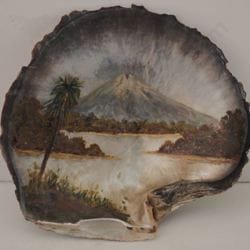
Mount Egmont with Lake
By: John Philemon Backhouse (1845-1908)
Oil on Sea Shell - 13cm x 14cm
Valued $2,000-$3,000
Offers invited over $1,500
Contact: Henry Newrick – (+64 ) 27 471 2242

|
|