
Founded by Max Farndale 1947 - 2018
Winners and losers in tradeoff
Exactly how a liberal government’s attempt to appease its Green Party MPs led to a declaration of war, however figurative, from the prime minister of Israel is the strangest tale yet in New Zealand’s almost two centuries of farm politics.
Exactly how this state of affairs led to a covert New Zealand taxpayer funded stock handling depot in the middle of a Middle East desert only contributes to a tale which ranks alongside anything from Arabian Nights.
The way in which it made strange bedfellows of meat packing, slaughter house, freezing works proprietors and the Greens is just another chapter in this astonishing saga of shifting and unlikely alliances.
The saga begins with New Zealand’s centrist National government giving approval to the export of live sheep to the Middle East.
Farmers, and farm export consolidators were delighted. Live sheep exports allows them to obtain a premium price for their sheep, instead of having to take the schedule price of the licensed export processing meat companies.
The meat export processors, meanwhile, who derive much of their profit from the animal by- products ranging from medicinals to pet foods via rendering were and remain singularly hostile to live sheep exports. A big chunk of their potential income sails away with the sheep.
They keep quiet about this point of view for fear of antagonising farmers.
Middle East interests, who have substantial investments in the live trade both here and overseas, appear to have been in no doubt that after years of stop-go the live trade would resume.
The Greens now launched their most successful political lobby since the anti-nuclear era. The government backed down on live sheep exports.
The mysterious New Zealand taxpayer funded depot is one by-product of this. It is designed to appease now the would be live sheep importers.
They were and still are only partially appeased.
The anti Israel New Zealand sponsored resolution at United Nations was thrown in as another sop to the Middle East importers by now threatening a Gulf-wide boycott of anything at all from New Zealand .
This byzantine power play engulfing as it does politicians, diplomats and traders from the Gulf to United Nations via the South Pacific has also enraged farmers especially in the Hawkes Bay where much of the trade in its glory days was once centred.
The centrepiece of this was the drafting, notably at Maraekakaho, where the inspecting agents acting on behalf of the Middle East importers would assess the suitability or otherwise of the stock for export.
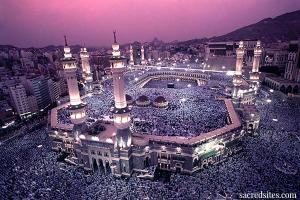
The fury of the Middle East importers at the broken promise is understandable given the timing of the live sheep shipments with the annual haj or pilgrimage to Mecca (pictured)
All this has simmered Omerta-style under the surface of public and even the farm-politics debate for quite some time.
Another unacknowledged and unmentioned element to this is that for the farmers, live sheep exports allow them to command a premium price for the stock – and to get paid.
The reason why the few established meat exporting processors have such a command on procurement is that they are big enough in terms of resources to ensure that they actually get paid at the other end.
In the meantime, the Middle East will fill its live sheep shipments from South America, notably Uruguay.
Live sheep exports gave farmers premium price plus guarantee of payment.
It is an ill wind that blows nobody any good.
So in this modern riddle of the sands, who are the winners?
Who are the losers?
The winners:-• The Greens• The meat processors, freezing works.• Uruguay• President Obama
The losers:-* Farmers* NZ Taxpayers* State of Israel
The Lesson:-The episode which began with live sheep and then made the transit of a lame duck US President Barack Obama still has a long way to go. But what is the lesson so far. Here we must touch down on Greece, classical epoch, in order to heed Aristotle who declared .......
A friend to all is a friend to none
| From the MSCNewsWire reporters' desk | Wednesday 11 January 2017 |
 ∩ The Opportunities Party to Register
∩ Ingram Micro’s new owners, HNA Group also snapped up UDC Finance
∩ Rocket Lab’s launch hopes rest on upcoming legislation
∩ While you were sleeping: Nasdaq hits record high
∩ Yahoo to cut board after sale to Verizon, change name to Altaba
∩ Gold hits 5-week high after slide
∩ NZ Binxi land purchase for Oamaru expansion approved
∩ 2016 'a stunning year for new vehicle sales'
∩ Bapcor stake in Hellaby tips over 50%, potentially turning takeover offer unconditional
∩ Rockets on the Mahia Penninsula with The Wall Street Journal

Special guests have always been a part of the AMCN Island Classic fabric, and the 2017 event at Phillip Island from January 27-29 will be no different with two stars of the race track making their way across from New Zealand – the awesome home-built Britten V1000 and now retired racer Andrew Stroud.
The just turned 49-year-old Stroud, a nine-time NZ superbike champion, enjoyed a huge amount of success with the V1000 during the 1990s in New Zealand, Australia, America and Europe, with the summit reached in 1995 when ‘Team New Zealand’ won the inaugural World BEARS (British European American Racing Series) event.
The BEARS win came just three weeks before the impossibly gifted John Britten, who designed and constructed the V1000 in his home workshop, passed away at the age of 42.
Just 10 V1000s were manufactured, with three remaining in New Zealand. The V1000 that Stroud will perform demonstration laps on at the Phillip Island Grand Prix Circuit from January 27-29 is the same one that he raced at the Assen BEARS race in 1995. It’s owned by New Zealander Kevin Grant.
| Continue to full article on MCNews | January 11, 2017 |
ANZ today announced an agreement to sell UDC Finance, the asset finance business of its wholly owned subsidiary ANZ Bank New Zealand, to HNA Group, a global company focused on tourism, logistics and financial services.
The sale reflects a continued focus by ANZ on simplifying its business and capital efficiency.
ANZ New Zealand CEO David Hisco said: "The sale of UDC is consistent with our strategy to simplify the bank and is a good outcome for customers and staff. HNA Group is one of the world's largest asset finance and leasing companies, and it intends to preserve UDC's operations including offering continued employment to all staff."UDC Transaction and Financial Summary
Sale Price
~NZ$660m
Premium to Net Assets (30/09/2016)
~NZ$235m
Price-to-Book Ratio (UDC net assets 30/09/2016)
~1.6 times
}}} Continue to read full release | January 11, 2017 |
REUTERS STR NewIn just a few decades, Vietnam has undergone a dramatic transformation, from an agrarian society to one that has embraced the modern era. Its youthful population and growing middle class have helped drive solid growth—and opportunities for many global investors. This up-and-coming market hasn’t fully embraced capitalism—it remains a Communist state—but it has managed to achieve an interesting balance. There has been a bit of buzz about Vietnam among investors in the past few years, but given the election of Donald Trump as the next US president, the Trans Pacific Partnership TPP , of which Vietnam would have been a key beneficiary, seems even less likely to move forward. However, new trade deals are in the works—including the Regional Comprehensive Economic Partnership RCEP , which Vietnam has joined along with nine other members of the Association of Southeast Asian Nations as well as Australia, China, India, Japan, Republic of Korea and New Zealand. And, there could be new, bi-lateral trade deals in the future.
Nevertheless, I believe Vietnam remains an attractive destination for both investors and tourists, and we think its future looks bright. I recently had the opportunity to visit Vietnam and see the latest wave of changes taking place.
Vietnam has seen strong economic growth, with gross domestic product GDP growth averaging just shy of 7 from 2000–2015.1 This economic boom has also boosted consumer buying power. In 1990, gross national income GNI per capita was US 910, but by 2015, it had risen to 5,690.2 During my recent trip to Vietnam, I found tremendous opportunities in the consumer sector as a result of this rise in income levels.
For example, we visited a dairy company and learned that while per-capita milk consumption in the United States has been above 100 liters per person per year, and in China it was 30 liters, in Vietnam it was only 16 liters. However, that number has been growing very quickly, and it’s no wonder the milk company we visited in Vietnam has seen profit growth every year for the last five years. The company produces fresh raw milk from local cows as well as reconstituted milk from powder, condensed milk, baby formula and yogurt. The company exports its products not only to its neighbors in Asia but also to some markets in the Middle East.
Many companies in Vietnam are government-majority owned, but privatization is expanding with plans to publicly list shares of a number of companies in the future. Some will initially be listed on the Ho Chi Minh Stock Exchange’s secondary exchange, the UPCoM, which has less stringent disclosure requirements, but we think eventually many companies will likely be required to list on the main board and institute broader disclosure. We believe the sale of some state-owned enterprises should help lower Vietnam’s rising national debt, but foreign direct investments are strong, and industry and exports are doing well. As services including tourism represent more than 40 of Vietnam’s GDP, it is the area we are most interested in.3
Phu Quoc Island
To study Vietnam’s tourist industry, my colleagues and I flew down to Phu Quoc Island off the coast of southern Vietnam. We landed at a new, modern airport capable of handling a growing influx of both local and foreign tourists. Local tourists can fly from Ho Chi Minh City for the equivalent of only US 30 to US 50 one way on Vietnam’s low-cost airline. While travel regulations can be tricky and ever-changing, today, foreign tourists can stay between 15 to 30 days without a visa in Phu Quoc, which is a unique concession not available for visitors to other parts of Vietnam.
During our stay, we drove and cycled from one end of the island to the other and found a construction boom under way with new hotels, apartments, villas and a spectacular cableway under construction linking the island with other smaller islands. Phu Quoc itself is a large island 574 square kilometers compared with Singapore’s 719 , and Vietnam’s government has designated it for tourist development.
REUTERS STR NewWe drove to our hotel on a new four-lane highway, and as we toured the island we saw construction of a new north-south four-lane highway under way as well. The government has spent over US 1 billion thus far for infrastructure on the island, including more than US 700 million on the airport where we arrived. According to regional news reports, through summer of 2016, the government had approved and licensed more than 160 projects involving a total investment of more than US 6 billion.
As a microcosm of the country as a whole, Phu Quoc has seen quite a transformation when we consider its history as a place of refuge. The island was also once a prison camp used during various regimes, from the French colonial period through the Vietnam War. One of the tourist attractions is a prison camp museum, complete with barbed wire, guard towers, and models of guard soldiers and prisoners. The island is also famous for its fish sauce and for peppercorns; which we saw growing on vines around the island.
Tourism is transforming the island’s economy, which had previously subsisted on fishing and the aforementioned peppers and fish sauce. A major Vietnamese developer constructed a huge complex at the northern part of the island, including 1,000 hotel rooms, 1,000 villas, a safari park apparently one of the world’s largest , a water park and an amusement park featuring many types of roller coasters and other stomach-churning rides. There is also a 27-hole golf course, an international hospital and facilities for what could become a major casino.
Another developer is building a complex on the southern part of the island, which includes a spectacular cable car that crosses the sea to neighboring islands. We also saw other new hotels being built along the beach.
A pearl farm has also been introduced, so we saw a number of shops promoting the local pearls. Touring the villages around the island we noticed there was still a dire need for better roads and facilities. The influx of tourists and construction of high-end facilities to accommodate them have brought good-paying, steady jobs to many locals who had been suffering a low standard of living before.
For example, one of the Vietnamese cooks at our hotel told us that he had been a fisherman, but now he was doing better financially. As a fisherman, he said life was dangerous and uncertain because he never knew if he could catch enough fish to earn a living. Now, with his wife also working, they are living a better life.
While some may criticize development in naturally beautiful places like Phu Quoc, it’s important to look at the issue from many angles. For the 100,000 natives on the island, prospects are now brighter. Hopefully, development in Vietnam and elsewhere can come with the right intentions and the right balance of interests. With their kind, hospitable nature and happy dispositions, the residents of Phu Quoc, in my view, will make their island a tourism success. We are excited about the potential for further growth and transformation in Vietnam.
Mark Mobius’s comments, opinions and analyses are for informational purposes only and should not be considered individual investment advice or recommendations to invest in any security or to adopt any investment strategy. Because market and economic conditions are subject to rapid change, comments, opinions and analyses are rendered as of the date of the posting and may change without notice. The material is not intended as a complete analysis of every material fact regarding any country, region, market, industry, investment or strategy.
Important Legal Information
All investments involve risks, including the possible loss of principal. Investments in foreign securities involve special risks including currency fluctuations, economic instability and political developments. Investments in emerging markets, of which frontier markets are a subset, involve heightened risks related to the same factors, in addition to those associated with these markets’ smaller size, lesser liquidity and lack of established legal, political, business and social frameworks to support securities markets. Because these frameworks are typically even less developed in frontier markets, as well as various factors including the increased potential for extreme price volatility, illiquidity, trade barriers and exchange controls, the risks associated with emerging markets are magnified in frontier markets. Stock prices fluctuate, sometimes rapidly and dramatically, due to factors affecting individual companies, particular industries or sectors, or general market conditions.
______________________________________
1. Source: IMF World Economic Outlook database, October 2016.
2. Source: World Bank, data as of 2015. GNI per capita is expressed in purchasing power parity dollars to adjust for price level differences across countries.
3. Source: CIA World Factbook, data as of 2015.NOW WATCH: Here's what happens to your body when you stop eating sugar
| An iStackr release | January 9, 2017 |
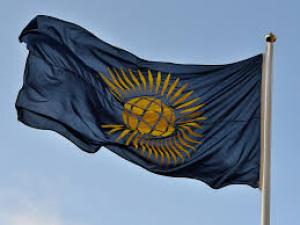
Britain should secure trade agreements with former colonies ahead of Brexit, MPs argue. On Politico By Esther King
The U.K. should reject the customs union and embrace trade with Commonwealth countries post-Brexit, according to a report by the Free Enterprise Group of Tory lawmakers released Tuesday.
Brexit is an opportunity to return to the U.K.’s “free trading principles” and pursue an agenda of “independent, worldwide trade liberalization and tariff elimination,” according to the report, which is co-authored by Conservative MP James Cleverly and Royal Commonwealth Society policy director Tim Hewish.
The Free Enterprise Group also includes Brexit hardliners such as Andrea Leadsom, secretary of state for environment, food and rural affairs, and Conservative members of Parliament Priti Patel and Jacob Rees-Mogg.
Britain, the group’s report said, had neglected the Commonwealth in trading terms and should consider “the benefit of trading with nations that share a common language and culture.”
The Commonwealth’s share of global GDP overtook the EU’s in 2004 and the gap is set to grow post-Brexit, according to data cited in the report.
While trade with Commonwealth countries accounts for only 8 percent of U.K. exports, Britain is the largest export destination for Australia, Canada, India, New Zealand and South Africa. This provides a strong incentive for these countries to form trade deals with the U.K., the report argued.
Trade deals will have to go hand in hand with liberal visa reform for skilled migrants from the Commonwealth, the report added.
As a first step, the U.K. should secure free trade agreements with Australia, Canada, Singapore and New Zealand in time for Brexit, the report said. It also urged Britain to start negotiations with India and with African, Caribbean and Pacific countries to “mirror or better existing EU options.”
As the world’s second largest service economy, the U.K. should also join the Trade in Service Agreement (TiSA) initiated by the U.S. and Australia.
The Commonwealth market, which includes 2.3 billion people, is “too big an opportunity to ignore,” said Cleverly.
LSE professor and former Business Secretary Vince Cable has argued that Britain’s current ministers have not taken on board that the attempted EU-India agreement foundered not because of the rest of the EU but in substantial part because Britain rejected it.
| A Politico release | January 10, 2017 |
All over the world, ageing populations and changing attitudes are making it harder to hold on to workers, believes Dr Rodney Brooks. Brent Balinski spoke to Brooks, founder of Rethink Robotics, about some demographic and technology shifts to watch out for and why it’s best to be realistic.
In the markets where Rethink sells its collaborative robots, ageing workforces and a shortage of younger workers available to replace retirees are a combination troubling manufacturers, according to founder, chairman and CTO, Dr Rodney Brooks.
It’s a problem that’s been brewing for many years, and an issue in China which he picked up on early in the millennium as co-founder of iRobot (which still produces its Roombas there, at a rate of around two million annually). The same goes for Adelaide-born Brooks’s adopted home of the US, he said. Ditto for Europe.
[Continue to full article on Manufacturers'Monthly]
A New Zealand based leading multinational dairy company -- Fonterra Co-operative Group Limited has expressed their interest to invest in the country's dairy sector, a high official of concern ministry said.
Fisheries and Livestock minister during his visit to New Zealand last year got the proposal from Fonterra for investment in the country's dairy sector.
To this effect, top officials of Fonterra visited Dhaka last month and submitted a proposal in this regard to the government requesting to arrange a government to government meeting (G to G) between Bangladesh and the New Zealand.
Board Director of Fonterra Co-operative Group Limited John Monaghan led the delegation.
Fonterra Co-operative Group Limited owned by 13000 New Zealand dairy farmers and the world's largest exporter of dairy products.
"During the visit, the Fonterra delegation had discussed the investment proposal with the fisheries and livestock minister Muhammed Sayedul Hoque," an official of the ministry, who is involved with the process told the New Nation preferring anonymity.
"They are highly satisfied with the investment potential in the dairy sector of Bangladesh," the official said. "The Fonterra has already sent a proposal to invest in Bangladesh's dairy sector considering its potential. If everything goes accordingly then the investment of Fonterra would reshape the landscape of local dairy sector," he added.
He said that the Fonterra officials have asked the ministry to arrange a meeting between Bangladesh and New Zealand governments for a detailed discussion on finalising the investment proposal.
However, according to the high official of the ministry, the government has started the process of finalising investment proposal from New Zealand's dairy giant.
As part of the process, the ministry of fisheries and livestock (MoFL) sent a letter to the Economic Relations Division (ERD) to arrange a government-level discussion between Bangladesh and New Zealand to expedite the investment in the local diary industry.
"We have sent a letter to the ERD requesting them to arrange discussion between Bangladesh and New Zealand for finalising the investment proposal," another senior ministry official said.
Meanwhile, trade between Bangladesh and New Zealand is undergoing a healthy growth, though the trade balance is largely tilted toward Wellington. Bangladesh enjoys duty-free market access to New Zealand.
Bangladesh's major exports to New Zealand are woven garments, which constitute 66.9 per cent of total shipment, while woolen garments represent 20.8 per cent, jute products 6.8 per cent, hats 2.5 per cent and miscellaneous garment accessories 1.4 per cent.
New Zealand's main exports to Bangladesh are milk powder, which is 90 per cent of the total shipment, while electrical equipment constitutes 2.9 per cent and waste steel 2.0 per cent and fruits 1.4 per cent.
Bangladesh exported goods worth US$ 40.90 million to New Zealand between June 2014 and April 2015, which was $ 40.65 million during the fiscal year 2013-14, according to the Export Promotion Bureau (EPB).
Fonterra is a global, co-operatively-owned company with its roots firmly planted in New Zealand. It accounts for more than 25 per cent of New Zealand's export. It employs 16,000 people in New Zealand and elsewhere in the world working to make dairy available to millions of consumers in 140 countries every day.
Fonterra produces more than two million tonnes of dairy ingredients, specialty ingredients and consumer products each year. About 95 per cent of these are exported to a world wanting more and more of the nutritional benefits we offer.
The company has 30 manufacturing sites across the country and processes about 16 billion litres of New Zealand's farmers' milk each year. It has operates in more than 100 countries across the world.
| A NewNation release | January 10, 2017 |
A new paper backed by former Australian prime minister Tony Abbott is calling on the UK to quit the EU's customs union and focus on Commonwealth trade after Brexit.
The report, authored by Tory Braintree MP James Cleverly, suggests a five step approach to Britain's trade priorities, beginning with the Commonwealth’s open economies.
After setting up “easy win” deals with Australia, Canada, Singapore and New Zealand in time for Brexit in 2019, the UK should pivot to negotiations with India, before deals with the Commonwealth nations of Africa, the Caribbean and the Pacific.
Finally, Cleverly said the UK should join the Trade in Service Agreement, a US-EU-Australian deal with is geared towards services.
| A CityAM release | January 10, 2017
The company, known formally as Shenzhen Huiding Technology Co., is among a crop of Chinese companies embracing technology and higher-margin products.
Goodix, a supplier of mobile chips to Amazon.com Inc. and major Chinese smartphone makers, plans to begin shopping abroad for semiconductor and software developers to gain an edge in an increasingly competitive market.
The company wants to become the world’s biggest supplier of fingerprint sensors, Chief Executive Officer David Zhang said in an interview at the Consumer Electronics Show in Las Vegas. That will help again double its revenue in 2017, matching its pace of growth in the first nine months of 2016, he added.
The company, known formally as Shenzhen Huiding Technology Co., is among a crop of Chinese companies embracing technology and higher-margin products, trying to shake off a reputation for making cheap goods.
| A Industry Week release | January 6, 2017 |
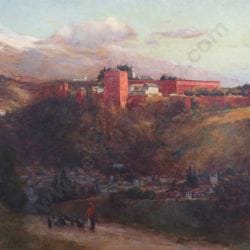
Palace of the Alhambra, Spain
By: Charles Nathaniel Worsley (1862-1923)
From the collection of Sir Heaton Rhodes
Oil on canvas - 118cm x 162cm
Valued $12,000 - $18,000
Offers invited over $9,000
Contact: Henry Newrick – (+64 ) 27 471 2242
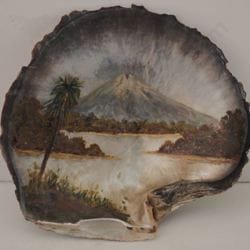
Mount Egmont with Lake
By: John Philemon Backhouse (1845-1908)
Oil on Sea Shell - 13cm x 14cm
Valued $2,000-$3,000
Offers invited over $1,500
Contact: Henry Newrick – (+64 ) 27 471 2242

|
|