
Founded by Max Farndale 1947 - 2018

SAN JOSE, Calif. and SYDNEY, May 18, 2016 /PRNewswire/ -- NETSUITE SUITEWORLD 2016 -- NetSuite Inc. (NYSE: N), the industry's leading provider of cloud-based financials / ERP and omnichannel commerce software suites, today announced that Mons Royale, a global apparel manufacturer and wholesaler of high performance merino clothing has deployed NetSuite OneWorld for business efficiency and growth. Mons Royale is using NetSuite OneWorld for financial consolidation, inventory management, multi-currency for AUD, NZD, Euro, Swiss Franc and Japanese Yen and multi-language support for English, French, Swiss, Norwegian and Japanese, and tax compliance across its head office in New Zealand and seven subsidiaries in Canada, the US, France, Switzerland, Norway, Japan and Australia. With NetSuite OneWorld, Mons Royale has a single source of truth in real-time for the very first time, facilitating more accurate and strategic decision making, as well as impressive cost and time savings.
Founded in New Zealand in 2009 by a professional skier and his wife looking for a more stylish alternative to the traditional technical merino base layers, Mons Royale began shipping international orders during its first year of business. Today, Mons Royale is available in stores across North America, Europe, Japan, Australia and New Zealand, as well as direct to consumers online. As a result of its global growth, Mons Royale struggled to capture real-time insights in order to make informed business decisions.
After a thorough evaluation process that included SAP and Salesforce, Mons Royale selected NetSuite OneWorld for its rapid deployment, powerful customisation and integration platform and its global scalability. With NetSuite OneWorld, Mons Royale has replaced a number of manual processes, allowing personnel to focus on more strategic tasks to grow the business. Furthermore, NetSuite OneWorld's ability to log any currency or stock changes automatically saved its finance staff up to 10 hours a week, where previously these changes had to be logged manually across disparate systems.
Global inventory management is also much more seamless and automated. Inventory can easily be moved around the world, with NetSuite OneWorld automatically recording these inter-company transactions and providing a real-time view of global inventory. Although headquartered in Wanaka in New Zealand, Mons Royale has a substantial global footprint, including manufacturing in China, 20 warehouse locations globally, physical offices in Austria, Switzerland and New Zealand plus multiple shipping locations in key markets around the world. From this footprint, Mons Royal distributes its product to 450 retail locations with NetSuite OneWorld tracking all inventory movement worldwide in real-time.
Ben Irving, Chief Operating Officer at Mons Royale said, "The business benefits delivered by NetSuite OneWorld have been transformational for Mons Royale. As a growing business, we really needed a sophisticated ERP platform to help us introduce more efficient business processes, as well as help manage the complexity associated with a global business, trading in multiple geographies, languages and currencies. For the first time we have a single source of truth available from our headquarters in New Zealand, which enables us to make more strategic business decisions, as well as deploy our most valuable resources on growing the business, versus back office business administration."
NetSuite OneWorld supports 190 currencies, 20 languages and automated tax compliance in more than 100 countries, and transaction in more than 200 countries. With NetSuite OneWorld Mons Royale can experience benefits including:
Today, more than 30,000 companies and subsidiaries depend on NetSuite to run complex, mission-critical business processes globally in the cloud. Since its inception in 1998, NetSuite has established itself as the leading provider of cloud-based financials/enterprise resource planning (ERP) and omnichannel commerce software applications for businesses of all sizes. Many FORTUNE 100 companies rely on NetSuite to accelerate innovation and business transformation. NetSuite continues its success in delivering the best cloud business management software to businesses around the world, enabling them to lower IT costs significantly while increasing productivity, as the global adoption of the cloud accelerates.
For more information about NetSuite please visit www.netsuite.com.au.
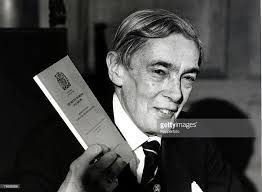 But their Judgments are Not
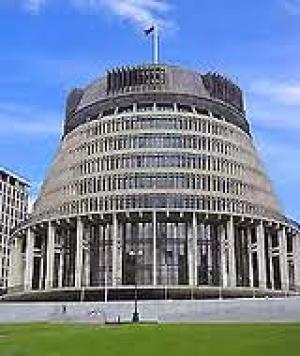
Entries open today for the 2016 Prime Minister’s Business Scholarships, which offer New Zealand executives the opportunity to improve their skills at the world’s best business schools.
Wellington, Beehive, May 16, 2016 - Economic Development Minister Steven Joyce says the scholarships are designed for senior managers, executives and business owners looking to expand their expertise by studying internationally.
“These scholarships enable businesspeople to develop their management and international business leadership skills, in order to make their firms at home more internationally competitive,” Mr Joyce says.
“Having our business leaders study overseas brings tangible benefits to New Zealand businesses and helps to grow the economy. If we increase the number of business leaders with a global mind-set, our businesses are better able to operate to international best practices.
“The scholarships also support New Zealand businesspeople to develop valuable networks and overcome the challenges that our small economy and distance from overseas markets can pose.”
The scholarships cover up to half of the course-related costs of attending an international learning institution.
Last year’s scholarships saw 13 successful recipients enrol at prestigious international institutions such as Harvard, Wharton and Columbia Business Schools, Stanford University, and the London School of Economics.
Applications for the scholarships close on 27 June 2016.
More information is available here
Some manufacturing firms that survived the global financial crisis have one unusual secret to their success: stop manufacturing.
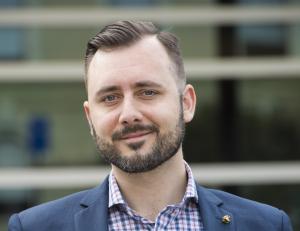
May 17, 2016 - Though just one of the strategies that helped keep some New Zealand manufacturing firms economically buoyant, it was among the most surprising results of Simon Collins’ PhD thesis.
Simon, who graduates on 17 May, dedicated his PhD to investigating the factors that increased resilience in New Zealand manufacturing firms to help them withstand the worst of the global financial crisis nearly ten years ago.
After conducting in-depth interviews with seventeen manufacturing firms, he identified four resilience-building strategies that separated those that continued to perform well during the recession, and those that did not.
"One of the biggest surprises was that some of the resilient firms stopped being manufacturers. They outsourced manufacturing and instead focussed on developing and designing great products, and then taking ownership of distributing and retailing those products themselves. By delivering their products straight to their customers they captured some of the margin that would usually go to a third party," Simon says.
Simon says this tactic was part of a wider survival strategy to maximise efficiencies, which saw resilient manufacturing firms aiming to be more efficient at every stage of the manufacturing process. This improved margins, and as a result, muted the negative effects of lower sales and the unfavourable exchange rate.
Simon’s research identified three other resilience-building strategies:
- Innovating platforms - developing the next generation of products to stimulate new sales
- Actively collaborating - working closely and consistently with other firms and individuals to help develop technology and products
- Cataloguing specialist knowledge and skills - building libraries, creating databases of skills and lodging patents to identify, protect and then capitalise on areas of expertise.
Professor Sally Davenport, one of Simon’s supervisors, says his research captures the response of firms from "some stellar performers to a couple that subsequently went under, so he had a continuum of performance from which to glean resilience factors.
"Simon’s analysis of their experiences can help other firms build resilience to survive future disruptions," she says.
Simon is already doing just that through his consultancy company Visory, which helps businesses use information design to facilitate the communication of strategy.
"I started Visory with two friends around the time I began my PhD. My research has been really valuable in our work because the findings are widely applicable to the type of strategy work we do for our clients," he says.
Simon was also supervised by School of Management’s Associate Professor Urs Daellenbach.
You can reach Simon on This email address is being protected from spambots. You need JavaScript enabled to view it.
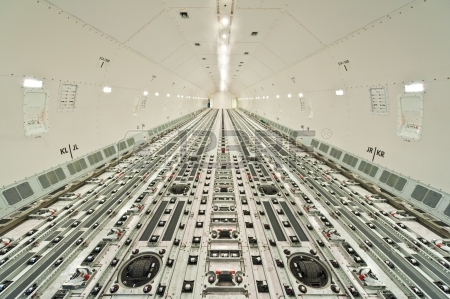 Up up and away from Auckland (and Wellington)
Beef Central, 15 May 2016 - Held in Germany every three years, IFFA is the world’s biggest exhibition of meat processing and packaging technologies, with around 1000 exhibitors mounting displays and 63,000 visitors in attendance. Here’s a snapshot of robotics and other exhibition items that caught the eyes of Australia’s Wiley Engineering staff during the event.

Dutch designer Dave Hakkens has updated his series of Precious Plastic machines, which anyone can build and use to make products by recycling the material.
Blueprints for the new machines, which the designer described as "a solution to plastic pollution", are now available online for anyone to download and build.
The devices are made using everyday materials and basic tools that are available all over the world.
For further information and access to the blue prints see:-
 Odd couple – but The Donald is a more reliable ally than The Guardian

The change to an Australian based health and Safety model certainly is challenging for many businesses and is to requiring to require a lot of clarification as to who has what responsibility for what.
This is now reaching into the areas of corporate bodies and rental properties or building, something that many businesses are operating from.
A little known fact is that it is the owner of the premises, the landlord responsibility under the 2006 “NZ fire safety and evacuation of building regulations” To develop and provide and to implement efficient emergency evacuation procedures for the prompt evacuation of their buildings or premises.
The following article written by Jessie Lapthorne, an associate at law firm Duncan Cotterill, sets out another set of responsibilities that clarifies the issue where a land lord employs contractors to undertake work on their property:-
"Rental properties are now classified as workplaces putting new responsibilities on landlords when undertaking repairs and maintenance.
New legislation means landlords have a responsibility to ensure the health and safety of contractors they engage to carry out work on their property.
Under the new Health and Safety at Work Act 2015 (HSW Act), a landlord is classified as a person conducting a business or undertaking (PCBU) and the property will be classified as a “workplace” if a person is undertaking work there.
As with any other workplace, the PCBU is tasked with protecting the health and safety of its workers and anyone else influenced by the work being carried out.
If, for example, a landlord hires someone to undertake electrical repairs on their rental property, the landlord will have an obligation to ensure that the contractor is suitably qualified to undertake the work and has health and safety systems in place to ensure that workers, tenants, or visitors to the property are not injured in connection with that work.
A landlord who does not meet this obligation could face prosecution under the HSW Act, if someone is injured.
WorkSafe will not take lightly to those who plead ignorance. The latest ACC statistics show that there were more than 146,100 active claims in the home or a commercial/service location as a result of work, at a staggering cost of over $289 million in the year to June 2015.
Given the nature of residential work, such as cleaning, gardening, building, and plumbing and electrical, there is likely to be more than one PCBU, including the landlord and the contractor. There are a number of steps you can take to remain compliant: Identify and manage the risks on the property (such as dogs) and connected to the work to be undertaken;
• Ensure contractors are sufficiently competent to perform the work and have their own individual health and safety plan; • Ensure contractors understand their health and safety requirements, particularly in relation to the risks identified; • If possible, meet with the contractor on site at the property and discuss risks and health and safety requirements, and make notes of the meeting and the discussion; • Consider appointing a project manager or property manager to manage the risks for contractors (although this will not excuse a landlord from liability)."
ConclusionJessie’s article certainly clarifies a number of Health and Safety issues and this now taking this business responsibility to another level. Like it or hate it, the HSW Act its enacted, it’s happening and we now, as a nation of responsible property and business owners have to make it work, it is no longer a negotiable option for any business owner .
 Gordon Anderson is the managing director of Hasmate Ltd of Napier. Since 1993 he has worked extensively in the area of health and safety as an adviser, systems development, auditing and management training. He works with a wide range of industries in Hawke's Bay and in other centres.

Taranaki tycoon urges countrymen to explore new business frontier
Napier, MSCNewsWire, Friday 13 May 2016 - The West’s only oligarch Stephen Jennings under the sponsorship of the New Zealand Initiative will address an Auckland forum in July this year.
The Taranaki-born and Massey University educated Jennings is considered to be one of the very few genuine inhabitants of the pantheon of the South Seas nation’s super rich.
He is certainly the West’s only authentic Russian oligarch having arrived there with Credit Suisse, and then set up on his own account.. His Renaissance operation took a roller coaster ride in the aftermath of the old USSR with Mr Jenning’s personal stake considered at its peak to have been touching $5billion.
Now considered to be in the neighbourhood of a more manageable $1 billion, Mr Jennings these days has set his oligarchical sights on African infrastructure.
African infrastructure in recent years has been the focus of Vincent Bollore the French financier whose long arm touched New Zealand taxpayers last year when he gamed Gameloft, a French videogame company underpinned by government stimulus funds.
Mr Jennings, a man of youthful demeanour and front row prop aspect, most definitely deserves pride of place on any New Zealand international social register. In post-Glasnost Moscow Mr Jennings and his former wive Tina became Russia’s first foreign power couple.
Now the former Mrs Jennings is the companion of Lord Lawson, who as Nigel Lawson was the Thatcher-era’s defining chancellor of the exchequer, and who is better known now as the father of Nigella, the television cook.
The Skycity event is a dinner on July 14 and Mr Jennings will set out the case for New Zealand investment in Africa.
From the MSCNewsWire reporters' desk This email address is being protected from spambots. You need JavaScript enabled to view it.

Palace of the Alhambra, Spain
By: Charles Nathaniel Worsley (1862-1923)
From the collection of Sir Heaton Rhodes
Oil on canvas - 118cm x 162cm
Valued $12,000 - $18,000
Offers invited over $9,000
Contact: Henry Newrick – (+64 ) 27 471 2242
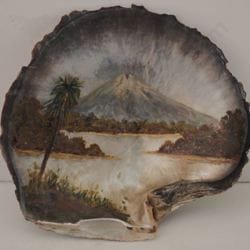
Mount Egmont with Lake
By: John Philemon Backhouse (1845-1908)
Oil on Sea Shell - 13cm x 14cm
Valued $2,000-$3,000
Offers invited over $1,500
Contact: Henry Newrick – (+64 ) 27 471 2242

|
|