
Founded by Max Farndale 1947 - 2018
The report, ‘Beyond commodities: Manufacturing into the future’ released today by the Ministry of Business, Innovation and Employment provides great insight into New Zealand’s manufacturing sector, showing the value it brings to our economy, the potential it holds for future growth and the challenges it faces.

Te Papa Tongarewa museum’s first chief digital officer Melissa Firth, who built a digital team almost from scratch, has been named among the top 100 CIOs in New Zealand for 2018.

The latest developments in the fascinating and fast-moving world of artificial intelligence will be revealed and discussed in Auckland in 2020, when the International Conference on Autonomous Agents and Multiagent Systems (AAMAS) comes to New Zealand for the first time in its nearly 20-year history.
Key parts of manufacturing are moving beyond commodities into value-added products, a new report released today by Economic Development Minister David Parker shows.
The 150 page report, Beyond Commodities: Manufacturing into the Future, is the most comprehensive on New Zealand manufacturing to be published in a decade.
It was launched at the Manufacturer’s Forum hosted by EMA, in association with the Manufacturer’s Network and Callaghan Innovation.
“This report shows the huge diversity of manufacturing in New Zealand, from core household goods like cleaning products, to building products, furniture and steel,” Mr Parker says.
The report also identifies a number of challenges for manufacturers, including difficulty finding skilled tradespeople and a lack of scale relative to international competitors.
“The continued lack of productivity growth remains troubling and limits opportunities for development,” Mr Parker says.
“Manufacturing is crucial to boosting jobs and growing our exports, particularly where New Zealand enjoys a comparative advantage. The sector’s potential is clear and we need to devote more of the country’s resource it.”
“The Government’s Tax Working Group and reforms we are making to the Reserve Bank Act are important steps on the path to a more productive economy.”
A key finding in the report is the degree to which production and export of high-value products is starting to gain real traction. Medical equipment, pharmaceuticals and agritech machinery and systems collectively generate $1 billion of exports. Infant formula and innovative foods such as nutraceuticals are generating double digit growth.
The report, part of the Sectors Reports Series, confirms that manufacturing will continue to play a major role in the economy, particularly in the regions.
Manufacturing provides 221,000 jobs, generates $36 billion in exports, and spends $670 million on research and development.
“Manufacturing has borne the brunt of changing global dynamics and these changes have resulted in increased competition for Kiwi firms.
“However, the globalised economy has also increased opportunities for local firms to target valuable niches,” Mr Parker says.
“Value-added products can offer higher returns and efficiencies for New Zealand businesses and allow for more productive land use with a lower impact on the environment.”
The report will help provide the information government and industry needs to adapt to emerging domestic and global opportunities.
The report is available at: www.mbie.govt.nz/manufacturing
{ A Beehive release } || April 17, 2018 |||
Place your news on MSCNewsWire here
Apr 17 - A comprehensive report on New Zealand’s manufacturing sector signals some of the strengths and challenges facing the sector at present.
Apr 17 - Twenty-seven years after the Porter Project recommended New Zealand should pursue a "clusters" strategy to develop its manufacturing base, a government study of the manufacturing sector has found there are "few economically significant manufacturing clusters in New Zealand".

Fifteen years after New Zealand first proposed a carbon tax to address climate change, the country’s policy-makers have apparently learned nothing.

A new aquatic centre, upgrades to stormwater systems and the estuarine environment, and the possibility of providing dechlorinated water stations are three of the projects to be considered under Napier City Council’s 2018-2028 Long Term Plan (LTP).

EMANZ is delighted to announce today that Jason Anderson, President and CEO of Cleantech San Diego, is confirmed as a second Keynote speaker for its low emissions conference in May.
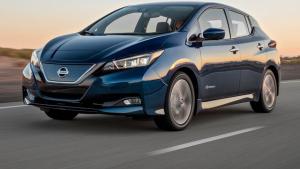
With a global commitment towards minimising carbon emissions, New Zealand businesses are increasingly embracing more sustainable transport options to get their employees from A to B.

Palace of the Alhambra, Spain
By: Charles Nathaniel Worsley (1862-1923)
From the collection of Sir Heaton Rhodes
Oil on canvas - 118cm x 162cm
Valued $12,000 - $18,000
Offers invited over $9,000
Contact: Henry Newrick – (+64 ) 27 471 2242
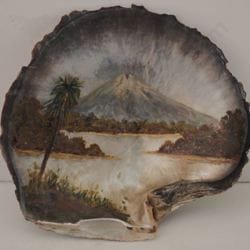
Mount Egmont with Lake
By: John Philemon Backhouse (1845-1908)
Oil on Sea Shell - 13cm x 14cm
Valued $2,000-$3,000
Offers invited over $1,500
Contact: Henry Newrick – (+64 ) 27 471 2242

|
|