
Founded by Max Farndale 1947 - 2018
Apr 17 - Fletcher Building has unveiled a $1.25 billion refinancing plan to strengthen its balance sheet after extending talks with US noteholders over a breach of its lending conditions

The hospitality giant’s fifth Ramada in Auckland is slated to open in 2020 Responding to a growing demand for high-quality accommodation in Auckland, Wyndham Hotel Group is strengthening its presence in New Zealand’s largest visitor centre with the addition of Ramada Hotel & Suites Newmarket.
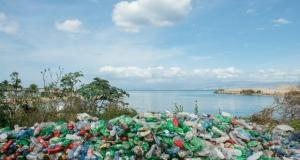
A fund intended to tackle plastic pollution has been set up by the UK government raccording to a report in PackagingNews.
Apr 17 - Fletcher Building plans to raise $750 million in an underwritten offer to shareholders at a deep discount and sell its Formica and steel roof tile businesses, strengthening its balance sheet and gaining support from its banking syndicate after a breach of . . .
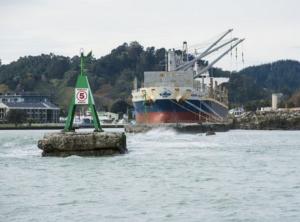
Eastland Port shifted three million tonnes of cargo in the financial year to the end of March 2018, breaking all previous records. In the year in question, 31,178 ships took away 3,002,369 tonnes of cargo from Eastland Port.

Virgin Australia today announced a suite of changes to its Trans-Tasman services, including two new routes and increased frequency into key markets.
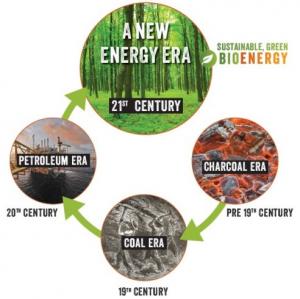
In response to the Government’s policy of achieving zero emissions by 2050 the Bioenergy Association says “Reducing greenhouse gas emissions from food processing sector waste should be at the top of the list for encouragement from Government if we are to achieve zero emissions by 2050”
Brian Cox, Executive Officer of the Bioenergy Association said “Using food processing wastes as a source of energy for the manufacturing plant is so obvious that it is no wonder that more and more food manufacturers are starting to install equipment that turns waste into energy. The equipment and processes are proven and can be easily installed.”
“The treatment of food processing waste in a waste-to-energy facility also avoids the discharge of methane to the atmosphere as a greenhouse gas contributor.”
“It is a no-brainer that using waste to produce energy and reduce greenhouse gas emissions also reduces manufacturing costs.”
A study (see below) commissioned by the Bioenergy Association has identified that the waste from the food processing industry can be an opportunity for reducing processing plants’ energy costs and their carbon footprint.
A review of the amount of food processing industry waste which can be converted into energy and fertiliser by anaerobic digestion shows that over 106 kt CO2-e of emissions could be avoided by 2030 and over 207 kt CO2-e of emissions by 2050 provided appropriate acceleration policies are adopted by the government.
“Overall, there is a potential for reduction of emissions from industrial wastewater treatment (mainly red meat and poultry processing) by improving the efficiency of the existing anaerobic treatment ponds and using the generated gas as fossil fuels substitute to reduce operating costs. In addition, replacement of primary treatment technologies with anaerobic treatment coupled with efficient gas capture and utilisation has a potential to generate additional GHG emissions reduction (i.e. carbon charge reduction for industrial emissions) and provide renewable energy source for industrial heating.”
{ A BioEnergyOrg release } || April 16, 2018 |||
Have your news read on MSCNewsWire
Apr 16 - New Zealand's government needs to get some tangible wins with its national transport strategy in building a more efficient, resilient and sustainable freight network to avoid returning to an uncoordinated policy, says Mainfreight chief executive Don Braid

Palace of the Alhambra, Spain
By: Charles Nathaniel Worsley (1862-1923)
From the collection of Sir Heaton Rhodes
Oil on canvas - 118cm x 162cm
Valued $12,000 - $18,000
Offers invited over $9,000
Contact: Henry Newrick – (+64 ) 27 471 2242

Mount Egmont with Lake
By: John Philemon Backhouse (1845-1908)
Oil on Sea Shell - 13cm x 14cm
Valued $2,000-$3,000
Offers invited over $1,500
Contact: Henry Newrick – (+64 ) 27 471 2242

|
|