
Founded by Max Farndale 1947 - 2018
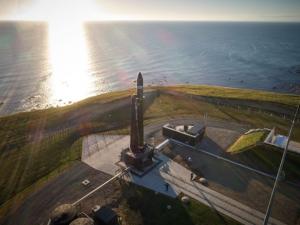
Dec 13, 2017 - : Rocket Lab has completed analysis of the Electron test flight abort that occurred during the company’s ‘Still Testing’ launch attempt yesterday. The analysis determined the launch was aborted due to rising liquid oxygen (LOx) temperatures feeding into one of the Electron’s nine Rutherford engines on the vehicle’s first stage. Rocket Lab has implemented corrective actions ahead of the next launch attempt, which is currently targeted for no earlier than 2.30 pm, Thursday 14 December NZDT.
The slight LOx temperature increase was a result of a LOx chilldown bleed schedule that was not compatible with the warm conditions of the day at Launch Complex-1. Rocket Lab has modified the bleed schedule to ensure components are sufficiently chilled ahead of a new launch attempt tomorrow.
While the temperatures were within safe parameters for launch, Rocket Lab had set conservative parameters for the test flight campaign that led to the vehicle performing a safe auto-sequence abort at T-2 seconds prior to a lift-off. The abort caused no damage to the vehicle or launch pad infrastructure, with the vehicle performing exactly as expected in accordance with the launch criteria.
Rocket Lab CEO and founder Peter Beck said the rapid and safe abort was yet another advantage of Rocket Lab’s advanced electric-turbopump engine technology, which can shutdown significantly faster than traditional turbopump engines.
“Electron performed as it should if it detects anything off-nominal during the auto-sequence and the electric turbopumps shut down in milliseconds. Our team developed very advanced systems to prevent launch if any one of thousands of factors isn’t perfectly aligned, and yesterday we proved those systems are performing well,” he said.
“We quickly identified the cause, put corrective actions in place and are looking forward to another launch attempt soon.”
For real-time updates from Rocket Lab, follow us on Twitter @RocketLab
| A RocketLab release || December 13, 2017 |||
Dec 13, 2017 - Minister for Agriculture, Biosecurity, Food Safety and Rural Communities Damien O’Connor announced today that the Ministry for Primary Industries (MPI) will reorganise its functions to create a stronger focus on core responsibilities. Mr O’Connor says government will set up four portfolio-based entities, Fisheries New Zealand, Forestry New Zealand, Biosecurity New Zealand and New Zealand Food Safety.
“Our priority is to achieve greater clarity and unity of purpose for these areas. We are seeking enhanced visibility of government policy and regulatory activities and clearer lines of accountability and engagement for stakeholders.
“We are now looking to the Director General of MPI to work with his team to achieve this, while ensuring prudent and efficient use of taxpayer and industry funds.
“MPI will continue to meet the expectations of our international trading partners as the competent authority.’’
MPI will build up its forestry presence in Rotorua, Mr O’Connor says.
“Rotorua’s location puts it at the heart of our forestry sector and makes it the most appropriate site for a dedicated forestry presence to support the Government’s ambition in this important sector.
“It’s likely further change in the forest space will occur after policy and operational work to deliver the Government’s ambitious goals in this area.”
Reorganisation of MPI’s functions will occur in the early part of 2018 and will be in place by April.
“I would like to thank MPI staff for their commitment and hard work in the primary sector and assure them that there will be no reduction in staff numbers as a result of these changes. This change is about increasing focus and ensuring greater visibility of fisheries, forestry, biosecurity and food safety,” Mr O’Connor says.
The estimated cost to implement the changes is $6.8 million to establish the four portfolio-based business units. Additional ongoing operating costs are estimated at $2.3m per annum.
Mr O’Connor says reprioritised money from the Primary Growth Partnership Fund will pay for the changes so there will be no additional cost to taxpayers.
“This is a prudent and cost-effective change that can be managed with existing monies.’’
| A Beehive release || December 13, 2017 |||
DEc 13, 2017 - Forestry Minister Shane Jones has today welcomed the separation of portfolios within the Ministry of Primary Industries, saying it marks a new era for forestry in New Zealand. The Ministry for Primary Industries (MPI) will reorganise its functions to create a stronger focus on core responsibilities.
Four new, separately branded portfolio-based branches will be established within MPI – Fisheries New Zealand, Forestry New Zealand, Biosecurity New Zealand and New Zealand Food Safety.
Mr Jones says the refocusing of the ministry’s functions will put greater emphasis on forestry, in line with the Government’s dedication to the sector.
“This Government has made a commitment to focus on regional economic development and the planting of 1 billion trees to support and grow a sustainable forestry sector,” Mr Jones says.
“The planting programme will also increase employment opportunities in the regions and help meet our climate change targets,” Mr Jones says.
“New Zealand Forestry will have leading role in meeting our 1 billion tree commitment, as well as in training people, finding land for afforestation and working closely with the sector.
“We have a highly motivated forestry sector in New Zealand and I’m looking forward to seeing what we can achieve in partnership over the coming years,” Mr Jones says.
| A Beehive release || December 13, 2017 |||
Dec 13, 2017 - Pumpkin prices increased 176 percent in the year to November 2017, to reach $5.78 a kilo, the highest price since the food price series began in December 1993, Stats NZ said today. Pumpkin and kumara are typically more expensive in November, but both hit record levels after larger-than-usual increases this year.
“Poor growing conditions due to the wet weather early this year had a huge impact on the supply of pumpkin and kumara,” consumer prices manager Matthew Haigh said. “Pumpkin prices have reflected lower supply, with dramatic price increases in the last three months, while kumara prices increased more steadily through the year.”
Kumara prices increased 83 percent in the year to November 2017, to reach a record of $8.99 a kilo. Kumara was $4.92 a kilo in November 2016. Potatoes, also a big contributor to the 6.3 percent increase in vegetable prices, increased 19 percent in the past year.
Higher vegetable prices, along with a 2.3 percent increase for ready-to-eat food (primarily biscuits, cakes, and hot drinks) and a 6.8 percent increase for fruit, pushed food prices up 2.3 percent in the year to November 2017.
Tomatoes and strawberries cheaper in November
Fruit and vegetable prices fell 2.6 percent in November, the main contributor in an overall 0.4 percent fall in food prices. However, after seasonal adjustment, fruit and vegetable prices rose 1.2 percent.
With summer approaching, tomatoes and strawberries had big price falls (down 44 percent and 22 percent, respectively), making them the largest contributors to the overall fall in food prices this month.
The average price for tomatoes was $4.32 a kilo in November, down from $7.68 in October 2017.
“Although tomato prices dropped considerably this month, they’re still at a much higher level than in November 2016 after seeing an annual increase of 27 percent,” Mr Haigh said.
Butter reached another record high, rising 1.3 percent in November. The average price of the cheapest available 500g block of butter was $5.74 in November 2017, up from $5.67 in October 2017 and $3.88 in November 2016.
| A STATSNZ release || December 13, 2017 |||
Dec 13, 2017 - The export price of butter reached a new high in the September 2017 quarter, to be up 8.8 percent from the June 2017 quarter, Stats NZ said today. Export butter prices increased 75 percent in the year ended September 2017, and these gains were closely tracked in domestic butter prices in New Zealand shops.
Whole milk powder prices were down 2.0 percent and cheese fell 1.7 percent in the September 2017 quarter. Dairy product export prices as a whole increased 38 percent in the September 2017 year, despite dipping 0.9 percent in the September 2017 quarter.
The recent increase in butter export prices was influenced by high global demand and a drop in European milk supply.
"Lower international supply was caused partly by lower farm-gate milk prices in Europe, which led to reduced herd sizes. At the same time we’ve seen a consumer swing towards butter and away from products like margarine,” prices senior manager Jason Attewell said.
“Globally, consumers often place a premium on New Zealand butter. That demand has pushed the export price to new heights.
In the September 2017 quarter, the price of a 500g block of butter (as measured by the consumers price index) was up 9.7 percent from the June 2017 quarter.
“Kiwi food shoppers have felt the impact of record world butter prices. The average price of the cheapest available block of butter in supermarkets reached a record $5.55 in September, up 60 percent from September 2016,” Mr Attewell said. “Prices have continued to climb into November, hitting $5.74 a block.”
“In recent years, export and domestic price changes for butter have tracked very closely, which reflects the fact that New Zealand consumers are ‘price takers’ on the international market despite New Zealand being a major butter producer.”
Other indicators, such as the fortnightly Global Dairy Trade (GDT) auction price for butter, also increased during the September 2017 quarter– the auction price reached a five-year high of US$6,026 a metric tonne on 19 September 2017.
However, since September GDT prices have fallen. The auction price on 5 December 2017 was down 24 percent to US$4,575 a metric tonne. Typically, there has been a lag of 4–6 months between GDT price movements and the prices New Zealand consumers see on supermarket shelves.
Local and international production have both increased and milk supply in Europe has begun to expand.
“Fears of the butter shortage, or #BeurreGate, continuing through to Christmas have abated,” Mr Attewell said.
“However, with the dry start to our summer it’s unclear how the price of butter will change in the near future.”
A STATISTICSNZ release || December 13, 2017 |||
Dec 13, 2017 - The appointment of Adrian Orr to be the new Governor of the Reserve Bank of New Zealand (RBNZ) appears to be a good move by the Minister of Finance. To be really effective, however, Mr Orr will need to take seriously the issue of our sustained overvalued exchange rate over the last decade which has played a role in holding back export growth.
“We are hopeful the appointment of someone from has worked inside the RBNZ, but also had a very successful career outside since, signals a willingness for reform within the bank, given the review and the new Government’s pre-election promises of changes to targets and the decision-making model, says Dr Dieter Adam, CE, The Manufacturers’ Network.
“Under the previous Governor’s leadership we saw consistent comments around the role of the currency in holding back growth in exports. We did not, however, see much credible action to change the situation. We understand that under current settings, the RBNZ has limitations as to what it can do to address the exchange rate level and volatility. With a new Governor more willing to act within existing means and the potential for wider reform, there is an opportunity to make strides to address the challenge.
“Our currency remains significantly higher than long term averages, both on the Trade Weighted Index and critically, against the Australian Dollar, where much of our manufacturer's export revenue comes from.
“The RBNZ’s recent work to introduce macro-prudential tools, such as the loan-to-value ratios have been a positive move to address concerns on financial stability while giving the Bank more freedom to act on interest rates. We would encourage the incoming Governor to continue down this path, particularly in continuing investigation of debt-to-income rations.
“Addressing the currency challenges our tradable sector has faced over the last decade are key to helping to improve our export success and the transition to a more productive and high value economy. Let us not forget, however, that the use of updated targets and additional tools by the RBNZ alone won’t suffice to meet the challenge. The Government needs to make decisive policy changes to address the economic fundamentals behind – first and foremost - the misallocation of capital into property speculation, high levels of household debt, and the absence of any significant productivity growth in the real economy of New Zealand." says Dr Adam.
| A Manufacturers Network release || December 13, 2017 |||
SANTA MONICA, Calif., Dec. 12, 2017 /PRNewswire/ -- AirMap has joined forces with Airways New Zealand to deploy an unmanned traffic management system that enables safe and compliant drone flights for a three-month trial in the Canterbury and Queenstown regions of New Zealand.
Drone flights in New Zealand are growing exponentially. Over the past three years, weekly recorded drone flights in the country's controlled airspace have increased 20-fold. As drones take off in increasing numbers, unmanned traffic management (UTM) technology will allow them to integrate safely with New Zealand's national airspace system.
The Airways-AirMap trial brings digital authorization capabilities first deployed in the U.S. for the LAANC program to New Zealand. Using AirMap's free iOS and Android apps, drone operators can request digital airspace and public land owner approvals required by New Zealand's Civil Aviation Authority. Digital authorization is available from the Christchurch, Queenstown, and Wanaka airports and on public lands in the Christchurch City, Selwyn, and Queenstown Lakes District Councils, including parks and reserves. Commercial and recreational drone operators are invited to take part in the trial, which is currently underway and will significantly simplify and streamline the authorization process.
Airspace managers participating in the trial are using the AirMap airspace management dashboard to provide digital flight authorizations and share real-time updates about the location of events, community gatherings, emergencies, and other areas to avoid. This information is delivered immediately to the AirMap app to enable safer flights and more comprehensive situational awareness.
Airways New Zealand is the key enabler of the region's aviation system and a leading provider of air traffic management services worldwide, serving more than 65 countries and managing more than 1 million air traffic movements each year. "The trial is an important step in investigating how Airways could develop a nationwide UTM system that safely integrates UAVs into New Zealand's wider air traffic control network," said Airways Chief Executive Graeme Sumner. "There is potential for New Zealand to become a test-bed for the UAV industry through the implementation of a system that supports growth and development in a safe manner."
"We're very excited to help New Zealand's drone pilots more easily and safely access the airspace," said Ben Marcus, AirMap CEO. "With the world watching, Airways and AirMap are demonstrating how UTM technologies can safely open the skies to high-scale drone operations, today."
About AirMapAirMap is the world's leading airspace management platform for drones. Millions of drones, hundreds of drone manufacturers and developers, and hundreds of airspace managers and stakeholders rely on AirMap's airspace intelligence and services to fly safely and communicate with others in low-altitude airspace. For more information please visit www.airmap.com and follow @AirMapIO on Twitter.
About Airways New ZealandAirways New Zealand is a world-leading provider of air traffic management services and a key enabler of the region's aviation system, optimising air traffic flows across the entire aviation network. We are responsible for one of the largest Flight Information Regions in the world of 30 million square kilometres, and we manage more than 1 million air traffic movements per year. Airways operates in New Zealand as a State-Owned Enterprise (SOE). We also provide air traffic control and engineering training, and have delivered air traffic management, Flightyield revenue management solutions, navigation services and consultancy in more than 65 countries. For more information please visit www.airways.co.nz.
| December 13, 2017 |||
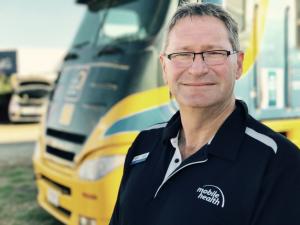
Dec 13, 2017 - The national surgical bus, possibly the only one of its type in the world, is looking for a significant change next year to keep up with demands and with high technology. Mobile Health chief executive Mark Eager says they are assessing cutting-edge new technologies with portable and modular healthcare facilities to help district health boards cope when they are under pressure and to assist in smaller towns and rural areas. “We are making substantial bright new changes next year but also continuing with our mobile surgical bus all over New Zealand,” Eager says. “We will be introducing an online interactive learning system and we will also be helping a nationwide stocktake of telehealth and all the facilities for the benefit of all Kiwis. “We are probably the only mobile surgical bus in the world. There are others that are on the road for months at a time. There is one container truck that looks like a food delivery truck in Ecuador which works for a few months a year. “But ours it unique in the way that we operate. It is an amazing concept and a great way of sharing an expensive resource. What we do saves $2 million a year in each town on capital costs, if they had to build a similar facility from scratch. “The bus is getting a new look over Christmas. So, we are excited for Kiwis who need the service next year. Mobile Health will also be working with health organisations to bring another Health Hub to Fieldays 2018. “Our annual rural nurses meeting will be staged in May. This is a great opportunity for rural nurses to expand their knowledge and catch up with one another. “This year we had our first education session via video conferencing with nurses on the Chatham Islands. We will continue to look at remote locations to bring to help our rural health development.” New Zealand’s mobile surgical bus marked its 15-year anniversary earlier this year after more than 21,300 operations in 24 towns. The mobile operating theatre marked its first day of surgery at Te Puia Springs, 100km north of Gisborne back on March 8, 2002. An independent health consultants report has found up to 300 patients annually would probably miss out on surgery if was not for the mobile surgical unit, with its state-of-the-art surgical operating theatre. The bus receives $4 million annually from the Ministry of Health. The bus runs on a five-week rotation system around New Zealand, carrying out operations at Kaikohe, Dargaville, Warkworth, Pukekohe, Te Puia, Wairoa, Taumarunui, Waipukurau, Taihape, Hawera, Levin, Dannevirke, Kapiti, Featherston, Takaka, Motueka, Buller, Waikari, Rangiora, Oamaru, Clyde, Queenstown, Balclutha and Gore. “The reason why the bus exists is to deliver care closer to home which is in line with the government policy. It also helps with recruitment and retention of health professionals in rural towns. We provide low risk day surgery in rural communities that don’t have local access to full operating theatres. “Patients are referred by their doctor to their district health board which places them on the surgical bus operating list. The bus delivers surgeries such as general surgery, children’s general anaesthetic dental, gynaecology, colonoscopy and minor orthopaedic operations. “The clinical team is made up of five teams, with a charge nurse, an anaesthetic tech and a driver on a five-week schedule. Each day they’re joined by an anaesthetist, surgeon and four nursing staff from the local town.”
| A Mobile Health release || December 13, 2017 |||

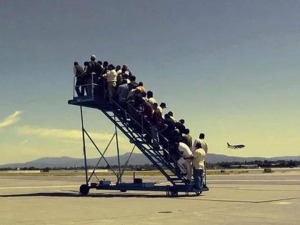

Palace of the Alhambra, Spain
By: Charles Nathaniel Worsley (1862-1923)
From the collection of Sir Heaton Rhodes
Oil on canvas - 118cm x 162cm
Valued $12,000 - $18,000
Offers invited over $9,000
Contact: Henry Newrick – (+64 ) 27 471 2242
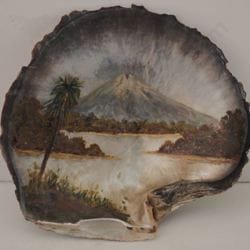
Mount Egmont with Lake
By: John Philemon Backhouse (1845-1908)
Oil on Sea Shell - 13cm x 14cm
Valued $2,000-$3,000
Offers invited over $1,500
Contact: Henry Newrick – (+64 ) 27 471 2242

|
|