
Founded by Max Farndale 1947 - 2018
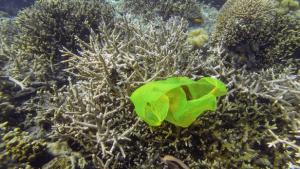
Dec 12, 2017 - Considering we pump millions of tons of plastic into the oceans every year, there is a hell of a lot we don't know about its whereabouts and its impact on the marine environment. A study examining how the material is torn apart by ocean life has uncovered some eye-popping evidence, finding that a single plastic bag is literally broken into millions of microscopic pieces before being spread throughout the seas.
It's hard to overstate the gravity of our plastic problem. Recent research tell us there is somewhere between 4.8 and 12.7 million metric tons of the material washing into the oceans each year. But what makes all that trash so hard to track is that it is broken down into microplastic fragments that are smaller than the fingernail on your pinky.
Scientists say they have been able to account for roughly one percent of all plastic waste in the ocean, but there is still so much to learn about where it all goes after being swept away from open dumps and improperly secured landfills.
Looking into such matters is a team of marine scientists at the University of Plymouth, who conducted a study to learn more about how quickly different types of plastic are broken down by marine organisms, and whether the rate of degradation was impacted by biofilm (a layer of organic material that builds up on the plastic over time).
The team observed how the amphipod Orchestia gammarellus, which lives in coastal areas of northern and western Europe, broke down plastic bags. Through monitoring in the lab and along the shoreline, the scientists found the crustacean could tear a single plastic bag into 1.75 million separate pieces of microplastic, with the debris then found in and around their excrement.
The type of plastic, whether conventional, degradable or biodegradable, was found to have no impact on how quickly it were consumed, but interestingly, the presence of biofilm speed things up by four times. This throws further weight behind a growing body of research that suggests marine life can be enticed by ocean debris at mealtime, particularly when there is natural matter building up on its surface.
For example, a study last year found that seabirds were mistaking plastic debris for food because organic compounds were giving off a familiar stench. Within just three weeks, plastic samples placed in a contained environment had become coated in a sulfur compound called dimethyl sulfide (DMS), which happens to be the same compound (and smell) that the birds usually relied on to find krill for dinner.
"An estimated 120 million tonnes of single-use plastic items – such as carrier bags – are produced each year and they are one of the main sources of plastic pollution," said Professor of Marine Biology at Plymouth University Richard Thompson. "They already represent a potential hazard to marine life, but this research shows species might also be contributing to the spread of such debris. It further demonstrates that marine litter is not only an aesthetic problem but has the potential to cause more serious and persistent environmental damage."
The research was published in the journal Marine Pollution Bulletin.
Source: Plymouth University || December 12, 2017 |||

Dec 13, 2017 - The apple industry is still not sure of the cost of a fungicide contamination which has threatened to destroy 35 hectares of apples in Hawke's Bay and lop several million dollars off the value of the export harvest.
The issue first came to light when Nelson-based Adama New Zealand was alerted by a Hawke's Bay orchardist on October 5 to a potential issue with blemishes discovered on the leaves and young buds of some Royal Gala tree varieties.
The company, part of a world-leading crop protection group, began an investigation which led less than a fortnight later to the pre-emptive recall of cover spray Mancozeb.It was later found a batch imported from India contained fungicide Azoxystrobin — commonly used in the growing industry, but not for apples, and a complete no-no for the signature New Zealand variety of Royal Gala.
The fungicide caused russet on apple skins, knocked apples off trees prematurely and damaged leaves, and it was reported soon afterwards that 185 hectares had been affected, mainly in the Nelson region, where 20 growers were compromised, but also 35ha in Hawke's Bay, where nine growers were affected, understood to be primarily in the Havelock North area.
Adama NZ chief executive David MacGibbon said on November 3 when announcing the permanent recall of Mancozeb from sale, that while the product was not one produced by his company, he was "devastated" by the impact on growers who he said were "like family to us, many of us have known each other for decades".
"Mancozeb has been a widely used product in spring for apple growers since we started selling it 10 years ago," he said. "There have never been any issues before."
"However, we will not be selling it again as we have now lost our faith in its manufacturer. This is the only product they produce for us."
It doesn't affect last season's apples, which had been applied with previous uncontaminated batches of Adama Mancozeb, and the company is continuing to run tests heading towards harvest in the current season on all crops where the product has been used, and will further support growers, Mr MacGibbon said.
Hastings-based industry leader Alan Pollard, CEO of New Zealand Apples and Pears, which until April was known as Pipfruit New Zealand, said yesterday a tracking system managed to establish quickly which growers had received the rogue batch, but while it is now more than two months since the alarms were first sounded it would be still a while before the cost could be established.
Insurance risk assessors have been working with growers and the company, and costs are assessed on the "physical loss" (complete destruction) and "economic loss" which includes diminished value of fruit able to be salvaged but not able to be exported.
With almost 10,000ha of apple orchard nationwide, the area affected represents about 1.85 per cent, which Mr Pollard said may be the equivalent of stock lost most years because of hail damage, and some of the loss is being minimised by thinning.
But based on the value of last year's exports — about $800 million — export market losses in Hawke's Bay could be about $3 million.
The product at the centre of the problem was just one of several of its type and orchardists have had other options.
| A Hawkes Bay Today release || December 12, 2017 |||


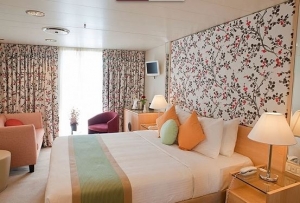
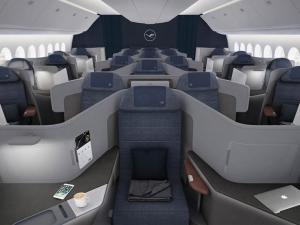
Dec 12, 2017 - Lufthansa has unveiled the concept for its new Business Class cabin, which will debut on the Boeing 777-9 (777X) in 2020. The carrier says Business Class passengers can look forward to lie-flat beds with a length up to 220cm (86.6 inches). Its goal is to provide passengers with the “best and soundest sleep up above the clouds”, and the backrest has been designed to provide the best possible support and comfort, including when lying on your side.
Over 500 Lufthansa customers have provided in-depth support during the development process. Privacy and comfort while sleeping emerged as two of the most important passenger needs on international routes, and Lufthansa says both of these are “handled perfectly” with the new Business Class concept.
“The new, ultra-modern Lufthansa Business Class creates a new global benchmark,” said Harry Hohmeister, Member of the Executive Board of Deutsche Lufthansa AG. “It offers our passengers a unique travel experience.
“We have consistently and continuously refined our range of premium products for our guests and modernised Lufthansa. Our focus is and has always been on the wishes of our customers and their specific needs. We want to provide them with the perfect travel experience. The new Business Class showcases the full innovative capacity of Lufthansa.”All Business Class passengers on Lufthansa’s 777-9s will have direct aisle access, thanks to the 1-2-1 and 1-1-1 configuration.
The 1-2-1 and 1-1-1 seat configuration will ensure all passengers have direct aisle access, and they will also have more personal and storage space. Passengers will also be able to control the in-flight entertainment system with their personal devices, and wireless device charging will be available.
Depending on their personal needs, passengers will be able to choose between a number of spatial configurations. For instance, they can choose to have an extended-length bed or a seat with twice as much desk space.
Lufthansa has also revealed that new exclusively-developed mattresses will be introduced in the Business Class cabin on long-haul flights from early-2018.
| AN FTE release || December 12, 2017 |||

Palace of the Alhambra, Spain
By: Charles Nathaniel Worsley (1862-1923)
From the collection of Sir Heaton Rhodes
Oil on canvas - 118cm x 162cm
Valued $12,000 - $18,000
Offers invited over $9,000
Contact: Henry Newrick – (+64 ) 27 471 2242
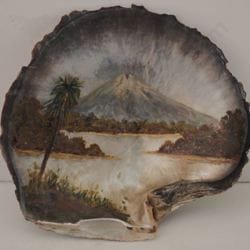
Mount Egmont with Lake
By: John Philemon Backhouse (1845-1908)
Oil on Sea Shell - 13cm x 14cm
Valued $2,000-$3,000
Offers invited over $1,500
Contact: Henry Newrick – (+64 ) 27 471 2242

|
|