
Founded by Max Farndale 1947 - 2018
Dec 12, 2017 - The New Zealand citrus industry’s ongoing commitment to working with Delytics Ltd to increase fruit quality has resulted in the majority of their navel oranges being liked by consumers in 2017, despite a challenging growing season.
Supermarket monitoring showed approximately 85% (6 out of 7) of all New Zealand navel oranges met the New Zealand Citrus Growers’ Inc (NZCGI) minimum maturity standard in 2017, compared to 67% in 2015 before new processes were implemented. This year’s average weekly acceptability ranged from 78% to 95%, and stayed above 90% for three out of nine sampling weeks.
New Zealand’s navel orange growers actively contributed to this positive result by taking part in the voluntary clearance programme that was adopted by NZCGI at the start of 2016. Delytics Ltd developed the clearance process and has carried out NZCGI’s orchard monitoring programme for the past two seasons.
This season, Navel orange orchards in Northland and Gisborne were monitored from early February until late September to measure changes in fruit quality and predict when fruit would meet NZCGI’s minimum maturity standard.
Up until May 2017, BrimA measurement data and maturity models produced by Delytics suggested an earlier start to the season than in 2016. However, the BrimA data showed a significant maturity slowdown in May and alerted the industry to a later harvest date, which ended up being almost 4.5 weeks later than 2016. This sudden maturity slowdown is thought to have been caused by unseasonal weather, which saw drought conditions in the summer followed by more than twice the average rainfall from February through to May.
Delytics Managing Director Mark Loeffen says, “The monitoring was critical to understanding how internal fruit maturity changed during a season of challenging weather conditions. One of the keys to the ongoing success of this monitoring programme and predicting maturity dates is the industry regularly watching this information to inform harvest decisions in combination with their own on-orchard maturity testing.”
“The results show that growers of New Zealand navels have now become suppliers of consistently great tasting fruit and that’s great news for the New Zealand citrus industry.”
| A FreshPlaza release || December 12, 2017 |||

Dec 12, 2017 - Tourists to New Zealand have, in the past, not heard of Kiwi icons such as jandals, creamota, Chesdale cheese, eskimo pies, buzzy bees and pineapple lumps. But over time, symbols and icons representing a culture like New Zealand have changed and merged with the global environment, leading Auckland artist Rewa Walia says. She is staging a major symbolic art exhibition - Abducted – at the Depot Artspace, in, Devonport, Auckland from December 28 to January 17. With the rapid onslaught of digital technology and social media symbols which are not restricted to a land or physical territory, Kiwi icons are becoming more well known around the globe, Walia says. “New Zealand is just the same as any other place with internet connection in the world, where YouTube, Facebook, twitter and google are accessible at the click of a button. My symbolic series explores the possibilities of the blurring of cultural identities and a new formed universal one which everyone can relate to. “I've adapted the old New Zealand icons, brand logos and brand ambassadors from communication and advertising messages and fused them with the global icons of the digital world. “The finished work delves into the medium of communication from the past and present in New Zealand, with an emphasis on social media and the need of repetition in communication of messages mass produced. “Christmas in New Zealand is a special time when people get the opportunity to unwind and soak in the beauty of nature and beautiful relationships as they meet and greet family and friends. We are exposed to thousands of messages every day and I've created artwork using social media and popular symbols used in the digital and real world. “We live in a world driven by choices, some forced upon us and others we make to fit in, creating an alter identity far removed from nature. “A virtual world does not engage all the senses and life spent mostly in front of a digital device especially during Christmas time, when we need to engage with family and friends instead of connect with people in cyber space is a life less lived. Imagine getting the full benefit of human connections and nature at its best this summer. Do it differently this holiday season and say no to the digital world and yes to the real. “Social media is another result of consumerism, taking up time we would have otherwise spent on human relationships, creation and small acts of daily life that we used to take for granted. The more time we spend on digital technology and social media, the less time we will have for these intimate moments and physical expressions of creativity. “It is very easy to be consumed by cyber space so much so that you start to question, what is reality? In the moment that I create art, that is my reality and then it changes at the flick of a button.” Walia’s works are featuring in one of the world’s biggest digital online art exhibition on the Wrong Pavilion website, with a page dedicated to her work. The online exhibition will remain open until January 31.
| | A MakeLemonade release for Rewa Walia || December 12, 2017 |||
Dec 11, 2017 - Just a matter of months after Qantas CEO Alan Joyce announced a new long-haul flight ambition, the national carrier is one step closer to realising its goals.
Back in August, upon announcing the mammoth $1.4 billion profit for FY17, Joyce revealed what he called ‘Project Sunrise’, which challenged Boeing and Airbus to deliver aircraft capable of direct flights from Sydney to London, Brisbane to Paris, and Melbourne to New York.
“From next year, we’ll be flying direct from Perth to London. So the time is right to set ourselves a new challenge. To chase a new frontier,” Joyce said.
“This is a last frontier in global aviation. And a revolution for air travel in Australia.”
“I have written to the CEOs of Boeing and Airbus to extend the challenge to them. Both manufacturers are developing aircraft that can almost do the job – the Boeing 777X and the Airbus A350ULR.
And now, in response to Project Sunrise, a nod to the Double Sunrise flights operated by Qantas across the Indian Ocean in WWII, where they remained airborne long enough to see two sunrises, Boeing is rising to the very ambitious occasion.
Joyce’s challenge pitted the Airbus A350-900ULR (ultra-long range) against the Boeing 777-8X, and it seems Boeing is the first to respond.
Per Australian Aviation, Boeing Commercial Airplanes Vice President and Chief Project Engineer for the 777X program, Michael Teal, said they were working with Qantas to understand its requirements.
“The good thing about getting in on it early with Qantas and their request is really to understand their fleet requirements and the market demands,” Teal said during a conference call with reporters on Tuesday, per AA.
“If you look at the exact airplane we have on paper today, which is not at firm configuration, it falls short of all their desires but exceeds many of their desires. What we are doing today is looking at what knobs we can twist.
“We are highly motivated to participate with them on Project Sunrise and make sure that the aircraft offering we have will meet their needs.”
The 777-8X is still in development and yet to reach firm configuration, however the Boeing website lists the aircraft as having a range of 8,700nm and a passenger capacity of 350-375 passengers, with the aircraft expected to enter service in 2022.
It already boasts new advancements including new, more powerful engines, new composite wings with folding wingtips, and in-cabin enhancements like more overhead storage space and a wider cross section.
The GE9X engine is due to begin flight tests on General Electric’s flying testbed before the end of the year.
Per AA, Boeing Commercial Airplanes Vice President and General Manager for the 777X program, Eric Lindblad, said he “expected the 777-8X to have a “greater customer base than what you see in the 777-200LR”.
“We also expect that the -9 to be our top seller and the -8 will just fit inside of the fleet architecture that various of our customers want.”
Qantas has also hinted that Cape Town, South Africa and Rio de Janeiro, Brazil, are on the horizon for additional direct, long-haul flights.
Currently, the world’s longest route by distance is Qatar Airways’ Doha-Auckland service at 7,848nm, operated by Boeing 777-200LR aircraft.
| A TravelWeekly release || December 11, 2017 |||
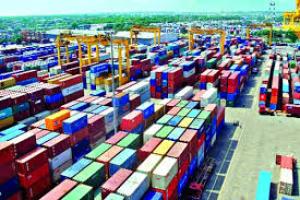
Dec 11, 2017 - New Zealand exporters need to maintain a dialogue with Government about issues encountered in overseas markets at a time when New Zealand is looking to expand, and possibly reshape, its trade law framework, says Daniel Kalderimis, partner and head of Chapman Tripp’s International Law practice.
"International trade policy is entering choppy waters, and the rise of China, the Trump Administration’s America First philosophy and Brexit will all bear directly on New Zealand in ways that are difficult to predict.
"Although the prognosis looks good post the APEC Summit for the Comprehensive and Progressive Trans-Pacific Partnership (CPTPP), there will be continuing uncertainty until the agreement is signed.
"If CPTPP comes into force, export businesses should engage in medium to long-term planning to ensure the smooth operation of global supply chains," Kalderimis said.
So far, we have not seen a retreat from globalisation and liberalised trade that we feared when President Trump was elected, he said.
But there are changes in the wind.
"There is an emerging view that free trade agreements (FTAs) need to address global issues such as climate change and rising inequality and there may be a trend away from investor-state (as opposed to state-state) dispute settlement clauses, which allow corporates to sue governments."
Governments will always do things to support their own constituents, and sometimes that may mean protectionist or complicated rules that increase expense for exporters, said Tracey Epps, trade law consultant at Chapman Tripp and former senior advisor in the Ministry of Foreign Affairs (MFAT) Trade Law Unit.
"But systems are in place that allow the government to address those kinds of actions, as evidenced by New Zealand’s successful claim in the World Trade Organisation (WTO) against Indonesia earlier this year.
"There are benefits to businesses engaging early and well to bring sticking points to the attention of relevant officials."
The WTO system is extremely valuable for New Zealand, and as a small country we rely heavily on a rules-based system, she said.
"A real concern at present is that the WTO’s dispute settlement system is under threat from US actions in blocking the appointment of members to the Appellate Body."
Also valuable is New Zealand’s growing network of FTAs, she said. "New Zealand negotiators will have their work cut out for them in Geneva to ensure continued agricultural market access on favourable terms to the United Kingdom and the EU27 following Brexit."
The lawyers were commenting on the release of Chapman Tripp’s publication, International trade law - trends and insights.
| A ChapmanTripp release || December 11, 2017 |||
Dec 11, 2017 _ After two-years of pre-consultation Napier Port is expecting to next week formally apply for permission to build a new $125 million berth wrote Tony Ashton in Saturdays Hawkes Bay Today.. The new berth, if consented would take about 18-months to two years to build. The $125m development would allow larger cruise vessels as well as larger container ships.
"There is a physical maximum inside the basin that we can deal with. So this being on the outside does give us a little more flexibility", Napier Port chief executive Garth Cowie said. "With the growth in larger container vessels likely to come and we have seen an uplift in vessels coming to Napier anyway, if the volume goes up, you either need more vessels or larger vessels. We are seeing it's predominately larger vessels, and that's going to need a step-change to handle vessels over 300 metres. That will need a berth just outside our current area."
Mr Cowie said the $125m investment was "really important" for the port's future.
Speaking at the Napier Port end of year breakfast today Mr Cowie said this year had seen the port record its highest ever volume levels, record profit and record revenue.
"Revenue rose to $86.7m - up from about $70m last so, year so a significant rise in revenue. Our after tax profit was $16.7m. Again, that's a 46 percent increase, part of that was paid to our shareholder.
"The 288,444 TEU was a record, up from 257,000 TEU last year. Again a lot of that is based out of region. Overall 12 percent growth has been a really great year.
"The Wall of Wood is certainly upon us - 1.6 million tonnes of logs during the year, up from 1.2 million. So over a 400,000 tonnage of growth. Again, that's huge and we're budgeting somewhere between 1.8m and 1.9m this coming year."
Mr Cowie said for this year the port was already 100,00 tonnes ahead of where it was at the same time last year.
"November was a record month for us with 218,000 tonnes. So if you extrapolate that out over a 12-month period, that's about 2.6m tonnes."
Mr Cowie, who leaves his post at the end of this month said he was happy to leave the port in great shape, adding that the last 18 and a half years at port chief executive had been an "absolute blast".
"Obviously it's in a great phase and that obviously sets the tone for a lot of the things the port's looking at."
"Bigger vessels are trickling down to New Zealand and we see those vessels coming to Napier in the long-term,because of the value of the cargo and certainly, we're very strong as a refrigerated container port. That bodes well in terms of why those bigger vessels are likely to call at Napier."
Napier Port Chairman Alasdair MacLeod said it had been a "momentous" year and praised Mr Cowie's dedication and inspirational leadership.
"He's led the port through 18 years of successive growth in revenue, growth and profit and I don't know another chief executive in New Zealand who can claim that - it's an absolutely amazing achievement."
Napier Port is owned by the Hawke's Bay Regional Investment Company, on behalf of the Hawke's Bay Regional Council and Central Hawke's Bay Mayor Alex Walker said teh whole region benefited from the port.
"Central Hawke's bay is driven by agriculture, which is an export economy, so teh role of Napier Port is absolutely crucial for the value chain of our local economy. We also have to think about teh port's future in that regard and secure the port's future."
| A Hawkes Bay Today release || December 9, 2017 |||
Dec 11, 2017 _ The Ministry of Business, Innovation and Employment says there are no grounds to impose provisional measures to protect steel products makers while it investigates claims subsidised Chinese rivals are damaging the local industry. In August, MBIE launched an investigation into steel reinforcing bar and coil (rebar) from the China after Pacific Steel NZ claimed government-subsidised rebar imports from China are causing material injury to Pacific Steel through price undercutting, price depression and price suppression. Pacific Steel is the sole producer of rebar in New Zealand and is a wholly owned subsidiary of New Zealand Steel Holdings whose parent company is ASX-listed BlueScope Steel.

Dec 11, 2017 - The NEM.io Foundation, the organisation behind the NEM blockchain technology, is setting up shop in New Zealand as part of what it says is $US40 million global expansion plan, and has been in New Zealand promoting a $US90 million ($130m) global development fund that it says will help kick start local blockchain companies.
The NEM.io Foundation is a Singapore based not-for-profit organisation whose purpose is “to introduce, educate, and promote the use of the NEM blockchain technology platform on an international scale to all industries and institutions.”
NEM has its own cryptocurrency, XEM, that is says is “recognised as one of the top ten cryptocurrency by market capitalisation.”
A NEM.io Foundation team, led by Jason Lee, global director, partnerships and strategic alliances is hosting a series of introductory events in Auckland, Wellington and Tauranga throughout December. The team also presented at the Blockchain Summit Auckland 2017.
A spokesman said that, in addition, the NEM.io Fondation team had been engaging with the Blockchain Association of New Zealand, universities and various blockchain companies and startups interested in the building on the NEM blockchain via the global development fund.
The head of the NEM.io Foundation in Australia and New Zealand, and a council member of the NEM.io Foundation, Nelson Valero, said the global development fund would help businesses, academics and developers feel empowered about the NEM blockchain technology and its potential to disrupt the way they manage information and data.
Lee said all applicants for funding had to be active members of the NEM community, but that this meant, “simply getting involved in conversations on our online forums.”
However, “If you are new to the community, you must have an endorser whom you think will be able to help you quality and contribute to your blockchain project,” he said.
The Foundation’s New Zealand initiative follows the opening of a NEM Blockchain centre in Kuala Lumpur as a joint initiative with the Australia-based Blockchain Centre (a not-for-profit sponsored by Blockchain Global and IBM). It says the centre will be a knowledge and innovation hub that will serve as an accelerator, incubator and co-working space.
The foundation claims to have a unique implementation of blockchain technology. “NEM is built from scratch as a powerful and streamlined platform for application developers of all kinds, not just as a digital currency,” it claims.
“Using NEM in your application is as simple as making RESTful JSON API calls allowing you to configure your own ‘Smart Assets’ and make use of NEM’s powerful blockchain platform as your fast, secure and scalable.
“Configured for your use, NEM is suitable for an amazing variety of solution classes, such as direct public transactions via streamlined smartphone app, efficient cloud services that connect client or web applications, or a high-performance permissioned enterprise back-end for business-critical record keeping.”
A technical whitepaper on NEM is available here.
| A COMPUTERWORLD RELEASE || DECEMBER 8, 2017 |||

Palace of the Alhambra, Spain
By: Charles Nathaniel Worsley (1862-1923)
From the collection of Sir Heaton Rhodes
Oil on canvas - 118cm x 162cm
Valued $12,000 - $18,000
Offers invited over $9,000
Contact: Henry Newrick – (+64 ) 27 471 2242
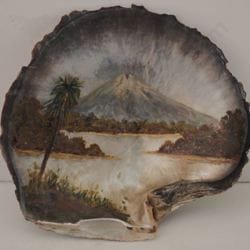
Mount Egmont with Lake
By: John Philemon Backhouse (1845-1908)
Oil on Sea Shell - 13cm x 14cm
Valued $2,000-$3,000
Offers invited over $1,500
Contact: Henry Newrick – (+64 ) 27 471 2242

|
|