
Founded by Max Farndale 1947 - 2018
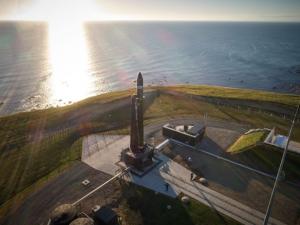
Dec 8, 2017 - Rocket Lab plans to roll out the company’s second light-class Electron rocket to its launch pad in New Zealand on Thursday for final countdown preparations, but officials have delayed liftoff to no earlier than Friday night, U.S. time. The Electron booster, standing roughly 55 feet (17 meters) tall, could blast off from Rocket Lab’s commercial launch pad as soon as 0130 GMT Saturday (8:30 p.m. EST Friday) at the opening of a four-hour launch window. The launch opportunity opens at 2:30 p.m. Saturday in New Zealand.
Rocket Lab says it has a wider window to launch the rocket, with four hours each day through Dec. 17.
Liftoff with three commercial CubeSat payloads was planned as soon as Thursday night, U.S. time, but officials said they needed more time.
The company transported the Electron vehicle to its launch base last month, after completing full-up hotfire testing. The launch team rehearsed countdown procedures last week, and practiced loading kerosene and liquid oxygen propellants into the rocket.
“We did a hotfire campaign as a big preparatory test, so all that was done over a month ago,” said Shaun O’Donnell, Rocket Lab’s vice president of global operations. “The wet dress rehearsal went really well. It went really smooth, especially for our first run at it, so we’re really confident.”
Ground crews at the launch site on Mahia Peninsula, on the east coast of New Zealand’s southern island, planned to transfer the two-stage rocket from its assembly hangar to Launch Complex 1 overlooking the Pacific Ocean Thursday, U.S. time, a Rocket Lab spokesperson told Spaceflight Now.
The rocket will be raised vertically on its launch mount, and Rocket Lab officials will assess the launcher’s readiness and weather conditions before proceeding with the countdown Friday.
The Electron rocket’s second launch comes more than six months after Rocket Lab’s first orbital launch attempt, which ended prematurely May 25 when a ground tracking computer feeding data to the range safety team stopped receiving signals from the launcher around four minutes after liftoff.
The flight safety officer inside Rocket Lab’s launch control center followed established procedures and sent the command to shut down the Electron’s second stage engine after the data dropout.
Investigators traced the mishap’s cause to a software programming error in a tracking system provided by a third-party contractor, and Rocket Lab’s own ground systems — operating in a shadow mode on the maiden flight — did not suffer the same problem.
With a launch base, control center and factory in New Zealand, Rocket Lab also has a headquarters in Southern California, where it is outfitting a second rocket assembly plant. Eventually aiming to launch as often as once per week, the U.S.-New Zealand company operates under the regulatory umbrella of the FAA.
The FAA announced earlier this week it issued a commercial launch license for the Electron rocket’s second flight.The second Electron rocket is pictured on its side at Launch Complex 1 in New Zealand. Credit: Rocket Lab
The May 25 test flight, dubbed “It’s a Test,” demonstrated good performance of the Electron rocket’s first stage, and the launcher’s second stage engine ignited and payload fairing jettisoned as designed before the mission was terminated.
The results raised hopes the second Electron launch, christened “Still Testing” by Rocket Lab, could successfully reach orbit. Engineers also minimized changes to the rocket, with the most significant upgrade in the second stage, which will debut stretched propellant tanks to accommodate more fuel, O’Donnell told Spaceflight Now.
“The performance we saw from the vehicle was really good,” he said in a phone interview Tuesday from Rocket Lab’s development facility in Auckland. “It was actually in the upper bounds of the performance we expected, so that was really positive.
“The vehicle this time around is slightly longer,” O’Donnell said. “That’s really just a tank stretch. It doesn’t relate to any changes with the engines or other functional parts of the vehicle. From the good data that we got from that first launch, we’re confident that the majority of those systems are fine, which was really reassuring.”
But the upcoming mission is still considered a demonstration, and Rocket Lab has a third Electron vehicle built that could launch in early 2018 on a third test flight — if necessary — before the company begins operational launches. Rocket Lab officials said commercial service could be accelerated to begin on the third Electron launch if the second flight goes well.
Rocket Lab said the weather outlook for Sunday does not look favorable, so the launch could slip to Monday (Sunday night in the United States) if officials order a further delay.
“Our weather limits are pretty generous for the vehicle,” O’Donnell said in an interview with Spaceflight Now. “We’ve got pretty decent ground level winds.
“One of our biggest issues is triboelectrification in the high clouds,” O’Donnell said, referring to the potentially dangerous build-up of static electricity on the rocket as it soars through high-level clouds. “It’s one of those things that could happen any time of year, and that can cause potential issues.”
A dedicated team will monitor real-time conditions during the countdown in case weather takes a negative turn.
Refined kerosene fuel and liquid oxygen will be loaded into both stages of the Electron rocket in the final hours of the countdown, and a final automated launch sequence will commence at T-minus 2 minutes to oversee the last steps before liftoff
The Electron’s nine Rutherford main engines, mounted in a circular web-like configuration at the base of the first stage, will ignite at T-minus 2 seconds.File photo of the Electron rocket’s nine Rutherford first stage main engines on a previous vehicle. Credit: Rocket Lab
The Rutherford main engines, developed in-house by Rocket Lab, will generate around 34,500 pounds of thrust at liftoff and power up to 41,500 pounds of thrust as the rocket climbs into the upper atmosphere. The Rutherford engines use electric turbopumps, an innovation in the launch industry that first flew on the Electron rocket.
The first stage engines are scheduled to shut down around two-and-a-half minutes into the flight, and the booster will release to fall into the Pacific Ocean four seconds later. Ignition of the second stage’s single Rutherford engine is slated for T+plus 2 minutes, 36 seconds.
Separation of the Electron’s nose shroud, which covers the three shoebox-sized CubeSats riding on the launch, is planned at T+plus 3 minutes, 4 seconds.
The second stage engine is programmed to fire more than five-and-a-half minutes until T+plus 8 minutes, 14 seconds. The second stage burn will be around 50 seconds longer than the firing planned on the Electron’s first test launch, thanks to enlarged propellant tanks that extend about a half-meter (1.6 feet) longer than the tanks on the inaugural flight, O’Donnell said.
“It just gives us more payload, essentially, thanks to a longer burn time,” O’Donnell said of the bigger second stage.
The three CubeSats — one from Planet and two from Spire Global — will release out of Rocket Lab’s Maxwell deployers at T+plus 8 minutes, 31 seconds.
Planet’s CubeSat, named “Dove Pioneer,” will join the company’s fleet of Earth-imaging satellites. Spire’s Lemur-2 CubeSats are used to track ship traffic and collect atmospheric measurements to aid weather forecasters.
Rocket Lab says it charges $4.9 million per Electron flight, significantly less than any other launch provider flying today, and offer a dedicated ride for payloads that currently must ride piggyback with a larger payload.
The company has a launch contract to place several CubeSats in orbit for NASA next year, along with future launch agreements with Planet, Moon Express and Spaceflight, which books launches of small satellites from various commercial and scientific customers.
With money from venture capital funds in Silicon Valley and New Zealand, along with a strategic investment from Lockheed Martin, Rocket Lab completed the design and qualification of the Electron rocket with less than $100 million since the company was established in 2006, according to Peter Beck, the company’s CEO and founder.
Rocket Lab’s progress was marked with test launches of more than 80 sounding rockets since the company’s formation. If the second Electron mission reaches orbit, it will mark the first orbital launch from New Zealand.
“What we’re looking for (on the second launch) is just to close off that final few minutes that we didn’t see on the first flight, where we’re getting into orbit, we’re completing the burn of the second stage and we’re releasing some payloads, which would really be the cherry on top,” O’Donnell said.
“It is still a test,” he said. “We had originally planned for three test flights, so we’re fully prepared to run that third test as well if we don’t get everything we need from this one.”
| A Spaceflight Now release || December 8, 2017 |||
Dec 8, 2017 - Figures released today show that Kiwis lost over $1.1 million to cyber security issues in the third quarter of 2017. This brings the total financial loss to New Zealanders from cyber security issues reported to CERT NZ to over $1.9 million since April. CERT NZ’s latest quarterly report was released today and shows that security threats continue to impact New Zealanders and their businesses.
“CERT NZ was launched in April 2017 to take reports from all New Zealanders about how they have been affected by cyber security incidents, so we can help them recover,” says Rob Pope, Director CERT NZ. “The reports we received in the quarter to 30 September show that our relative geographic isolation is no barrier to being affected by these threats.”
“Between 1 July and 30 September, CERT NZ received 390 incident reports of which the vast majority, 297, were responded to by CERT NZ.”
In this reporting period, CERT NZ has seen an increase in targeted invoice scams affecting both individuals and businesses around New Zealand. “As we noted in our previous report, targeted attacks are on the rise. In this quarter we’re seen an increase in invoice scams impacting New Zealand businesses through a range of means.
“We’ve also seen a marked decrease in ransomware reports following the global ransomware attacks that we saw earlier this year, with these reports dropping by over 50%.”
Mr Pope encourages all New Zealanders affected by cyber security issues to report them to CERT NZ, “Our team is here to help people who have been affected by cyber security issues by giving them advice and assistance on how to avoid and overcome them. The more reports we receive, the more information we can share with New Zealanders to help them protect themselves”
If you or your organisation experiences a cyber security threat – or if you suspect you may have been exposed to one – contact CERT NZ any time or call 0800 CERT NZ, Monday to Friday, 7am – 7pm.
| A Beehive release - MBIE || December 8, 2017 |||

Dec 8, 2017 - Holden Special Vehicles (HSV) has announced its product plan for 2018, following the end of General Motors manufacturing in Australia, and it doesn’t include any hot imported Commodores. However, the good news for rear-wheel drive V8 muscle-car fans is the 2018 HSV range will be headlined by the Chevrolet Camaro SS coupe, although it will be $20,000 pricier than Ford’s equivalent Mustang GT at up to $80K.
Before HSV begins right-hand drive Camaro conversions in July, it will start RHD production of the Chevrolet Silverado 2500HD pick-up in April, followed by the even heavier-duty Silverado 3500HD by mid-year.
In a move that GM denies marks the first step in Holden being rebranded as Chevrolet, the Chevy brand will be established in selected HSV dealers in Australia and New Zealand to sell both the Camaro and Silverado.
The first cab off HSV’s 2018 rank will be the Colorado SportsCat ute, which enters production in late January and will become the only HSV-branded model available once stocks of the Commodore-based MY17 models are sold.
Copntinue here to read the full article with images on Motoring || December 8, 2017 |||
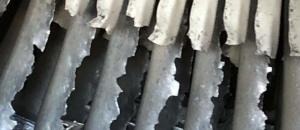
Dec 8, 2017 - Photos of one of Air New Zealand's Boeing 787 Dreamliner engines which failed this week in-flight show damage to multiple turbine blades, at the rear, suggesting a part broke off and travelled through the engine. That engine, on Tuesday morning's flight NZ99 bound for Tokyo with 282 people on board had to be shut down when it caused the aircraft to shake violently.
Passengers heard clunking sounds and electrical power went out temporarily after takeoff from Auckland airport. The plane concerned, which was the first of the airline's nine Dreamliners to go into service, has since been grounded.
On Wednesday another Dreamliner bound for Buenos Aires also had to turn back to Auckland when problems arose with an engine. That engine did not have to be shut down in flight.
Air New Zealand told Newsroom last night it was "extremely surprised by the two issues experienced this week".
Provided with the photos taken of the NZ99 engine after it landed back in Auckland, a spokeswoman said: "The cause of these incidents is yet to be determined and this is the role of the Transport Accident Investigation Commission. But the damage sustained on Tuesday suggests an engine part has travelled through the engine."
Continue here to read Tim Murphy's full article with images on NewsRoom || December 7, 2017 |||

Local Government Commission Instead Should be encouraging Collaboration
Dec 7, 2017 - The Lions service organisation called on management consultant Derek Williams, a specialist in mergers, to become a platform participant in its community forum programme designed to achieve a wider understanding among voters of the pending referendum on the amalgamation of local bodies in the Wairarapa.

Dec 7, 2017 - A damning report on the state of New Zealand’s drinking water has called for mandatory treatment of the country’s water supply — but a battle is looming over the cost of making that a reality. The previous Government launched a two-stage inquiry into drinking water in September 2016, following an outbreak of gastroenteritis in Havelock North linked to contaminated drinking water which made over 5000 people sick.
A report from the second stage of the inquiry, released yesterday, highlighted “a widespread systemic failure” to supply safe drinking water to the country, with 20 percent of Kiwis supplied water that was not “demonstrably safe” to drink.
It said there were up to 100,000 cases of waterborne illness in New Zealand each year — although some thought the real number could be higher — while there was a degree of complacency from those tasked with managing the water supply system.
The inquiry had received a number of submissions and evidence indicating untreated drinking water was “unacceptably risky in today’s circumstances”, and recommended making it mandatory for drinking water to be treated.
It also recommended the creation of an independent drinking water regulator to monitor supplies around the country and crack down on offenders.
The report estimated the cost of replacing the country’s deteriorating water pipelines, some of which were at risk of collapse, at $2.2 billion.
Councils responsible for water - Parker
Speaking after the report’s release, Attorney-General David Parker said the inquiry had made a clear case for mandatory water treatment.
Continue here to read the full article by Sam Sachdeva on NewsRoom || December 7, 2017 |||

Palace of the Alhambra, Spain
By: Charles Nathaniel Worsley (1862-1923)
From the collection of Sir Heaton Rhodes
Oil on canvas - 118cm x 162cm
Valued $12,000 - $18,000
Offers invited over $9,000
Contact: Henry Newrick – (+64 ) 27 471 2242

Mount Egmont with Lake
By: John Philemon Backhouse (1845-1908)
Oil on Sea Shell - 13cm x 14cm
Valued $2,000-$3,000
Offers invited over $1,500
Contact: Henry Newrick – (+64 ) 27 471 2242

|
|