
Founded by Max Farndale 1947 - 2018
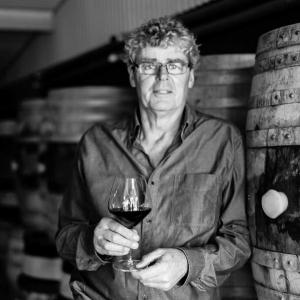
Dec 1, 2017 - There are fewer than 20 Australians and New Zealanders working now in the California wine industry, the majority as winemakers. Some others migrated to Washington, Oregon and British Columbia from their home country writes Santa Rosa based-wine and spirit This email address is being protected from spambots. You need JavaScript enabled to view it. for The Press Democrat.
Most of those interviewed for this article agree that Grant Taylor, a Kiwi winemaker, was the first to come to California in 1979, to work at Pine Ridge in the Napa Valley. Taylor returned to New Zealand in 1993 and is the owner of Valli Vineyards in Central Otago.
The following is a partial list of Aussies and Kiwis, in chronological order by the date they first came to California and their present position in the California wine industry.
Rex Smith (Australia): 1984, winemaker William Knuttel Winery, Sonoma.
Daryl Groom (Australia): 1989, co-owner Colby Red Wine and Groom Wines
Nick Goldschmidt (New Zealand): 1989, Goldschmidt Vineyards and Nick Goldschmidt Consulting
Chris Loxton (Australia): 1991, owner/winemaker Loxton Cellars
Michael Scholz (Australia): 1991, vice president, Winemaking & Vineyards, St. Supery Estate Vineyards & Winery
Mick Schroeter (Australia): 1992, director of winemaking, Sonoma Cutrer
Toni Stockhausen (Australia): 1999, Winemaker, Bennett Valley Cellars
Wayne Donaldson (Australia): 2000, vp production, Deutsch Family Wine & Spirits
Sean McKenzie (New Zealand): 2001, senior winemaker, The Dreaming Tree
Susan Doyle (Australia), 2003: chief winemaker, Spring Mountain Vineyard
Matt Parish (New Zealand), 2003: managing dir., Matt Parish Wines, sold through Nakedwines and International consulting winemaker.
Matt Johnson (Australia), 2008: chief winemaker Americas, Treasury Wine Estates
Andrew Bilenkiji (Australia), 2012: winemaker, Ledson Winery
Sam Glaetzer (Australia), 2016: senior vice president wine & spirits production, Constellation Brands
- Gerald D. Boyd
When people think of winemakers from other parts of the world who’ve influenced Sonoma County winemaking, they likely think of France or Italy. They don’t think of Australia or New Zealand. But they should.
In 1989, Daryl Groom, an Australian winemaker in his 20s, was one of the first Antipodeans to move to California to make wine. At the time, Groom was working for Penfolds, one of Australia’s largest and most respected wineries.
“Lisa and I never sought to move from our home in Tanunda in the Barossa Valley,” Groom said. “We had just built our house. I had the best winemaking job in Australia as senior red winemaker at Penfolds, and we loved our community and friends.”
At the time, Henry Trione, then the owner of Geyser Peak Winery, was in a partnership with Penfolds and the Australian wine company wanted their top winemaker to learn about making wine in California.
“I was asked by Penfolds if I wanted to go to California and make wine,” Groom said. “I was 29, my wife and I had a new baby, but Penfolds sweetened the pot by offering me my job back after two years in California. It promised to be a great adventure.”
A few years later, Penfolds sent Mick Schroeter, one of three winemakers who reported to Groom at Penfolds, to California on an overseas wine educational trip.
“I needed someone at Geyser Peak who knew Aussie winemaking techniques and who I didn’t have to train, so while he was here, I offered Mick the job,” Groom said. Today, Mick Schroeter is director of winemaking at Sonoma Cutrer.
For the Groomses, anticipating a new adventure in another country was mixed with concern. “Our only thought, now naïve, was all of the USA was full of crime and violence. On Aussie news at that time you only heard the ugliness of America, and in particular, New York at its worse. We were a little scared,” Groom said.
Groom said he and Lisa found life in Sonoma County easier than they expected. “People were overly friendly and so helpful in the community and at work,” said Groom.
Nick Goldschmidt’s move to California took a different path from the Grooms. The same year that Groom departed Australia for California, New Zealand winemaker Goldschmidt, restless with wanderlust and knowing his wife’s desire to live in California, applied to a number of North Coast wineries and landed a job at one of Sonoma’s iconic wineries.
“My wife, Yolyn, and I didn’t have kids back then, and we had been traveling for a year already, so we were capable of living elsewhere,” Goldschmidt said. “I applied by letter to three wineries in California and ended up working the harvest at Carneros Creek in 1989.”
A year later, Goldschmidt signed on at Simi to work with Zelma Long and Paul Hobbes. He stayed at Simi until 2003.
Before the move, Goldschmidt was on the winemaking team at such noted New Zealand wineries as Kumeu River, Coopers Creek and Babich. The Goldschmidts manage Goldschmidt Vineyards and Forefather wines from their home office in Healdsburg.
Even though there was some trepidation, the Goldschmidts found Sonoma County not much different from New Zealand.
“ ‘What an opportunity,’ we thought. Kiwis from little New Zealand moving to a big scary country like the USA,” he said. “But we found Northern California very similar to New Zealand, except we couldn’t swim in the ocean. The people were great and the place wasn’t as intimidating as we thought.”
The inviting and open attitude in California was refreshing for the Goldschmidts. “People in America celebrate success,” he said. “In New Zealand they have the Tall Poppy theory, where you are not expected to stand out above your peers.”
Goldschmidt said that although the pace of life is slower in New Zealand, Kiwis are open and opinionated.
“Americans are very sensitive, compared to the frank and opinionated attitudes of most Kiwis,” he said.
He admits the commonly shared language wasn’t a problem as much as different accents: “One of the first things I picked up on was the difference between rubbish and trash and we say mate to everybody.”
On his outlook on winemaking in California, Goldschmidt was direct.
“There is a lack of a specific wine culture in the U.S. wine industry,” he said. “Americans are trying to make wine for everyone with little consideration for such things as terroir.”
Still Goldschmidt is impressed with the growing diversity in the market and sees merlot as an underrated wine.
Groom also remembers the unknown in winemaking that lay ahead of him in California.
“That first year in Sonoma County was a challenge,” he said. “It was the harvest from hell, but we turned the wines upside down at Geyser Peak in two years, with fresh varietal sauvignon blanc and barrel-fermented chardonnay. It was a turning point in my career.”
Viewing California winemaking from an Australian perspective, Groom had this to say: “Australia deals with more infertile soils than California. And Australia works more with grapes on their own roots, rather than the grafted vines in California. That often means higher yields and dropping fruit which you don’t see in Australia.
“And then there was a language barrier,” he added with a laugh. “It’s the nature of people, I reckon, but Californians are more complex, descriptive than Aussies.”
He soon realized that the biggest confusion was different words for the same thing.
“I asked a lady if I could help her by nursing her baby. Nursing in Australia is simply holding a child,” he said. “My wife asked at the supermarket where the pot plants were. We learned she should have asked about potted plants.”
Looking to the future of wine in Sonoma County, both men like what they see in the growth for rosé wines. “Rosé is an important slot to fill in the expanding market,” Goldschmidt said.
Groom is seeing more lower-alcohol wines, with increased fruit expression, especially in Sonoma County.
Planning for the future in winemaking hit a snag recently with the wildfires in the county. Neither Groom nor Goldschmidt suffered personal or work-related fire damage. However, Groom said that because of a power outage for nine days, cabernet sauvignon he already had in the tank started to ferment, and he will have to downgrade the wine and not use it for his Groom label.
After decades in California winemaking, both men are going off in different directions.
Besides running his own brand, Goldschmidt Vineyards, Goldschmidt consults in Chile, Argentina, Australia and New Zealand while devoting 25 percent of his time to Alpine Engineering, a company developing inventions related to wine, along with his wife.
Groom, on the other hand, has stopped traveling, deciding instead to freely mentor young winemakers. Part of his time, though, is spent with Colby Red Wines, a project he runs with his son, Colby, and wife Lisa that raises money for heart disease research.
“Of course, I still make Groom Wines in Australia,” he said.
Now, 30 years after moving to California, the question is: are Goldschmidt and Groom staying put or returning to their native countries?
Goldschmidt didn’t hesitate, saying that he and Yolyn are here permanently. Their five children are grown: a daughter lives and works in Australia, a son is a winemaker in Napa Valley, their twins are in college and the youngest daughter is a sophomore in high school.
The Grooms have also decided to stay in Sonoma County. Groom said their four children are Americanized. Of the three daughters, one lives and works in Los Angeles, one is in pediatric residency in Arizona and one is in the wine industry. Groom’s son is studying political science and traveling the country as a guest speaker on his journey with heart disease.
While the migration of winemakers from Australia and New Zealand has slowed in recent years, the lure of a new adventure and the opportunity to learn something new remains an attraction.
Groom and Goldschmidt are but two winemakers who made their way to California. A list of others now living and working in California is included in box at left.
Source: Gerald D. Boyd is a Santa Rosa-based wine and spirits writer. Reach him at This email address is being protected from spambots. You need JavaScript enabled to view it.. || December 1, 2017 |||

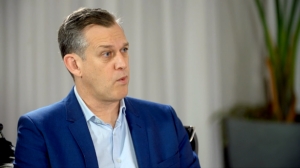
Nov 30, 2017 - Engineering New Zealand Chief Executive Susan Freeman-Greene says everything her organisation has done to raise the bar for engineers has been in the shadow of this tragedy. “Today our first thoughts are for those who lost loved ones in the CTV building. We are very aware of the families’ ongoing grief. “We know that the public wants better ways of holding engineers accountable. We’ve changed our rules so that a member can’t resign to avoid a complaint, and we’ve overhauled our complaints process.
“Last year we introduced a new Code of Ethical Conduct that sets new expectations for engineers.
“Engineers now have an obligation to report potential adverse consequences for people’s health and safety. This means that they must take action if they see something of concern.
“For example, if they see potential design flaws in a building under construction, or poor construction practices that threaten health and safety.
“And if an engineer suspects another engineer has significantly breached the Code, they must report this.
“On 1 October, Engineering New Zealand introduced a new membership pathway for our 20,000 members. All members must now pledge every year to uphold the Code of Ethical Conduct and commit to ongoing professional development.
“We have strengthened the Chartered Professional Engineer assessment process for structural engineers to include more specific and targeted assessment.
“But we would like to see changes to the way engineers are regulated. Engineering New Zealand supports the task-based licencing of engineers for safety-critical work. This means restricting safety-critical design to engineers specifically licensed to do this work.
“As well as structural engineering, we’d like to see this kind of regulation extend to any safety-critical work; for example, fire, geotechnical and food-process engineering.
| Background: Complaints relating to the CTV building tragedy
We received complaints about David Harding from MBIE’s Chief Engineer and a group of victims’ families.
Our Disciplinary Committee found that Mr Harding had breached our Code of Ethics.
Towards the end of this process, he resigned.
Because he was no longer a member, the Disciplinary Committee had no power to make any orders against him, but we made the decision against him public.
We received complaints about Alan Reay from MBIE’s Chief Engineer and a group of victims’ families.
Dr Reay resigned as a member in February 2014, while the complaints process was underway.
The timing of his resignation meant we no longer had jurisdiction over Dr Reay. So the complaints process was stopped.
In March 2015, the Government sought a judicial review of our decision to stop the complaints process. The judicial review is ongoing and a date for the substantive hearing hasn’t been set. In the meantime, we have changed our rules so that a member can’t resign to avoid a complaints process.
| An Engineering New Zealand release || November 30, 2017 |||
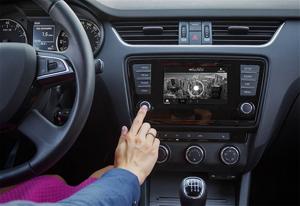
Nov 30, 2017 - Would you like to listen to what amount to verbal tweets while you are driving: short 42 second messages from friends, musicians, news reporters, thought leaders, comedians and others? Well, technology from ASX-listed Israeli company HearMeOut will interest you. The company has developed a platform and smartphone apps to do just that, and has now made its service accessible while driving.
HearMeOut says its platform “enables users to share and listen to 42‐second audio posts through the platform’s native feeder on other social networks, such as Twitter or Facebook,” and that through its app, “people can express their authentic voice and put their unique signature on social media interactions.”
The company has now announced it has developed a working prototype of a device, which it calls Hoop, that will enable drivers to have full access to all the features of the HearMeOut platform direct from the steering wheel of their car, without linking to any other platform.
It says Hoop is compatible with any car steering wheel, and will let drivers safely use the HearMeOut platform with both hands on the wheel. It is being developed in conjunction with DSP Group, a global provider of wireless chipsets for converged communications.
HearMeOut describes Hoop as a natural extension of its existing connected car strategy. It has a distribution agreement with Ford for the implementation of its technology with Ford’s Applink Sync platform in the US, UK and Ireland.
The company has joined Spotify and Waze in a program overseen by the SmartDeviceLink consortium that includes a number of car manufacturers and brands including Toyota, Lexus, Lincoln, Mazda, Subaru, Suzuki, Peugeot, Citroen and Daihatsu.
SmartDeviceLink is a system to standardise the connection between in-vehicle infotainment systems and smartphone applications
While having short messages being whispered into their ear while they drive might not excite many drivers. HearMeOut CTO and co- founder, Lior Menashe, claims the development of Hoop to be “globally significant,” because “for the first time ever a user can seamlessly engage with the HearMeOut platform regardless of the technology in the car.”
Hoop’s development, he says, “positions HearMeOut as a global leader in the ‘connected car’ space.”
HearMeOut has a market valuation of $11.8 million and in Q3 2017 was rated sixth in the social platform category on Apple’s US App Store, below Facebook and WhatsApp.
The company claims its popularity is being driven by the increasing use of voice for interaction with online systems. It cites figures estimating that 20 percent of mobile queries are now voice searches, and says this number is expected to reach 40 percent by 2018. Also, the company says 40 percent of millennials use voice activated intelligent assistants.
On some estimates, quoted by Microsoft at a presentation in Sydney, within a few years people will spend more time talking to machines than talking to their spouse.
Against this background HearMeOut says it has a vision to become the leading social network. The means to achieve this, it says, will be to establish sustainable growth by expanding its assets in three main areas: automotive, entertainment and technology.
In the field of entertainment the company plans to work with media companies, broadcasters and celebrities to gain content and reach. It also plans to recruit influencers from various categories.
On the technology front the company says its application programming interface (API) is in constant development to fit various wearable devices and voice assistance hardware.
It has also foreshadowed Hoop 2 “an upgraded device that features an entire closed ecosystem based on HearMeOut’s services and platform.”
The company is also doing OEM development for car companies to enables one-to-one, one-to-group and one-to-many communication via third parties and social networks.
| An IOTHub release || November 30, 2017 |||

Nov 30, 2017 - Europe’s largest industrial manufacturing company, Siemens, has teamed up with one of the world’s largest software companies, Software AG, to address the IoT market by integrating Siemens’ IoT operating system, MindSphere, with Software AG’s Digital Business Platform. Software AG CEO Karl-Heinz Streibich said the aim was to intelligently combine Siemens’ global industrial presence with Software AG’s software expertise in IoT.
“Bringing our high-performance components of our Digital Business Platform to MindSphere, users will have new opportunities to exploit the full potential of their data to get a competitive edge,” he said.
The two companies say the combination of their technologies will provide comprehensive market-leading capabilities enabling users to acquire and comprehensively analyse raw data produced by plants, machines, systems and products more easily.
“Software AG application and device management technology enables both centralised networking of devices as well as cloud-based management, providing scalable and flexible management for a network of millions of end devices, also in the area of edge analytics in the future,” Software AG said.
Siemens describes MindSphere as a cloud-based, open IoT operating system that “connects real things to the digital world,” and “an open platform as a service (PaaS) [that] enables a rich partner ecosystem to develop and deliver new applications providing a basis for new business models, such as in the fields of preventive maintenance, energy data management or resource optimisation.”
Siemens says MindSphere’s APIs and support for open connectivity standards enable the production of OEM and customer specific apps. “For example, for machine manufacturers, Siemens MindApps provide the basic functions for machine manufacturers to enter the digital world,” the company says.
“Machine manufacturers can use these basic functions to apply their specific and comprehensive machine and process knowledge. … This allows them, for example, to monitor machines scattered throughout the world, or whole machine fleets, and to reduce their downtime.”
The Digital Business Platform is Software AG’s flagship product. It is essentially a methodology for a business that wants to undergo digital transformation and is complemented with a range of software products to enable that process.
In the IoT sphere the Digital Business Platform underpins Software AG’s Cumulocity IoT, launched in September 2017.
Software AG said at the time. “[Cumulocity IoT] brings together the power of Software AG’s Digital Business Platform and the original Cumulocity products portfolio into a single, comprehensive and leading IoT portfolio [that] will take full advantage of Software AG’s industry-leading integration, business process, advanced analytics and machine learning capabilities, based on its heritage in enterprise middleware platform leadership.”
Cumulocity originated as a spinoff from the, now defunct, Nokia Siemens joint venture in 2010 and was acquired by Software AG in 2016. According to Software AG, Cumulocity now has over 200 eco system partners including device partners, network and connectivity partners, application partners, system integrators and ISVs.
MindSphere is part of Siemens’ Digital Enterprise Suite, which the company says is used for product lifecycle management, manufacturing operations management and totally integrated automation to make “products, like laptops, computers, televisions, cars, trucks, planes, heavy equipment, fitness devices, white goods, etc.”
Siemens envisions these products being connected to MindSphere so their data can be collected and analysed in MindSphere applications and connected back to the complete digital twin to drive innovation.
MindSphere fulfils a similar role in the IoT ecosystem as Predix from US based industrial giant GE and the Siemens/Software AG tie up is the latest in a series as Siemens and GE seek to increase the role of their respective platforms in industrial IoT.
Earlier this month Apple announced a software development kit to enable developers to create iOS apps integrated with GE’s Predix industrial IoT platform. A year earlier GE and Microsoft announced a partnership to make GE’s Predix industrial IoT platform available on Microsoft Azure.
In September 2016 Bosch and GE announced plans to work on technology interoperability and platform integration through Predix operating system and the Bosch IoT Suite.
In December 2016 Siemens and IBM announced plans to integrate IBM's Watson Analytics and other analytics tools into MindSphere.
| An IOTHub release || November 30, 2017 |||
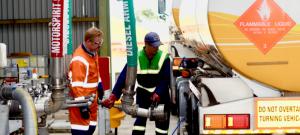
Nov 30, 2017 - Fuel is flowing to and from Port Taranaki’s refurbished storage and distribution terminal near New Plymouth. Lessee BP New Zealand has started operation at the former Chevron tank farm on Centennial Drive, with the first diesel passing through the terminal earlier this month. Petrol is expected to be on-stream early in 2018.
Port Taranaki bought the facility in 2015 and entered into an operational agreement with BP New Zealand to enable larger parcels of petrol and diesel to be shipped in, stored and distributed throughout the region, reducing costs and the number of road tankers coming into Taranaki to deliver fuel.
More than 100 million litres of fuel is expected to pass through the terminal annually.
“The facility needed extensive refurbishment ahead of lessee BP taking responsibility for its operation,” Port Taranaki chief executive Guy Roper said.
“This work began in August last year and has included a new truck-loading gantry, a new control system, new tank-gauging systems and the replacement of pumps and valves.”
Port Taranaki has also brought the associated pipeline to the Newton King Tanker Terminal and a loading arm on the terminal back into use to support the project.
Mr Roper said the work had gone well and he was delighted the facility was now operational.
“We saw the purchase and refurbishment of the site as an opportunity to secure an important piece of infrastructure for the region and develop long-term commercial opportunities for our business. It will have the twin benefits of fuelling Taranaki’s businesses, farms and communities, and reducing the number of fuel trucks on our roads, with large amounts of fuel coming into the region by ship rather than by road tanker,” he said.
“A facility of this nature demands high operating standards and the health and safety of staff and contractors is a priority. With new Major Hazard Facility regulations in place following the Health and Safety at Work Act 2015, the work required a lot of collaboration from the many parties involved.
“Throughout the process we’ve had a great relationship with BP New Zealand and thank them for their support and knowledge as we have worked to make the terminal operational,” Mr Roper said.
BP general manager marketing supply, Courtney Ireland, echoed Mr Roper’s statements.
“Safety is a No 1 priority for BP, so it was very important to us that the terminal was converted in adherence with the new Major Hazard Facility regulations.
“Terminals are an extremely important part of BP’s strategy, and enable us to effectively support the needs of our customers across the country. BP is pleased and proud to be in a partnership with Port Taranaki that allows us to support ongoing growth in the Taranaki region,” Mr Ireland said.
| A portTaranki release || November 28, 2017 |||

Nov 30, 2017 - It’s encouraging to see an increasing level of automation application and acceptance among manufacturers of all sizes, from small subcontract shops to large OEMs. Competitive pressures, demands from customers, the skills gap, Industry 4.0 and more are among the drivers of this phenomena. Like all evolutions in manufacturing protocols and best practices, there are pauses and plateaus along the path towards optimal efficiency. Sometimes it’s waiting for one aspect of the overall system to catch up with another.
For example a cutting tool advancement can spur a subsequent new capability in CNC programming software. At times two technology advancements may be developed concurrently. Then a period of increased productivity might be followed by several years of the new status quo until the inspiration for the next innovation sparks and becomes a viable solution.
I’m sensing that we in manufacturing are in the midst of rising off of a plateau. For about 25 years now, we’ve embraced and configured our shops and factories into the cellular approach to part production. Pallet changers and work handling robots are fairly common at this point. Still, many of the secondary operations such as deburring and part washing are conducted outside of the cell, sometimes in another part of the shop altogether. Companies markedly ahead of the trend or with significant resources may have incorporated these kinds of functions into their cells within the last five to 10 years. But now, even many smaller shops are adding them, or at the very least inquiring about how to integrate all the secondary operations into a single cell and fully complete a process within it. That’s a positive turn. Yet there’s still more that can be done.
With the advent of shop-floor CMMs, probing and other metrology tools, the automation loop is closing even further for automation adopters. Particularly with the CMM in the configuration, dimensional workpiece data can be fed back to the machine tool control while the part is being cut. Should the data ping that the part is trending towards an out-of-tolerance condition, the signal is sent to the machine tool control, which makes the correct toolpath offset on the fly. Likewise, cutting tool life can be monitored and cutting parameters can be modified automatically in a similar fashion, accommodating the change in the edge or insert condition. When part deburring and washing are integrated into the cell, and fully automated, the part may, on occaston, go back into the machine tool if it makes sense in the process or part design to perform certain operations after a round of deburring.
Many shop owners and operators are concerned about the level of difficulty to bring more automation into their workspace. Is it hard to figure all this out? It can be a challenge, however that’s where your automation provider partner can help break down the goal into manageable tasks and possibly accomplish it in phases with a modular, scalable system. The software that ties it all together is open and scalable, too, and I’ve written about the software aspects in previous columns in Manufacturing Engineering.
Flexibility is the way to go, so that the investment evolves as needs change and unfold. Automating a manufacturing process is similar to other job functions at a company—matching pieces of information, gathering the tools required to do the job, and connecting all the dots. It’s more tedious than difficult, but once the system is fully functioning and the company is enjoying the benefits of improved part accuracy, optimal spindle uptime, and smart labor allocation it’s worth the initial effort. Evolving from there, with a smart initial plan, gets easier.
The time is now to go beyond the pallet changer-based cell. Keep adding functionality to it along with feedback data and automatic offset capability. Close that loop and, as the kids would say, drop the mic, because while you may not be finished with your factory automation goals, you will enjoy many advantages at this stage.
| An AdvancedManufactuirng release || November 30, 2017 |||

Palace of the Alhambra, Spain
By: Charles Nathaniel Worsley (1862-1923)
From the collection of Sir Heaton Rhodes
Oil on canvas - 118cm x 162cm
Valued $12,000 - $18,000
Offers invited over $9,000
Contact: Henry Newrick – (+64 ) 27 471 2242
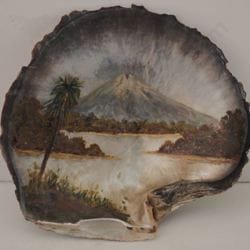
Mount Egmont with Lake
By: John Philemon Backhouse (1845-1908)
Oil on Sea Shell - 13cm x 14cm
Valued $2,000-$3,000
Offers invited over $1,500
Contact: Henry Newrick – (+64 ) 27 471 2242

|
|