
Founded by Max Farndale 1947 - 2018

Nov 29, 2017 - 21 Night Grand Aegean and Egyptian Experience from Athens Return aboard Aegean Odyssey. SALE TO 30 NOV only!! BONUS: FLY FREE from Auckland or Christchurch to Europe and Return 2 Nights premium hotel stay in the 5-star Electra Metropolis, Acopolis Suite. Includes transfers. 2 Night overland tour to Cairo, Egypt https://goo.gl/jx2W9Q #travel #cruise #cruising #cruiseline #cruiseship #sail #mediterranean #sea #flyfree #aegean #egypt #egyptian #athens #mondotravelnz #cruisespecialist #cairo
Nov 29, 2017 - New Zealand Energy Corp. ("NZEC" or the "Company") (TSX-V: NZ) announced today it has filed with Canadian regulatory authorities its third quarter 2017 financial results and management discussion and analysis, which documents are available on the Company's website at www.newzealandenergy.com and on SEDAR at www.sedar.com.
Reflecting on the direction of the Company after the third quarter 2017 results, Chairman James Willis said: “During the last quarter the results for the Company were adversely affected by a number of issues arising from equipment failures and unplanned maintenance. I look forward to a better production performance in the next quarter. We continue to make solid progress towards implementing the Waihapa enhanced oil project. Small but important steps, such as upgrades to the gas processing system (to restore full gas dehydration and measurement) have been completed. And arrangements to enable sales of non-specification gas are being finalised. It is an important project for the Company - the Board, our CEO Mike Adams and his team are focused on ensuring we continue to optimize the project (technically, operationally and financially) and on safely implementing the next redevelopment stage in Q1 2018.”.
Cash used in operating activities for the nine months was $104,829 (2016: $131,768) and for the quarter was $170,437 (2016: $84,143). The net loss for the nine months was $1,463,669 (2016: $2,886,458), of which $1,236,800 (2016: $1,741,293) was represented by non-cash items (depreciation, depletion and accretion). For the quarter, the net loss was $320,376 (2016: $1,126,194) of which $382,531 (2016: $523,198) was non-cash (depreciation, depletion and accretion). The Company achieved average net daily production of 206 boe/d (87% oil) for the nine months (2016: 231 boe/d (76% oil)); and for the quarter 106 boe/d (93% oil) compared to 150 boe/d (84% oil) during the third quarter of 2016.
| An New Zealand Energy Corp. release || November 29, 2017 ||
Nov 29, 2017 - Some overseas reports say petrol cars may be obsolete by 2026 but either way the massive switch to electric vehicles will be the biggest disruptive change to people’s lives in more than 100 years, NZTech chief executive Graeme Muller says. As New Zealand’s 15,000 motor mechanics get ready for the exciting electric vehicle (EV) era, petrol cars will soon begin to phase out in the biggest change to transport in the modern era, Muller says. “A couple of weeks ago, I was at a conference on digital transformation and a presenter showed a photo of Times Square in New York from 1900, complete with horses and carriages. “Then we were shown the same view, in 1920 and not a horse to be seen. Something like 20 million horses were unemployed within 20 years. Last week, Stanford economist Tony Seba told APEC delegates in Wellington that this process has already started for cars. “He believes the tipping point is here and no petrol vehicles will be built after 2025. Tony also believes that the number of cars will have decreased by 80 percent by 2030, with most of us opting to ride in an Uber style self-driving vehicle. “I dropped my daughter off at school the other day and I was almost run over by a Tesla. We stepped out between two parked cars, heading towards the school gates, when this lovely looking car glided past. “It didn’t make a sound. Instant car envy. It got me thinking about technology change. Before my daughter finishes school, I will no longer have to do the school run. Maybe one of those purring Tesla’s will collect her.” According to Tony Seba, on current trends it will be cheaper to build a mid-range EV costing US$33,000 than a conventional car by 2019, and they would be cheaper than the average equivalent conventional small car by 2022. The next step is embeddeing the technology into roads. This is being piloted in several countries including UK, Israel and Sweden. The technology, similar to that developed by Kiwi company PowerbyProxi which was recently purchased by Apple, allows wireless charging from the road to the car. This charge-as-you-drive system would overcome battery limitations. “EVs will also play a crucial role in supporting the environmental sustainability of future transport. Helping to rid the environment of harmful fossil fuels, cutting down on air pollution emissions and providing not just a more convenient future, but a healthier one too,” Muller says. “So consider the horse and car example, by 2037 if you look along Highway 1 in New Zealand the number of human driven petrol vehicles will have probably dropped substantially to about 1 in every 10 vehicles. “The cost of insurance and enviro taxes making them too expensive for most people to run. It will be likely that many roadways in New Zealand will have embedded inductive charging systems allowing EV’s to travel and charge at low costs, and the majority of the population won’t own a car, instead choosing to “request” a vehicle when they need it. “There will be more ride sharing, lower cost of transport, reduced environmental impact, more space on roads and easier parking.”
| A NZTech release || November 29, 2017 |||

Nov 29, 2017 - KORU® is a new apple variety which has been grown in New Zealand for a few years now and exported to the US market. Now it is also being grown in the States and the area will increase considerably in years to come writes Nichola Watson for FreshPlaza.
"We import this apple in February and March," explains Jim Allen from New York Apple Sales. "Now we are growing it in the States too. It is an excellent eating apple, a cross between the Braeburn and Fuji apples. The Fuji gives it that high flavour and sugars and the low acid Braeburn combines them together."
Jim was at the Amsterdam Produce Show promoting the KORU® apple as it is also sold in Europe. "We are planting heavily in the US and have already harvested the New York and Washington state crops. We are in a group of three different marketers who have the right to market the apple for a grower's cooperative group who have the right to grow it. This year we harvested between 700 and 800 bins in New York and 1,500 bins in Washington state. Volumes will be increasing threefold each year in the States, just as they are in New Zealand."
The current New Zealand production is around 160,000, by 2020 they are looking at 300,000. It is a good yielding variety and a good sized apple which colours very nicely.
"We have been importing it now for 3-4 years," said Jim. "This is our second year of domestic production and KORU® is in the major retailers such as Walmart, Cosco and others. It is a hard apple which holds up very well and we are very excited about it. We think it is one of the best new apples around."
US production starts in October and runs through to January, then in February and March apples are imported from New Zealand. "What we have done this year is put some of our domestic crop in storage, we expect to bring those out a month before the new season starts. New Zealand stocks will last until August - September making an almost year round supply. This is the first year that we have put a lot in CA storage, but we have a lot of confidence that the quality will still be very good, the characteristics of the apple already point to a great storage apple."
| A FreshPlaza release || November 29, 2017 |||
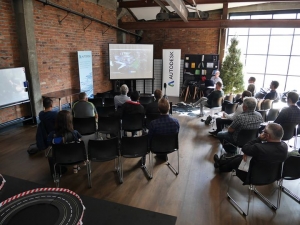
Great event in Auckland last week! Places are still available for Christchurch presentation tomorrow
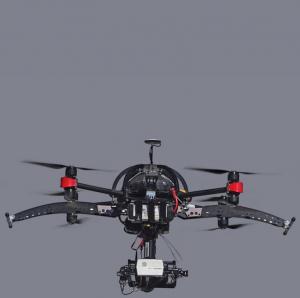
Nov 28, 2017 - Kiwi-owned and operated VigilAir has launched its semi-autonomous aerial surveillance drone technology onto the global market – a product that has the potential to change the face of security worldwide. “The VigilAir software product is one of the first of its kind and will undoubtedly disrupt the security industry. Simply put, our software will enable drones to be the first-response security guards of the future,” says director of VigilAir Limited, Mike Marr.
Mr Marr’s company has spent some years pioneering the use of drones with new technology for security purposes, including self-funding their own research and development, and it’s all run out of their Auckland premises.
New Zealand has been at the forefront of drone/UAV (Unmanned Aerial Vehicles) regulation. VigilAir continues to work closely with the Civil Aviation Authority (CAA) to develop the equipment, systems, and processes to provide a safe and effective service.
The VigilAir solution will be provided as a full-service solution, with drone enclosure, installation and full ongoing support provided.
The product and service operate under a current Civil Aviation Authority certification, with work underway to rapidly expand the operating parameters. International patents are also well underway for the software that can dispatch camera-equipped drones to investigate any external security event.
VigilAir is a SaaS product that integrates drones into existing electronic security systems. It’s suited to large outdoor sites such as retail and industrial parks, hospitals, university campuses, schools, ports, prisons, and town centres that are at risk of burglary, vandalism or security breaches. A security drone will also be an effective deterrent.
When not flying, the drone sits in an enclosure - dubbed a nest - located on a business site. When alerted by an alarm sensor trigger, it will be dispatched to fly over the site to investigate, recording and live-streaming high definition video footage to whoever’s monitoring the action.
The drone may include a thermal or infra-red camera, and bright LED floodlights to illuminate any intruder and record the scene. The hovering drone may sound a siren or even talk to the intruder using a two-way communications system.
Before leaving the nest, the VigilAir SaaS system checks the weather data, then the drone flies a pre-determined flight route that’s geo-fenced to preserve neighbours’ privacy and comply with flight regulations.
A future release will allow the drone to be further manoeuvred to follow any fleeing suspects, capturing images of them and their vehicle license plate number as they evade. The drone then returns to its nest to recharge.
“After considerable R&D, innovation and years of trials, not to mention processing technology and software patents, to now be able to unleash the product onto the international market is really exciting.
“VigilAir’s system is all about delivering faster, safer, and more cost-effective security for organisations or businesses with large sites and security installations.”
Mr Marr says to be able to fly a rapid response drone literally directly into a crime, and to record and transmit all that’s happening, has huge advantages over a traditional on-the-ground security response.
“And we’ve designed it to be user-friendly. Security guards, whether on site or operating remotely, will be able to use the system and it’s one that can already ‘talk’ to 99% of all existing electronic security systems.
“As you can imagine this is all a lot safer than dispatching a guard on foot to check out a security problem. Drones will help catch perpetrators as everything’s recorded which is gold for any eventual prosecutions. And importantly, the ongoing cost will be lighter on operational budgets.”
Mr Marr says VigilAir has the potential to make $400m in annualised revenue. This is largely because the fully integrated semi-autonomous system is a world-leader and its ease of operation and effectiveness has wide appeal for any organisation needing to protect its assets or people.
VigilAir is completing reseller agreements with two major international corporations, providing a channel for product export and on-going support.
“We’re very confident in its success. We’ve done exhaustive searches and cannot find anything to compare with VigilAir’s system worldwide. It’s truly a global first with unlimited potential.”
Further, he believes harnessing drone technology for security purposes was somewhat inevitable for a company that has been at the forefront of CCTV and wireless security technology in New Zealand.
VigilAir’s interest in drones however doesn’t stop at security. Mr Marr says while their use for aerial photography is well established, considerable potential remains in core New Zealand sectors like agriculture, construction and forestry.
“Our drones have assisted the police in search and rescue operations in hard-to-reach terrain like cliffs and crevasses. And we’ve done all sorts of work from inspecting the Auckland Harbour Bridge to looking for leaks on the roofs of central city buildings.”
As well as inspecting infrastructure and assets, smart drone technology is used for Infrared imagery to track heat-loss and to create 3D models that are dimensionally correct to a few centimetres.
VigilAir was invented and developed by ASG Technologies - a technology incubator established three years ago by TPT Group. Over 150 people are employed at TPT Group which has a stable of security businesses - the best known in New Zealand being Advanced Security.
Based at East Tamaki, Mr Marr is the founder of TPT Group and remains its CEO. He is also directly heading VigilAir which was founded last year to commercialise ASG’s drone control software.
Mr Marr says the experienced VigilAir team, led by Andy Grant an ex Warfare Officer from the Navy, includes software and mechatronic engineers and a commercial pilot. The team remains focussed on the ongoing development of the VigilAir capability and delivering world-leading future-focused security technology.
“To now launch a semi-autonomous ‘eye in the sky’ solution, incorporating an on-site drone with cloud-based SaaS software, is a long way from how we initially viewed drones - as flying CCTV cameras to support the fixed ones.”
He says with the world continually urbanising, ongoing security technology innovation will help with many governments’ aspirations to develop safer cities.
TPT Group is also advancing robotic technology with the intent of one day launching fully autonomous ‘foot patrol’ robots to work in conjunction with its security drones.
| A VigilAir release || November 28, 2017 |||

Los Angeles on SALE! LAX with Fiji Airways = $875* return! Even better – you can choose to fly ex

Grand Adriatic Fly + Cruise SALE TO 30 NOV only! Greece & Aegean experience cruise from Venice to

Nov 28, 2017 - If your organisation is struggling to clear backlogs of integration projects, increase time to value and overcome resource and skills constraints, you’re not alone Eric Thoo, research director at Gartner (Computerworld) writes. The need to connect applications, systems, endpoints and users in complex, multi-organisation ecosystems is growing. This is forcing integration to become pervasive, which is a critical but complex competency that’s now foundational to enabling digital business transformation. Application leaders responsible for integration are having to empower almost every member of their organisation to make this new reality happen.
If your organisation is struggling to clear backlogs of integration projects, increase time to value and overcome resource and skills constraints, you’re not alone. Making pervasive integration capabilities adaptable, at scale and extensive, compels integration teams to seek new ways of accomplishing more with less. As the number of integration technologies continues to expand, making independently designed applications and data structures work together remains a complex challenge for enterprises.
If you’re seeking simpler ways to integrate applications into the enterprise, consider introducing integration platforms armed with artificial intelligence (AI) capabilities.
| AI-enabled integrationSeveral integration technology providers have already AI-enabled their platforms to simplify the development of integration flows, shorten the learning curve, lower skills requirements and assist in the execution of integration processes.
Some targeted, early business benefits of using AI in integration include:
At this early stage, AI in integration platforms is beginning to bring together diverse, commonly required integration functionality. Some iPaaS providers – such as Dell Boomi's Boomi Suggest, Informatica's CLAIRE, SnapLogic's Iris Artificial Intelligence and Workato's Workbot – take advantage of their "integration eye in the sky" on cloud-native platforms and offer AI-enabled recommendations for integration development approaches based on collective patterns.
| Build recommendation enginesA prominent use of AI at present is to enable business roles to perform integration. This is provided through metadata sharing and analysis to build recommendation engines that automate the integration process.
Embedded in integration platforms, recommendation engines have the ability to use graph and cluster analyses on data usage characteristics. This is done by analysing things such as the frequency of data access by data type (how data is stored – via relational, object, document and other structures); the affinity of service components (which data is put together into query objects or mined to create query objects); and the identification of user credentials and job roles involved.
| Emergence of digital integrator technologiesAI techniques applied to integration are emerging as digital integrator technologies — that is, innovations that set out to facilitate the resolution of complex integration problems, including challenges of a scale that would not be addressable by conventional approaches.
Some functional characteristics of digital integrator technologies, such as making recommendations to improve the performance of your integration flow execution, are visible to integration developers. While others, such as helping integration tooling optimise its platform operations, are invisible to developers. These evolving innovations have far-reaching implications in terms of achieving the key dimensions of pervasive integration.
With AI-guided recommendation engines that use machine learning and inference algorithms to deliver step-by-step guidance, building data pipelines and application flows will ideally become an increasingly intuitive effort. This guidance allows diverse personas to use the recommendations of the AI engine to automate highly repetitive integration tasks, which expedites the clearance of integration backlogs that currently worry integration teams.
As the need to use diverse endpoints, deployment models and various integration patterns increases, the integration pipelines inferred by AI engines with access to discovered metadata, tagging and inferred analysis, can provide lessons to streamline and suggest which options to use when integrating applications and data.
This use of AI inside integration software potentially shortens the learning curve of both specialist and less technical integrators to manage data and business flows. This enables an extensive range of roles to perform integration tasks to pervasively address needs.
The use of AI techniques to power integration platforms and complement human capability is on the rise. Plan now for investigating, developing or further extending your integration competencies and technologies to engage in connected infrastructures and systems by including AI as part of your integration strategies and infrastructure.
Eric Thoo is a research director at Gartner, advising clients on data integration practices and technologies. He will speak about data integration strategy at the Gartner Data & Analytics Summit in Sydney on 26-27 February 2018.
| A Gartner release || November 28, 2017 ||

Palace of the Alhambra, Spain
By: Charles Nathaniel Worsley (1862-1923)
From the collection of Sir Heaton Rhodes
Oil on canvas - 118cm x 162cm
Valued $12,000 - $18,000
Offers invited over $9,000
Contact: Henry Newrick – (+64 ) 27 471 2242

Mount Egmont with Lake
By: John Philemon Backhouse (1845-1908)
Oil on Sea Shell - 13cm x 14cm
Valued $2,000-$3,000
Offers invited over $1,500
Contact: Henry Newrick – (+64 ) 27 471 2242

|
|