
Founded by Max Farndale 1947 - 2018

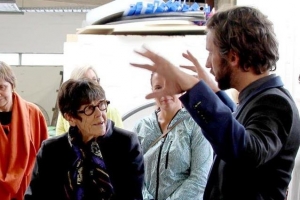
Nov 27, 2017 - It has been far too long arriving, but thanks to the enthusiasm of We Can Precision Engineering’s Ricky Pike, the Maintenance Engineering Society (MESNZ) has firmly established its presence in Hawkes Bay with the very first Kaeser Compressors Network Evening.
It is appropriate that as the modern face of precision engineering, We Can have taken over the Eric Paton Ltd stock and IP, giving some relief to engineers gutted by the loss of the industry stalwart. Whilst this acquisition is just another feather in the cap of the Hastings based company, their focus on precision, quality and innovation mirrors the ethos of Mr Paton himself. The mix of attendees on the night from leading firms in the meat, plastics and food industries was testimony itself to the depth of confidence that this firm commands
Owner/Operator, Rickie has vast experience in manufacturing. His focus has been the improvement of productivity and quality to reduce inventory and streamline processes. He is passionate about continually improving We Can’s systems and manufacturing techniques for the benefit of customers.
While We Can draws on a range of complimentary machines to undertake projects other precision engineering companies cannot tackle, they also use multitasking and five-axis machines.for the manufacture of complex parts involving a combination of turning, milling, hobbing and three dimensional profiling. The state of the art machinery including wire cut EDM gives them the capability to cut very intricate and delicate shapes and manufacture complex parts more accurately and cost-effectively than traditional machines. Their focus is on producing small to medium sized precision components in quantities that start at just one.
The Kaeser Compressors Network Evening series is as much about highlighting the capabilities of local companies as it is about spectacular achievements or interesting maintenance challenges and the We Can evening proved once again that precision engineering is a thriving capabaility in New Zealand.
The MESNZ Kaeser Compressors Network Evenings are hosted to showcase local operations and provide networking opportunities for engineers across all regions of New Zealand. The evenings offer the opportunity to take a look at the host operation and discuss common issues and solutions in a relaxed after work environment. Open to interested members of the public, the nights are well patronised.
The Maintenance Engineering Society is active across New Zealand, providing professional development opportunities for maintenance engineers and manufacturing operations to network and share innovations and experiences; both at a national level at their annual national conference or at these regional events. The 2018 National Maintenance Engineering Conference will be held in Rotorua on November13-15.
| An MESNZ release || November 27, 2017 |||
Nov 27, 2017 - The Internet of Things (IoT) has led to an unprecedented level of connectivity within enterprise. According to Cisco, as many as 50 billion devices could be connected to the Internet of Things (IoT) by 2020, including numerous industrial processes. The Industrial Internet of Things (IIoT) has facilitated connectivity between manufacturing machines, industrial equipment, pipelines and other remote devices which, in turn, has created vast amounts of operational data.
Although big data is a valuable resource for organisations, many businesses are stuck in the “what, how, where” phase of their IIoT thinking because of the challenges of implementation.
Enterprises must connect, identify and secure numerous different devices, machines, and appliances. They must capture, transmit and store data from those things.
They must analyse and learn from that data, and integrate it into core operating and information systems. They must educate customers, employees and partners in its use. And they must rethink business processes and measures of success.
But there is a way forward.
There is an approach that can quickly generate tangible and measurable value from the IIoT. It is an approach that means deploying advanced analytics solutions “at the edge.”
Analytics at the edge is a new and different solution. It involves carrying out conventional big data analysis but moving more of it to the edge of the network. In other words, closer to the “essence” or the “thing” that is the source of the new data, whether that be a vehicle, industrial machine, fitness device or washing machine.
This involves running the data through an analytics algorithm as it is created, at the edge of a corporate network.
The process sorts information in real-time and only saves useful information that is worth saving for later use. Edge Analytics moves away from the principle in Big Data Analytics that “the more data the better”.
Pushing as much computing workload as close to the edge as possible can bring serious benefits, particularly where communication costs are high or where instant action is needed. Edge Analytics can drive business value through:Improving equipment up time and efficiency
Failure in a subsystem or component, or the impact of running a component in a degraded state, can be predicted in real time (and continually refined as more data is analysed) and used to inform operational use and maintenance scheduling.
Automated “self-correcting” actions that continuously optimise performance can also be triggered.Reducing maintenance costs
Equipment failure can be avoided through preventative maintenance undertaken when actually needed, rather than at fixed periods in a predetermined schedule.
More repairs can be carried out on first visits by giving mechanics detailed instructions about the causes of a problem, what action is needed, and what parts are required.Lowering spares inventory
Maintenance crews have an earlier and more precise visibility into future failures and breakdowns, making a spares inventory vastly more efficient.
Take the hypothetical failure in one part of a manufacturing system. An analytics algorithm interpreting the data at the network edge can automatically shut down the faulty machine and simultaneously send an alert to personnel so the part could be replaced.
But today’s edge capabilities are still relatively unsophisticated, lacking anything like the computing power that cloud services can provide.
New approaches, therefore, need to be found.
The challenge in pushing computation closer to these edge devices is that their capabilities are dictated by their environment.
Unlike Big Data Analytics, Edge Analytics doesn’t require large numbers of servers, computing power for machine learning and advanced analytics.
But they must have a small processing footprint. Take a Fitbit fitness device, it operates as an individual sensor with little processing capability that can send data to the cloud for computation.
The answer to this challenge is to design, build and deploy analytical models that address specific problems or objectives. In the process, new value-added capabilities can emerge.
Edge Analytics could be used to optimise uptime and maintenance for an individual oil well, for example, while Big Data cloud-based models work across multiple locations at an enterprise level.
The benefits of edge analytics’ problem-focused approach will initially be seen at the edge of the network. That means optimisation will first occur at the level of individual pieces of equipment.
Realising the wider benefits of edge capabilities enterprise-wide will require analysis and optimisation further up the chain.
For example, the management of individual industrial equipment parts with edge capabilities will maximise the uptime and utilisation of each piece of equipment, but optimising parts management and maintenance scheduling across an entire fleet is a different story.
It means aggregating all the individual equipment outputs and then applying more traditional forms of analytics. Most organisations will thus opt for a hybrid analytics approach, incorporating both edge and cloud capabilities, optimised for their individual requirements and circumstances.
Starting at the edge and working towards the centre is the best place to start.
Edge capabilities represent the first step in an organisation’s journey to capture the immense value that lies in the billions of connected devices set to join the IIoT.
Article by Marek Rucinski is the Managing Director for Accenture Analytics in Australia and New Zealand. \\ November 27, 2017 |||
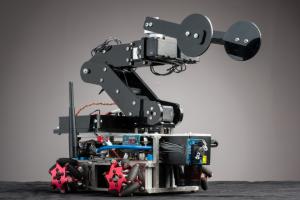
Nov 27, 2017 - Primary sector and manufacturing employees may find themselves with some interesting new colleagues in the next few years as researchers develop robots that can be trained to work alongside people in factories and the great outdoors. A two-year, $2m project funded by the Science for Technological Innovation National Science Challenge Board is examining how next-generation robots can work with humans in a safe and flexible manner. Researchers will focus on developing robots to work in small-scale manufacturing and unforgiving outdoor environments. Such technology could become a global specialty of New Zealand robotics businesses, with great export opportunities and long-term solutions for the country’s economic needs. The interdisciplinary research programme involves robotics experts from Lincoln Agritech and Scion, as well as researchers and PhD students from the universities of Auckland, Canterbury, Massey, Otago, Victoria and Waikato. The programme is laying the groundwork for follow-up projects over the next few years that will focus on making New Zealand a competitive country for the production and use of robots in small-scale, flexible manufacturing businesses and challenging environments such as those found in agriculture and forestry. “We will advance the science required for a new generation of industrial robotic solutions,” says Lincoln Agritech Group Manager in Precision Agriculture, Dr Armin Werner. “These robots can provide enormous benefits to the primary and manufacturing sectors. Both industries require fast adaptation to different products and markets, and constant responsiveness to changing outdoor environments. “The robots can assist with complex tasks such as pruning tree or vine crops, safely felling trees on steep slopes or assembling small batches of appliances on demand.” To develop the technology, researchers will investigate how sensors and artificial intelligence can allow robots to perceive and understand their surroundings, flexibly handle new situations through learning or training by humans or other robots, and work in challenging environments. All the while, the robots will work collaboratively with humans, behaving safely around both people and animals. “The robots will be adaptable and create new solutions for the often small-scale and highly flexible production environment in New Zealand and many other comparable regions in the world,” says Dr Werner. “The targeted innovation represents a major shift from the notion of isolated robots solving single tasks.” The technology is expected to help the country’s industries thrive globally and create an international hub for innovative robotics development. To ensure industry-informed science project coordinators Dr Werner, Associate Professor Will Browne of Victoria University of Wellington, and Associate Professor Johan Potgieter of Massey University will work closely with an industry advisory group that includes robot manufacturers, food and manufacturing industries, Māori businesses and Government funding agencies.
| A Lincoln University release || November 27, 2017 |||

Nov 27, 2017 - Blockchain project TravelChain today announced that for their token sale they are not going to use the Ethereum smart contract, which they have posted earlier on GitHub. The token sale is going to be on their graphene-based blockchain and going to start on December 10. TravelChain is a breakthrough in the travel industry and is the core of the SmartTraveling Ecosystem which is going to provide reliable tools for developers willing to create services that meet demands of contemporary leisure travelers.
“Data is the “oil” of the 21st century, but in most cases, it circulates within corporate systems and cannot be used by other companies to create innovative services. We are looking to bring fourth digital revolution in the travel industry using blockchain.” said TravelChain co-founder and CEO Ilya Orlov. “We designed TravelChain to bridge the gap between all stakeholders in the travel industry and incentivize the consumers. Travelution is coming”
| About TravelChain
TravelChain is a decentralized data exchange platform for the travel industry. It is globally scalable data storage infrastructure, secure by its design.
Graphene-based blockchain allows us to make the public information available for every part of the system, while private information is safely encrypted and stored with just the mark about the type of the information inside. Individual users (private or corporate entities) own the keys to their data in order to control secure storage or distributing/selling their data in real time.
A key component of TravelChain is Traveler Passport, a model with distributed trust that allows you to form an image of another person without being acquainted personally. When dealing with unknown people, it is difficult to predict their actions. However, this is critical when it comes to money, private property, and health.
Key features of Traveler Passport:
| MARKET OVERVIEW
Data market is currently not monetized outside of advertising space. Alphabet (Google, YouTube), Facebook, AirBnB, Amadeus and other services barely reach outside base advertising products and services to individuals.
TravelChain provides different models, enabling data sharing among individuals and business on equal terms.
Target for consumers: To make profit from sharing their data, to get the best deals and offers from businesses and an ability to make the C2C escrow deals.
Target for businesses: Information about potential customers, big data for better market analysis, immediate feedback from customers about goods and services and an ability to provide the best possible conditions for any customer. Access to the TravelChain ecosystem data can significantly reduce marketing costs of business.
| TravelToken sale
Travel chain is going for its token sale on 10th December 2017, and it’ll last for up to two month. Limited part of tokens is going to be out there with 15% bonus. The value of 1 TravelToken is going to be around 0,0000016 BTC (26.11.17 rate). In total 693 000 000 tokens shall be released during the TokenSale. For more information, you can check out the travel chain whitepaper https://travelchain.io/files/TravelChain.WhitePaper(ENG).pdf
| A NEWSBTC release || November 27, 2017 |||
Nov 27, 2017 - New Zealand accounting software CashManager is the first to achieve one of the holy grails in accounting software: direct GST integration with Inland Revenue. Filing GST returns will become a whole lot easier for businesses using the accounting software from today — they’ll be able to send their GST return to Inland Revenue in less than a minute.
CashManager is making this service available to both its online customers and its PC-based customers.
CashManager is the first accounting software programme to successfully offer this feature on Inland Revenue’s new Gateway Service.
The Gateway Service is the portal between the private sector and Inland Revenue allowing software developers to integrate their products with the tax department’s.
CashManager Managing Director Grant Hewson says the new feature will make filing GST a breeze for users.
“Integrating directly with Inland Revenue’s Gateway Service eliminates the common risk of human error when manually transferring data from one system to another. Thanks to CashManager, filing tax returns is just a few clicks away; it’s seamless.
“On top of this, amendments to GST filing periods can be actioned from within CashManager instead of having to go through Inland Revenue.”
Other big name cloud based software companies have worked with Inland Revenue for some time on this GST integration. It took CashManager just two months to achieve this result on the new Gateway Service.
“Our system is smart and built for constant development,” says CashManager developer Penny Slater.
“Data security and systems reliability are our two most important priorities so we’re pleased to say the integration is fully tested and robust. Our clients can rest easy and enjoy the extra time they will free up every year thanks to the integration.”
The CashManager team worked closely with Inland Revenue to deliver the feature, a coveted task amongst software gurus, says Hewson.
“CashManager is the first in the industry to connect via Inland Revenue’s new Gateway Services — this really is quite a feat for us as one of the smaller players.
“Automation is something Inland Revenue is really focussing on and it is great to see them working so closely with the private sector.
“The less time Inland Revenue staff have to spend manually handling things like GST returns, the more time they can spend assisting New Zealanders in other ways.”
| A Cashmanager release || November 27, 2017 |||
Nov 27, 2017 - New Zealanders increasingly think we're moving to a cashless society. So why has the amount of cash held in New Zealand more than trebled in the last 20 years? Lynn Grieveson looks at whether criminals, tradies or abusers of migrant workers are responsible. Half of New Zealanders think that we won't be using cash in ten years' time, and over two-thirds rarely carry cash now, yet new research shows that the amount of cash in circulation has grown over the past decade, outpacing the growth in GDP.
The Federal Research Bank of San Francisco released research last week into cash use around the world.
After looking at the amount of cash in circulation in 42 economies including New Zealand, the Bank found that in nearly every country the amount of cash being held grew as fast or faster than GDP over the past ten years.
In New Zealand, the amount of cash in circulation rose by 76 percent over the past decade, while GDP only rose by 54 percent - a 21.5 percentage point difference. Over the same period, the average household wage grew only 42 percent.
This increase in cash in circulation gave us a ranking of 27th in the list of 42 countries, which was topped by troubled economies such as Argentina (where the rise in cash in circulation was 769 percent more than the rise in GDP), the Sudan (454.5 percent) the Ukraine (368.2 percent) and Afghanistan (206 percent).
The two outliers in the survey were Norway and Sweden, where cash use is declining.
Why so much cash?
The Bank had some theories for the results, which it conceded "may come as a surprise" given technological innovations in the payments sector and a widely-held view that cash is nearly dead.
In countries in economic and political turmoil it clearly makes sense to have a store of cash. But the Bank suggested that the low interest rates in many countries since the global financial crisis may also be factor, as people worry less about the interest they are losing out on by keeping a stash of cash that could otherwise be in a savings account or investment.
New currency designs, as we have had in New Zealand, can also bump up the amount of cash in circulation.
But it seems unlikely to be a major factor, and the statistics show fewer people carrying cash and ATM use falling. ATM use fell 22 percent in Australia over the past five years, even as the amount of cash in circulation there rose 17.7 percent faster than the rate of GDP growth.
Continue to read the full article by Lynn Grieveson on Neewsroom here || November 27, 2017 |||
Nov 27, 2017 - Rail is delivering up to $1.5 billion a year to New Zealand in hidden benefits, according to a study prepared as part of a joint KiwiRail/NZTA team looking at integrated transport planning.
"That far exceeds what the taxpayer is spending on rail," KiwiRail Chairman Trevor Janes says.
The study, carried out by professional services firm EY, looked at some of the wider economic benefits the rail network brings to New Zealand.
"The areas where rail is delivering for New Zealand include cutting congestion, reducing greenhouse gas emissions, improving safety on our roads and lowering spending on road maintenance and upgrades.
"These benefits do not show up on the balance sheet, but they are very real, and they make a huge contribution to New Zealand.
"They need to be considered when choices are made about the transport options available, and how to allocate resources."
Mr Janes says the biggest contribution from rail comes from the reduction it brings in road use.
"Rail is taking cars off the road and it’s taking trucks off the road. That is saving the country $1.3 billion a year because it cuts congestion for all road users, including other freight movers.
"The study found that without rail there would be the equivalent of an additional 100,000 daily car trips on our roads each year - 76 million light vehicle hours reduced through rail - and 57 million of those hours were on Auckland roads.
"Rail also means heavy vehicles such as trucks are on the roads for 11 million fewer hours each year - the equivalent of 30,000 trucks driving for an hour every day.
"Using rail cuts New Zealand’s carbon emissions by 488,000 tonnes a year. That is the equivalent of taking 87,000 cars off the road, saving millions of dollars. Rail freight has 66% fewer carbon emissions than heavy road freight which is useful for New Zealand reaching its ambitious climate change targets.
"New Zealand has a road toll issue with deaths on the road rising markedly since 2013. Taking trucks and cars off the road makes for a safer New Zealand with EY estimating that because we have a rail network, there are 271 fewer fatalities and injuries on the roads.
"Most importantly, that means fewer Kiwi families suffering the heartache that road accidents bring.
"In economic terms, it means $60 million in savings."
The approach taken by EY was to model what it would mean for the roading network if there was no rail network.
"EY took a conservative approach. For example, in considering the economic cost of road accidents it took the same approach as the Ministry of Transport. If it had calculated the cost of road crashes the same way as ACC does, the savings from road incidents would have been more than $100 million.
"The numbers produced reflect the value of rail at a point in time. We will continue to refresh the data with our transport stakeholders, ensuring we are reflecting the changing nature of rail in New Zealand.
"There are further benefits which are not quantified in this report such as the economic benefits rail brings to the regions through network resilience, land use and value uplifts, together with benefits from its tourism and freight businesses.
"It is also important to note that the study reflects similar work done in Scotland, Australia and the wider United Kingdom.
"This study is an important contribution to the transport debate and underlines the value of rail to New Zealand," says Mr Janes.
| An NZRail release || November 27, 2017 |||
Nov 27, 2017 - The Minister of Police, Stuart Nash, today joined New Zealand Police in launching a new recruitment campaign aimed at attracting hundreds of new cops to join next year.
The eye-catching new video campaign is aimed at recruiting officers from a range of backgrounds and ethnicities to help serve their communities and keep the country safe.
“The Government has a vision of improving the wellbeing of all New Zealanders and I believe Police can play a big part in this.”
That is why the Labour and NZ First coalition government is striving towards hiring 1,800 sworn officers.
The details of this package are still being worked through, however Police are already aiming to recruit an additional 220 officers this financial year.
“I know Police staff do a great job, often in what can only be described as trying circumstances. They deal with New Zealanders when they’re at their most vulnerable and protect us all from harm.
“This video, starring more than 70 real staff, is an effective way to showcase there is much more to working for Police than a lot of people realise, and that the organisation needs people who represent all of the communities in New Zealand.”
New Zealand Police have launched the video via its strong social media channels as this is the best way to engage with the 18-24 age group who are the ideal candidates to become new cops.
“I commend the Police on their recent efforts to attract more women and people from diverse ethnic backgrounds to the job. Since 2010 the number of female constabulary members has increased and now stands at nearly 20%. 2015 was the first year where a third of recruits were women and Police are aiming for 50% in the future.
“Various initiatives such as Te Wānanga O Aotearoa and Unitec pre-Police courses are underway at a district level and supported at a national level to increase the diversity of Police applicants. Last month Rotorua Boys' High School and Rotorua Girls' High School were the first schools in the country to add a NCEA-accredited police studies subject to their curriculum. These are great steps.
“New Zealand Police staff are already doing fantastic work. Now the organisation just needs to recruit more people to help make even more of an impact and this new campaign will help them do just that,” says Mr Nash.
| From the Beehive || November 27, 2017 |||

Palace of the Alhambra, Spain
By: Charles Nathaniel Worsley (1862-1923)
From the collection of Sir Heaton Rhodes
Oil on canvas - 118cm x 162cm
Valued $12,000 - $18,000
Offers invited over $9,000
Contact: Henry Newrick – (+64 ) 27 471 2242

Mount Egmont with Lake
By: John Philemon Backhouse (1845-1908)
Oil on Sea Shell - 13cm x 14cm
Valued $2,000-$3,000
Offers invited over $1,500
Contact: Henry Newrick – (+64 ) 27 471 2242

|
|