
Founded by Max Farndale 1947 - 2018
15 Nov 2017 - Westpac New Zealand Limited (Westpac) has had its minimum regulatory capital requirements increased after it failed to comply with regulatory obligations relating to its status as an internal models bank. Internal models banks are accredited by the Reserve Bank to use approved risk models to calculate how much regulatory capital they need to hold. Westpac used a number of models that had not been approved by the Reserve Bank, and materially failed to meet requirements around model governance, processes and documentation. “This is very disappointing. Operating as an internal models bank is a privilege that requires high standards and comes with considerable responsibilities. Westpac has not met our expectations in this regard,” Reserve Bank Deputy Governor and Head of Financial Stability Geoff Bascand said. The Reserve Bank required Westpac to commission an independent report into its compliance with internal models regulatory requirements. The report found that Westpac:· currently operates 17 (out of 35) unapproved capital models;
· has used 21 (out of 32) additional unapproved capital models since it was accredited as an internal models bank in 2008; and
· failed to put in place the systems and controls an internal models bank is required to have under its conditions of registration.
The Reserve Bank has decided that Westpac’s conditions of registration should be amended to increase its minimum capital levels until the shortcomings and non-compliance identified in the independent report have been remedied. Westpac’s minimum capital ratio requirements will be 6.5 percent for Common Equity Tier 1 capital, 8 percent for Tier 1 capital and 10 percent for Total capital, with the additional 2.5 percent capital conservation buffer applying. Currently, for all other locally incorporated banks capital ratios are set at, respectively, 4.5 percent, 6 percent and 8 percent, plus the 2.5 percent buffer. In addition, the Reserve Bank has accepted an undertaking by Westpac to maintain its total capital ratio above 15.1 percent until all existing issues have been resolved. The Reserve Bank has given Westpac 18 months to satisfy the Reserve Bank that it has sufficiently addressed those issues or it risks losing accreditation to operate as an internal models bank. “We believe the regulatory action is appropriate given the seriousness of Westpac’s non-compliance and the need to protect the integrity of the capital regime,” Mr Bascand said. The Reserve Bank has taken into account that Westpac has not deliberately sought to reduce its regulatory capital. While there have been serious shortcomings and non-compliance, it appears that Westpac has remained well above its required regulatory capital levels. Westpac has confirmed that it does not dispute the findings of the independent report, that it is committed to remedying all the issues identified, and that it will maintain its total capital ratio above 15.1 percent.
| A RBNZ release || November 15, 2017 |||
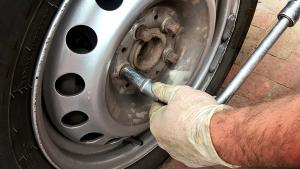
15 Nov 2017 - A study done by the University of Southern California and New Zealand’s Victoria University shows that additional trade schools could be a better way to close the income gap than universities. The research found that more investment is needed to go to vocational training because "there are too many four-year colleges serving too many students, and too few institutions with greater focus on vocational education and training," according to Joshua Aizenman, economics chair at University of Southern California.
Data shows that the amount of available vocational training relative to the size of a country's manufacturing sector may reduce income inequality and improve the fortunes of workers earning below the top 10 percent of household incomes, according to the report.
"Pushing more students to B.A. granting colleges may no longer be the most efficient way to deal with the challenges caused by the decline in manufacturing employment," said Aizenman.
Many believe fewer works would mean decreased output, but real gross domestic product manufacturing has risen over the past two decades, according to the report. This leads to the popular conclusion that machines have replaced labor in the workplace.
| A news4sa.com release || November 15, 2017 |||
15 Nov 2017 - Mobil Oil New Zealand Limited (Mobil) today announced plans to improve fuel supply capacity for the South Island with the construction of two tanks at its fuel terminal in Lyttelton.
The tanks, which will replace those damaged by a 2014 landslide at Mobil’s Naval Point facility, will be located adjacent to Mobil’s existing terminal at George Seymour Quay and will store petrol and diesel. The company expects to complete the work in early 2019.
· Two new tanks will improve fuel supply capacity for the South Island· To be located adjacent to Mobil’s existing terminal at George Seymour Quay· Construction underway, completion expected in early 2019
“Construction of new tanks will restore fuel storage capacity at our Lyttelton operation, which, along with the Lyttelton-Woolston pipeline and Woolston Terminal, is an important part of the fuel supply chain in the South Island,” said Andrew McNaught, country manager for Mobil. “This project represents a significant investment in New Zealand’s fuel supply chain and demonstrates our commitment to the local market.”
Restoring the Lyttelton fuel terminal’s storage capacity is the latest of several recent major investments by Mobil to enhance its fuel product offerings to New Zealand customers. These include the launch of its new Synergy family of fuels and associated service station enhancements, as well as the upgrade of its bulk fuels terminal at Mount Maunganui. Since 2012, Mobil has invested more than NZ$120 million in its New Zealand operations.
Mobil has been a reliable supplier of quality fuels and lubricants to New Zealand for more than 120 years. The company supplies a nationwide network of more than 170 Mobil-branded service stations and more than 50 unbranded sites. For more information, visit www.mobil.co.nz.
| A Mobil New Zealand release || November 15, 2017 |||
15 Nov 2017 - A report produced by the Australian Competition and Consumer Commission (ACCC) on the country’s stevedores has suggested that Port Botany has overtaken the Port of Melbourne for container trade due to constraints at the Victorian port, as first reported by The Age. In 2016/17, Port Botany handled 34 per cent of Australia’s container movements, with 33 per cent going through the Port of Melbourne – down from 36 per cent in 2015/16.
While the report did not directly link the Port of Melbourne’s reduced volume to the increasing size of container ships, it noted that it is the most likely port to put limits on the size of ships visiting the country.
The Age noted that the biggest ship to visit Australia, the 347-metre Susan Maersk that docked at the Port of Brisbane in October, would have been unable to travel up the mouth of the Yarra River to Swanson Dock, and its 10,000 TEU (twenty-foot equivalent unit) load may or may not have managed to fit underneath the West Gate Bridge.
In a recent newsletter, industry body Shipping Australia wrote that with only one terminal able to take the larger ships – Webb Dock, with Swanson Dock out of reach – “Melbourne is already the limiting factor for the size of ships coming to Australia’s east coast ports and is preventing Australians benefiting from the efficiencies of larger ship operations.”
“The risk is that shipping lines may consider by-passing Melbourne for Adelaide or Sydney and use rail, or a smaller ship feeder service (possibly from New Zealand) to make the connection,” it added.
“This would ultimately cost the Victorian consumer, the Port of Melbourne and the state economy.”
| A L&MH release || November 15, 2017 13:15 |||
15 Nov 2017 - Max Frank Pecafil Steel Formwork Is More Efficient Than Traditional Formwork
The rate of construction work being done to modernise New Zealand is increasing. In the year ended September 2017, non-residential building consents across the country totalled $6.4 billion – up 5.9 percent from the September 2016 year. The need for better formwork technologies has risen to make construction work faster, more cost-effective and less labour-intensive.
Pecafil is one form of modernisation in the construction industry answering this need for modernisation. It is a formwork solution especially useful for laying foundations formwork, replacing conventional timber or steel shuttering for in-ground construction of pile caps and ground beams.
Designed by Max Frank in Germany and distributed by Fletcher Reinforcing, Pecafil is a specially manufactured material constructed from a steel mesh encased in an outer layer made of reusable, strong, heat-shrunk polyethylene. It is lightweight and self-supporting, supplied by Fletcher Reinforcing as a full sheet or pre-bent off-site according to design requirements. This significantly reduces construction time on-site, promising a quicker transition from breaking ground to pouring concrete.
Continue here to read the full release || November 15, 2017 - 13:07 |||
15 Nov 2017 - One of the largest, and the longest established New Zealand-owned engineering and design consultancy, Harrison Grierson, has announced its merger with Wellington-based spatial information specialists, e-Spatial.
Harrison Grierson employs over 350 people in eight offices across the country. Its four key market sectors are Land and Buildings, Water and the Environment, Utilities, and Transport.
e-Spatial’s expert services include spatial consulting, solution development, data management and technology.
The new stand-alone business unit will be called ‘e-Spatial, a Harrison Grierson company.’
This is the second merger in Harrison Grierson’s 132-year history and is a significant diversification for both companies, says Managing Director, Glen Cornelius. ‘With this new specialist offering, we can undertake a range of different projects for our clients, adding value and enjoying a competitive advantage in many areas.’
In February this year, Harrison Grierson merged with the traffic and transport engineering specialists, T2, to form a new business unit called HGT2.
| A harrison Grierson release || November 15, 2017 - 12:53
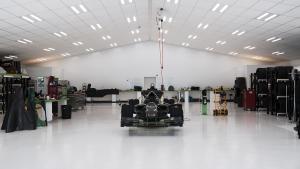
15 Nov 2017 - What brings an extremely wealthy Australian tech guru to the backblocks of the South Island? Granted, there is a small stream on the western boundary of his 550 hectare North Canterbury farm that might harbour brown trout but there’s certainly no lake, no private golf course, no hint of equestrian activity, no magnificent country estate, rather just a random collection of innocuous sheds of varying sizes and shapes.
On closer inspection there are, however, extensive tar-sealed roads, one in particular running for nearly a kilometre alongside a narrow public access road that forms the inland route between Waiau and Kaikoura. It’s along this road that gobsmacked tourists sometimes get to experience the cacophony of sound as a speeding ‘Formula 1-like’ race car blasts past their vehicles at what must seem like insane speeds on the other side of the farm fence.
It’s all that separates the 2.8 kilometre long race track from a normally quiet public road, just 50 metres away. David Dicker, head of Dicker Data Australia, which recently turned over A$1billion in sales revenue, is certainly not the only rich man to build himself a private race track here, and probably won’t be the last. Such a man could therefore be expected to have a collection of fast toys, and he has them in spades; Ferraris (his favourites), Lamborghinis, and Porsches but few such enthusiasts own a Lotus 125 “F1 customer experience” race car, complete with a screaming 650bhp Cosworth V8 engine.
Even fewer have their own 2.8km race track on which to unleash the beast whenever they . . . .
Continue here to read the full story written by Mark petch in AutoCarNew Zealand || November 15, 2017
15 Nov 2017 - Mainfreight, the transport and logistics group, posted a 1.1 percent gain in first-half profit as strong trading in Australia and improving results in Europe were offset by weaker results in the Americas and Asia. The company said it had expected a better first-half result. Profit rose to $42.2 million in the six months ended Sept. 30 from $41.8 million a year earlier, the Auckland-based company said in a statement. Sales rose to $1.2 billion from $1.1 billion.
Mainfreight declared an interim dividend of 19 cents a share, up 2 cents from a year earlier, saying even though it was disappointed in the first-half result it had "ongoing confidence for further improvement at the year-end result," with a stand-out full-year result expected from Australia.
"Our Australian businesses have significant momentum, and we expect full-year results for this region to be at record levels," the company said today. "Our European businesses continue to outperform the year prior, and we are seeing incremental improvements in Asia and the Americas as our new leadership teams settle into their roles."
In New Zealand, revenue rose 10 percent to $317 million and earnings before interest, tax, depreciation and amortisation gained 3.5 percent to $38 million. Its domestic operations faced additional costs associated with servicing inter-Island freight movements via road and coastal shipping following the Kaikoura earthquakes last November. Against that, Mainfreight enjoyed "stronger intra-Island volumes, together with an expanded and improving Logistics warehousing operation."
Australian sales rose about 14 percent to A$292.9 million and ebitda jumped 29 percent to A$20.8 million on the back of "strong sales improvement across our domestic and warehousing divisions," it said.
"Both domestic transport volumes and logistics warehousing activity continue to increase as the pre-Christmas season influences October and November trading," it said. "Air & ocean activity remains subdued compared to the prior period."
Mainfreight's Asian operations recorded a 20 percent jump in sales to US$37.6 million but ebitda tumbled 53 percent to US$2 million in the first half, as gross margins "were adversely affected by the decline in inter-company airfreight revenue."
"Senior management changes took effect from early October, with an ongoing focus on branch profitability improvement," it said.
In the Americas, sales fell 10 percent to US$203 million and ebitda fell 14 percent to $8.4 million, partly reflecting the loss of "a significant airfreight import account" from its air & ocean division. Its domestic transport and logistics divisions "did not achieve trading expectations during the period" while at its CaroTrans wholesale business, revenue was "stable compared to the prior period, halting the decline of the previous two years."
Still, it said activity in all its US operations picked up in September and October and it expected to see results for the full year in line with the 2017 result.
In Europe, sales rose 19 percent to 163 million euros and earnings gained 9.8 percent to 8.4 million euros. "Trading through October and November remains ahead of the year prior," it said.
Mainfreight shares last traded at $24.12 and have gained about 16 percent this year.
| A BusinessDesk release || November 15, 2017 |||

15 Nov 2017 - Ara computing senior lecturer Amit Sarkar interviewed the top decision makers at 30 organisations that survived the Christchurch earthquakes, and found that Information Systems (IS) resilience was a major factor in their continued operation and successful recovery. This held true for large organisations and small organisations, both public and private sector.
Amit’s work impressed participants and jury at the European, Mediterranean and Middle Eastern Conference on Information Systems (EMCIS), where it was awarded best research paper this year. The paper Governing Information Systems Resilience: A Case Study is co-authored by Stephen Wingreen from UC and John Ascroft from Jade Software. Another paper in this series, CEO Decision Making under Crisis: An Agency Theory Perspective, is co-authored by Stephen Wingreen and Paul Cragg from the University of Canterbury, and was published in the Pacific Asia Journal of the Association for Information Systems (June 2017).
“Information Systems (IS) resilience is fundamental to an organisation’s survival,” Amit says. “In every organisation, if there is downtime in an organisation’s IS then there is a very slim chance that they will survive. Snail mail and paper-based accounting is almost obsolete. So the IS is quite central to the business. If the IS is down, if they can’t receive or send data and they can’t do any transactions, then what are consequences?”
Resilience is widely recognised in related disciplines such as Computer Science, Crisis Management and Safety Engineering, but there had been very little attention paid by Information Systems scholars to IS resilience. Business leaders who Amit interviewed told him that IS resilience was very important, but simply had not been documented.
Canterbury’s computing experts and business leaders have a lot of wisdom to share about business preparedness for disaster and Amit collated this using Q spot methodology to identify not only the most important factors in IS resilience, but also how decision makers prioritise these factors for resourcing.
Successful organisations, he found, had an IS resilience plan and, most crucially, they had practised it, challenged it and embedded it into the organisation.
“Good process means you are taking it seriously and practising it, trying to find the loopholes and debating, learning from the drills what went wrong and how to improve, so that when the real thing comes you are super ready. That cannot happen from reading the plan on the day. The plan goes out the window when the disaster strikes, so this is significant.”
Often basic preparation included migrating data to the cloud – something the city council fortuitously completed just four hours before the first, September 2010, earthquake struck. When there is no physical access to servers, then the cloud becomes essential for retrieving stored data.
Diversity and complementarity within the company was important to testing resilience plans for many eventualities and for practising problem solving. When a range of thinking styles was employed, IS resilience plans were more thoroughly tested. IS resilience is as much about people as it is about technology, Amit says.
“All the companies that survived put people in the centre. There is a huge emotional toll that happens and every single organisation in the study, including Ara, took care of the people, by making sure salaries are paid, checking on employees and so on. It’s a symbiotic relationship. If you look after your employees, they will look after your technology and processes.”
Not only did organisations need to be resilient themselves, but they had to choose partners carefully to ensure they were also resilient. Having robust systems would be pointless if the supply chain collapsed because other organisations were not prepared. This also applied to overseas partners.
An in-depth case study on Jade Software in Christchurch has now evolved into a proposal to develop an app to periodically check organisations’ resilience status. This could create a valuable tool that can be used in different countries and cultures, Amit says.
| An ARA release || November 15, 2017 |||
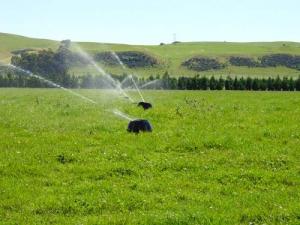
15 Nov 2017 - IrrigationNZ says that the petition presented by Greenpeace at Parliament yesterday misrepresents how irrigation has been funded and used and ignores the wide range of benefits to New Zealand from irrigation, as well as the efforts being made to address environmental issues.
“Greenpeace has presented a petition seeking to stop government funding of irrigation schemes. The petition is misleading as the majority of money provided to irrigation schemes by Crown Irrigation Investments has been in the form of loans which have to be paid back with interest,” says Andrew Curtis IrrigationNZ Chief Executive.
“The loan funding supports new irrigation schemes but also supports work to modernise existing irrigation schemes so they can use water more efficiently, something many people would support if they knew about it.”
Mr Curtis says the petition’s focus on irrigation being used by dairy farms does not fairly represent how irrigation is used in New Zealand. Over half of New Zealand’s irrigated land is not used for dairy farming but to grow crops, for sheep and pasture grazing, and for fruit, vegetable and wine production. Most dairy farms in New Zealand do not use irrigation.
“Modern irrigation schemes can also have a range of environmental benefits,” says Mr Curtis.
Trials by the Foundation for Arable Research have found that arable farms with irrigation leached less nitrogen than the equivalent dryland farms. On irrigated farms nutrients can be targeted to provide reliable plant growth which is not limited by soil moisture. Enhanced plant growth allows more nutrients to be used by plants, reducing the risk of leaching. Irrigation also promotes consistent ground cover (either crops or pasture) through the summer growing season, which reduces the risk of wind erosion of soil and surface sediment runoff. Sediment is a significant contaminant in waterways.
Irrigation schemes can be designed to protect river health – for example water from the Opuha Dam is used to supplement river flows to keep the river flowing during drought years and is released to mimic ‘natural freshes’ that flush-out algal growth in the Opuha River.
“The recent report on domestic vegetable production by HortNZ highlights that New Zealand needs to focus on ensuring there is a secure food supply for the future. Irrigation helps us feed our growing population, keeps food more affordable and allows a wider variety of local food to be grown throughout the year,” Mr Curtis adds.
“Irrigation will become even more important in the future to help reduce food shortages or price spikes due to droughts occurring more often as a result of climate change.”
Many irrigation schemes supply multi-purpose infrastructure with Oamaru, Timaru and Kerikeri all sourcing their town drinking water supply from irrigation infrastructure.
“Irrigation is vitally important to New Zealand’s economy and it contributed an estimated $5.4 billion to NZ’s GDP in 2016-17. For every 1,000 hectares of irrigation added, several New Zealand studies have found at least 50 new jobs are created. For high value horticulture, this increases to over 500 new jobs,” Mr Curtis says.
“New Zealand is a world leader in efficient, safe food production and irrigation plays an important role in this as well as in creating prosperous communities. Farmers and growers are now taking a wide range of actions on farms like fencing off waterways, riparian planting and developing farm environment plans which are already resulting in improvements to rivers,” says Mr Curtis.
Notes on sources:
(1) For information on trials by the Foundation for Arable Research see Irrigation is good for the environment
(2) Information on the Opuha Dam is online
(3) For HortNZ’s report see New Zealand vegetable production: the growing story
(4) For details of the economic contribution of irrigation to GDP, how irrigated land in New Zealand is used refer to IrrigationNZ’s website
(5) For studies on the link between irrigation and job creation see the Socio-Economic Value of Irrigation
(6) For Canterbury rainfall data see Land, Air and Water NZ

Palace of the Alhambra, Spain
By: Charles Nathaniel Worsley (1862-1923)
From the collection of Sir Heaton Rhodes
Oil on canvas - 118cm x 162cm
Valued $12,000 - $18,000
Offers invited over $9,000
Contact: Henry Newrick – (+64 ) 27 471 2242
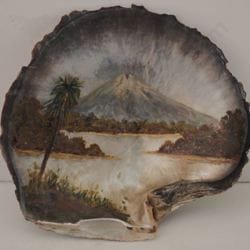
Mount Egmont with Lake
By: John Philemon Backhouse (1845-1908)
Oil on Sea Shell - 13cm x 14cm
Valued $2,000-$3,000
Offers invited over $1,500
Contact: Henry Newrick – (+64 ) 27 471 2242

|
|