
Founded by Max Farndale 1947 - 2018
13 Nov 2017 - Contact Energy is getting a lot of attention for its pioneering green borrowing programme, certified by Climate Bonds Initiatives (CBI) and launched in mid-August. There are expectations this will lead to further similar issues in New Zealand as the appetite for socially responsible investing and meaningful action on climate change grows. Green bonds are created to fund projects or assets that have positive environmental and/or climate benefits. Most green bonds that are issued worldwide are green “use of proceeds” or asset-linked bonds. This means investors that buy these green bonds can be confident their investment is linked to assets that will benefit the environment.
James Kilty, Contact’s Chief Generation and Development Officer says the certification reflects the low carbon nature of the company’s generation assets. “Over 80% of Contact’s electricity is produced from renewable sources and for us a responsible, innovative and sustainable approach to managing these precious resources is key.”
In the case of Contact Energy, its $1.8 billion programme allows debt investors and lenders to access a broad range of certified green debt instruments, including committed bank facilities, commercial paper and retail bonds issued by the company. The programme has been certified by the Climate Bonds Initiative (CBI), one of its largest certifications to date.
Louise Tong, Head of Capital Markets and Tax at Contact, said all future funds raised by Contact are intended to be included in the Green Borrowing Programme. In addition, there is potential for the company’s existing hydropower generation assets in Clyde and Roxburgh to be included in the programme in future.
“We’re part of a Technical Working Group associated with CBI that’s trying to determine what appropriate hydropower criteria should be. Once the criteria are determined, we’ll bring our hydropower assets into the programme. This would allow Contact to include the new debt issuance planned for next year in our Green Borrowing Programme.”
“As well as shining a light on Contact’s broader sustainability initiatives, the Green Borrowing Programme is an opportunity to attract a broader pool of “green” investors who appreciate the importance of low carbon energy in addressing the challenges presented by climate change” she said.
Contact is actively focusing on the role it can play to help New Zealand transition to a low carbon economy. James Kilty notes, “There’s also a great opportunity to do more to tackle climate change in NZ, particularly in the transport sector and energy-intensive manufacturing businesses where’s there’s an opportunity to convert to cleaner electricity, backed by renewable generation, and we’re keen to work with industry and customers to help bring about this change.”
Katharine Tapley, Head of Sustainable Finance at ANZ Bank who assisted Contact to establish its Green Borrowing Programme, said it has been a catalyst for sparking significant interest from other New Zealand corporates.
“Following the Contact programme being launched, we’ve had a lot of enquiries about the potential for other green bonds to be issued into the New Zealand market,” she said.
She noted that, while the green debt market in New Zealand is lagging Australia and Asia, there is opportunity given the focus on renewable energy, energy efficiency and sustainability more broadly.
Internationally, there has been enormous growth by investors and issuers in green bonds over the past year. At the end of the first quarter of 2017, green bonds issuance stood at $US21.76 billion, up nearly 42 percent from the same period last year. The Organization for Economic Co-operation and Development (OECD) estimates that the green bond market could increase by $US4.7 - $US5.6 trillion by 2035.
The benefits to issuing green bonds include:
1. Increased transparency about carbon reduction.
For Contact this means having assets that meet scientifically-based emissions criteria. Contact has committed to regular disclosure and reporting in relation to those criteria.
2. Funding for sustainability initiatives
Green bonds can provide capital for sustainability-related projects. In the case of Contact, this includes refinancing exiting assets, but a number of other New Zealand companies are considering green bonds to finance projects ranging from water efficiency initiatives through to green-rated buildings.
3. Demand from private investors
For investors, green bonds allow them to invest in environmentally-friendly products and services – this segment of investment funds is growing significantly, reflecting the increased focus on socially responsible investment.
4. Enhances company reputation
As Contact Energy is experiencing, when companies introduce green borrowing, they get a lot of attention. This allows companies to share their stories about the other reputational and financial benefits of sustainable business.
| A Contact Energy release || November 13, 2017 |||
13 Nov 2017 - New Zealanders are set to start receiving emergency alerts to their mobile phones, warning them that their life, property or health is in serious danger. Minister of Civil Defence Kris Faafoi said implementation would start with a live nationwide test of Emergency Mobile Alerts on 26 November. “By running this test and asking people to be aware of the alerts, we are able to test our systems, the cell towers and your phones ability to receive an Emergency Mobile Alert,” Mr Faafoi says.
“This is a test for now but when emergencies happen this is another tool we can use to keep everyone in our community safe. Not all phones are currently capable of receiving the alerts, so we need people to look after others: if you receive an alert, tell your neighbours, your whanau, your colleagues.”
The Ministry of Civil Defence and Emergency Management (MCDEM) is leading the implementation of the new emergency alert channel. A nationwide multi-media campaign starts today (Sunday), online, on radio and on street posters, letting people know about the alerts and how to check whether their phones will receive them.
The alerts are sent using cell broadcast technology, so there is no need to sign up or download an app. They can be targeted to affected areas, so you will only get them if the emergency is in your area. It is expected that around one third of phones will immediately be able to receive alerts but this will rise over time. You can check whether your phone can receive the alert and find out more at civildefence.govt.nz.
Minister Faafoi says Emergency Mobile Alert is an additional channel to help keep New Zealand safe in an emergency and does not replace other alerting systems and information channels, or the need to take action after natural warnings.
“If you feel your life may be in danger, don’t wait for an official warning. Take immediate action. For example in local source tsunami, there may not be time to send an alert. Please recognise the natural warnings and get safe – ‘Long or Strong, Get Gone’”.
Emergency Mobile Alert messages can only be sent by the Ministry of Civil Defence & Emergency Management, Civil Defence Emergency Management Groups, NZ Police, Fire and Emergency New Zealand, the Ministry of Health and the Ministry for Primary Industries.
| A Beehive release || November 13, 2017 |||
13 Nov 2017 - After a few fraught days, the TPP was given new life. However, the struggles to get the deal across the line and other issues at the Apec summit raise questions about obstacles to multilateral trade and what that means for New Zealand, as Sam Sachdeva reports. The ideological battle for the future of Asia-Pacific trade played out on the big screen at Da Nang.
Of course, there was the stuttering, stumbling, but ultimately successful (or near enough) negotiations to reach agreement on the TPP (now known as the CPTPP - the Comprehensive and Progressive agreement for the Trans-Pacific Partnership).
While the New Zealand team was cautiously hailing the outcome, other events at the Apec summit may have given them cause for concern when it comes to multilateralism.
In his speech to the Apec CEO’s Summit, US President Donald Trump railled against what he saw as unfair trading arrangements, saying the US had “not been treated fairly” by the WTO and other countries had not reciprocated the favours extended by his country.
While the US was open to bilateral agreements with any Asia-Pacific country, he made no bones about its approach to multilateralism.
“What we will no longer do is enter into large agreements that tie our hands, surrender our sovereignty, and make meaningful enforcement practically impossible.”
Worryingly, there are some concerns about whether Trump wants to kill the WTO: an article in the New York Times suggested American negotiators had warned their Mexican and Canadian counterparts that they could not expect their trade to “simply snap back to WTO rules” if the US leaves NAFTA.
Continue here to read the full Newsroom article by Sam Sachdeva || November 13 2017 |||


Congratulations to all winners at the 2017 New Zealand Architecture Awards, held at the Viaduct
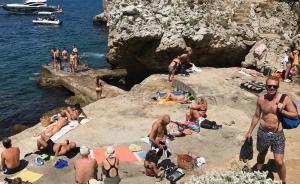
Strollers Discover Tranquility in the Eye of the International Tourist Storm
12 Nov 2017 - In Antibes it was curious to observe that domestic property prices in the town seemed on a par with those in New Zealand’s rural Hawkes Bay and this unpressured ambience permeates the fabled Cote D’Azur,writes our roaming travel editor, Peter Isaac. If anyone was in a rush then they made sure to keep it to themselves, certainly in the Antibes town square, just a leisurely 10 minute walk from the railway station, which itself radiated a rural line, off-peak, level of activity.
Plenty of bench space in the square ringed with its murmuring cafes.
Plenty of towel space too on the inner town’s own mellow beaches, the ones you encounter before hitting the more substantial one on its outskirts toward the Cap d’Antibes.
Sauntering along the Cap d’Antibes, along the storied Chemin des Douaniers, with itinerant international New Zealand yachtsman - lawyer Zac Foot, (pictured extreme right, Baie des Milliardaires) and particularly evident was the easy-going nature of the French at leisure, and they did give the appearance of being almost entirely French.
Their behaviour being in contrast to their English-speaking counterparts who would have been determinedly striding out on the well maintained yet unostentatious and litter-free Cap foot path with their alpine sticks, or hoarsely panting by in running rig.
A cooling plunge en route in the sumptuously-named Bay of Billionaires, ringed by narrow jagged beaches and vaguely reminiscent of Cornwall’s smugglers coves, and hence one senses the Douaniers, the customs enforcers, appellation here.
As it turned out our swim was rewarded by slices of home-cooked pizza from local fellow beachgoers sympathetic to this incongruous, pallid Anglo duo.
Past the Chateau de la Croe, pre-war refuge of the abdicated Edward V111, before Winston Churchill instructed he and his duchess to hurry to the Atlantic coast where a battleship captained by Louis Mountbatten, his cousin, would pick them up before the Germans did.
The Chateau incidentally, now under restoration by its new owner, another oligarch, but of a different stripe -- Roman Abramovich, proprietor as well of the Chelsea Football Club.
Now on to the Cap itself, doubling back via Eden Roc.
On the other side now, the westerly one, on the Cannes side, ambling into Juan Les Pins which is back-to-back with Antibes.
In an international resort compression sense, it is a bit like starting a walk through Paris and stumbling across Rome too.
Latin language buffs beware though of the revealing shibboleth which even on this accepting coastline separates the dolts from the sophisticates.
It is not “Joo-an” Les Pins, as in the opera,
Or even “Wahn”
It is “Shoo-arng” Les Pins
If Antibes is redolent of the stately 1930s then Juan Les Pins presents a 1950s resort aspect, just a soupcon of repressed raffishness.
At the isthmus neck of the Cap d’ Antibes we turned east back to Antibes traversing a shallow saddle hump via the Chemin des Sables walking through leafy and seemingly deserted streets reminiscent of the verdancy and understated prosperity of the nicer suburbs one finds lining the Pacific.civic shore.
Once returned to the Antibes side of the Cap and a further supply of not terribly crowded sandy beach capacity, another immersion to dissipate the now restored received effects of the afternoon ambient heat.
This was intense it being the height of summer and thus the height of the season.
France is the world’s most visited country. The Riviera, it’s most coveted destination.
All additional proof that if you truly want to get away from it all, as the English like to say, then the most tranquil place to be is in the eye of the seasonal international tourist storm.
\| the MSCTtravelDesk editor, This email address is being protected from spambots. You need JavaScript enabled to view it. || Sunday 12 November, 2017 |||
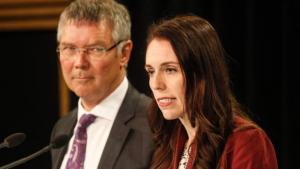
12 Nov 2017 - Minister for Trade and Export Growth David Parker has welcomed the 11-member Comprehensive and Progressive Agreement for the Trans-Pacific Partnership (CPTPP) which incorporates the TPP. A Ministerial Statement has been issued today by all eleven Ministers in Da Nang, Viet Nam, which confirms the core elements of the deal are now agreed, with just four issues requiring further technical work and discussion.
"My Ministerial counterparts and I also agreed this week to suspend a number of the most controversial parts of the of the original TPP in the new Agreement,” says Minister Parker.
“At the same time, there will be no change to the goods market access outcomes contained in the original TPP.
“This is a now an improved deal for New Zealand.
“The overall outcome satisfies the five conditions that the Labour-led Government laid out for a revised TPP:
• It achieves meaningful gains in market access for farmers and supports the more than 620,000 New Zealanders whose jobs depend on exports. The CPTPP will also provide New Zealand for the first time with preferential market access into Japan, the world’s third-largest economy, as well as Canada, Mexico and Peru;
• It upholds the unique status of the Treaty of Waitangi;
• It preserves New Zealand’s right to regulate in the public interest. We have also retained the reciprocal agreement with Australia, which is the source of 80 per cent of our overseas investment from this new grouping, that ISDS clauses will not apply between our countries. We continue to seek similar agreements with the other countries in this new Agreement. In addition, the scope to make ISDS claims has also been narrowed;
• The Pharmac model continues to be protected. Further improvements now achieved include suspension of patent extensions which could have increased the cost of medicine to the government; and
• The ability to control the sale of New Zealand homes is being preserved by separate legislation in New Zealand.
“New Zealand will now be focused on working together with our partner countries toward signature, including on the four specific items to be finalised by the date of signature of the new Agreement.
“I expect negotiators will need to meet again in the next few months to take this forward.
“In the meantime, I want New Zealanders to have the opportunity to understand what has been agreed and what it means for them, their families and their country, before anything is signed or ratified.
“Like all free trade agreements, the Foreign Affairs, Defence and Trade Select Committee will scrutinise the CPTPP and Parliament will consider the necessary legislative changes needed to give effect to the agreement.”
Notes:
The CPTPP was negotiated between Australia, Brunei Darussalam, Canada, Chile, Japan, Malaysia, Mexico, Peru, Singapore, Viet Nam, and New Zealand.
The four remaining specific items to be finalised by the date of signature are included at the end of the list of suspended provisions.Beehive.govt.nz
| A beehive release || November 11, 2017 |||
12 Nov 2017 - The Government has outlined its priorities across digital technology, media and open government signalling that the establishment of a Chief Technology Officer is at the top of the list. Delivering the keynote speech at NetHui 2017, the Minister of Broadcasting, Communications and Digital Media and Government Digital Services and the Associate Minister of State Services (Open Government), Clare Curran, said that the Chief Technology Officer would be responsible for preparing and overseeing a national digital architecture, or roadmap, for the next five to ten years.
Ms Curran also said that the Government would begin work on a blueprint for digital inclusion to address the emerging digital divide, establish RNZ+ as the centrepiece of a full non-commercial public media service for all New Zealanders, institute a process for the proactive release of government information and create a framework for strengthening citizens’ rights in the digital environment.
“This Government will be modern, future-focused and innovative. We will also work collaboratively with industry, non-government organisations and communities.”
Further, Ms Curran said she would convene reference groups in her key portfolio areas and task them with pulling together leading thinkers and actors in each area, from inside government and across industry, local government, Māoridom, non-government organisations and community groups to ensure that the best thinking is applied to realising Government policy.
“This Government intends to progress its goals to close the digital divide by 2020, and to make ICT the second largest contributor to GDP by 2025.”
“New Zealanders rightly expect that their government should behave in a predictable, open and transparent way and ensure that nobody is left behind. The internet and digital tools are fundamental to us achieving these goals,” Ms Curran said.
| A Beehive release || November 11, 2017 |||

Palace of the Alhambra, Spain
By: Charles Nathaniel Worsley (1862-1923)
From the collection of Sir Heaton Rhodes
Oil on canvas - 118cm x 162cm
Valued $12,000 - $18,000
Offers invited over $9,000
Contact: Henry Newrick – (+64 ) 27 471 2242

Mount Egmont with Lake
By: John Philemon Backhouse (1845-1908)
Oil on Sea Shell - 13cm x 14cm
Valued $2,000-$3,000
Offers invited over $1,500
Contact: Henry Newrick – (+64 ) 27 471 2242

|
|