
Founded by Max Farndale 1947 - 2018
8 Nov 2017 - On day one in the House, Labour struck a deal with National to save face, but the consequences of that deal could mean a difficult three years for the government writes Lynda Walters for Stuff today.
On Tuesday, during the election of the Speaker of the House, National caught Labour off guard, suggesting the government didn't have the numbers to elect its nominated man, Trevor Mallard.
In what appeared to be a mad scramble, leader of the House Chris Hipkins conversed with Jacinda Ardern, Grant Robertson and NZ First's Ron Mark over how best to proceed.
Continue here to read the full article || November 8, 2017 |||
8 Nov 2017 - The last government has a lot to be proud of, writes National MP Chris Bishop for The Spinooff, from fending off the GFC and Canterbury earthquake recovery to social investment and addressing child poverty. As the dust settles on the election and the new super-sized Labour/NZ First/Greens ministry gets to work, it’s worth looking back on nine years of National-led government, and what has been achieved for New Zealand.
Let me say at the outset that no government is perfect. All are affected by global economic circumstances and – as encapsulated in Macmillan’s famous dictum – “events, dear boy, events”. Governments never deliver all the fervent desires of their most ardent supporters, and most aren’t anywhere near as hopeless as partisans from the other side would have you believe.
I believe New Zealanders can look back with pride on nine years of National government. The country is demonstrably a better place than it was in 2008. Since Muldoon (who infamously, and depressingly, promised to leave the country no worse than he found it) that has surely been the litmus test for good government in this country. New Zealand is prouder, wealthier, more confident and aspirational than it was nine years ago.
Here then are 10 of National’s achievements.
1. Getting the country through the global financial crisis – and back into the black
Any account of the last National government has to start with the GFC. Sir John Key, Bill English and team took office in the teeth of the worst financial crisis since the Great Depression, and it’s worth recalling that New Zealand actually entered recession a year before the rest of the world. Treasury predicted never-ending deficits, unemployment to rise to over 10%, and debt to peak at 40% of GDP.
The government didn’t panic – and nor did it slash and burn. Social support was maintained, but poor quality programmes were rationalised, and new Budget operating allowances were pared back. In the years preceding 2008, Labour had increased spending unsustainably (50% in its last five years) for little to no effect. With Bill English in charge of the purse strings, departments were told to focus on results, not just to lobby for ever-escalating spending.
The government books got back into the black in 2014/15. Unemployment is now down to 4.6% and labour force participation is at record levels. Our debt to GDP topped at just 25%, and is coming down (Australia’s is 40, the UK’s is 90 and the USA’s is 108%!).
I’m proud that we did this while maintaining investment in core public services. For example, since 2009 health spending has increased by $3 billion per year, or around 25% (population growth has been 14%).
The incoming government inherits books that are the envy of the developed world.
2. Building a more productive, diverse and competitive economy
While dealing with the GFC, National started the process of consistent, moderate and sustained economic reform to build a more productive and competitive economy.
Continue here to read the full article on The Spinoff || November 8, 2017 |||
8 Nov 2017 - Maungatapere residents Gwen and Peter Ras were inspired to introduce a new hot water technology while searching for a more efficient system for their family home.Northern Advocate. Gwen and Peter Ras have launched Calitec, a company which is introducing a new type of hot water heating system to New Zealand.
Having spent 10 years working with heat pump technology, including eight years as a Home Tech heat pump franchisee in Northland, Mr Ras said Calitec is manufacturing the technology which he claimed can save 70 per cent on energy bills.
Calitec is planning to open the company up to franchisees in 2018.
Originally from Arnhem in the Netherlands, Mr Ras is a sparky by trade, while Mrs Ras was a public relations specialist, having worked on campaigns for energy companies.
Continue here to read the full article in the NZHerald || November 8, 2017 |||
08 Nov 2017 - New Zealand’s Fonterra Co-operative Group has deepened a long-standing commercial agreement with Lithuania’s biggest dairy producer, AB Rokiskio Suris, taking a 10 percent shareholding in the company. Ranked by Rabobank as the world’s sixth largest dairy company by turnover in 2017, Fonterra has invested €7.1 million (US$8.2 million) in Rokiskio, securing a supply line of high-value whey ingredients while opening up product options across Europe and the Middle East.
It also creates the opportunity to source additional dairy products from the Baltic milk pool to serve the increasing demand from nearby developing markets.
Fonterra Chairman John Wilson says the investment is closely aligned to Fonterra’s strategy to grow its global sources of milk in strategic locations such as Europe, enabling the co-operative to satisfy customer demand in market closer to those sources.
“Our New Zealand farmers will always remain our primary source of milk, but increasingly we are supporting our growth and their returns through strategic partnerships in Europe, Latin America, Australia and China. These partnerships enable us to produce products in demand closer to the market while providing more opportunity for milk and milk products we make elsewhere,” he said.
Fonterra CEO Theo Spierings says the development built on Fonterra’s current long-term supply relationship with Rokiskio and would benefit both companies.
“Our ability to access high-value whey protein ingredients is increasingly important as demand grows, especially in Eastern and Western European, Middle Eastern and North African markets.”
“Rokiskio is also a highly-respected cheese producer and this also opens up further opportunities for us to satisfy customer demand in these markets. This is another step in our strategy to develop a sustainable European-sourcing network, providing a reliable and efficient chain of supply that will complement our New Zealand-sourced ingredients.”Click to Enlarge
Rokiskio Suris Chairman, Dalius Trumpa says Rokiskio’s focus on product quality and safety, as well as its environmental performance, were important strengths the company brought to the relationship with Fonterra. Contract manufacturing for Fonterra had played a role in the company’s capacity expansions and upgrades in 2014 and 2016 and he is optimistic about future growth opportunities.
"We have worked closely as commercial partners for five years and over this time we have built a strong relationship. Fonterra’s investment in Rokiskio Suris lifts our company to a new global level, opening up export opportunities which will generate more value from our local milk pool,” says Trumpa.
“By welcoming Fonterra as a shareholder, future growth can be accelerated by entering new markets and investing in new technologies.”
Rokiskio has three factories in Lithuania and makes cheese, butter, whey protein and milk powders. It is one of the largest and most well-known cheese producers in Central and Eastern Europe, producing more than 30 thousand tons of cheese each year.
The company exports to both Eastern and Western markets as well as producing a wide range of fresh dairy products for the Baltic region.
In September, Fonterra confirmed that it lodged a bid for Australia’s largest dairy processor, Murray Goulburn, and also released its full-year results. A number of groups were believed to have made offers for the struggling company, but Fonterra was the first to confirm its interest on the back of a successful business year.
Fonterra’s full-year results were described as successful. The company announced that it had seen its net profit fall by 11 percent in the year to July 31. However, revenue rose to NZ$19.2 billion (US$15.52 billion), up 12 percent from NZ$17.2 billion (US$12.3 billion) the year before.
The Asian protein ingredients market forecast to grow by 11.5 percent from 2016 to 2020, according to Fonterra NZMP Ingredients General Manager for South & East Asia, Hamish Gowans.
You can listen to a podcast interview with Gowans here.
| A FoodIngredients release || November 8, 2017 |||
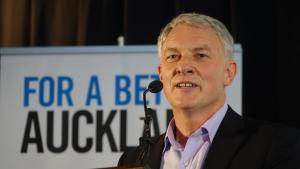
8 Nov - Auckland's largest trade delegation, totalling almost 100 delegates from 70 businesses, is convening in southern China for talks on growing the regional economy. Also taking part in the Tripartite Economic Alliance Summit from Wednesday to Friday is host Guangzhou and Los Angeles. "Businesses clearly see the advantage of interacting with our two sister cities at the summit," said Mayor Phil Goff, who is leading the Auckland delegation.
"Each are gateway cities to two of the most important and powerful economies in the world."
Mr Goff, Guangzhou Mayor Wen Guohui and Los Angeles Deputy Mayor Jeff Gorell will be among 830 representatives attending.
The Tripartite Economic Alliance, signed in November 2014, is designed to increase economic, trade and investment opportunities for local businesses.
"The summits provide real economic value and jobs to Auckland with deals ranging from hundreds of thousands to millions of dollars sealed as a result of the past two events," Mr Goff said.
Although Guangzhou will be the last of three summits, the parties have agreed to extend the relationship for three more years with opportunities for interaction outside the formal summit process.
| An NZN release || November 8, 2017 |||

8 Nov - Trade and Export Growth Minister David Parker says the Government will not shrink away from New Zealand’s leadership role on free trade - but it must be on our terms. Before heading to Apec, Parker spoke to Sam Sachdeva, Newsroom's Foreign Affairs and Trade EditorNewsroom's Foreign Affairs and Trade Editor about taking on “the excesses of globalised capital” and avoiding a public backlash. Befitting his status as one of Labour’s policy wonks, David Parker has been handed an array of challenging roles.
The economic development and environment portfolios, both areas where the Government has some ambitious plans, would be challenging enough, with the Attorney-General position adding more work again.
Yet Parker’s toughest role may be as Trade and Export Growth Minister, where he will be tasked with satisfying the scepticism of supporters regarding free trade deals while placating exporters and the business community.
Early signs have been positive, with a ban on foreign buyers fulfilling Labour’s pre-election pledge without jeopardising TPP talks and existing trade deals (with the exception of Singapore). Yet tougher obstacles may lie ahead.
FTAs 'sexy' but not enough
Under the previous National government, trade ministers Tim Groser and Todd McClay made a virtue of signing New Zealand up to as many free trade agreements as possible.
The Trade Agenda 2030 strategy, unveiled by McClay earlier this year, set a target of having 90 per cent of New Zealand’s exports covered by FTAs.
Parker is less convinced, saying of FTAs: “They’re sexy but they’re not the be-all and end-all.”
“Exports could go down and you could still meet that [90 per cent] target - FTAs are not the driver of investment in the new products and services that we need to sell to the world.”
Continue here to read the full article on Newsroom || November 8, 2017 |||
8 Nov 2017 - Automation, artificial intelligence (AI) and digital transformation issues facing the country could become threats, leading to increased social and economic difficulties and a strain on government resources unless they are immediately addressed, New Zealand’s tech leader say. The TechLeaders executive has only recently just been formed because New Zealand is facing unprecedented growth and change in tech, which is now the nation’s fastest growing sector. TechLeaders from some of New Zealand’s biggest companies and organisations has been set up with the support of NZTech and is a group of New Zealand tech, digital and ICT focused-executives from leading organisations. They have just met in Auckland and all agreed AI and other digital changes will greatly impact on many of today’s jobs in coming years, as well as the income of many Kiwi families, NZTech chief executive Graeme Muller says. “Automation will change just about every industry in New Zealand and over the next few years rapidly change the number and type of jobs available. If we act now to prepare the New Zealand workforce for these changes it may provide opportunities. “If left unaddressed these opportunities will turn to challenges and potential threats leading to increased social and economic difficulties and a strain on government resources. “The TechLeaders discussed how we can help prepare New Zealand’s future workforce. Being at the forefront of technology change these senior executives have insight into the pace of change and see critical elements in ensuring Kiwi families all have jobs in the future. “We need to ensure that our education system is developing the skills needed for a future workforce, in particular, an understanding of digital technologies and collaborative working practices. “We need to start developing policy and a national shared purpose around how to re-train or upskill current employees who work in jobs that may change or disappear rapidly due to technology. “Through the discussion a number of ways were identified where technology leaders and industry could play an active role in helping secure the future of work for Kiwis. “We must bring a stronger connection with education to help prepare students, support teachers and support the introduction of the new digital technology curriculum. “And we need to work with government to help reshape the national conversation away from the robots are taking my jobs to a more positive view that encourages upskilling.” TechLeaders chair David Kennedy says they have a responsibility as industry leaders to prepare future generations for what tomorrow holds. “We are well placed people to help tackle the difficult questions that need to be addressed to ensure future work for generations of Kiwis,” Kennedy says. “We all agree that tech leaders and industry have a role and responsibility to guide and support initiatives to retrain people for the new skills paradigm brought on by technological change. The development of the next generation of workers is also critical.” Among a series of recommendations, the leaders want to reduce fear-inducing messaging about everyone losing their jobs and robots taking over.
| A Techleaders release || November 8, 2017 |||
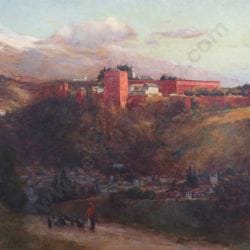
Palace of the Alhambra, Spain
By: Charles Nathaniel Worsley (1862-1923)
From the collection of Sir Heaton Rhodes
Oil on canvas - 118cm x 162cm
Valued $12,000 - $18,000
Offers invited over $9,000
Contact: Henry Newrick – (+64 ) 27 471 2242
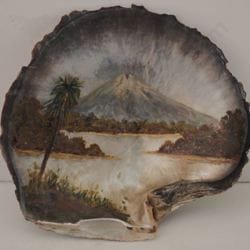
Mount Egmont with Lake
By: John Philemon Backhouse (1845-1908)
Oil on Sea Shell - 13cm x 14cm
Valued $2,000-$3,000
Offers invited over $1,500
Contact: Henry Newrick – (+64 ) 27 471 2242

|
|