
Founded by Max Farndale 1947 - 2018

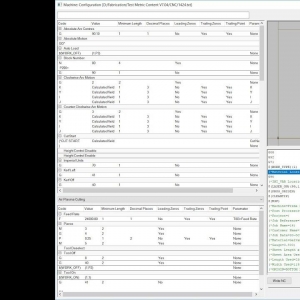




31 Oct: Automotive and industrial supplier Schaeffler Australia has welcomed its global parent company’s acquisition of Autinity Systems, an IT company that specialises in machine data recording and evaluation.
Condition monitoring of machinery and equipment as well as digital networking in production are of great interest to both Schaeffler’s internal and external customers throughout Australia and New Zealand, said Mark Ciechanowicz, Industrial Services Manager, Schaeffler Australia.
These include key Schaeffler Australia markets, among them bulk materials handling; mining and energy production; food, beverage and primary processing; and broader industrial and road and rail machinery systems.
The company noted that the purchase of 100 per cent of Autinity shares, completed this month, is an important step in implementing Schaeffler’s global and local digital agenda, with Autinity specialising in digital condition monitoring and machine data recording.
“Schaeffler has been using software solutions by Autinity for many years now,” said Ciechanowicz. “The acquisition of this company will help us to intensify our collaboration and accelerate further developments in the fields of machine data recording and condition monitoring. Both topics are essential elements of Schaeffler’s digital agenda, which are in strong demand both from internal and external customers.”
| A L&MH release || October 31, 2017 |||

31 Oct: The word “FinTech” (financial technology) has been thrown around as of late by hundreds, if not thousands, of startups looking to capitalize on the e-commerce coverage that the growing industry has been receiving. A FinTech, according to definition, is a company that uses new technology in the financial world. Originally, it was a term used to define the back end technology of established financial institutions.
Today, the term is used much more broadly and includes new financial technologies, such as Bitcoin, various e-wallet apps and capital marketplaces like Kickstarter. These companies attempt to disrupt the established financial sector and conventional financial channels by offering services that eliminate the need to use their older counterparts. Other interesting developments in the sector can be found in the insightful infographic the fellows at Play-N-Play have assembled.
Contrary to popular belief, the first truly successful FinTech companies have been around since the turn of the millennium. Some were even around since the late 90’s. The first FinTech to truly become a global financial giant out of this sector is none other than PayPal.
Today, PayPal is worth over 80 billion dollars and is, according to Forbes magazine, the 193rd biggest public company on the planet. Though this success has been nearly 18 years in the making, the rise of PayPal to global domination in the industry it pioneered has not been all smooth sailing.
PayPal was started in 1998 and was voted the worst idea of the year in 1999. The financial and venture capital firms assumed the payment processor would never be able to penetrate the market due to the immense size and market share of its competitors Visa, MasterCard and Amex.
PayPal began to convert users who found the payment system streamlined in the relatively new e-commerce experience and offered a cheaper price point for merchants than Visa, MasterCard and other conventional payment processing systems.
In 2000, PayPal had its initial meeting with eBay, a marketplace for auctioning goods. eBay was attracted to the growing user base and thought PayPal could be an asset to their business model. By 2001, PayPal began its impressive user growth and hit 100,000 users, a number that began to shake up the financial markets and bring attention to the growing FinTech sector.
In 2002, less than 4 years after being founded, PayPal had its IPO (Initial Public Offering) and immediately grew 55%, becoming NASDAQ’s biggest gainer amongst newly listed companies. eBay, immediately spotting the ecommerce growth, purchased a controlling interest in PayPal for 1.5 billion dollars.
Continue to the full release on ECN || October 31, 2017 |||
31 OCT: New Zealand's trade minister said on Tuesday that it may be too late to make significant changes to the Trans-Pacific Partnership (TPP) after his new Labour-led government said last week it would seek to renegotiate the agreement.
The Labour Party, which took the helm last week, has taken issue with the fact that the deal is at odds with its plans to ban foreign ownership of existing houses, a key campaign promise.
The 11 TPP members had set a goal of reaching broad agreement on the pact on the sidelines of the Asia-Pacific Economic Cooperation meeting in Vietnam next week and some fear New Zealand's renegotiation could unravel the agreement.
Trade Minister David Parker told Radio New Zealand that Labour still found the foreign ownership rules "abhorrent", but that trade officials had told him not all changes would be possible given how late it was in negotiations.
"That doesn't mean to say we won't be able to change anything and it doesn't mean to say that perhaps through mechanisms outside of the TPP we will perhaps be able to fix other things," Parker said.
His comments suggested the government could instead focus on a change to domestic law to get around the TPP rules, which Parker had flagged as an option the previous day.
Parker added that he would release more details on the "mechanisms" to achieve the foreign housing ban later this week.
Trade experts told Reuters that New Zealand could include housing in the country's domestic legislation regulating foreign investment, which overrides the TPP.
The TPP currently requires member states to give foreign investors equal treatment to locals unless there are specific exemptions.
The Labour party would like an exemption for existing homes, similar to Australia's carve out.
New Zealand's current exception allows it to add a tax to foreigners purchasing homes, but Prime Minister Jacinda Ardern has said that would not work and an outright ban was needed.
Ardern's government campaigned to restrict foreign buyers to reduce demand as the country tackles what Labour says is a housing crisis left unresolved by the previous government.
Parker on Tuesday would not confirm whether New Zealand was willing to walk away from the TPP over the issue, saying that would undermine the country's negotiating position.
"We're pretty good at trade agreements...so we rate our ability work through these issues in the best interest of New Zealand," he said. (Reporting by Charlotte Greenfield)
| A ShareNetNews release || October 31, 2017 |||


Palace of the Alhambra, Spain
By: Charles Nathaniel Worsley (1862-1923)
From the collection of Sir Heaton Rhodes
Oil on canvas - 118cm x 162cm
Valued $12,000 - $18,000
Offers invited over $9,000
Contact: Henry Newrick – (+64 ) 27 471 2242

Mount Egmont with Lake
By: John Philemon Backhouse (1845-1908)
Oil on Sea Shell - 13cm x 14cm
Valued $2,000-$3,000
Offers invited over $1,500
Contact: Henry Newrick – (+64 ) 27 471 2242

|
|