
Founded by Max Farndale 1947 - 2018

31 Oct: New employees with Directors of Sleepwell International as well as Management staff of S.S.A.B. New employees with Directors of Sleepwell International as well as Management staff of S.S.A.B. “United we stand, divided we fall.” This is a guiding principle for 20 new employees of the company who will be working on renovating the whole 7,000 square meters of what used to be the Yazaki premises.
The company is now starting on building offices, wood works as well as technicians and air compressors.
One of the Directors, Tuatagaloa Aumua Leung Wai, said these are the first steps of the factory which promises jobs for many Samoans. They plan to officially open the factory some time in December.
Sleepwell International is a partnership between Sleepwell New Zealand owned by the Lutu Brothers and Samoa Stationery and Books owned by Tuatagaloa and Fiti Leung Wai.
The beginning of the renovation started with a prayer and word of encouragement by Rev. Segi Bee and Kuini Leung Wai of Worship Center and Nino Lafaele of the Assembly of God Lotopa.
Salā George Lutu encouraged the new employees that honesty is the best policy.
“This is a new beginning and we must have one heart and soul to make this work,” he said.
“You have been chosen because you have the ability and the skills to do the work and at the same time we want you to be honest.
“Being honest comes great blessings and I am looking forward to have this new beginning and to work side by side with you our Samoan community in running this factory.”
Fiti Leung Wai said that yesterday the 30th of October, 2017 will always be remembered as the date that history had been made.
“This is a special day for us as this is the first factory in Samoa,” she said. “Sometime this year we went on a trip to Fiji and we found out that there were five bed factories in Fiji but as for Samoa we have none.
“So Sleepwell International Ltd will be the first bed factory to be set up in Samoa and we want to acknowledge the Lutu Brothers for choosing S.S.A.B. to be their partners.
“The reason why we called this company Sleepwell International because for the long run we will be selling to international markets and who knows maybe we will take up the challenge with China.
“Many of the businesses within Samoa are competing on the current pull of money that is circulating within but Sleepwell International we are trying to inject new revenue from outside of Samoa.
“All the wisdom and knowledge in making good quality beds is with the Lutu Brothers and so if the beds we make are in good quality we will have more overseas market’s demand for our beds.
“This is why it is very important for you all to do the work with honesty so that we will be able to sell it internationally.
“So as the start of a new milestone we have to work together for the betterment of our people as well as our company.”
| A SamoaObserver release || October 31, 2017 |||
31 Oct: Vector has announced it has executed a contract to provide metering services to EnergyAustralia with an initial three-year deployment period that will commence before the end of 2017. Vector Limited Group Chief Executive, Simon Mackenzie, said, 'We're excited to be working with EnergyAustralia as part of our long-term commitment to the Australian market.
'We pride ourselves on our proven and innovative delivery of advanced metering services in New Zealand and Australia, alongside our huge focus on health and safety. Vector is looking forward to building on our New Zealand experience and being part of EnergyAustralia's new Power of Choice journey and supporting their aim to provide a world-class customer experience.
Vector now expects to be deploying advanced meters on behalf of at least four leading electricity retailers in 2018 across New South Wales, Queensland, South Australia and the ACT.
Mr Mackenzie said, 'Our vision is to create a new energy future. This means using technology such as smart meters to help enable new energy solutions, supporting the increasing expectations of consumers to have more choice, control and information over their energy needs just as they do with any other service.
'We're taking our experience and expertise from managing New Zealand's largest energy network, and our investment in developing new energy technologies and partnerships, and exporting them to other markets such as Australia and the Pacific
| A Vector release || october 31, 2017 |||
31 Oct: Sandvik Materials Technology has signed an agreement to divest the welding wire operations to ESAB, a global leader in the welding industry and part of Colfax Corporation. The agreement completes the main step in the divestment plan for welding wire and stainless wire announced on 17 May 2017. The deal includes the production units in Sandviken, Sweden and Scranton, US as well as the global sales and product management organization; in total approximately 120 employees. Revenues for the welding wire business amounted to 470 million SEK in 2016.
"We strongly believe that ESAB, with welding as its core business, is the right owner. The divestment enables us to further focus on our core operations according to Sandvik's strategy," says Björn Rosengren, Sandvik´s President and CEO.
"We are excited by the opportunity to better serve customers with a broader and enhanced portfolio of stainless steel and nickel filler metals," says Shyam Kambeyanda, President of ESAB.
The cash flow impact from the transaction is expected to be positive. Closing of the divestment is estimated to be completed within 2-4 months, following customary closing conditions.
The process to exit the stainless wire business, with about 270 million SEK in sales 2016, is progressing according to plan.
| A Sandvic release || october 30, 2017 |||
31 Oct: The Science for Technological Innovation (SfTI) National Science Challenge Board is providing $2m of funding for a project to develop adaptable, cheaply reconfigured, rapidly deployed ‘workforce’ robots able to learn from their environments. Project will examine how robotics can deliver an economic boost to NZ writes Stuart Corner for Computerworld New Zealand. SfTI said the project would take a long-term view and examine how robotics could provide solutions for New Zealand’s economic needs.
Specifically, the programme will look into automated and autonomous technologies for small scale, high value, production; delve into ‘learning’ robots; and look at how robots can operate in rugged outdoor environments.
“Researchers will seek to develop new paradigms in robot autonomy and adaptability, including predictive environmental sensor fusion, and automatic improvement of AI-based interpretation of data,” according to SfTI.
The research group will also investigate workforce robots that could ‘communicate’, learn, and collaboratively work alongside humans, and investigate ‘non-written cues’, and the use of icons to communicate and exchange information.
SfTI said the collaborative structure of the research project across academic, commercial and industrial manufacturing sectors would create a dynamic network of information and expertise that will generate new knowledge, skills and revenue.
“From a commercial perspective the primary sector, including agriculture, horticulture, aquaculture and forestry, will directly benefit from the introduction of highly adaptable robots. Robust robots can assist in pre- and post-harvest processes eg cropping, pruning, monitoring nutrients in run off and leaching, and manage environmental inputs like precision agriculture and nutrient management,” SfTI said.
The project will involve researchers from Lincoln Agritech and SCION, as well as Auckland, Victoria, Massey, Canterbury and Otago Universities.
SfTI Director, Sally Davenport, said: “this is a forward-looking project aimed at underpinning future small-scale production of tailored, high value robots with wide application and an eye on export.”
Davenport said the projects brought to seven the number of spearheads projects funded since the SfTI Challenge launched two years ago with a $32.9m budget. SfTI had also funded a further 28 smaller high-risk, potentially high reward, SEED research projects in that time.
| An SfTI release || October 31, 2017 |||
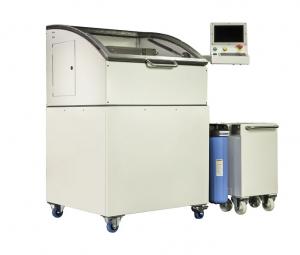
Sharp & Tappin Technology, a precision engineering company based in Devon, will launch its new advanced composite plate saw at this years Advanced Engineering trade show, which is taking place in Birmingham this week.
The Compcut 200 represents the company’s developing interest in the growing home market for the precision cutting of composites. This new machine has been designed to offer composites R&D teams and test centres affordable access to an easy to use though inherently sophisticated and robust plate saw.
“From our long experience of tackling the challenges of composite machining and taking a good look at the market, convinced us that there was a niche for a unit like the Compcut 200,” said Ben Sharp, Managing Director at Sharp & Tappin.
“We are confident that the 200 offers a tremendous range of features and benefits at an affordable price – easy to use with the minimum of operator training yet capable of consistently delivering very high-quality cuts.”
According to the manufacturer, the Compcut 200 enjoys a host of well thought out features that include:
Sharp & Tappin’s expertise in precision composite cutting is appreciated by its customers. “Our Compcut saws give us the ability to quickly and repeatedly produce high quality test specimens with a near zero scrap rate, - in reality the resulting specimens exceed the requirements of the common International standards,” commented Paul Yeo, Technical Director at CTE (Composite Test & Evaluation Ltd).
“The latest generation Compcut saws produce specimens to such a high-quality edge finish that no post preparation of the specimens edges to remove machining marks is required – significantly reducing the amount of specimen preparation times, which offers our customers significant cost and timescale benefits.”
“Above all, the machines are very simple to use and it’s not necessary to be an experienced CNC machinist to operate the unit – within an hour of training you will be producing accurate specimens.”
| A Sharp&Tappin release || October 31, 2017 |||


31 Oct: T
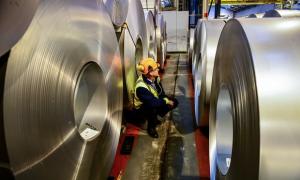
Britain’s manufacturing sector could unlock £455bn over the next decade and create thousands of jobs if it cracks the fourth industrial revolution and carves out a successful post Brexit future.
That is the conclusion of a government commissioned review on industrial digitalisation, published today and led by industry chief Jürgen Maier, the UK and Ireland boss of German engineering giant Siemens.
Continue here to read the full article on The Guardian || October 31, 2017 |||



Palace of the Alhambra, Spain
By: Charles Nathaniel Worsley (1862-1923)
From the collection of Sir Heaton Rhodes
Oil on canvas - 118cm x 162cm
Valued $12,000 - $18,000
Offers invited over $9,000
Contact: Henry Newrick – (+64 ) 27 471 2242

Mount Egmont with Lake
By: John Philemon Backhouse (1845-1908)
Oil on Sea Shell - 13cm x 14cm
Valued $2,000-$3,000
Offers invited over $1,500
Contact: Henry Newrick – (+64 ) 27 471 2242

|
|