
Founded by Max Farndale 1947 - 2018
27 Oct: A regional petrol tax to help fund Auckland city's transport infrastructure comes amid a global change in the air for user-pays funding for major projects, provided the benefits stack up for those footing the bill.
US President Donald Trump is reportedly toying with the idea of hiking fuel taxes as a means to fund his promised US$1 trillion of infrastructure investment, which was a key policy plank in his successful bid for the White House last year. That would end a 24-year freeze on US petrol taxes and marks "a massive shift" for user-pays funding models, says KPMG's Americas and India head of global infrastructure Stephen Beatty.
"It will send a signal to all politicians it is possible to raise charges as long as you're prepared to provide something to the people that you are charging," Beatty told Infrastructure New Zealand's building nations symposium in Wellington today. "Our credibility as public servants is not high because we aren't delivering the value we need to and we are apologising when we raise any charges for it, and so I would urge everybody in the room to turn to the new government and say don't apologise but make sure you deliver benefits at the same time."
Both major political parties made big-spending infrastructure promises in the lead-up to the September election to meet New Zealand's expanding population, which has seen a shortfall of housing drive up property prices and increase traffic congestion, while at the same time local authorities are hamstrung in their ability to pay for upgrades to municipal infrastructure.
Beatty told the conference that the big questions for policymakers to answer is funding projects, which is whether the taxpayer or users foot the bill over an extended period of time, rather than financing, which is simply where the immediate cash comes from. "It's not about financing, it's about funding. Does the base business case actually work?" he said.
Continue here to the full article on ShareChat || October 27, 2017 |||
27 Oct: A bad batch of fungicide has ruined apples in the Nelson region in New Zealand and some fruit will be destroyed instead of exported, a grower says.
An apple grower in Nelson, said it was the active ingredient mancozeb causing the problem, damaging numerous orchards in Nelson and several in Hawke's Bay.
He said in his orchard the fungicide has caused russet on apple skins, knocked fruit off trees too early, and damaged leaves, resulting in lower quality apples that he said would not meet export standards.
New Zealand Apples and Pears chief executive Alan Pollard said the industry was in the early stages of investigating the problem.
"We are aware that an issue has arisen, particularly in Nelson. It appears that a spray has been applied in the early stages of fruit development. It seems to have caused some damage to the developing fruit.
"We have recalled the product which is the first stage. We are just in the process now of evaluating the extent of the impact of the issue."
Mr Pollard said he did not know how many orchards were affected, but those that were would not necessarily be written off and hoped that some fruit could be spared.
"Hopefully, not all the fruit on the tree will be subject to that and we'll be able to save some."
New Zealand Apples and Pears said it was talking with the supplier of the product, and working out what process they have used.
Mr Pollard said it was too early to know if the chemical supplier would be held accountable for damaging crops.
"We are trying to understand what has happened and why, and once we do that we will be in a better position to see what happens from there."
| A FreshPlaza release | October 27, 2017 |||
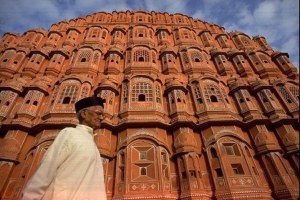

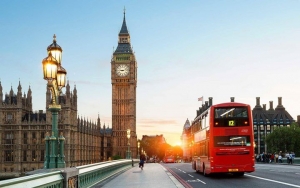


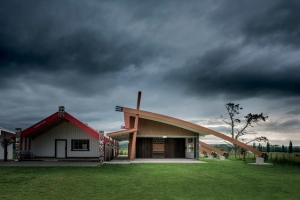
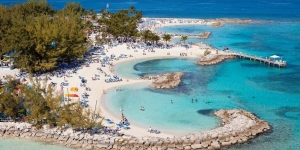
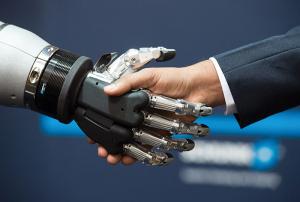
EMO Hannover 2017 theme of “Connecting Systems for Intelligent Production” allowed exhibitors to showcase their smart solutions
The EMO Hannover 2017 theme of “Connecting Systems for Intelligent Production” lived up to expectations from the many exhibitors who were only too willing to show you how they have embraced the concept by implementing Industry 4.0 or the Internet of Things (IoT) in their products or future plans.
Many were demonstrating connectivity solutions, data analysis applications and other innovative services, each trying to outdo the other with their novel idea giving a reflection of how they have interpreted the theme and the concept. However, throughout the exhibition the emphasis was on systems capable of interconnecting multiple partners, cloud-based machine monitoring solutions, simulation software, augmented reality for machine maintenance, block chain technology for secure data transfer, new business models and much more.
Prior to the show beginning, EMO’s organisers said they were confident that the show would generate impetus for implementing Industry 4.0 or the Internet of Things (IoT) concepts.
“In the machine tool sector we have long since implemented digitalisation,” explains EMO’s General Commissioner and VDMA President, Carl Martin Welcker.
“Digital images, for example, for simulations have likewise been possible for quite a long time now. Under the keyword of Industry 4.0, the task now is to network the entire production operation, and indeed the complete added-value chain.”
He also refers to Industry 4.0 as a mindset: encouraging staff to come up with ideas on how they can put Industry 4.0 into shop-floor practice.
“In a consistently networked manufacturing line, flexible production is possible with optimised sequences, so that even rush orders in small batch sizes can be handled. Complete networking of the entire production line with real-time communication and control will create maximised added value for companies when it implements horizontal communication from receipt of the order all the way through to dispatch. Within the added-value chain, moreover, it’s important to network not only the component suppliers, but also the logistical partners and the customers involved, so as to achieve maximised productivity, flexibility and efficiency. If all this succeeds, this signifies a quantum leap forwards in terms of productivity, and will catapult those who can do it to the leading edge of international competition,” is the succinct verdict of Carl Martin Welcker.
Individual responsesAt EMO, control developers and manufacturers, software companies, tooling companies and machine tool builders demonstrated their individual responses to Industry 4.0 requirements.
“The keynote theme of this year’s EMO Hannover gave us the ideal backdrop against which to present market-ready products for digital manufacturing,” said Christian Thönes, chairman of the executive board of DMG Mori AG, Bielefeld, Germany.
Continue here to read this article from MetalworkingNeews || October 27, 2017 |||

Palace of the Alhambra, Spain
By: Charles Nathaniel Worsley (1862-1923)
From the collection of Sir Heaton Rhodes
Oil on canvas - 118cm x 162cm
Valued $12,000 - $18,000
Offers invited over $9,000
Contact: Henry Newrick – (+64 ) 27 471 2242
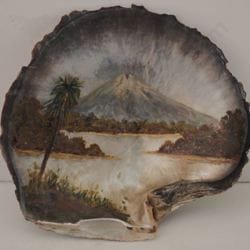
Mount Egmont with Lake
By: John Philemon Backhouse (1845-1908)
Oil on Sea Shell - 13cm x 14cm
Valued $2,000-$3,000
Offers invited over $1,500
Contact: Henry Newrick – (+64 ) 27 471 2242

|
|