
Founded by Max Farndale 1947 - 2018
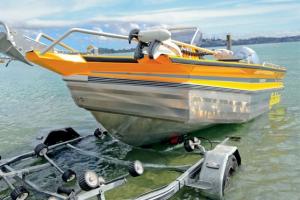
The Balex System solving common pain points felt with loading and unloading boats into the water through technology at a push of a button.
Elly Strang in her article for Idealog quite rightly wrote that anyone who's owned a boat or been out for a ride on one knows it's a bit of an awkward process actually getting a vessel into the water. But last year, Balex set out to change that with its invention of an hydraulically-powered automated boat loader that helps launch and retrieve boats from the water with the click of a button, while being three times as fast as an electric winch.
Automated boat loading company Balex went into liquidation earlier this year, but two Kiwi expat businessmen, Daniel Given and Reon Oak, have come to the rescue. They've relaunched the brand and are rolling out plans to take it global, solving common pain points felt with loading and unloading boats into the water through technology.
Continue here to the full article on Idealog || October 24, 2017 |||
New Zealand’s recent election and the political uncertainty which has followed is having a major impact on business sentiment, with seven in ten businesses indicating politics will influence their ability to grow in the next 12 months.
This is one of the key findings from the latest Alleasing Equipment Demand Index, and it comes after the rapid emergence of Labour leader Jacinda Ardern, who has been confirmed as the country’s youngest Prime Minister in a coalition Government.
Upper corporate businesses were most sensitive to the political environment, with 77.5 per cent expecting politics to have some impact on their business. For SMEs, the figure was 70.4 per cent against a national average of 71.2 per cent.
The SME constituency have traditionally been the heartland of the National Party, and this segment showed less sensitivity to politics as they pondered the possibility of a Labour Government. Of upper corporates, 77.5 per cent anticipate an impact on their business, opposed to 70.4 per cent of SMEs.
At industry level, hospitality is the most wary of the potential impact that politics could have, with 76.9 per cent expecting politics to impact them in some way. A quarter of manufacturing businesses expect a significant impact from the political environment, while the figure from the agriculture, fishing and forestry sector was 22.8 per cent. This fell away to 11.1 per cent in the transport sector, and 9.1 per cent in construction.
Daniel Blizzard, chief executive of Alleasing, said it is clear the recent New Zealand election has been a focal point for businesses across the country, with many concerned with how the results would impact their operations.
“Seven in ten businesses have demonstrated concern regarding the impact the election result will have on their business,” noted Mr. Blizzard.
“‘Jacindamania’ has had a major influence on business sentiment, and now that Ardern is Prime Minister in what could be a volatile coalition, we expect the business sector will be watching the new Government’s movements closely, particularly at the beginning of 2018.”
Although there could be a period of political volatility, the Organisation for Economic Co-operation and (OECD) is forecasting that the New Zealand economy will continue its strong growth trajectory. This could relieve some pressure on the new Government as it settles into the Beehive in Wellington.
Under the National Party, the New Zealand economy has gone from being one of the most regulated in the OECD, to one of the most open according to the 2017 Index of Economic Freedom by the Heritage Foundation.
New Zealand businesses are now more exposed to international competition than ever before. While the ability to compete with these businesses is a key driver for a number of firms to upgrade to the latest technology (16.4 per cent), a greater number of firms are concerned with their ability to compete against their local competitors. This was cited as the biggest issue for 22.4 per cent of executives should they not upgrade.
Alleasing’s Daniel Blizzard notes that among New Zealand businesses, the manufacturing sector is the most sensitive to international competition.
“While 16.4 per cent of New Zealand business said failure to upgrade technology exposes them to international rivals, the figure among manufacturers is 28.6 per cent,” Mr Blizzard said.
“With Chinese manufacturers leading the way in implementing automation and industry 4.0 technology, this sector’s concern is understandable.
The Index reveals that some businesses are reacting to these pressures, with 47.6 per cent of businesses planning to increase their asset base this (December) quarter. Of those businesses, 23.5 per cent intend to acquire automation equipment, drones, artificial intelligence and big data.
“New Zealand businesses are beginning to embrace transformation. This is a good start because the opportunities that come with implementing Industry 4.0 technology will increase productivity and attract more capital to the country.”
To date, Alleasing Index data continues to track the percentage of businesses planning to acquire assets in the next quarter in-line with trends in Statistics New Zealand data on Gross Capital Formation over the first two quarters of 2017.
Matching the Index forecast for third quarter of the 2017 calendar year, Trading Economics is also forecasting a slight dip in Capital Formation for this period.
| A Alleasing release || October 24, 2017 |||
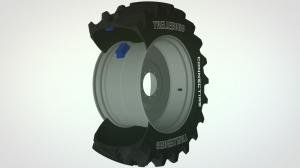
ConnecTire is a sensor-based smart wheel which enables data sharing at multiple levels, reducing the risk of tire slippage on the rim. It allows farmers to leverage the Internet of Things for safer and more efficient operations.
Operating key farm machinery at the lowest safe pressure is a key challenge – being in control of this maintains the safety both of machine and operator as well as ensuring minimum impact on topsoil. During operations tire pressure can change due to a number of factors including ambient and soil temperatures, as well as the intensity of task being performed and the configuration of the machine itself.
ConnecTire constantly monitors two key variables – tire pressure and temperature – which it relays to both tractor and farm mainframes via Bluetooth and wireless connectivity. Operators set their target tire pressure and can then monitor how tire pressure deviates from that target and act accordingly. Should corrective action be required, ConnecTire automatically sends an alert via its App, ensuring minimum disruption and maximum machine safety.
Piero Mancinelli, R&D Director at Trelleborg Wheel Systems, commented: “ConnecTire is about ensuring efficiency and sustainability; tires are required to work intelligently and to be at the right pressure at all times. Farm machinery is exposed to many variables throughout a working day, all of which can impact upon efficiency – ambient temperature, humidity and soil conditions. Being able to be in control of these allows farming operations to reduce inefficiencies. The alert via App capability is an essential feature of ConnecTire; changing conditions can require immediate action in order to maintain maximum efficiency and prevent rim slippage. ConnecTire’s communications functions enables fingertip control.”
Beyond tire monitoring, ConnecTire delivers further advantages: An inbuilt GPS capability identifies the live position of the tractor helping to keep lone workers safe and even safeguarding the tires and machine against risk of theft. In addition, with the help of precision farming software, farm managers are able to track the number of machine passes over every square centimetre of land, helping to limit soil compaction and erosion as much as possible.
Mancinelli, continues: “Repeatedly driving over the same ground at different stages of the crop cycle has a long term impact on yield. With ConnecTire, we saw an opportunity to help reduce this effect by providing the data that allows farms to identify at risk areas and mitigate this. Efficient use of land is essential and by reducing the number of machine passes, ConnecTire helps soil to rapidly recover fertility and yield potential.”
ConnecTire will be on display at Agritechnica 2017, November 12 to 18 in Hannover, Germany. Further information will be available at Trelleborg’s Agritechnica Press Conference on Monday November 13th 2017.
| A Trelleborg release || October 19, 2017 |||
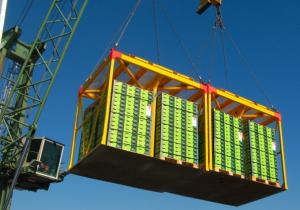
World Top Exports founder Daniel Workman takes a look at the Global sales from kiwifruit exports by country which sees New Zealand rated No 1.
Global sales from kiwifruit exports by country amounted to US$2.5 billion in 2016. Overall, the value of kiwifruit exports were up by an average 20.1% for all exporting countries since 2012 when kiwifruit shipments were valued at $2.1 billion. Year over year, the value of global kiwifruit exports appreciated by 8.7% from 2015 to 2016.
Among continents, Oceanian countries (mainly New Zealand) accounted for the highest dollar worth of exported kiwifruit during 2016 with shipments valued at $1.2 billion or 47.4% of global kiwifruit exports. In second place were European exporters at 40% while 7.1% of worldwide kiwifruit shipments originated from Latin America (excluding Mexico) and the Caribbean. Smaller percentages were sent from kiwifruit exporters in Asia (4.2%), North America (0.9%) and Africa (0.3%).
Kiwifruit Exports by Country
Below are the 15 countries that exported the highest dollar value worth of kiwifruit during 2016:
The listed 15 countries shipped 98.4% of global kiwifruit exports in 2016 by value.
The listed 15 countries shipped 98.4% of global kiwifruit exports in 2016 by value.
Among the above countries, the fastest-growing kiwifruit exporters since 2012 were: China (up 712.3%), Hong Kong (up 123.2%), Iran (up 99.2%) and New Zealand (up 41%).
Those countries that posted declines in their exported kiwifruit sales were led by: Lithuania (down -62.7%), France (down -25.8%), Netherlands (down -20.9%), United States (down -14.4%) and Chile (down -13.2%).
| A Wtex release || October 23, 2017 |||
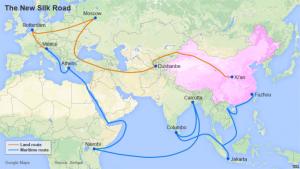
As Donald Trump whips the world into a frenzy with his tweets, China is plotting a trillion-dollar global trade revamp which could change everything reads an article in The NZHerald.
It's being dubbed the "New Silk Road" which could redefine global trade and mark a tipping point for a new Asian century.
So far, 68 countries including New Zealand have signed up to the President Xi Jinping's "One Belt, One Road" (BRI) project, but it's left Aussie politicians divided and scratching their heads, according to an international relations expert.
"I don't think the government has done a great deal of thinking about this," Australian National University's Dr Michael Clarke said.
"But, I've heard from my contacts in government that there is a very definite divide between the security agencies who have strategic concerns and the departments of trade and agriculture, which are looking at BRI as a big economic opportunity for Australia."
This was backed up today, with the ABC reporting that the Australian heads of the immigration and defence departments told the Turnbull Government earlier this year not to join BRI.
However, the Department of Foreign Affairs and Trade were reportedly broadly in favour of joining.
Beijing's massive plans, which were first unveiled in 2013, involve the reviving of an ancient land and ocean silk trade routes.
It has already spent billions of dollars on new infrastructure projects for roads, railways, ports and maritime corridors.
Continue to read the full article on the NZHerald || October 24, 2017 |||
Last Thursday a 72-year-old man used his time at the most-watched podium in the land to make a rather extraordinary ideological statement about the state we find ourselves in and, it seems, to swing a hammer at what has felt like a layer of thick ice between New Zealand as it is and New Zealand as it will be writes Anna Connell for Newshub.
"Far too many New Zealanders have come to view today's capitalism, not as their friend, but as their foe” said Winston Peters
"That is why we believe that capitalism must regain its responsible - its human face. That perception has influenced our negotiations."
In making these remarks, Peters joined Dame Anne Salmond and Jim Bolger as elder statespeople calling time on neo-liberalism, and in making the call to go into coalition with Labour, propelled Jacinda Ardern, a 37-year old woman, to the top political role you can hold in New Zealand. In an odd twist for our country and maybe Peters himself, he became a catalyst for a new generation of political leadership and a new kind of thinking.
Ardern is the first of her generation to hold the office of Prime Minister and her ascension is symbolic of more than the ideology she represents as a member of the Labour Party or the ideological disenchantment Bolger and Peters refer to.
Ardern, like me, sits on the cusp of latest of the late Gen Xers and the Millennial generations. We both grew up in the Waikato and may have battled against each other at the finest of sporting events for nerds, interschool debating. Ardern is not only the first political leader whom I can refer to as a peer and a contemporary but one of the first leaders across any sector who is more like me than not. And that is exciting, not just because my generation now has a PM in its number but because, as Salmond says, ‘it marks a changing of the guard between generations, and a time to try out new ideas.’
In part, Ardern comes equipped to try out new ideas simply by virtue of what being her age means. The New Zealand she grew up in, what she learned at school and the changes she has observed are all markedly different to that of her predecessors English, Key and Clark. She has lived almost half her life in the 21st century and the future is less likely to look like the Jetsons in her head and more like driverless cars.
Maile Carnegie, Group Executive, Digital Banking at ANZ bank recently shared her views on what it takes to shift a legacy business into the 21st century at a symposium in Sydney earlier this year. While I have never been a fan of equating government with business, I can’t help but refer to her use of the term ‘the frozen middle’ in reference to businesses struggling to adapt in the context of New Zealand right now.
Having friends who are renters won’t be unusual to this PM and the desire to use public transport rather than drive will be something she’ll understand. There will be no ambiguity from this Prime Minister about same sex marriage or whether climate change is a real threat.
Within business the frozen middle is a layer of middle management who Carnegie says “are no longer are experts in a craft, and who have graduated from doing to managing and basically bossing other people around and shuffling Powerpoints.”
The frozen middle is the most conservative layer in the organisation and the most resistant to chnage. Individuals within the ‘frozen middle’ will choose the safety of the tried-and-true over inventiveness and ingenuity. Carnegie names tackling the ‘frozen middle’ as one of the greatest challenges business leaders must face. “The frozen middle will resist change like death.” She says.
For a lot of my career, it has felt like being a part of my generation was akin to being underneath that frozen middle and waiting for it to crack or lightly thaw. Like many people of my age, I have spent a lot of time convincing people older than me that social media wasn’t a fad, that same-sex marriage wasn’t going to be the end of the world, that using basic Te Reo in signage or speeches shouldn’t be optional and that consumers did care about things like the environment and gender equality. I have spent a lot of time arguing for evolution and adaption knowing that what they regarded as contestable was, in fact, a fait accompli. I have expended a lot of energy in essentially being told to accept the things I cannot change while watching them become inevitable.
No one is going to have to explain social media to Ardern. Facebook, Netflix, Uber and Air BnB will all be well embedded technologies used by the PM’s peers as opposed to reasons you call your kids and Ardern’s contemporaries have probably all had mobile phones for at least 15 years. Having friends who are renters won’t be unusual to this PM and the desire to use public transport rather than drive will be something she’ll understand. There will be no ambiguity from this Prime Minister about same sex marriage or whether climate change is a real threat. Ardern will be a Prime Minster that will attempt to correctly pronounce Māori placenames and use Māori language because that is the right thing to do and Guyon Espiner speaking Te Reo on RNZ won’t just be a good thing but a normal thing in a country where Māori is an official language. Our government will look more like the New Zealand we live in than ever before because diverse representation will be a norm, not an exception.Winston Peters - an unlikely but effective ally to New Zealanders seeking generational change in the corridors of power. Photo: Lynn Grieveson
Accepting these things as the status quo and not contestable ideas isn’t ideological, it’s generational and it’s a prerequisite to being able to move conversations and ideas on from where they’ve been languishing in the change resistant frozen middle. With Ardern as Prime Minster there is hope and optimism and it’s about more than policy or ideology. There is a new generation feeling empowered to make change and there is now space for us to have the conversations we need to have; conversations that are different from the ones we’ve been having for the last 30 years.
I owe much of this week’s column to being able to have some of those new conversations with friends over eggs and many pots of coffee on Saturday. One of those friends sent me a text on Sunday with a quote from Dr. Angela Davis that she described as ‘maybe summing up a bit of the tipping point I was trying to articulate.’
‘I am no longer accepting the things I cannot change. I am changing the things I cannot accept.’
I think that quote more than maybe sums up the tipping point we’re at. What was once change is now the status quo, creating more room for the pursuit of greater change and less acceptance of not being able to make it.
The gap between New Zealand as it is and New Zealand as it will be has shrunk somewhat as a new generation steps up and oddly enough, we owe some thanks to a 14 term, pre-Boomer politician called Winston.
| A Newshub release || October 24, 2017 |||
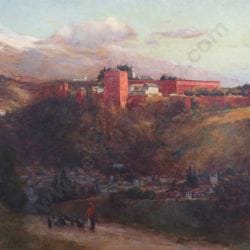
Palace of the Alhambra, Spain
By: Charles Nathaniel Worsley (1862-1923)
From the collection of Sir Heaton Rhodes
Oil on canvas - 118cm x 162cm
Valued $12,000 - $18,000
Offers invited over $9,000
Contact: Henry Newrick – (+64 ) 27 471 2242
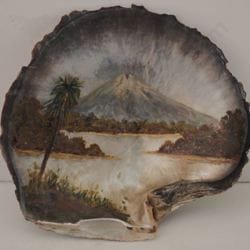
Mount Egmont with Lake
By: John Philemon Backhouse (1845-1908)
Oil on Sea Shell - 13cm x 14cm
Valued $2,000-$3,000
Offers invited over $1,500
Contact: Henry Newrick – (+64 ) 27 471 2242

|
|