
Founded by Max Farndale 1947 - 2018

DIY defeat in which Blindness to symbols blended with analysis-induced paralysis.
Political buffs everywhere will refer to the fall in 2017 of the National Government as an example of how flourishing terms of trade and other positive economic indicators are insufficient to compensate for a failure to quickly get on top of emotive domestic issues.
The National Government fell through becoming paralysed by its own over-analysis.
It could never get a clear vision of its overriding objective which was to stop its older adherents bolting to Winston Peters and his New Zealand First alternative party.
Similarly, National had to lock in its farmers.
Yet with its inability to put out clear policies, notably on water, National allowed Winston Peters to insert himself in the policy vacuum and declare himself the champion of farmers
Again, in taxation, National was unable to put across the obvious dual message to the effect that yes, capital gains tax was a good idea, but oh dear! It simply had had the opposite effect of the one intended in countries that had it. They might have quoted Spain, for example
In a curious example of reverse laws in physics, the more advisers and “consultants” the Nationals recruited to its cause from at home and abroad, the less the grasp it gave the impression of having on the issues
Neither was it able to recognise its own strengths in order to de-fuse the anticipated accusations of absence of much caring-sharing in regard to minority groups. It’s allegiance with the now extinct Maori Party was one of these hidden symbolic advantages.
It was in its absence of comprehension of political symbols that from the outset of its third term that the governing-alone National Party was most manifestly out of its depth.
The caucus, the Parliamentary party in toto, did not know how to handle a celebrity prime minister, and especially one who would not be taking them into the next election
Without anyone to counter his own exuberance, the caucus allowed Mr Key to launch his personal flag-changing campaign which was to alienate the growing proportion of its elderly supporters, and to near universal surprise, a sizeable chunk of the younger ones as well.
A pride of the National government was that under the tutelage of old Wall Street hand prime minister John Key, it understood pretty much what was going on in United States politics.
In the event it gave the impression of having little comprehension at all.
It seemed as surprised as its contacts in United States media and politics that Donald Trump became the new president.
It was revealed for example that the National government had signed off on a large donation to the Clinton Foundation.
Worse was to follow.
The National government now followed through on its pledge as a temporary member of the United Nations Security Council to back a measure against Israel.
This had the effect of alienating its support among New Zealand’s accelerating congregations in evangelical churches in which anything to do with the holy land is regarded with extreme sensitivity
As the election drew near and grappling now with the excesses of house prices and unable to explain how this was due in part to regulatory constraints, many introduced by Labour, the National Government now stood mutely by as it found itself on the receiving end of the biggest own goal in New Zealand political history.
Former prime minister, by now Sir, John Key now sold his Auckland property.
New Zealand is quite different from the United States and Australia in that great wealth is not necessarily admired.
Attitudes to large scale individual capital formation can quickly change from sneaking regard, furtive envy, to outright resentment
Which is what happened now as the general election drew near .
Neither can the National Party point to Fifth Column-style enemies of the type that are supposed to be neutral.
Certainly not the mainstream media.
The old legacy media nowadays is neither to the right nor to the left.
It is though intensely pc, something which National finds it hard to grasp, and thus accommodate itself to.
In the end it was a DIY defeat.
National fell into all the bear traps dug for it by Winston Peters.
Then added its own.
| From the This email address is being protected from spambots. You need JavaScript enabled to view it. || Monday 23 October 2017 |||
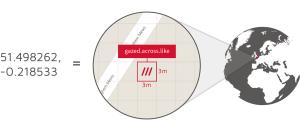
With what3words, Chris Sheldrick and his team have divided the entire planet into three-meter squares and assigned each a unique, three-word identifier, like famous.splice.writers or blocks.evenly.breed, giving a precise address to the billions of people worldwide who don't have one.
In this quick talk about a big idea, Sheldrick explains the economic and political implications of giving everyone an accurate address -- from building infrastructure to sending aid to disaster zones to delivering hot pizza.
You can view the address by Chris here
| A TED release || October 19, 2017 |||
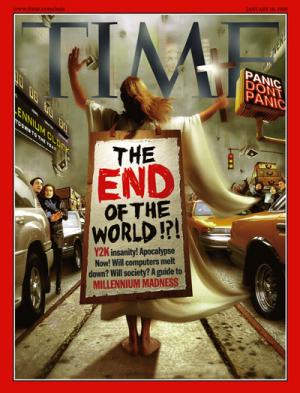
#6 - The millennialist panic was that all the world’s computer programming would freeze up as 1999 turned into 2000. This it was said would cause aeroplanes to fall out of the sky, and utilities such as electricity to switch off thus crippling transactions everywhere. This was based on a short-cut in the then tiresome business of writing programmes which had caused programmers simply to cut everything off at the end of the last century.The position nowNobody bothered to investigate non standard but widely used computer systems such as the Pick one which had actually expired by this time, yet continued to operate perfectly well beyond its nominal expiry date
| MSC Newswire Big Frights of Our Times Series #6 || Monday 23 October 2017 |||
Following others in the financial services industry, Mastercard unveiled its own blockchain distributed ledger for cross-border payments.
Mastercard is launching its own blockchain network to enable partner banks and merchants to make cross-border payments faster and more securely.
The Mastercard blockchain service can be used to clear credit card transactions, eliminate administration tasks using smart contract rules and thus, speed transaction settlement.
"By combining Mastercard blockchain technology with our settlement network and associated network rules, we have created a solution that is safe, secure, auditable and easy to scale," Ken Moore, executive vice president for Mastercard Labs said in a statement.
On Saturday, Mastercard will also sponsor the Money20/20 Hackathon, where the company will make the Mastercard Blockchain API available for participating developers.
Blockchain is a public electronic ledger – similar to a relational database – that can be openly shared among disparate users and that creates an unchangeable record of their transactions, each one time-stamped and linked to the previous one.
Mastercard's blockchain is a private, permissions-based network, meaning only those authorized to participate in transactions can see them.
The credit card giant is another among several financial services organizations that have deployed blockchain-based cross-border payment networks.
Earlier this week, IBM announced it had partnered with a Polynesian payments system provider and an open-source FinTech payment network to implement a new international exchange based on a blockchain electronic ledger.
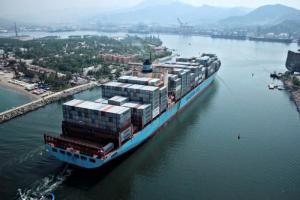
A new blockchain solution from IBM and Maersk will help manage and track the paper trail of tens of millions of shipping containers across the world by digitizing the supply chain process.
Jeffrey Neuburger, partner with Proskauer Rose LLP, an international law firm specializing in corporate finance, characterized IBM's blockchain deployment as "a major milestone for implementation of blockchain in major financial institutions."
IBM partnered with KlickEx Group, a United Nations-funded, Pacific-region financial services company, and Stellar.org, a nonprofit organization that supports an open-source blockchain network for financial services, to create the new cross-border payments service.
That partnership is likely to be a "watermark event in the growth of blockchain and digital currencies," Neuburger said.
"A lot is riding on the success or failure if this. Particularly interesting because the participants created their own digital currency for this implementation, and it will be interesting to see how regulators, among others, will receive this," Neuberger said.
Mastercard's blockchain is integrated into the company's payment network that includes 22,000 financial institutions to move funds that have been committed on the blockchain.
Mastercard's financial services and merchant customers will be able to connect into its blockchain network using an API, alleviating them from having to build out their own distributed ledger server nodes. Once a part of the blockchain network, banks and retailers can add their own internal nodes to scale capacity, Mastercard said.
"When it comes to payments, we want to provide choice and flexibility to our partners where they are able to seamlessly use both our existing and new payment rails based on the needs and requirements of their customers," Moore said.
| A ComputerWorld release || October 21, 2017 |||





Palace of the Alhambra, Spain
By: Charles Nathaniel Worsley (1862-1923)
From the collection of Sir Heaton Rhodes
Oil on canvas - 118cm x 162cm
Valued $12,000 - $18,000
Offers invited over $9,000
Contact: Henry Newrick – (+64 ) 27 471 2242

Mount Egmont with Lake
By: John Philemon Backhouse (1845-1908)
Oil on Sea Shell - 13cm x 14cm
Valued $2,000-$3,000
Offers invited over $1,500
Contact: Henry Newrick – (+64 ) 27 471 2242

|
|