
Founded by Max Farndale 1947 - 2018
Air New Zealand has started trialling its new Inflight Wi-Fi service on one of its long-haul Boeing 777-300 aircraft. The airline is rolling out Wi-Fi capability across its international jet fleet, beginning with the 777-300 fleet. Further Wi-Fi enabled aircraft will become available progressively over the next couple of months. Air New Zealand is utilising satellite company Inmarsat’s global GX satellite constellation and has partnered with Panasonic Avionics as the in-cabin technology supplier. Air New Zealand Chief Digital Officer Avi Golan says the airline has been working closely with its partners to prepare for the launch of Inflight Wi-Fi which will enable customers to access email, social media channels, web browsing and go shopping while travelling. “We’re launching Inflight Wi-Fi as a trial initially in order to gather customer feedback and ensure it meets the needs of our customers before we roll it out across our international jet fleet. “The service will be available progressively with the installation of Inflight Wi-Fi on our Boeing 777-300 fleet expected to be completed by June 2018 and our Boeing 777-200 fleet rolling out from April next year. “The trial will not only test the technical aspects of the service, it will also gather feedback on pricing options. Going forward, customers will be able to choose to sign up for different timeframes and have the ability to pay in a variety of ways, including with Airpoints Dollars™, as we look to offer a best in class connected inflight experience. “Looking ahead, we’re keen to actively explore new content opportunities and will also make Air New Zealand’s friendly chatbot, Oscar, available to help assist passengers to resolve any travel related questions during their journey,” says Mr Golan.
| An Air New Zealand release || October 9, 2017 |||
Big Frights of Our Times MSC Newswire Series
Starts Tomorrow Tuesday 10 October 2017
“Don’t’ worry,” the saying went “it may never happen!”
None of them have. So far.
In this series we look at the panics of our time. We assess them in the light of today. Were/are they justified? Who started them? What is the situation now?
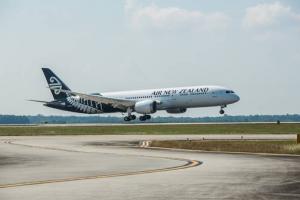
The first of Air New Zealand’s new-look Boeing 787-9 Dreamliners has touched down in Auckland, with a freshly configured interior offering more premium seating options for customers. The airline has refreshed the cabin configuration for its next four Dreamliner deliveries in response to growing demand for premium travel, increasing the number of Business Premier seats from 18 to 27 and Premium Economy seats from 21 to 33. Air New Zealand Chief Marketing and Customer Officer Mike Tod says the airline is expecting the new cabin layout to be popular with customers. “Since we introduced the Dreamliner, we have seen strong customer demand for our award-winning Business Premier and Premium Economy cabins and the products and service that come with these. Increasing the size of these cabins on our new 787-9 Dreamliners will give more customers than ever the opportunity to experience why Air New Zealand has been named by Airlineratings.com as the best airline in the world for the past four years,” Mr Tod says. Mr Tod says the team at Boeing has been excellent to work with during the design process. “They share our vision of taking comfort in the sky to the next level for more people and have supported Air New Zealand as we set a new benchmark for 787-9 Dreamliner travel,” he says. Boeing Commercial Airplanes Senior Vice President, Asia Pacific & India Sales Dinesh Keskar, says the manufacturer has enjoyed the opportunity to work with the 787-9 Dreamliner launch customer on this reconfiguration of the aircraft. “Since the launch of the 787-9 Dreamliner, Boeing and Air New Zealand have partnered together to bring a new level of capability and comfort to passengers around the world. With the delivery of its tenth 787-9 Dreamliner – and its newly refreshed interior – Air New Zealand is once again demonstrating its commitment to taking the customer experience to the next level,” Dr Keskar says. Air New Zealand was the first airline in the world to take delivery of the revolutionary 787-9 aircraft in 2014 and this latest arrival takes the airline’s fleet to 10 Dreamliners. The delivery is also the airline’s first from Boeing’s facility in North Charleston, South Carolina. The fleet has performed well to date, delivering good fuel efficiencies with each aircraft 20 percent more efficient than the aircraft they have replaced. The latest aircraft, with the tail number ZK-NZL arrived in Auckland just before 7pm last night, Sunday 8 October (local time). Air New Zealand’s newest aircraft is currently scheduled to enter service on Sunday 15 October, operating a service to Sydney. It will be deployed onto the Auckland–Houston route in December 2017, the first time a Dreamliner will regularly service one of the airline’s North American routes.
| An Air New Zealand release || October 09, 2017 |||
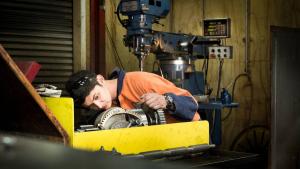
A Napier engineering apprentice is on a mission to get more people into trades.
Paul Taurima is an engineering apprentice at Foot Engineering in Napier through Competenz (an industry training organisation). He is a speaker at a series of events organised by Competenz to encourage Maori and Pasifika school levers into trades apprenticeships, especially engineering.
Mr Taurima says his job involves a range of roles and responsibilities to ensure the workplace runs smoothly including being a courier driver, rubbish man, a builder, forklift driver and cleaner as well as engineering tasks. "Every day is a challenge and that's why I love it.
"I love that at my job you might be welding a bicycle then one phone call later, you're packing the bush truck to repair a digger, then maybe at the port doing maintenance.
"Every day is different and the variety of work my company covers is so vast, I'm going to have a good set of skills when I qualify."
Continue to the full article here on Hawkes Bay Today || October 9, 2017 |||
The new government should make it a policy priority to help rebalance the economy, says BNZ boss Anthony Healy.
"I do think the shape of our tax system needs to be looked at, particularly when you consider some of the widening gaps between rich and poor.
"I think addressing that through redistribution, particularly with a capital gains tax, would certainly be something I'd like both (potential) governments to be considering."
Hear Healy's comments in the video player above
Healy said there were four main reasons why the housing market stopped going up.
The first was a lack of affordable houses – a lot of buyers were simply priced out of the market now.
Secondly, the LVR restrictions were having a significant impact particularly on investors.
Thirdly, all the major banks had stopped lending on foreign income which had removed a lot of foreign investors from the market.
Finally, Healy said capital controls in China had cut the number of Chinese buyers in the market.
Healy said the banks “weren’t” panicking about the slow-down but agreed that property developers were now having difficulties in financing some projects.
| A Newsroom release || October 09, 2017 |||
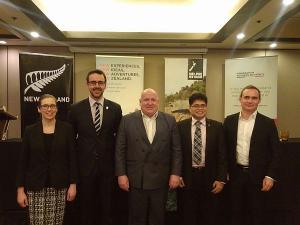
New Zealand Ambassador to the Philippines David Strachan expects stronger ties between his country and Cebu as the two parties further explore opportunities in trade, tourism and education.
At a time when the people-to-people links between New Zealand and the Philippines are burgeoning, Strachan led an 11-strong New Zealand delegation to Cebu to look into potential areas of collaboration.
“We continue to strengthen our ties and explore partnerships that would be beneficial for Cebu and New Zealand,” he said in a roundtable discussion with local media at the Cebu City Marriott Hotel last Friday.
According to Strachan, 80 percent of New Zealand exporters are small and medium enterprises who could be the right match for Cebu-based entrepreneurs.
He said New Zealand is exploring potential investments on food and beverage, wood processing and furniture as well as information technology innovations.
Investments
Hernando Banal, the New Zealand trade commissioner, said they see a sustained entry of investments particularly into the business process outsourcing (BPO) industry.
Aside from the BPO sector, he said New Zealand is also looking for collaborative projects in renewable energy, especially since the country is known for geothermal power sources.
Banal said the bilateral trade of the Philippines and New Zealand has been growing, registering $1 billion in trade value in the last five years, making the Philippines the 15th largest export destination for New Zealand.
He added that Philippine companies are also investing in firms in New Zealand, particularly those involved in food and food processing.
New Zealand boasts of a large Filipino community, with more than one percent or about 6,000 of the country’s population being Filipinos and making it the fastest growing Asian community there.
Tourism
Steven Dixon, Tourism New Zealand regional manager, meanwhile, said more Filipinos now see New Zealand as a travel destination.
They expect more Filipinos to travel to New Zealand as Philippines Airlines is set to launch a non-stop service between Manila and Auckland starting December.
“This decision by PAL would inject greater momentum into the fast growing two-way tourist flows,” he said.
Around 28,000 New Zealanders travel from New Zealand to the Philippines while 23,000 Filipinos travel to New Zealand every year, mostly for business, incentives, as well as visiting family and friends.
Education
Education New Zealand Regional Director John Laxon, for his part, said Cebu is becoming a promising education market for New Zealand.
He said that more than 1,000 students have registered for the New Zealand Education Fair hosted by Golden Summit Immigration Consultancy held at the Cebu City Marriott Hotel last Oct. 7.
“Filipinos pursuing their education in New Zealand are learning from some of the best education institutions in the world. They earn degrees that are internationally recognized. This gives them an advantage in pursuing their careers in the Philippines or elsewhere around the world,” Laxon said.
More than 4,000 Filipino students study in New Zealand, making the Philippines the fifth largest sources of international students worldwide.
Year to date, the number of Filipino students choosing to study in New Zealand universities has risen by 35 percent in 2017 compared to the same period last year.
The popular degree programs among Filipinos, Laxon said, are those related to management and commerce as well as health studies, animation, cyber security and ICT.
| A TravelWireNews release || October 8, 2017 |||

New Zealand software innovator CS-VUE has enhanced an environmental compliance management system for one of the country’s largest infrastructure projects – the NZ Transport Agency’s $709.5m motorway from Pūhoi to Warkworth. It is the first stage of the Ara Tūhono – Pūhoi to Wellsford Road of National Significance.
It’s a long way from where it all began. In 2004 the software start-up business was created to help the former Auckland City Council better manage its stormwater consents.
CS-VUE has since grown in staff, clients and turnover. In recent years, work includes providing software to manage the New Zealand Transport Agency’s operational network and capital project consents. Roads of National Significance projects can involve hundreds of consents across multiple teams and construction areas, with work often staged.
The Transport Agency says prior to using CS-VUE’s software to help manage their consent conditions and compliance, they relied on a range of spreadsheet-type systems that differed from contract to contract.
When the Transport Agency’s second Public Private Partnership (PPP) Pūhoi to Warkworth was in the procurement phase, CS-VUE General Manager Wayne Fisher got a phone call.
“I recall they wanted us to design some enhancements to the software and quickly,” he laughs. “We were thrilled for the call up. It was scoped, designed and built in time for the award of the contract to Northern Express Group (NX2).”
Mr Fisher says with construction underway, their software module is now doing its job and will continue to well after the four-lane motorway opens because many of the consents are ongoing, as is monitoring and compliance.
Known as their ‘Two Step Sign Off’ module, CS-VUE has built in extra capability and better data exchange to effectively allow “two-way conversations” between the consent holder and its contractors and the regulator, Auckland Council.
“Normally a consent holder would rely solely on its contractors to ensure every consent was being monitored and complied with. Our module gives the Transport Agency direct oversight and Auckland Council instant access to the status of consents with the ability to directly sign them off.”
Graham Jones, Senior Monitoring Officer at Auckland Council’s Resource Consents department says: “To the best of my knowledge this is the first time the regulator has shared a common platform with both the consent holder, the NZ Transport Agency and the contractor, NX2. All parties having access to common software allows us all to be on the same page at any instant in time on the status of conditions. As a project team, it allows us to work in a more collaborative manner.”
Tom Newson, NZTA’s Principal Project Manager, says: “As a PPP, the Pūhoi to Warkworth conditions require input and oversight from the three key parties during construction and once in service to ensure compliance and management of the outcomes-based consents set by the Board of Inquiry in 2014. CS-VUE’s new system provides all parties with quick access and a single source of truth via a two-step validation process with Auckland Council. We’re using it as a pilot with a view to using the same CS-VUE application on other large roading infrastructure projects, such as East West Link and the Northern Corridor improvements.”
Mr Fisher says with the 18.5km motorway scheduled to open by 2022, having a cloud-based environmental compliance management system that each party can access 24/7 not only means greater transparency, which helps to avoid any breaches and saves time.”
CS-VUE is proud of its role with the Pūhoi to Warkworth PPP, which will ultimately help in the Northern Express Group’s construction, management and maintenance of the motorway for the five-year construction and its further 25-year operational period.
“The Transport Agency is a massive government agency with a huge work programme. They’re also champions of innovation. As a New Zealand-owned and operated software business, we’re delighted to be working alongside them on a daily basis. It just goes to show there is room for local products and suppliers if they can deliver and keep up.”
Mr Newson says the Pūhoi to Warkworth outcome-based RMA conditions provide greater flexibility to the contractor in both design and construction than most other Transport Agency projects. It also requires vigilance from a compliance standpoint.
CS-VUE is also working with about 20 percent of the country’s district and city councils ensuring they keep on top of their often complex and lengthy consents granted by regional councils. For Auckland Council, CS-VUE manages its stormwater and contaminated land sites.
“Our clients have achieved great results around improving information accuracy and auditability. We provide tools to achieve better business analytics and we can reduce an organisation’s annual operating costs.
Board directors prick up their ears when we talk about improvements to governance, risk and compliance. While helping to keep the rates down seems to resonate with council procurement managers. Our products actually offer many tangible advantages.”
He says public and private entities also respond positively to the concept of resilience and keeping critical information safe from the likes of earthquakes, floods or fires. CS-VUE achieves this as its software is entirely cloud-based, putting everything in one place for easy management, and no capital expenditure on hardware is required.
CS-VUE also manages and tracks resource consents for big infrastructure players and heavy industry. Most consents being managed are around air discharge, water, land use, and trade waste, or consents issued by NZ Petroleum & Minerals for extraction. Sectors include oil and gas, quarrying, mining, and some of the country’s key ports. While clients include GBC Winstone, Bathurst Resources, Fulton Hogan, Landcorp, NZ Defence Force, KiwiRail, BP and Shell. Large packaging company, PACT, is among its Australian clients.
And it’s not just about delivering up-to-the-minute environmental balance sheets. Since the Health and Safety At Work Act came into force in April last year, CS-VUE has designed and implemented software to help businesses and organisations better manage and mitigate risks in the workplace.
“Over the past 13 years in software we’ve learnt you can have all the marketing, management and techno speak you want, but what really defines whether you succeed or not is the quality of your software developers and CS-VUE has an exceptional team.
“We work really hard to keep ahead of change and continuously improve. That is how we’ve secured great clients and big projects,” says Wayne Fisher.
| A CS-VUE release || October 10, 2017 |||
Victoria University – Chicago Survey still remains the last word
We are told by former prime minister Jim Bolger among select others that what Winston Peters MP really wants is “respect.”
Yet what precisely is respect these days and who exactly has it?
One thing is obvious and it is that the Right Honourable Winston Peters MP PC does not believe that he has enough of it.
Otherwise he would not be so actively seeking more of this elusive commodity.
Our starting point to putting flesh on the bones of the elusive respect is what became known as the “Congalton” report on the status of occupations here.
This report named after its driving force A.A Conglaton of Victoria University was a joint venture with the University of Chicago.
It was one of the rare academic reports to have generated a strong response outside the university, as well as the usual fluttering of the dovecotes inside.
In the midfield of the occupations in terms of status that of politician appeared under that of journalist or “news reporter” as it was described in the survey.
Standing unrivalled in the top three positions of this survey were in order :-
*Medical doctors
*Solicitors
*Company directors.
Would Mr Peters have thus been accorded more respect had he remained just a solicitor instead of chancing his arm as a professional politician?
Possibly.
There have been numerous other such reports since the Congalton one.
These though have been adjusted around the funding available to complete them and therefore have been of a modish and thus tendentious nature woven around gender and ethnic pivots.
In the context of today’s debate the ascendancy of the occupation of news reporter over that of politician remains the outstanding condundrum.
This was prior to the university-isation of journalism. Before it became feminised. Before its pseudo -professional “investigative” era
In those days news reporters did just that. They reported the news.
It is hard to discern any other clues.
One might be in the old city & guilds type of grading qualifications such as in Pitmans.
Still, this must be set against the status from which National member of parliament were drawn in those days which then as now was from a farming-professional one.
Or the notably much stronger profile in those days of the Labour members, drawn from a union-academic background.
Mr Peters meanwhile is no politico-literary slouch and enjoys quoting from David Lloyd George among whose utterances are those to the effects of the “baubles” of office and “the glory of the unadorned name.”
In the event Lloyd George was hardly immune to such temptations having succumbed to the title of Earl Lloyd-George of Dwyfor, OM, PC.
Is there something familiar about this?
| From This email address is being protected from spambots. You need JavaScript enabled to view it. || Saturday 7 October 2017 |||

Of the top five countries writes by Pam Tipa in RuralNews, New Zealand trades with, it only has trade deals with two, an ExportNZ conference has heard.
“That leaves us very vulnerable,” says trade expert Charles Finny. “We don’t have links to those markets that others do.”
National trade spokesman Todd McClay had earlier pushed the case for NZ to forge ahead in doing deals with like-minded countries.
Of our top five goods export countries -- China, Australia, US, EU and Japan -- we only have trade deals with China and Australia, he told the Auckland conference held on September 21.
McClay says when we do trade deals we get it right and trade flows increase significantly in both directions, as has been the case with China. He says that FTA got NZ through the global financial crisis (GFC).
“To continue to offer opportunities to NZ we need more trade deals.”
EU commission president Jean-Claude Juncker has expressed a desire to have a trade deal with NZ within two years; “that will take a lot of hard work”, McClay added. He expects this will take “three years rather than two”.
NZ is one of only six WTO countries that don’t have a trade deal with EU.
McClay says with the UK we are in a good space since Brexit was announced last year. UK trade secretary Liam Fox confirmed earlier this year that NZ will be first cab off the rank with Australia for new FTAs once they got through Brexit.
Meanwhile, McClay says TPP11 is a high-quality deal.
Continue to read Pam's full article on RuralNews || October 6, 2017 |||

Palace of the Alhambra, Spain
By: Charles Nathaniel Worsley (1862-1923)
From the collection of Sir Heaton Rhodes
Oil on canvas - 118cm x 162cm
Valued $12,000 - $18,000
Offers invited over $9,000
Contact: Henry Newrick – (+64 ) 27 471 2242
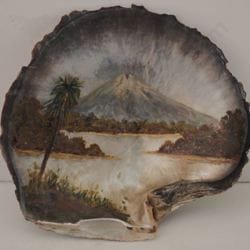
Mount Egmont with Lake
By: John Philemon Backhouse (1845-1908)
Oil on Sea Shell - 13cm x 14cm
Valued $2,000-$3,000
Offers invited over $1,500
Contact: Henry Newrick – (+64 ) 27 471 2242

|
|