
Founded by Max Farndale 1947 - 2018

According to a new report, the design sector contributed over $10 billion to the New Zealand economy in 2016 writes Henry Oliver from TheSpinoff in which he asks Thomas Mical, the head of AUT’s School of Art and Design, what that means for New Zealand design.
Designers know that their work creates value, but a recent report from DesignCo – commissioned by ten New Zealand institutions including AUT – confirms it, by quantifying design’s growing impact on the New Zealand economy. According to The Value of Design to New Zealand report, the design sector contributed approximately $10.1 billion to the New Zealand economy in 2016, about 4.2% of New Zealand’s GDP.
And if design were treated as its own industry rather than a sector within various industries, its contribution to the economy would be larger than agriculture ($8.1 billion) and on the heels of retail trade ($10.6 billion) and food, beverage and tobacco product manufacturing ($10.6 billion). Product design and interactive design are the two biggest contributors towards design’s economic impact, along with manufacturing, human health, financial, environmental and construction industries.
But it’s not just design for design’s sake. The report shows a strong design sector and national prosperity and economic growth. Further, design is a powerful tool of urban regeneration and a way to help solve complex and hard-to-solve problems in both the private and public spheres.
Thomas Mical, the head of AUT’s School of Art and Design, was trained as an architect and has thought a lot about the interaction of public and private spaces. He sees reports like The Value of Design as vital, not just for the design industry to prove it’s worth to the government and the private sector, but for designer’s themselves to understand their economic impact and the value of the work they do. And for Mical, who sees the future of design everyday in his student’s work, its value is only going to grow.
Continue here to read the full article on TheSpinOff || October 5, 2017 |||


A leading tech businessman, who has possibly done more to improve trade ties with Vietnam than any other New Zealander, has last night recognised for his leadership at the Auckland University of Technology Business School NZ Business Support Excellence awards. Augen director, NZTech and FinTechNZ chair Mitchell Pham was one of the finalists at the gala event in Auckland. Pham has impeccable links with South East Asia and was pivotal in setting up the Kiwi Tech Connection Hub in Ho Chi Minh city to help Kiwi tech businesses accelerate presence and engagement in the ASEAN region. “New Zealand lacks capability and reach to operate in Asia. There has been plenty of focus on China and India, but not enough capability in South East Asia. We provide that reach and operational capability on-the-ground with the Kiwi Connection Tech Hub,” Pham says. “New Zealand has not had the capacity or expertise to engage in broad business development activities and deep relationships with business networks as well as tapping into talent pools and investment capital in South East Asia. “We are starting to look at how we can take Kiwi Connection Tech Hub to the next level and provide a more direct business development channel to Kiwi tech businesses. New Zealand faces global demand for tech innovation, while at the same time we also suffer from shortage of both tech talent and investment capital to support international growth. “I feel very honoured to be a finalist in the awards last night, on behalf of all the people and organisations that I work with. As I don't work alone or achieve any impact on my own, this recognition is for them.” Pham developed his leadership skills from business and community engagements and has also spent time at Harvard University’s Kennedy School to further enhance and broaden his capability in this area as a result of being named Young Global Leader by the World Economic Forum. His company, Augen, has brought resource scalability to help nearly 250 New Zealand businesses accelerate innovation and gain speed-to-market advantages, including such groups as Acuite, AgilityTRx, Atlantis Health, Auckland District Law Society, Benecura, Blackbay, Calqtech, Go Car Finance, GO Rentals, HealthSoft, Kiwa Digital, Manawanui In-Charge, MerlotAero, OMNIMax, Orion Health, Rhombic, RoleQ, ShapeShifter, SoftTech, Strategic Pay, SurveyOnline.com and Wizbang. Many of the Kiwi businesses assisted by Augen have also been upskilled with the capability to work effectively with international teams in today's diverse globally supply chains and digitally-connected business ecosystems. Pham was one of the refugees who were fortunate enough to successfully get out of Vietnam in the 1980s. He survived several near-death experiences crossing the South China Sea and two perilous years in four refugee camps in Indonesia. He says he resettled in the best country on earth, received world-class education, established his life in New Zealand, built a technology business group and expanded back into Vietnam years later. “I am very fortunate to have built a business career in an industry – technology – that is now the fastest growing globally. I reconnected with my immediate family after 13 years apart and reunited in New Zealand after 30 years. I have expanded my Kiwi technology group back into Vietnam to support the growth of New Zealand businesses and creation of opportunities for both countries.”
| A MakeLemonade release || October 5, 2017 |||


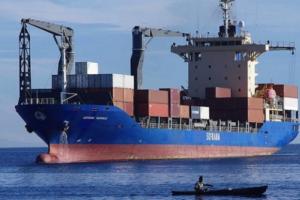
The acquisition will be concluded on behalf of the French carrier by its Australasian subsidiary, ANL, which will then merge with Sofrana to create Sofrana ANL.
Chief executive of SeaIntelligence Consulting Lars Jensen said the acquisition was in line with CMA CGM’s focus on growing regional presence through snapping up niche brands.
Mr Jensen added: “It also is another step in the consolidation among the smaller shortsea and feeder carriers globally that will unfold in the coming years.”
While ANL already operates at ports throughout Australia, New Zealand, and Papua New Guinea, CMA CGM hopes to capitalise on Sofrana’s “in-depth knowledge” of the region to expand its reach.
Active in the South Pacific for 50 years, New Zealand-based Sofrana operates 10 vessels on eight tradelanes, servicing 21 ports in Australia, New Zealand, Papua New Guinea, and the Pacific.
Sofrana-ANL would conduct operations across Asia, the Indian Subcontinent, North America and the Pacific islands.
CMA CGM has proved adept at handling the integration process during recent acquisitions, its latest results being the third full quarter to include figures from Singapore-based APL, showing how it could take a loss-making company and turn it into a profit generator.
The carrier reported revenues of $10.1bn and operating profits of $724m, driven by an upturn of 34% in liftings and a 9% increase in revenue.
Net profit reached $320m over the six months to June, versus a loss of $217m at the halfway point of 2016, with APL contributing $116m – in the first half of 2016 APL lost $127m.
Industry analysts cite CMA CGM as the best-performing container line in the world, with profit margins in the region of 7.1%, 1.8% ahead of its nearest competitor.
The Sofrana acquisition follows the agreement this summer between CMA CGM, reefer specialist Seatrade and independent container line Marfret to launch a joint service in the South Pacific.
One of the first instances of cooperation between specialist reefer and container carriers, the 13-vessel joint service will link Australasia and French Polynesia with Europe and the US east coast.
The acquisition of Sofrana Unilines is expected to be completed by the end of October. The terms were not disclosed, but Benoît Marcenac, MD of Sofrana for 15 years will remain with the company.
| A Loadstar release || October 3, 2017 |||
To further improve fuel efficiency, Air New Zealand has turned to electricity to power its aircraft while on airport gates, a move that is expected to reduce carbon emissions by more than 4,500 tonnes each year. Traditionally onboard systems like air conditioning and lighting are powered by an Auxiliary Power Unit (APU), a small jet engine in the tail of an aircraft, when on the ground. This however consumes jet fuel and generates carbon emissions. Now APUs are increasingly being switched off with aircraft being plugged directly into electrical power at gates at both Auckland and Christchurch International Airports. In the first month of trialling this new process in Auckland with just its Boeing 777 and 787-9 long-haul fleets, the airline saved 475,000kg of carbon and 188,000 litres of fuel – more than the volume of fuel required to fly a Boeing 777-300 from Auckland to Los Angeles. Air New Zealand Head of Sustainability Lisa Daniell says, “Reducing our carbon emissions is a key goal under our Sustainability Framework and it’s fantastic to collaborate with our airport partners on this particular initiative which will significantly allow us to cut down APU usage and reduce emissions while our aircraft are on the ground. The key priority in the year ahead will be getting more of our fleet onto ground power,” says Ms Daniell. The airline has been working closely with both Auckland and Christchurch International Airports to ensure ground infrastructure is compatible with aircraft systems and processes are aligned. All wide-body jet aircraft are now using ground power when on gates in Auckland while domestic jets are currently plugging into electricity in Christchurch. The airline is also currently in talks with Wellington Airport to adopt similar processes. Better utilising ground power is just one initiative Air New Zealand has in place to reduce carbon emissions and improve fuel efficiency. The airline is also continuing to invest in a modern fleet and reduce weight onboard its aircraft, as well as transitioning its ground service equipment at airports to electric options where operationally feasible. The airline has already completed the transition of more than 75 vehicles in its light vehicle fleet to electric models. Click here or on the image below to download broadcast quality video of Air New Zealand’s Carbon Reduction Programme Manager Rob Nicholls discussing the initiative.
| An Air New Zealand release || October 4, 2017 |||
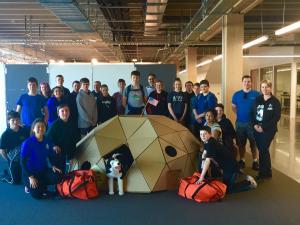
On Thursday 5 October at 12.30pm, ambassadors and high commissioners from nine of the countries involved in Antarctica will visit the Antarctic Ecobots programme at Ara. Their visit is being hosted by Antarctica NZ.
Antarctic Ecobots is a free interactive workshop for year 9 and 10 students on 4 and 5 October. The focus in this workshop is to build a robot that can tackle dangerous environmental tasks using maths, physics and computer skills, utilising VEX IQ Robots and MBots that then compete to win the ‘Antarctic Mission’.
After learning about Antarctic science, including microbiology, glaciation, the effects of global warming and the damage it does to the environment, participants learn what robots can contribute in this environment and then build an ecobot robot.
Earlier in the week was Mission to Antarctica, a free engineering programme on 2 and 3 October for Years 9-11, exploring solutions for living in an inhospitable place.
Participants use engineering and architectural design principles and 3D printing to build geodesic habitats and energy systems for survival, and learn how to live in harmony with this unique and fragile environment.
The habitat created would also harness solar and wind energy and protect humans from radiation, cold, wind and extreme isolation – no small challenge, says Ara STEM Coordinator Miranda Sattherthwaite.
“Providing a substantial challenge raises the engagement of the participants as they strive to use design thinking, learning and resources to create solutions. There are many inhospitable places on the planet, each with their own challenges. This programme, run in collaboration with Fablab, gets participants thinking about how humans can exist in such places. Using the tools of engineering and broadens their understanding of what can be accomplished,” she said.
Engineering comes into many aspects of life near the south pole such as navigation, wearable technology and the science of Antarctic glaciology.
Miranda is seeing more and more robotics in learning in New Zealand and this is coming through to competitions as well.
Later in the year, she will help to judge the biggest robotics competition ever held in the Southern Hemisphere in Rotorua in December - the Asia Pacific VEX Robotics Competition 2017 .
Ara uses innovative technology such as robotics, modelling and 3D printing to engage students in science, technology, engineering and science.
School holiday programmes in these areas help students to broaden their awareness, start thinking about possible careers and check out study options and pathways - plus they are a lot of fun and free.
| An ARA release || October 4, 2017 |||

Palace of the Alhambra, Spain
By: Charles Nathaniel Worsley (1862-1923)
From the collection of Sir Heaton Rhodes
Oil on canvas - 118cm x 162cm
Valued $12,000 - $18,000
Offers invited over $9,000
Contact: Henry Newrick – (+64 ) 27 471 2242
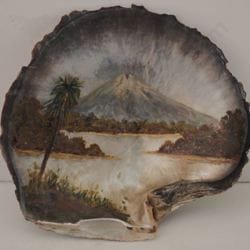
Mount Egmont with Lake
By: John Philemon Backhouse (1845-1908)
Oil on Sea Shell - 13cm x 14cm
Valued $2,000-$3,000
Offers invited over $1,500
Contact: Henry Newrick – (+64 ) 27 471 2242

|
|