
Founded by Max Farndale 1947 - 2018
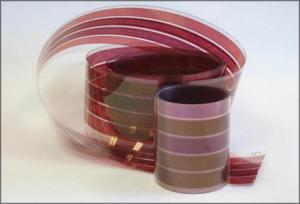
When it comes to solar panels, the future is flexible. Vanessa Young discovers how a MacDiarmid project is unlocking the possibilities of a new generation of solar cell technology.
When we imagine solar panels, we think of hard rectangle frames, sitting upright on roofs, or spread out across expanses of deserts.
But imagine flexible, bendy solar panels, supple enough to skin a curved roof, pliable enough to be rolled up and transported easily. Lightweight enough to be a thin film for the roof of a tent. And portable enough to be rolled out to generate power for emergency relief operations, or taken into remote areas.
Printable solar materials that will allow all of this is closer than we think. Victoria University associate professor Justin Hodgkiss, lead researcher in a MacDiarmid Institute project investigating the possibilities presented by ‘printable photovoltaics’, says they will be low cost and could replace silicon as the next generation of photovoltaic (solar energy) materials.
“Silicon cells are getting cheaper but still require a high-temperature, high vacuum manufacturing process. For solar energy to be really accessible it needs to be much cheaper and faster to manufacture.”
He says these printable semiconductors, including polymers and nanoparticles, can potentially be manufactured on a roll, cutting production costs.
“Their ease of transport and light weight also mean it is feasible for these to be manufactured in New Zealand and shipped anywhere in the world.”
New generation flexible solar cell material. Photo: Eight19 Ltd
Shiny is the enemy of good
When we see photos of those bright shiny swathes of solar farms, we don’t automatically think of their shininess as a problem. But Hodgkiss says an ideal solar panel would look black.
“Every bit of light that reflects off a solar panel is light not transformed into energy. When no light bounces off it means all visible light is getting in.”
This is where nanotechnology comes in. He compares the idea to radio antennae on the roof of a building.
“When you see large antennae on the top of buildings, their size is related to the radio frequencies they’re tracking. Radio waves are of the order of metres, so the antenna discs are this size. But optical wavelengths are in the order of hundreds of nanometres.”
He says the MacDiarmid teams working on this are effectively creating tiny antennae that capture light and can direct it inside the solar panels.
“We’re making nano-patterns that make sure that light gets in and is not bounced away, and that capture and focus the light waves directly where it is needed in the solar panels.”
Continue to read the full article here published by The Spinoff on a MacDiarmid Institute Project a MacDiarmid Institute Project || October 3, 2017 |||
China and the United States’ cooperation in applying sanctions against North Korea does not promise a new era of cooperation around increasingly entwined economic and security issues, new research led by Victoria University of Wellington academics has concluded.
“We’re seeing much more competition than cooperation” says Robert Ayson, Victoria’s Professor of Strategic Studies and author of a study published by a prestigious Australian National University (ANU) think-tank.
“Our new report, The Economics-Security Nexus Under Trump and Xi: Policy Implications for Asia-Pacific Countries, finds that New Zealand and its regional partners should expect less reassurance and more pressure,” says Professor Ayson.
“President Trump has withdrawn the US from the Trans-Pacific Partnership process and is threatening to exit the free trade agreement with South Korea, a leading US security ally. And China has signalled to New Zealand, Australia and other regional countries that they need to consider the potential trade implications of taking a critical stance on the South China Sea. The days of separating our economic and security interests are well and truly over.”
The new study was kick-started by a symposium hosted by Victoria’s Centre for Strategic Studies, which brought together leading scholars from Victoria, the ANU and Singapore’s Nanyang Technological University.
Associate Professor David Capie, the Centre’s Director, says the symposium was an opportunity to build strong links with some of Victoria’s most important capital city university connections. “We were also thrilled with the participation of senior officials from a range of government agencies.”
Building deeper connections with scholars in the region and with the official community is a strong focus for Victoria.
“This is exactly what we had in mind when we established ‘Enabling our Asia-Pacific trading nation’ as one of Victoria’s eight areas of academic distinctiveness and strength,” says Professor Siah Hwee Ang, Victoria’s Chair in Business in Asia and Chair of the team leading this area of research collaboration.
“We’ve created research connections across the University that can bring new combinations of expertise to deal with knotty interdisciplinary questions. And we’re leading the way in outlining the policy options governments need to consider.”
That’s where the next stage of Professor Ayson’s work will head.
“We knew none of the options for governments would be easy” he says, “but we think we’ve identified some of the most fruitful ways ahead. It’s no longer about finding our comfort zone between the US and China, because that doesn’t exist. For New Zealand, we think this means working even more closely with some of our regional partners, including Australia and Singapore, to make sure none of us is alone when we face future economic and security pressures from the big powers.”
| A Victoria University release || October 3, 2017 |||
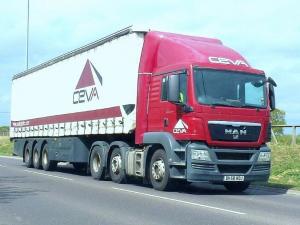
Ceva Logistics is celebrating two anniversaries in Australia this month, marking ten years of operations as Ceva Logistics, and the first anniversary of its new Australasian headquarters in Truganina, Victoria.
Ceva was born in Australia from the merger of Australian transport company, Thomas Nationwide Transport (TNT), and Eagle Global Logistics in August 2007.
Ceva is celebrating the milestone achievements with customers and staff across the country, starting with a staff event at Truganina hosted by Managing Director of Australia and New Zealand, Carlos Velez Rodriguez.
“We are delighted to be able to celebrate two landmark achievements at the same time with our colleagues and customers,” said Velez Rodriguez.
“I’d particularly like to pay tribute to our staff, be they working at this site or others in the Australia & New Zealand cluster, for their dedication and hard work in making this company the success it is today. A number of them have been with us for many more than the ten years we are marking today and we salute them all.”
| A L&MH release || October 3, 2017 |||
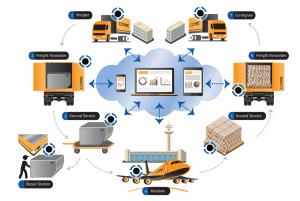
ACL Airshop of the US and CORE Transport Technologies of New Zealand have announced an exclusive strategic alliance for bringing innovative new, field-proven Bluetooth® enabled logistics technology to the global air cargo industry, to jointly provide automated tracking of Unit Load Devices (ULD Equipment). ACL Airshop, with main offices in South Carolina and Amsterdam, is a worldwide provider of custom ULD solutions to over 200 air carriers and cargo clients, with services, repairs, and leasing operations at 40 of the world’s Top 50 air cargo hub airports, substantial manufacturing and supply chain capabilities for cargo control products, and 34 years of experience in air cargo. CORE Transport Technologies is an agile software developer, focused for over 10 years on services that provide significant improvement to the transportation process in multiple industries, with offices in New Zealand, Hong Kong, and Orlando FL.
Predictive analytics and Big Data are just part of the new efficiencies these innovations can bring to air cargo carriers, according to the two companies. They assert that airlines will also be able to track the actual cargo loads by the container and pallet, that the tracking system will yield real-time “dot on the map” monitoring and status reports, and will reduce both the loss and/or the overstocking of pallets and other mission-essential cargo equipment. This is coupled as a significant technical enhancement to ACL’s already robust ULD Control and bar-coding systems used by some of its customers.
The two companies have successfully concluded extensive beta testing in the field with international air carriers and an array of multiple ULDs, with 100% tracking reliability. Similarly, a global air carrier conducted another CORE test which succeeded with hundreds of ULDs. Market readiness is now complete. Regulatory aspects such as compliance with FCC and FAA rules have been addressed, plus rigorous adherence to RTCA-DO-160 (“Environmental Conditions and Test Procedures for Airborne Equipment”).
Ian Craig, Managing Director & CEO of CORE Transport Technologies cited additional aspects of the logistics enhancements for clients, and explained the strategic alliance merits at a September air cargo conference. “While CORE has initiated a number of previous technology products independently, with the most current offering of COREInsight Tracking technology, we felt it is best suited for a partnership with a great industry leader like ACL Airshop.” Craig further stated, “By partnering with ACL, we introduce a new benefit to leasing ULD Equipment, whereby the lessee can now have an automated avenue to track their leased ULD even when it may be outside their own system. Core grants ACLAS the worldwide exclusive right to license, sublicense, and sell the ULD tracking technology, in tandem with us. ACLAS customers will always know where their ULD’s are located and when they are being utilized.”
Wes Tucker, Executive Vice President for ACL Airshop, said, “This partnership is not only about tracking ACL’s 40,000 ULDs, it’s also about partnering with a formidable technology company to bring electronic ULD tracking to the airline industry. We’ve been working in unison with CORE in testing and development of this technology. The results are quite impressive. This is the ultimate solution for ULD Equipment tracking available today.” Tucker further explained benefits for airlines customers, “This is a positive game-changer for ACL Airshop and its hundreds of airlines clients. COREInsight ULD service tracks these valuable assets in real time. FOR ACL’s airlines clients, we predict this will be a low-cost logistics efficacy enhancement that will remarkably improve how we can help them manage their fleet and save money long-term.”
Steve Townes, chairman of ACL Airshop and its parent company, said, “Speaking for our entire team of Ranger Airshop co-owners, we are excited to advance and accelerate this new logistics sophistication for ACL’s airline clients, and we are delighted to be partnering with such an excellent teammate as CORE Transport Technologies. We are aiming to accelerate Bluetooth tracking into usage for the many airlines customers who will value the compelling new efficiencies it is designed to deliver for their ULDs”
| A joint ACL Core release || October 2, 2017 |||

Dennis Barnes, Chief Executive of Contact Energy is urging New Zealand Inc to move past debates on technicalities and act on the climate change challenge.
“As a country I firmly believe there’s a real opportunity for us to innovate, to work together and do more to tackle climate change and Contact is keen to play a key role”, says Dennis Barnes.
Contact agrees with the Parliamentary Commissioner for the Environment’s recommendations that depoliticising New Zealand’s response to climate change is a key step to be taken. Decisions on how we move to a lower carbon economy need to be made, with emissions targets and budgets, policy developed to help us get there and a Climate Change Commission set up to provide expert, independent and objective analysis and advice.
“Hope won’t help us deliver a low carbon economy, but a plan that ensures government agencies and businesses can work together on how to achieve targets would be a great step.”
Contact believes having a truly market-priced Emissions Trading Scheme, covering all sectors, all gasses and with the removal of existing caps and transition periods, will help spur the transition to a lower carbon economy.
“New Zealand is blessed with abundant renewable energy and we can use this to decarbonise the transport and manufacturing sectors, by increasing the use of electric vehicles and converting fossil fuel fired processes to low carbon electricity.”
“We are actively working with our energy-intensive business customers to help them identify opportunities to transition to flexible, efficient, low carbon energy solutions and welcome conversations with other organisations who are keen to be involved.”
Contact produces roughly the same amount of electricity as six years ago, but has reduced its emissions by 53% and its gas purchases by nearly 80%, by closing gas-fired generation, investing in new renewable energy production and innovating to deliver lower cost and more efficient electricity generation.
Contact is a strong supporter of electric vehicles and initiatives designed to increase their use in New Zealand and 25% of Contact’s own vehicle fleet is electric. Through technology trials across the country Contact is working with customers to truly understand the opportunities for customers in pairing solar energy, battery storage, smart hot water control technology with app-based real-time control. Contact’s market-leading Green Borrowing Programme was introduced in August 2017 allowing investors, for the first time ever, to have the opportunity to invest in certified Green Debt Instruments issued by a New Zealand company.
Contact has outlined its thinking on climate change opportunities in its submission today to the New Zealand Productivity Commission’s Low Emissions Economy Inquiry and in a short video featuring Contact Chief Executive, Dennis Barnes. A copy of Contact’s full submission can viewed on Contact’s website (www.contact.co.nz/aboutus/media-centre) and the video viewed via Contact’s YouTube channel (https://youtu.be/F8Z0v-8Te4w)
| A Contact Enerrgy release || October 2, 2017 |||


NZ: Hawke's Bay's Napier port considers new levy on pipfruit - A FreshPlaza release:
Following increased fees, a new insurance levy has reportedly tipped local port users - across the horticultural sector, exporters, and transport companies - over the edge.
Port CEO Garth Cowie said one of the fees being considered by the port was for the pipfruit sector. The port sought feedback from the pipfruit sector on the concept of a peak season reefer surcharge.
"The apple industry is growing and Napier Port's infrastructure has to keep pace in order to support our growers and provide the level of service they need," he said, adding this came at a cost.
Over the past five years the port had invested more than $95m in infrastructure.
"We have done everything we can to keep this proposed fee to a minimum while still ensuring the pipfruit industry has the infrastructure they need for the peak export season."
The number of apple exports through the port has increased from about 12,936 containers in 2008 to a record 22,205 20ft containers of apples last year.
| A FreshPlaza release || October 2, 2017

Food Standards Australia New Zealand (FSANZ), a trans-Tasman regulatory body, has approved 6 lines of GE potatoes (A1139) carrying genes from viruses and bacteria to stop discoloration and alter vital nutritional components [1]. The NZ Minister for Food Safety has let down NZ consumers yet again by failing to carry out a thorough public safety evaluation.
The joint submission from GE-Free NZ and Soil and Health highlighted many studies that show harm from eating GE foods, which FSANZ has dismissed and ignored. [2]
The FSANZ decision states, “No public health and safety concerns have been identified in relation to food derived from the potatoes developed by the Applicant.” This statement is highly misleading and contravenes a “duty of care” to the consumer. FSANZ openly acknowledges it does not require feeding trials or genomics testing.
“How can FSANZ give consumers an assurance of safety when they do not require any animal or human feeding studies? There is no evidence that the potatoes are safe to eat,” said Claire Bleakley, president of GE-Free NZ.
The FSANZ decision has dismissed submitters' concerns calling them “campaign targeting”. The agency has rejected all requests for feeding trials to see if the foreign DNA causes harm. Submitters cannot challenge the agency's decision, because they have no jurisdiction to call for a review. Consumers are forced to accept that FSANZ can approve anything regardless of its dangers.
“The goodness in potatoes has been corrupted and now harbours unknown dangers,” said Claire Bleakley. “Consumers are also vulnerable, as the GE potatoes escape the labelling laws.”
These potatoes are aimed at fast food outlets and the frozen chip and crisps market. Any imports would include processed foods such as par-cooked frozen potato chips, crisps, flour, starch and alcohol. There is as yet no approval to grow GE potatoes in Australasia.
GE Free NZ asks all fast food outlets to ban the use of transgenic potatoes, as they are putting their customers at risk. There is no evidence that these GE potatoes are safe to eat.
References:[1] A1139 Approval Decision http://www.foodstandards.gov.au/code/applications/Documents/A1139_Approval%20Report.pdf[2] Joint submission to A1139 from GE Free NZ and Soil and health. http://www.gefree.org.nz/assets/A1139-GM-Potato-Application-Joint-Submission-GE-Free-NZ-and-Soil-Health.pdf
| A GE-Free NZ release || October 2, 2017 |||


Palace of the Alhambra, Spain
By: Charles Nathaniel Worsley (1862-1923)
From the collection of Sir Heaton Rhodes
Oil on canvas - 118cm x 162cm
Valued $12,000 - $18,000
Offers invited over $9,000
Contact: Henry Newrick – (+64 ) 27 471 2242

Mount Egmont with Lake
By: John Philemon Backhouse (1845-1908)
Oil on Sea Shell - 13cm x 14cm
Valued $2,000-$3,000
Offers invited over $1,500
Contact: Henry Newrick – (+64 ) 27 471 2242

|
|