
Founded by Max Farndale 1947 - 2018
A return to 100 per cent jet fuel allocations at Auckland Airport is a great start to the school holidays for airlines and their customers, Energy and Resource Minister Judith Collins says.
Two weeks ago the fuel allocation was reduced to 30 per cent following the disruption to supply through the Marsden Refinery to Auckland pipeline. Fuel allocations were increased incrementally to 50 per cent then 80 per cent as alternatives to transporting fuel to Auckland Airport were found.
“Getting back to 100 per cent fuel allocation this morning is great news for the start of the school holidays. It is the result of the co-operation between government and industry in managing a complex logistical exercise in moving fuel through alternative routes by land, air and sea,” Ms Collins says.
“It should be noted that the Marsden Refinery to Auckland pipeline while repaired, will be operating at 80 per cent capacity into the New Year. However, the industry is confident that the pipeline will be able to deliver the amounts of jet fuel airlines need to operate normally.
“Trucks will continue transporting the 1.5 million litres of jet fuel stored at Wynyard Wharf until the tank is empty, which is expected to be toward the end of next week.
“It’s also good to hear from the industry that there are no longer any short-term outages at stations in Auckland. The pipeline is increasingly being used to deliver petrol and diesel into Auckland, which is continuing progress to normal supply. The fuel companies are looking at their logistics to ensure use of the pipeline and fuel being trucked in from outside of Auckland is balanced, and continues to ensure demand is met.”
| A Beehive release || October 2, 2017 |||

More than $1 million has been gifted to the University of Auckland Campaign For All Our Futures by Canadian philanthropist John McCall MacBain to create a one of the country’s most prestigious scholarship programmes.
The new Kia Tūhura Scholarship Programme will be offered to exceptional postgraduate students with a view to developing the next generation of New Zealand leaders. Initially focusing on the sciences, up to 20 scholarships will be available from 2019, accompanied by a leadership programme.
“These scholarships are an incredible opportunity for New Zealand’s top students to prepare for challenging careers and to speak out and lead in their communities,” Vice-Chancellor Professor Stuart McCutcheon says. “The programme will also help New Zealand to retain home-grown talent by fostering a cohesive community of exceptional scholars.”
McCall MacBain is one of the world’s most generous philanthropists to education. He gave an unprecedented $150 million gift to Oxford University’s Rhodes Scholarships in 2013, and is himself a former Rhodes Scholar. He has worked with the University of Auckland to develop the new scholarships and announced his support of the initiative in person at the University’s Chancellor’s Dinner on September 28, one year after the public launch of the University’s fundraising campaign.
“These scholarships aim to create the next generation of explorers in innovation and discovery for a new future,” he says. “The McCall MacBain Foundation is proud to be a funder of the Kia Tūhura Scholarships.”
McCall MacBain has committed to funding the development costs for the leadership course that will accompany the Kia Tūhura programme and to personally supporting five scholarships for the first five years. These will be known as the McCall MacBain Kia Tūhura Scholarships. The University is in the process of raising philanthropic funding for the additional scholarships prior to the 2019 launch.
Like the Rhodes, the Kia Tūhura Scholarships will support and nurture talented students with the potential to make real change in the world. Each scholar will be matched with a high calibre mentor to advise, challenge and guide. Mentors will be drawn from a variety fields and roles, from business leaders to senior policy makers.
For the first five years, the scholarship will be focused on developing exceptional science leaders, before expanding to other disciplines.
“We believe the sciences, medicine and engineering are areas of great significance for the future of New Zealand in a global economy,” Professor McCutcheon says.
“While New Zealand’s long term success will take much more than just scientific leadership, John’s inspirational support will create a more agile and responsive science and innovation community that makes a major impact on our health, economy, environment and society.”
Successful scholars will receive full tuition fees, accommodation, and significant development in leadership. The selection process will look for academic brilliance as well as leadership capacity, with special consideration given to including diversity in the cohort.
About John McCall MacBain
Following the successful sale of Trader Classified Media, the world’s leading classified advertising company (1987 – 2006), John McCall MacBain, the Founder, majority shareholder and CEO, set up the McCall MacBain Foundation in 2007 which has committed over NZ$275 million in donations to scholarships and education, health and climate change.
Mr. McCall MacBain is a Rhodes Scholar (Oxford, M.A. Law), a Harvard M.B.A. and an Honours BA graduate in Economics from McGill University. He is also Chair of the Trudeau Foundation and the McGill Principal’s International Advisory Board, Founding Chair of the European Climate Foundation, Second Century Founder and Trustee of the Rhodes Trust, director of the Mandela Rhodes Foundation in Cape Town and an Officer of the Order of Canada.
About Kia Tūhura
Tūhura means to discover, unearth, explore, investigate. The name acknowledges the scholarship’s aim to create the next generation of explorers – pioneers at the forefront of innovation and discovery committed to forging a new future in a new world.
About The University of Auckland Campaign For All Our Futures
Through the University of Auckland Campaign For all our Futures, the University aims to address, with philanthropic help, some of the key issues facing New Zealand and the world. Publicly launched in September 2016, the campaign has so far raised $220 million for multiple projects, including in the areas of cancer research, innovation and entrepreneurship, online STEM subject education, and scholarships for students.
Information about the campaign is available at www.giving.auckland.ac.nz
| A UOA release || October 2, 2017 |||


Results show that while 30% of 3PLs and 16% of shippers see blockchain as a potential application, they have yet to engage with the technology says MH&L.
The 2018 22nd Annual Third-Party Logistics (3PL) Study, released on Sept. 26, shows the continuation of two trends: the importance of the relationship between shippers and 3PLs, and the importance of adapting to emerging technologies, including blockchain and automation. The result of these closely-forged relationships is improved services to the end customer.
The study sponsored by Penske Logistics, Infosys, Penn State University and Korn/Ferry, examines the global outsourced marketplace and leading trends for shippers and 3PLs in the logistics industry. The specialized focus in this year's report is blockchain, automation/ digitization, the logistics talent revolution required for shippers and 3PLs to drive technology advancements, as well as how shippers and 3PLs view their risk/resilience relationship.
Blockchain This is the first time that the 3PL study investigates blockchain. Results show that while 30% of 3PLs and 16% of shippers see blockchain as a potential application, they have yet to engage with the technology. The study describes anticipated benefits including improved supply chain visibility and potential challenges that participants will face in implementing blockchain.
"Blockchain has the potential to make significant improvements in security, transparency and governance, but only in supply chains where there is value in controlling consumer risk, valuable goods or complying with regulations," said Ken Toombs, Global Head of Infosys Consulting. "Shippers and 3PLs will need to work together to drive value from blockchain, using lessons collectively learned from missteps with other emerging technologies like Radio Frequency Identification (RFID)."
Automation/ Digitization in Transportation The study describes some of the exciting potential with on-road automation, such as driverless vehicles. It also describes many ways in which automation is already providing returns across the supply chain through digitalized load matching and warehouse robotics. Competitiveness is a key driver for a majority of 3PLs (62%) and shippers (57%) to invest in automation/ digitization. However, the report also revealed a number of reasons for lack of investment in digitization and automation, including a lack of in-house talent to develop, implement and monitor (12% of 3PLs and 10% of shippers).
Logistics Talent Revolution Technology is reframing the demands on the workforce, particularly within the supply chain where automation, digitization and data collection capabilities are growing rapidly. Supply chain leaders and logistics executives play even more critical roles as companies work to build more efficient and technologically advanced supply chains.
"It's no surprise that technology continues to unlock unforeseen value across the global supply chain in a variety of ways," said Neil Collins, regional managing partner for Korn Ferry's North American Industrial Markets. "To leverage the potential upside, organizations must now rethink their talent strategy from top to bottom. The supply chain/logistics leader must now be agile, a strategist, a visionary and a collaborator. The entire supply chain organization must now compete with technology, and the winners will be those that elevate their people using technology, rather than replacing them with it."
Risk/Resilience in Shipper-3PL Relationships Through all the technological advances, the opportunity to improve upon the risk/ resilience relationship between 3PLs and shippers continues: 79% of 3PLs and 64% of shippers report they have been involved in projects in which the ability to execute quickly was directly impacted by lack of complete, accurate and consistent information provided by the shipper.
The study shows a large increase in the percentage of shippers seeking information technology (IT) services from 3PLs, with 27% indicating outsourcing of IT services in the 2018 study compared to 17% in the previous year. However, the percentage of shippers indicating satisfaction dropped slightly this year from 65% to 56%, potentially due to higher expectations among shippers as technology has improved or because shippers are seeking enhanced analytical capabilities to help drive more effective supply chain decisions.
| A MH&L release | September 29, 2017 |||


As a House of Lords Member a Lord Peters can serve in a New Zealand government cabinet
Knowingly or unknowingly New Zealand caretaker prime minister Bill English has it within his gift to put renegade electoral balance of power holder Winston Peters MP on the high road.
The one that leads to the House of Lords.
Former National Party prime minister Jim Bolger signalled that Mr Peters wanted “respect.”
This can now be interpreted beyond the abstract sense in which until now it has been taken.
Neither does it take the form of a knighthood.
Mr Bolger has deliberately stood aside from this diluted form of ennoblement.
Mr Peters will do so, if he has not already done so.
It is within a New Zealand prime minister’s patronage or gift to recommend to Buckingham Palace a candidate for the House of Lords.
The last such candidate was the late Lord Cooke of Thorndon, an eminent jurist.
Mr Peters displays many of the characteristics of this former Wellington law lord.
He is also a lawyer. He is at ease with formality, and protocol.
He is consistently pro monarchist.
He has long been an advocate of Commonwealth trade preference.
Early last year he addressed the House of Lords on this topic in the context of Brexit.
His speech widely publicised in Great Britain was ignored here.
Why then cannot Mr Peters be similarly dispatched to the House of Lords by a coalition friendly Labour government?
The reason is that as a Labour Party initiative such a bold move would be much, much, more difficult if it could be implemented at all.
The action by the last Labour government in eliminating the British honours here was one of string of slaps across the imperial face dating from the Norman Kirk era.
Such an elevation will require also the endorsement of the British prime minister.
Premier Theresa May is likely to have doubts about sponsoring into the House of Lords a new member who is part of a Labour Party. Mrs May would need to be assured that such a candidate was not going to add to the Brexit dissonance.
Neither is it widely understood that as a member of the House of Lords Mr Peters, now Lord Peters, could still serve as a member of a New Zealand government cabinet.
He could not of course continue to sit as a Member of Parliament.
No insoluble problem here to a delicately balanced National-led MMP coalition because the next one on his list would simply slide in at the bottom.
By House of Lords standards Mr Peters at 72 is not very old.
An operational problem is the financing of a member of the House of Lords from New Zealand.
Robin Cooke QC, Lord Cooke of Thorndon, was able to look after the costs of his own membership of the House of Lords.
In the instance of Mr Peters an obvious solution is for his deployment to be part of the operations of New Zealand House.
Mr Peters, now Lord Peters, as a New Zealand cabinet member with an international role would therefore become an official deftly positioned to push the national cause simply by being part of the establishment instead of a mere observer looking in.
Couched in bitter-sweet terms here is part of Mr Peters’ somewhat prescient pre-Brexit appraisal of the position that he delivered to the House of Lords last year……
………The Commonwealth the UK will find in 2016 is quite different to the one it turned its back on in 1973. Infrastructure has come on in leaps and bounds. The days of the Commonwealth having nothing but raw commodities are gone.
It is now a dynamic powerhouse, crossing every time zone and trading session in the world. It covers nearly 30 million square kilometres, almost a quarter of the World’s land area. It’s members can be found in every single inhabited continent. Together, we have a population of over 2.3 billion, nearly a third of the world’s population. In 2014 the Commonwealth produced GDP of $10.45 trillion, a massive 17% of gross world product. Seen that way the Commonwealth could be a colossus.
| From the This email address is being protected from spambots. You need JavaScript enabled to view it. || Sunday 1 October 2017 |||

Australasia’s long-established Customised operator Out-Distances competition with long-range journeys onto the Roads less Travelled
Australasian tour operator Odyssey Traveller anticipated the narrow ultra-specialised consumer requirement so evident today.
Now of course the customised preference drift has become the dominant leisure industry direction echoed so distinctly in outward and inward packaged travel everywhere.
Tailored around the knowledge-seeking experience Odyssey’s expeditionary-style tours are sharply defined around just a few time-frame durations, notably of nine and 30 days.
Focussed on the 50 plus age sector Odyssey’s concentration on the exclusivity of small travelling groups means that the operator can mould its offerings to conform to traveller preference rather than the other way around.
The Sydney-based Odyssey is owned by the Australian and New Zealand universities.
In an academic-dimension lightbulb moment a generation ago these universities conjured forth Odyssey because saw the future in adding an adventure element to what had previously been academic field trips.
In recent years Odyssey CEO Mark-Banning Taylor (pictured) has tightened up still further on this sharp destination emphasis by sending tours into regions which people have long read about, but who have never encountered anyone who has actually ever been there.
These destinations include nations such as Togo and Benin, Madagascar, and Papua New Guinea.
He has similarly sharpened his profile on inward tours by emphasising subject areas over destinations, basing them for example on studies of Australasian ethnicity, arts, flora and fauna, photography, pioneering, and so on.
In fact he has let expire the organisation’s agency arrangements in order to concentrate on Odyssey’s own inward intellectual tours.
He has similarly enhanced the perspective on Odyssey’s outward tours.
For example, with the resurgent interest in battlefield travel, those of antiquity to those of modern times, Odyssey has expanded its range of tours encompassing the Pacific theatre, North Africa and Europe.Odyssey has also nudged still further to their geographic extremities its standard tours to the Russian/Asian landmass.
Iran is a particular thrust at the moment, with departures guaranteed years ahead for these small groups.
According to Mr Banning-Taylor the objective is to implant tour members directly into the environment and its culture with the minimum of distraction.
This applies across the swathe of the tours including such mainstays as the one that “Island Hops” through Scotland’s Western Isles.
Here members will find themselves lodged in remote crofts and listening to Gaelic as part of everyday life.
A particular strength of Odyssey is considered to be its carefully selected local guides who must be local residents and accredited to a tourism authority.
Similarly the company’s tour “leaders” as they are described are drawn from those who have had a vocational, often academic, association with the region being visited.
The tour planning starting point tends to be at the learning end rather than with the destination itself.
In other words, what are party members going to acquire in a knowledge sense from their experience that they did not know before?
Observes Mr Banning-Taylor: “We ask ourselves, ‘what do people of curiosity really want to discover, see for themselves?’ “
This is a particular characteristic of the Odyssey inward tours which deliberately cater for these special fine-focus interest groups.
Aside from the obvious ones of terrain, settlement and ethnicity, we also find, for example an emphasis devolving onto governance, national character, and how these came about.
One example is a tour for those curious about Australian literature.
Here, the tour takes in visits to the homes in which the authors once lived and takes party members through the institutions and landscapes that determined their output.
This fine-slicing embraces broader gauge interests such as the tours of Australasian distinctive cuisine and wine regions that are sectored into regional specialities, terroirs and marques.
Odyssey according to Mr Banning-Taylor, seeks always to put plenty of distance between what it offers its travellers and the general Australasian tourist concept of looking at the familiar sights.
In its central Europe offering for example is one on the Hapsburgs with reference to their pioneering role in the entertainment industry as we know it today.
It turns out that this is a variant on the usual Danube type of experience insofar as it takes into account the little-understood fact that it was the Hapsburgs who liberated live entertainment and thus gave the world Mozart and Beethoven among other luminaries.Similarly a tour of Provence features this connectivity between past and present with an emphasis on the walled cities of Avignon and Carcassonne which turns out to be where the global heritage and conservation movement as we know it had its beginnings.
Odyssey’s intellectual point of embarkation features a notable sociological emphasis that some may interpret as downright serious.
For example a South American tour is one into Peru centred on the influence of women in regard to the matrilineal nature of the Inca society which was pretty much wiped out by the patriarchal Spanish colonisers.
The tour includes contemporary manifestations of the subsequent resurgence in the status of women especially in textile design and development, thus blindingly indicating the linkage between perceived economic value and civil rights.
Symbolically the expedition is capped by two nights in the middle of Lake Titicaca on Suasi Island owned by a prominent Peruvian womens activist.
In operational terms an enduring shared worry of both providers and their clients is that offered tours will in fact not take place because they are under-subscribed.
It is no consolation to would-be travellers that their deposits will be recovered should there be insufficient bookings to launch it. Time has been allocated, arrangements made.
To this end Odyssey from its long experience categorises certain tours as guaranteed.
Other tours such as the pioneering ones into the paths less travelled are cited as being dependent on a minimum number of takers, usually as low as three people.
A recent tour to see the world’s largest ever dinosaurs in Argentina is just one example “You could say that we are in a joint venture,” noted Mr Banning-Taylor
“A client seeks from us a memorable experience—it is up to us to be candid about the need to find a few others who wish to share in it.”
He summarises the Odyssey endeavour as being quite literally one of an applied taste test.
“Would your Odyssey travellers’ tales stand up at a dinner party; command some attention?
“We like to think that if you have been on an Odyssey tour, then, yes, they would.
“Our objective is taking travel quite some distance beyond sightseeing.”
Similarly Odyssey itself travels just a little bit further also in a community sense
It is known that Odyssey via its board allocates surpluses to university types via a series of cash scholarships for students across New Zealand & Australia of AUD$10,000 who demonstrate financial need and academic performance.
| From the MSCNewsWire REporters desk - travel || Monday 27 September 2017 |||
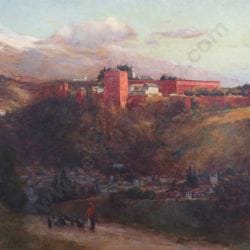
Palace of the Alhambra, Spain
By: Charles Nathaniel Worsley (1862-1923)
From the collection of Sir Heaton Rhodes
Oil on canvas - 118cm x 162cm
Valued $12,000 - $18,000
Offers invited over $9,000
Contact: Henry Newrick – (+64 ) 27 471 2242
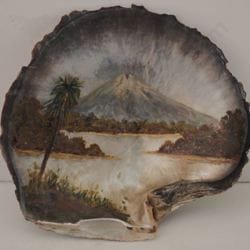
Mount Egmont with Lake
By: John Philemon Backhouse (1845-1908)
Oil on Sea Shell - 13cm x 14cm
Valued $2,000-$3,000
Offers invited over $1,500
Contact: Henry Newrick – (+64 ) 27 471 2242

|
|