
Founded by Max Farndale 1947 - 2018
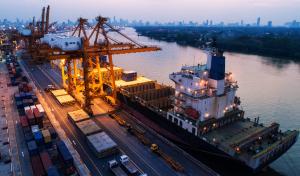
Did you know that it takes over twelve hours to fly from China to the United States? With such a large distance between them, it is not surprising that the regions differ in many ways, from culture to industry. Here, Jonathan Wilkins, marketing director at obsolete industrial parts supplier, EU Automation explains the main differences between the manufacturing markets in the United States and the Asia Pacific region. The fourth industrial revolution, Industry 4.0, that brings the Internet of Things (IoT) to industry, first began in Germany. Manufacturers worldwide aim to compete with companies by investing in the technology introduced during this period. According to the Global Competitiveness Index, manufacturing is an important industry in both the United States and Asia. America has been a manufacturing power for the majority of its history and greatly contributes to the countries’ economy. The US has also been an innovator in the sector, most notably for inspiring the second industrial revolution with Henry Ford’s ground-breaking assembly line. However, Asia is widely regarded as the manufacturing hub of the world. The largest country in the region, China, has led the manufacturing sector in the last few years and smaller Asian countries are climbing the ranks. These two regions are competing for the top position as the global leader in manufacturing, and the US is expected to overtake China to take the top spot by the end of the decade. So, what does the manufacturing sector look like in each region? Industry 4.0Both countries have embraced the changes introduced by the fourth industrial revolution. Governments in both Asia and North America have introduced policies and incentives to integrate more technology into factories. With automated systems, both manufacturing hubs can increase productivity, offering more customisable products at a lower price and reduce both waste and risk of downtime. Asian manufacturers in leading countries, such as China, were quick to embrace new technology and emerge as innovators in manufacturing. Asia has both invested and produced a high volume of robots to remain competitive. Asia installed around 689,349 industrial robotics units in 2013 and this is expected to increase to around 1.1 million by the end of 2017. Asia is known for its cutting-edge technology, investing in robots and artificial intelligence (AI) to revolutionise industry and everyday life. Singapore is leading this innovation, introducing technology to city infrastructure to become a smart nation. In the US, automotive manufacturing is the main sector that benefits from automated assembly lines. Businesses can provide high quality vehicles that are assembled cost-effectively and efficiently. HubsAsia Pacific and North America are both large geographic areas, so it is difficult to pinpoint one specific hub. Different areas of both regions develop at different rates and contribute to the respective economies in different ways. Many Western countries outsource manufacturing labour, relying on Asia to provide the majority of goods, as labour and materials are less expensive. While China is best known for its large factories producing the majority of goods, other countries in Asia Pacific contribute to the manufacturing economy of the region. In India, for example, over 40 per cent of factory work is completed by robots. This is expected to rise to 70 per cent by 2020. India also introduced the “Make in India” initiative in 2014, investing in technology to become a leader of the Industrial IoT revolution. The FutureGovernments across Asia and the US hope to encourage economic growth by investing in automation and manufacturing. In 2011, President Obama introduced the Advanced Manufacturing Partnership (AMP) to bring government, universities and industries together to invest in emerging technology and enhance the US manufacturing sector. This partnership recommends enabling innovation, securing the talent pipeline and improving the business climate to become leaders in advanced manufacturing. Some governments in Asia are also investing in automation. Made in China 2025 encourages the improvement of production in the country, to move to higher quality manufacturing. Smaller countries, such as India, Korea and Japan, are also hoping to innovate their own respective manufacturing sectors through automating the supply chain. Even though Asia Pacific and the US are separated by the Pacific Ocean, they both rely on manufacturing to support their economies. While they may embrace automation at different rates and with different technologies, it is clear that both areas will continue to be leaders in the sector.
| An EU Automation release || September 29, 2017 |||
As the rebuild takes effect, Christchurch has a golden opportunity to become New Zealand’s number one city of choice, says outgoing Canterbury Employers’ Chamber of Commerce chief executive Peter Townsend. Townsend says Christchurch is back and running after 11,000 aftershocks, 53 of them over five on the Richter scale. Currently $83 million is being spent in rebuilding the city every week, and by the end of this calendar year 75 per cent of the housing stock will have been repaired and rebuilt. A total of 70 percent of the commercial building repairs and rebuilds will also have been completed, he says. The cost of the Structural side of the rebuild so far is $33 billion. But there is still a massive amount to do. The total cost of the whole rebuild is still estimated at somewhere between $40 and $50 billion. EQC insurance proceeds have accounted for around $11 billion dollars of insurance monies injected into the rebuild with other private insurance contributing another $20 billion “There is nowhere in the world where around $30 billion dollars of insurance proceeds have been applied to the rebuild of a city of 400,000 people”. “The Government have injected around $8.5 billion into land, infrastructure and amenities”. Townsend makes other factual and compelling points about Christchurch and Canterbury, as it becomes a city of choice. • A total of 1100 commercial buildings in the city were lost in the earthquakes but they might be replaced by just 400 buildings. • By the end of 2020 Christchurch is going to have as much hotel accommodation as it had before the earthquakes. • Christchurch will be the safest city in New Zealand because all the shonky stuff has gone. • The city will be the most energy efficient city in New Zealand because it has rebuilt to a new code of double glazed windows, better insulation, heat pumps under the floors to heat the concrete pads and it all results in much cheaper electricity. • A total of 25,000 Christchurch houses were destroyed or had in excess of 100,000 of damage in the earthquakes. • There is no other city better equipped in primary, secondary and tertiary education, by a country mile. • Canterbury is regarded as having one of the top six health systems in the world. • Christchurch is going to be the most accessible city in the country as its traffic infrastructure is taking off with the southern motorway, the northern arterial route and the west diversion. • A taxi driver told Townsend that many of his overseas passengers says the drive from the airport into the city is the most beautiful airport to city drive in the world • Christchurch is the only city in the world with under a million people that has a daily Airbus 380 service • The city is a target for medical specialists and doctors wanting to live and work in Christchurch. Why – Brexit, Trump, lone-wolf terrorism and Christchurch is seen to be a safe bolt-hole for people to live and bring up their kids; it’s really a compelling proposition. • Canterbury is not all about dairy. Canterbury grows 68 percent of the world’s radish seeds and 34 percent of the world’s carrot seeds • Finally, the rebuild of the ChristChurch Cathedral over the next seven to 10 years must be a tourist attraction. Townsend says, why not, instead of fencing it off and wrapped in white plastic, why not put glass panelling around the outside of it? Why not put a couple of grandstands in the Square so people can look into the rebuild? And why not make the rebuild of the ChristChurch Cathedral a positive experience for tourists.
| A MakeLemonade release || September 29, |||

Artificial Intelligence has been making waves in many industries and is increasingly affecting life as we know it.
Now the New Zealand wine sector is getting in on the act, with Lincoln Agritech Ltd developing a computerised system to make early-season predictions on the grape yield a vineyard is likely to harvest.
"Grape growers and wineries spend a lot of money trying to predict their grape yield each year," says Lincoln Agritech Optics and Image Processing Team Leader Jaco Fourie.
"This currently involves hiring a large number of workers to manually sample grape bunches."
Lincoln Agritech is working on creating a more convenient system that uses electronic sensors to accurately count grapes.
"The sensors will capture and analyse grape bunches within individual rows, and assess the number, sizes and distribution of grape bunches," says Dr Fourie.
"We’ll then feed this dat into computer algorithms, which have been designed by the University of Canterbury, to predict grape yield at harvest time."
New data will be added to the system each year, leading to continuous improvements in the model’s accuracy, with the system’s predictive power improving over time as more data is gathered under different conditions.
Dr Fourie says profitable wine production depends on early knowledge of the grape yield that is likely to be harvested each season.
"Estimating the yield as soon as possible allows marketers to know how much wine will end up being produced."
The main focus of grape varieties for the study is Sauvignon Blanc, after which the team will identify how much technology development will be needed for Pinot Noir.
The project is funded by the Ministry of Business, Innovation and Employment (MBIE) and NZ Winegrowers. Collaborating partners include Plant and Food Research, Lincoln University, the University of Canterbury, CSIRO (Adelaide), NZ Winegrowers and local winegrowers in the Marlborough region.
Lincoln Agritech Ltd is a research and development company owned by Lincoln University.
| A Lincoln Agritech release || September 28, 2017 |||

Crownthorpe winery Monowai Estate has won three gold medals and been named Hawke's Bay Winery of the Year for the second time at the New York International Wine Competition.
After picking up one gold medal and two bronzes at last year's competition, Monowai Estate owner and winemaker Emma Lowe said this year's results reflected a change in attitudes towards New Zealand wines in America.
Read more: Hawke's Bay vintages impress judges at Bayleys Wine Awards
"I've just been over there and that's certainly a trend that's taken off over there so where New Zealand wines appear to be more and more popular."
Monowai Estate were awarded gold medals for their 2015 Sauvignon Blanc, 2015 Pinot Gris and 2013 Pinot Noir at the awards, which were held in the heart of New York City.
The competition is marketed as the only trade awards with a blind judging panel and this year showcased 1300 wine submissions from over 23 countries.
Continue to read the full release on Hawkes Bay Today || September 29, 2017 |||
New Zealand’s economy and financial system remain on a sound footing despite continuing challenges in the global environment, according to the Reserve Bank’s Annual Report 2016-17 released today. The 2016-17 financial year saw a pickup in economic activity in most major economies, although inflation and wage pressures remained subdued Supported by improving domestic economic conditions, the New Zealand banking system remains sound and well capitalised. “As a small, open economy, developments beyond our shores have a large influence on New Zealand’s economic outcomes,” former Governor Graeme Wheeler says in the Report. Mr Wheeler finished his term as Governor on 26 September. Acting Governor Grant Spencer said that in the last financial year the Bank undertook comprehensive research into the drivers of low inflation and in particular the formation of inflation expectations. “We have also focused a lot of policy work on strengthening the financial system against potential shocks. "Rapid house price inflation in recent years led to increased financial stability risks. In response, the Bank introduced loan-to-value restrictions on house lending, including tighter LVR restrictions on property investors from October 2016. These measures have improved the resilience of the banking system. "We have revised the outsourcing policy for larger banks, initiated improvements to banks’ quarterly disclosures, and undertaken stress testing.” During the year, the IMF undertook a comprehensive review of New Zealand’s financial sector regulatory regime through its Financial Sector Assessment Program (FSAP). “The IMF recognised a number of positive features of New Zealand’s institutional framework and the Bank’s policy approach, and we are assessing their recommendations aimed at strengthening the regulatory framework,” Mr Spencer said. In other highlights the Board conducted its annual overall assessment of the performance of the Bank, and this is included in the Bank’s Annual Report. The Board also noted that the Bank retained high audit ratings and achieved its operational objectives. A dividend of $145 million has been paid to the Government. The Annual Report is available as a downloadable PDF and the Bank has produced two videos for a general audience designed to communicate the Bank’s role in maintaining a sound and efficient financial system through the use of macro prudential policy. More information• The Reserve Bank’s Annual Report 2016-17 (pdf)• Video 1 - Global forces• Video 2 – Keeping banks healthy
| A RBNZ release || September 29, 2017 |||


A tumultuous pair-bonding
The general public remains baffled about the constant and unremitting castigating of the mainstream media by New Zealand First’s Winston Peters MP.
They assume it is a lovers’ tiff.
In a way it is.
The two parties involved possess the essential characteristics of a tumultuous pair bonding.
They cannot live tranquilly together.
Yet they cannot live apart.
Mr Peters understands also that he is both ward and prey.
He helps out by generating news. From time to time he will be fodder himself.
He understands something else too.
It is this.
Journalists would rather be scolded than ignored.
In the current post electoral outcome fractionalisation standoff this press drama which peaks every three years has assumed a stormier than usual proportion and therefore now deserves to be analysed.
Our starting point is the belief held by Mr Peters to the effect that simply because the mainstream media insists that it is impartial, so must it be impartial in its reporting.
Mr Peters contrasts this proclaimed New Zealand impartiality to that which exists in other parts of the Westminster sphere.
In which for example newspapers such as Britain’s Daily Mail, Guardian, Daily Telegraph, Daily Mirror display a known diversity of political preferences.
This means that readers price in this bias when they study the respective newspapers.
What are Mr Peters’ specific gripes? Here are some of them:-
*Whenever Mr Peters advances a policy plank, the media simply goes to other and opposing political side to get comments about it.
*Commentators on reviewing any policy from Mr Peters simply conclude that he is a “populist” which is code for grabbing votes wherever you can.
*Any incursion by Mr Peters and/or his party into the issue of ethnicity in Parliamentary representation is greeted with veiled or direct comments centred on the media trigger-word racism.
*That Mr Peters is primarily a circus entertainer who shoots from the hip, and is an ageing one now to boot.
There are though some solid reasons behind Mr Peters’ reluctance to commit himself to background data on his planks.
For example, had he gone into the historic connection between the Maori Seats and the Ratana sect he could well have found himself accused of being anti-religion, among other things.
His sparseness of supporting background data has much to do with side-stepping angle-journalism, the dominant applied news- shaping technique here.
It devolves on a public figure unwittingly having pinned on them something which, taken out of context, makes them look silly or dastardly, or both.
This process can be lethal to the utterer/author if it is run through the politically correct filter.
This screening process does not so much apply to the visible news people, the ones on the pavement, or in the studio.
But it is a factor for those up the line who must consider things such as licence and public advertising allocations.
| From the MSCNewsWire reporters' desk || Friday 29 september 2017 |||

GreenSky London arrived on the scene a few years ago, an ambitious project led by British Airways to produce renewable aviation jet fuel from East London’s garbage.
Now, a group of four companies established a new partnership to prepare the business case for a commercial scale waste-to-renewable-jet-fuel plant in the UK. Subject to the successful completion of all development stages, the aim is to achieve a final investment decision in 2019.
British Airways spokesperson Cathy West said: “The government needs to support innovative aviation biofuels projects such as this if they are to progress. Aviation fuels are not eligible for incentives that road transport fuels receive, making it difficult to build a business case to invest in UK aviation fuels projects. This affects investor confidence.”
This week, the Department for Transport published changes to the Renewable Transport Fuels Obligation (RTFO), and for the first time, sustainable jet fuel is to be included in its incentive scheme. These changes to the RTFO are designed to promote sustainable aviation. Once implemented, they are expected to provide long-term policy support for this market.
Ultimately, BA speculated that the UK policy shift could stimulate as many as a dozen advanced biofuels plants in the UK by 2030.
The technology involved was a gasification system by Solena that would convert municipal solid waste to syngas, and it planned to convert that syngas to liquid transport fuels using Velocys’ micro-channel Fischer-Tropsh technology.
The plant would take hundreds of thousands of tonnes per year of post-recycled waste, destined for landfill or incineration, and convert it into clean-burning, sustainable fuels. The jet fuel produced is expected to deliver over 60% greenhouse gas reduction and 90% reduction in particulate matter emissions compared with conventional jet fuel, thereby contributing to both carbon emissions reductions and local air quality improvements around major airports.
The UK still sends more than 15 million tonnes of waste per year to landfill sites, which not only damages the natural environment but also releases further greenhouse gases affecting climate change.
The planned plant will produce enough fuel to power all British Airways’ 787 Dreamliner operated flights from London to San Jose, California and New Orleans, Louisiana for a whole year. It would be the first plant of this scale.
The jet fuel produced at the plant will deliver more than 60 per cent greenhouse gas reduction, compared with conventional fossil fuel, delivering 60,000 tonnes of CO2 savings every year. This will contribute to both global carbon emissions reductions and local air quality improvements around major airports.
Capacity is not entirely clear, since the business plan is under development, but there are three keys. First, a 60 per cent GHG savings, and 60,000 tonnes of CO2 savings budget. And, conventional jet fuel produces roughly 19 pounds of CO2 per gallon burned.
Back of the envelope math suggests a project of around 11.5 million gallons (42m litres) per year.
| A Biofuel digest release || September 28, 2017 |||

A³ by Airbus is serious about getting Transpose in the air. Technical reviews are ongoing with Airbus cabin and structural engineering, and engagement continues with the likes of the FAA and EASA.
The idea of reconfigurable aircraft cabins has been around for a while and although some in the air transport industry still refuse to entertain the notion that they could become reality in the near to medium term, others are making big strides forward.
Jason Chua, Project Executive at A³ by Airbus Group, is among the latter and at FTE Global 2017 in Las Vegas earlier this month he revealed all about the “Transpose” project, which is based around the development of a modular aircraft interior.
Essentially, Transpose allows airlines to offer a broad range of experiences on board a single aircraft – for instance, cafés, spas, gyms and children’s play areas can be included in the in-flight offer. Furthermore, at the end of a flight, each of these “modules” can be easily swapped in and out, offering airlines flexibility like never before.
| A Future Travel Experience release || September 28, 2017 |||

Palace of the Alhambra, Spain
By: Charles Nathaniel Worsley (1862-1923)
From the collection of Sir Heaton Rhodes
Oil on canvas - 118cm x 162cm
Valued $12,000 - $18,000
Offers invited over $9,000
Contact: Henry Newrick – (+64 ) 27 471 2242

Mount Egmont with Lake
By: John Philemon Backhouse (1845-1908)
Oil on Sea Shell - 13cm x 14cm
Valued $2,000-$3,000
Offers invited over $1,500
Contact: Henry Newrick – (+64 ) 27 471 2242

|
|