
Founded by Max Farndale 1947 - 2018

An award-winning online marketing campaign has helped New Zealand Trade and Enterprise (NZTE) build a database of over 65,000 consumers in China.
Developed for the WeChat platform, the campaign has been built around NZTE’s annual Taste NZ programme, which aims to promote New Zealand food and beverage products in a number of Asian markets.
NZTE engaged United Media Solutions (UMS), a digital marketing company based in New Zealand and China, to create and run the WeChat campaign for Taste NZ in the People's Republic.
“The aim of the platform was to create a group of people with the potential and interest to keep purchasing New Zealand products,” said Maxwell Shi, NZTE’s regional marketing and communications manager for Greater China.
The promotion was structured around a set period, in which consumers received a Taste NZ voucher every time they purchased a New Zealand product online.
That voucher included a QR code that consumers could scan using their WeChat account. Every consumer who scanned the QR code received points that could then be used while shopping for other New Zealand products. Regular competitions and prize draws were also held.
The programme has built a database of 70,000 members, which NZTE and UMS have drawn on to analyse consumer insights and promote other New Zealand brands and products.
“This database is our asset, and our aim is to increase this and further promote New Zealand companies and products to that database of consumers. We’ll do this by leveraging the database with incentives to buy New Zealand products,” said Shi.
The NZTE team has plans to grow the programme to reach 100,000 active consumers over the next two years.
The campaign recently won the Best International Social Media Campaign at the 2017 New Zealand Social Media Awards.
Aiming to strengthen its position in the international arena, NZTE travelled to Hong Kong last week for Asia Fruit Logistica. The government agency helped coordinate the country’s presence at the show – alongside Horticulture New Zealand, New Zealand Apples and Pears and NZ Plant and Food Research – with 28 New Zealand horticulture companies exhibiting.
“Most of the New Zealand companies represented here don’t have an in-market presence in Asia,” Shi told Asiafruit. “Our role is to help them connect with key markets so they can facilitate exports and grow their business.”
| An Asiafruit release || September, 2017 |||
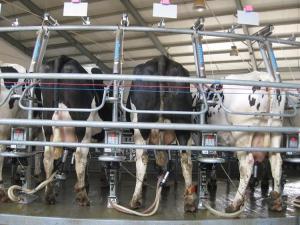
Leinster Leader - The latest in sensor technology systems, seed drills, rotary milking systems and even a dual electric drive utility bike will be on show as New Zealand agritech returns to Ireland following a successful presence at the National Ploughing Championships in 2016.
The strong agricultural partnership between New Zealand and Ireland will continue to prosper as 13 leading New Zealand agricultural companies descend on Screggan for the 2017 National Ploughing Championships.
Companies such as world-leading in-shed farm automation technology provider LIC Automation (Saber) and specialist seed drill manufacturers, Duncan Ag and Aitchison will return for the second year running. As well as displaying their market leading technologies, they will introduce exciting new products to the Irish market for the first time.
The New Zealand pavilion will also feature some highly anticipated new additions, such as UBCO Bikes, manufacturers of dual electric drive, all terrain bikes and Waikato Milking Systems, leaders in advanced dairy technology.
Under the theme of smarter farming, the New Zealand pavilion aims to grow the longstanding and successful partnership of two leading agricultural nations. Farmers visiting the New Zealand pavilion will get an exclusive insight into the efficiencies and innovations of industry-leading products and how New Zealand and Ireland are working together to continuously improve and develop on-farm systems – working smarter, not harder.
Keeping in theme with smart technology, Irish farmers will be able to ‘virtually’ explore a New Zealand farm through a unique virtual reality (VR) experience.
Daniel Taylor, New Zealand Trade Commissioner to the United Kingdom and Ireland says:, ‘All of the companies representing some of the best of New Zealand agriculture are delighted to be back in Screggan this year following an excellent Ploughing Championships last year. We’re looking forward to continuing to build on our relationships developed last year and further growing our partnership with Irish farmers.”
“I am convinced that the shared experiences and similarities between farming in New Zealand and Ireland, coupled with the innovation our companies display, we will continue to forge a strong and mutually beneficial relationship for Irish and New Zealand agriculture,” says Mr Taylor.
Companies exhibiting at the New Zealand pavilion include:
* LIC Automation, a world leader in integrated and innovative ‘Saber’ in-shed farm automation and sensor technology systems with a proud history dating back to 1909; * UBCO Bikes, a newcomer to Screggan for 2017 UBCO manufacture dual electric drive, all terrain bikes for use around the yard and further afield. UBCO bikes come complete with power outlets and USB ports, as well as accessory lugs for equipment; * Duncan Ag, market leaders in the manufacturing of robust and user-friendly machinery for seed drilling and forage feeding; *Waikato Milking Systems, the third largest manufacturer globally of rotary milking systems provide advanced dairy technology options to simplify milking routines to ensure more efficient milking, better mastitis control and higher productivity; and, * Aitchison, a company with a proud 40-year history of machinery manufacturing and specialising in seed drills and spreaders whose size, flexibility and rugged construction are well suited to the Irish market.
The New Zealand Pavilion will be located at stand 268, Row 11, Block 3 at the National Ploughing Championships from 19-21 September 2017, in Screggan, Tullamore, Co. Offaly.
| A LeinsterLeader release ||| September 12, 2017 |||
Development of technology to help build the world’s first hybrid-electric passenger jet plane is among Victoria University of Wellington projects to receive nearly $29 million in the Ministry of Business, Innovation and Employment's 2017 Endeavour Fund.
Five Victoria projects have been successful in this year’s science investment round, announced this morning by Science and Innovation Minister Hon Paul Goldsmith.
Dr Rod Badcock from Victoria’s Robinson Research Institute is leading the jet plane project, which was awarded $6.3 million over five years.
The Institute is an international leader in the field of superconductivity—a key mechanism needed to develop cleaner aviation technologies, says Dr Badcock.
“Electric planes pose a big challenge as they will require very high-power propulsion systems which are subject to stringent weight constraints. Existing electrical machines are simply too heavy. The only feasible approach is high-torque, high-speed machines that employ high temperature superconductors.
“We’re planning to develop a motor for a Boeing 737-sized passenger plane. This will use an electric drive-train to connect high-speed electric motors with a fuel-powered generator running at maximum efficiency. A superconducting motor will deliver the all-important power-to-weight ratio.
Dr Badcock and his team will collaborate with experts in the United States, United Kingdom and Japan. “Flying is the most climate-intensive form of transport,” he says. “It’s important that a clean alternative is found—and fast. It would have a huge economic impact not only for New Zealand but around the world.”
Professor Colin Wilson from Victoria’s School of Geography, Environment and Earth Sciences is leading an $8.2 million five-year multi-institution consortium programme that aims to reduce the uncertainty around future supervolcano eruptions.
“Unlike normal-sized volcano systems, the behaviour, impacts and probabilities of supervolcano eruptions remain poorly understood around the world,” says Professor Wilson.
“Global hype assumes any activity at a supervolcano will lead to catastrophe—however, history and the geological record shows that their impacts can be managed. Our project will develop a new framework for estimating the size, timing and impacts of future unrest or eruptive events, and provide resources to improve education, resilience and decision-making for our communities.”
“Our project will explore the use of complex sugars called heparan sulfates in producing more effective and rapid tissue regeneration. Heparan sulfate has been shown to be an essential ‘match-maker’ in coordinating growth factors that mediate the repair processes. With our partners at the University of Otago and in Singapore, we will build on our current research activities to develop materials that assist in tissue repair processes.”
Professor Tim Naish from Victoria’s Antarctic Research Centre is leading a project that will receive $7.1 million over five years to develop a national set of sea-level rise estimates.
Professor Naish says there is currently a number of knowledge gaps that are hampering our ability to anticipate and manage future sea-level rise in New Zealand—including a lack of understanding of the influence of vertical land movements and changes in sea-surface height.
“A team of leading experts will aim to address these knowledge gaps, and to generate a set of probabilistic sea-level rise scenarios. This will improve our assessment of the physical impacts and risks of increased coastal flooding and rising groundwater levels.”
In addition to the four successfully funded research programmes, Associate Professor Taehyun Rhee from Victoria’s Faculty of Engineering has been awarded Smart Ideas funding worth $1 million.
This three-year project will examine how to capture real-world lighting and reflections in augmented and mixed reality applications.
“Generating realistic representations of the world is essential for the visual effects industry to seamlessly blend virtual objects with real ones—but doing this accurately is very challenging,” says Associate Professor Rhee.
“We propose a novel method of automatically producing real-world lighting using what is called image-space analysis. Our project will ensure far more realistic visual output in immersive augmented and mixed reality and will vastly improve the visual quality for interactive applications including computer games, virtual simulation and training.”
ictoria’s performance in this year’s Endeavour Fund represents 12 percent of the total $248 million awarded to 68 projects from 17 universities, research institutes and other organisations.
“This is a stunning result for Victoria and testament to the quality of our science and technology at New Zealand’s number one-ranked university for research excellence,” says Professor Mike Wilson, Pro-Vice-Chancellor for the Faculty of Science.
Professor Kate McGrath, Vice-Provost (Research), says the result reflects the exceptional leadership of Victoria's researchers in the scholarly community and beyond.
“Our researchers are utilising an expanding base of fundamental science and engineering to create valuable solutions to global problems and to boost high-value manufacturing in New Zealand.”
| A VictoriaUnuversity release || September 13, 2017 |||
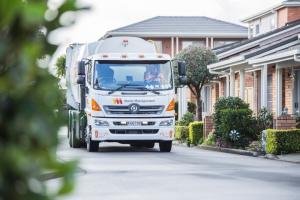
Waste Management NZ is currently trialling their first electric truck for wheelie bin waste collections, which will start work on New Zealand streets from October this year.
Christchurch will be the first city in the Southern Hemisphere to put a 100% electric residential waste collection truck into service.
More electric trucks will arrive into Waste Management’s fleet in other cities around New Zealand towards the end of 2017.
Waste Management announced its move towards a fleet of electric vehicles in September last year as part of its Sustainability Commitment.
Waste Management NZ’s first electric truck.
The company has introduced more than 20 electric cars within its light fleet. It also launched an electric box body truck, which collects food waste from Countdown supermarkets across Auckland, earlier this year. This new truck will be the first electric truck which is designed and dedicated to collecting residential wheelie bins from the kerbside.
Tom Nickels, Waste Management Managing Director, says the new truck is further evidence of the company’s continued shift to EVs.
“With a large fleet of trucks and cars on the road we believe we can help safeguard our environment for future generations through the adoption of electric vehicle technology. I am delighted we’re bringing this strategy to life by rolling out electric trucks across New Zealand.”
Other logistics operators, such as Infratil NZ, have been trialling electric vehicle technologies. Their business NZ bus is testing the Chinese made BYD fully electric vehicle, in a bid to accelerate the transition to electric-powered public transport in New Zealand.
| A VINZ release || September 13, 2017 |||

Sparkle Coin has introduced its eponymous cryptocurrency, the first of its kind backed by diamonds.
The launch is the initial step toward the company’s goal of creating more efficient global economic growth to promote societal advancement by developing a platform that brings cryptocurrencies into the mainstream business and consumer markets.
Sparkle Coin is a hybrid cryptocurrency possessing the best qualities of both POW (Proof of work) and POS (Proof of stake), providing rapid adoption through mining of Sparkle Coin as well as long-term sustainability through minting.
Founded by business and technology veterans, Sparkle Coin is designed to be a part of a new economic ecosphere, built on a foundation of proven business fundamentals essential for real-world transactions.
“Cryptocurrencies were always envisioned to revolutionise global financial markets and the way consumers and businesses transact,” says Victor Wong, Sparkle Coin founder and CEO.
“Sparkle Coin bridges the gap between cryptocurrencies and traditional business by developing an economic ecosphere comprised of an asset-backed cryptocurrency, transacted through a powerful currency exchange, with an outward facing cryptocurrency payment gateway allowing virtually all merchants to accept cryptocurrency though an online shopping mall or directly on their own websites.”
After the initial coin release (ICO), Sparkle Coins can be transacted on VCoin Exchange, an advanced currency exchange that allows for trading with other cryptocurrencies and fiat currencies.
VCoin Exchange also provides software and payment gateways for virtually any merchant to accept Sparkle Coin and other cryptocurrencies as payment for products and services.
Online shoppers can use their Sparkle Coins as well as other cryptocurrencies to purchase products directly from their favourite stores including Amazon, Walmart, Target, Toys R Us, Bed Bath & Beyond, Staples and more via VCoinMall.com, a front-end order management and payment processing service.
Together, Sparkle Coin, VCoin Exchange and VCoinMall.com make up a unique economic ecosphere that connects the latest blockchain technologies with existing business platforms and networks to drive adoption of cryptocurrencies for real business transactions.
“Cryptocurrencies have struggled in the past to be widely adopted because the technologies were still being developed and the necessary infrastructure was not in place yet,” says David Chen, Sparkle Coin financial strategy vice president.
“Sparkle Coin represents the second generation of cryptocurrencies that will push through the barriers because it’s fully funded, asset-backed and easy to integrate with existing payment infrastructure.”
Sparkle Coin’s hybrid POW and POS algorithm is the latest technology for cryptocurrency, providing a rapid ramp up of miners and subsequently processing power for the network to create extremely powerful encryption and security, and accelerated transaction processing.
Sparkle Coin is the only company in the blockchain and cryptocurrency world to incorporate a fund set aside for the operation of the company for 100 years.
In addition, the public will be able to mine for approximately 1,000 Sparkle Coins a day for the same 100-year period to further increase the size and stability of the network. This approach, along with minting, creates stability, longevity and managed growth.
At launch, each Sparkle Coin is backed by US$5 worth of Gemological Institute of America (GIA) certified diamonds, procured through established diamond wholesalers, which can be immediately redeemed the day after the Sparkle Coin ICO in increments of US$500.
By backing Sparkle Coin with diamonds, which have been shown to steadily increase in value over time more than other assets such as gold, early adopters have a safety net for their participation in this new economic ecosphere.
When the price of Sparkle Coin reaches US$25 per coin, there will no longer be any need to back the coins with diamonds as the worth generated by the economy built around Sparkle Coin will have proven itself, thereby providing Sparkle Coin with its own intrinsic value five times greater than the initial price.
The Sparkle Coin ICO will occur at TechCrunch’s Disrupt in San Francisco on September 20 at 1pm PDT.
| A BizEdge release || September 13, 2017 |||

International payments provider Veem has announced an integration with New Zealand cloud-based accounting software Xero.
The integration will enable Xero users and accounting professionals to automatically sync vendor bills from Xero into Veem to streamline international payments, save time and money, and limit human errors.
With the Veem integration, Xero users can seamlessly pay international bills through the Xero platform.
When a user enters a bill in Xero, the bill automatically can be paid through Veem’s global payment platform.
The Veem platform supports global payments in US Dollars as well as multiple currencies to over 60 countries.
Users are able to see exchange rates as well as the currency related to the payments.
Veem is built on multi-rail routing tech and powered by blockchain technology.
Additional automation ensures that Veem payment IDs are automatically added to Xero bank reconciliation reports.
The Veem platform is an essential tool for small and medium businesses paying international vendors.
“Connecting Veem with Xero simplifies international payments even further by eliminating double entries and simplifying reconciliation,” comments Mark A. Gilbert, MBS Accounting Technology & Advisory president and CEO.Veem Helping Automate Accounting
The Veem global payments platform now allows financial professionals to bypass the cumbersome bank-to-bank international wire transfer process and send global payments through a simple interface in a few clicks, instead of hours.
Through the Veem - Xero integration, Xero customers now have access to simple, more automated international wire transfers.
“We’re excited about the additional functionality the Veem integration brings to our customers,” says Sid Maestre, Xero developer evangelism head.
“Global platforms like Xero and Veem have a massive opportunity to eliminate the headaches small business owners face doing trade across borders, in turn helping their businesses thrive.”The Veem-Xero Impact on Global Trade
Both Veem and Xero serve small to medium-sized business, which in the US account for ninety-four percent of global trade by volume.
Both Veem and Xero have large global customer bases, who send and receive payments to and from customers and suppliers around the world regularly.
"Veem is the global bridge that brings businesses, their customers, and suppliers closer together. We’re here to support the network of small businesses that power the global economy," says Marwan Forzley, Veem CEO and founder.
Veem is a next generation platform for business-to-business payments.
Veem enables businesses to send and receive payments in local currency with a few simple steps using multi-rail technology across several global networks.
According to their website, Veem avoids intermediary bank networks, using blockchain technology to transport payments.
And because it only touches payments once, it only needs to charge once.
Fewer touches mean less fees and faster payments.
Founded by a team of industry veterans with over 100 years of combined experience in payments, payment processing and banking IT infrastructure management, Veem aims to change the financial payment system through innovation.
The company wants to change the legacy financial payment system through innovation and improve the costly and outdated payments industry by building a new user focused financial ecosystem that services businesses globally. | A Bizedge release || September 13, 2017 |||

Business and community leaders from across Alabama are traveling in Australia and New Zealand this week, seeking to boost exports and strengthen trade ties in the region.
The 17-member delegation kicked off a series of briefings with U.S. Commercial Service officials in Sydney, as well as appointments with area companies.
Later in the week, the group will travel to Auckland, New Zealand’s primary commercial hub for a similar slate of meetings.
“Alabama has strong, and growing, relationships with both Australia and New Zealand, and we want to build on those bonds,” said Greg Canfield, secretary of the Alabama Department of Commerce, who is leading the delegation.
“This trade mission is about helping our state companies find new markets for their goods and services, so they can create jobs and make new investments in their communities back home,” he said.
Alabama exports to Australia reached nearly $298 million in 2016, rising 11.6 percent from the previous year, according to Commerce Department data. Top exports included transportation equipment as well as paper, chemicals, machinery (except electrical), and computer and electrical products.
Motor vehicles were by far the largest export shipped to Australia in the transportation equipment category.
Meanwhile, state exports to New Zealand last year totaled $68.7 million, jumping 63.6 percent from 2015. Transportation equipment also led the way here, but in a change from previous years, aerospace products and parts, instead of motor vehicles, constituted the largest transportation equipment category.
Other top Alabama exports to New Zealand included chemicals, paper, plastics and rubber parts; and machinery (except electrical).
‘International footprint’
Hilda Lockhart, director of the Department of Commerce’s Office of International Trade, said Australia and Alabama have a strong relationship in both trade and investment. The free trade agreement with Australia allows Alabama companies to be competitive in this far-reaching market, she said.Members of a trade delegation visit Sydney, Australia, in search of more business for Alabama companies. (Made in Alabama)
In addition, New Zealand is a natural fit for Alabama exporters as some distributors cover both countries.
“As our companies say, it only takes one strong partner to do business here,” Lockhart said.
Alabama companies represented in the delegation include Atlas RFID Solutions, Warren Manufacturing and Regions Bank, all of Birmingham; Irrigation Components of Daphne; PowerSouth Energy Cooperative of Andalusia; MechOptix of Madison; Pinnacle Solutions Inc. of Huntsville; and Quality Valve Inc. of Mobile.
Also part of the group are representatives from the University of Alabama, the U.S. Department of Commerce and the Mobile Area Chamber of Commerce.
“This trade mission is comprised of multi-industry companies ranging from automotive, aerospace and high-tech equipment, which are among some of the best industry sectors for both Australia and New Zealand,” Lockhart said. “Both countries are very receptive to U.S.-made products because of quality and service.”
As on all trade missions, the Commerce Department has partnered with the U.S. Department of Commerce Foreign Commercial Service to set up prequalified appointments to identify potential buyers and distributors.
“The companies with us are working to grow their international footprint in new markets, and we feel very positive that they will be successful on this trip in doing so,” Lockhart said.
Strengthening business
Irrigation Components is changing its distribution model and looking for new distributors after many years of operating in Australia and New Zealand, said Ramsay Geha, vice president of international sales and a member of the trade mission delegation.
The company provides irrigation parts for gear boxes, center drives, sprinkler packages and alignment controls, and it is the world’s leader in center pivot spare parts sales. Irrigation Components operates in more than 40 countries, all major agricultural areas.
“Export sales are about 40 percent of our business,” Geha said. “Export was what established our company, and we are seeking to revitalize and strengthen this portion of our business.”
Atlas RFID Solutions sees tremendous opportunity for its business in Australia and New Zealand.
“Despite having worked on very large industrial construction projects in Australia, we have done so on behalf of U.S.-based contractors and have never worked directly with any Australian or New Zealand-based companies,” said Robert Fuqua, the company’s president and CEO. “We believe that having a more established presence in the region will open doors for more opportunities to provide value to local construction contractors.”
Kevin Bube, vice president of client operations, and Ben Whipple, program manager, are representing the company in the trade mission delegation.
“We are always looking for innovative industrial construction companies to whom we can deliver value through our proprietary materials readiness solution, Jovix,” Fuqua continued. “Companies who are prone to technology adoption are prime for our solution, which focuses on increasing craft productivity and schedule adherence through material readiness.”
Presently, Jovix is deployed in four countries, and exports account for more than 65 percent of Atlas RFID’s annual revenue.
“We have previously participated in trade missions to China, Hong Kong, Norway and Sweden. These trips have provided great value by aiding us in learning about the local business ecosystems and allowing us to create lasting relationships within those markets,” Fuqua said.Austal USA launches the future USS Omaha from its shipbuilding facility in Mobile. The Australia-based company is one of south Alabama’s largest employers. (Austal USA)
Trading partners
In addition to business meetings, delegation members also will attend networking receptions hosted by Consul General Valerie Crites Fowler of the U.S. Consulate General in Sydney and Acting Consul General Craig Halbmaier of the U.S. Consulate General in Auckland.
Among the 50 states last year, Alabama was Australia’s No. 2 trading partner in exports of pulp, paper and paperboard mill products and its No. 4 trading partner in motor vehicle exports.
Meanwhile, the state imported $106.5 million of goods from Australia in 2016.
Other key ties between the state and the country include Australian shipbuilder Austal USA, which has a major manufacturing operation in Mobile.
For New Zealand, Alabama ranked as the No. 1 trading partner in exports of pulp, paper and paperboard mill products, and the state was No. 2 for exports of resin, synthetic rubber, artificial and synthetic fibers, and filament.
Alabama’s 2016 imports from New Zealand totaled $10.1 million.
This story originally appeared on the Alabama Department of Commerce’s Made in Alabama website.
| AnAlabamaNews release || September 12, 2017 |||
Manufacturers are important employers in New Zealand creating many opportunities for skilled and unskilled labour.
As released in ManufacturingNZ’s election manifesto, the sector employs 250,000 people and accounts for 14% of all jobs.
In the current skills shortage environment, the sector needs the incoming government to have a cohesive strategy for addressing growing the workforce of today and in the future.
In the EMA Election Manifesto, it outlined several recommendations to close the skills and training gaps. These included:
- Applying more funding to fill the skills gaps in the trade sector and incorporate an employer-based approach - Policies need to reflect lifelong career development, including a continuation of funding and support for workplace literacy programmes; and an co-ordinated approach to managing an ageing workforce - Ensuring the immigration process is less complicated, having a greater emphasis on the points system to meet the required skills required by employers. Automatic extension of temporary work visas for sectors placed on the skills shortages list
"Our manufacturing sector is an integral part of New Zealand’s economy. It produces around 50% of our exports, makes a significant contribution to the regions, invests in plant and machinery along with investing about $450 million in research and development," says Kim Campbell, CEO, EMA.
"While automation and developments in technology have enhanced the manufacturing sector, there is a worsening labour shortage - 65% of employers say there is, or soon will be, a skills shortage in their sector. The next government needs to address this."
Another key challenge for manufacturers is transport and infrastructure. In the EMA Election Manifesto, it outlined several areas that business wants addressed in this regard. These range from expediting critical national infrastructure, easing congestion particularly in Auckland through to reforming the resource management system.
"We need to keep ahead of the demand curve to ensure our manufacturers remain competitive. This impacts their entire supply chain, from sourcing of materials through to getting goods to market - and everything in between," says Mr Campbell.
| AnEMA release || September, 2017 |||
What business needs from the incoming government is continuity around the current employment and labour relations framework, says EMA.
“Many members are raising their concerns about what will happen to workplace relations if there is a change as outlined in Labour’s Fair Pay Agreements policy,” says Kim Campbell, CEO, EMA.
“I urge all employers to take a good look at this policy. Within it are plans for significant change to the enterprise-level bargaining framework that has been in place for many years.”
Under the Employment Relations Act (2000) there is a clear framework for how employers and employees negotiate in good faith.
“This approach gives companies the flexibility to negotiate agreements with their workers to best meet the needs of the operation. Don’t forget, with this comes responsibilities that the employer must abide by too. If they don’t, they can find themselves facing hefty penalties along with irreparable reputational damage.
“We want a system which enables New Zealand business to remain competitive, now and into the future,” says Mr Campbell.
The EMA Election Manifesto highlighted the key areas its members wanted addressed by an incoming government. Some of the points highlighted were the need to address the Holidays Act and to ensure the principles and framework developed by the Pay Equity Working group were enshrined in the new legislation.
It also raised the need for a cohesive strategy on addressing the dynamic of the country’s ageing workforce along with closing the gap on skills and training, to help employers recruit and retain their workforce.
| An EMA release || September12, 2017 |||

FreshPlaza | The link between weather and the price of vegetables has become all too apparent for shoppers in recent months. Grocery prices across New Zealand skyrocketed after back-to-back storms wiped out entire crops.
In our household, we swapped kumara for potatoes, after prices nudged $9/kg. Kumara was just $3.12/kg in July 2016, according to Statistics New Zealand.
It's been a terrible growing season for vegetable producers. This year's kumara crop was just one of the casualties. Planting was delayed by unfavourable weather conditions. The seedlings then struggled through a dry summer.
The country's commercial crop is grown in Dargaville and Ruawai in Northland. Record-breaking rain drenched the region just before the harvest was due to start. Mechanical harvesters couldn't get onto the waterlogged paddocks.
I've seen photos of workers trudging through mud, trying to salvage what they could of the crop.
Further south, the fertile dark brown soils of Pukekohe are used to grow everything from onions, to lettuces, squash and broccoli. Vegetables are a big earner for the region.
But Pukekohe wasn't spared when ex Tropical Cyclone Debbie pounded parts of the country. Figures from NIWA show on April 4, Pukekohe received 84mm of rain. It was one of numerous areas to experience their wettest April day on record.
The deluge wiped out entire crops of green vegetablesThe storms triggered supply shortages. It was reported that some supermarkets in the North Island were left with empty shelves. Lettuce hit $10.56 a kilogram in May, up from $4.23 a year earlier, according to Statistics New Zealand.
Vegetable growers did an excellent job explaining the flow-on effects of miserable weather. Hopefully it meant shoppers pushing trolleys around the fruit and vegetable section of supermarkets at least knew why prices had spiked.
That's why I was surprised to see an Auckland restaurant owner in the media complaining about the hike in vegetable prices. Tobias Roebuck-Ward labelled the high prices "ridiculous" and "absurd". His Ponsonby restaurant had reportedly spent 42 per cent of its weekly food sales in early June on produce. Typically, that figure was between 30 and 35 per cent.
Roebuck-Ward said the rise in prices was difficult for his trendy eatery because it had a no freezer philosophy and bought fresh produce daily. We've had breakfast at his restaurant. It was amazing. But his comments left me feeling like he was out of touch with the daily challenges faced by growers.
I'd hate to think what we would have done if we'd had to rely solely on our vege patch last summer. The tomato crop was a failure. The capsicums grew to the size of a golf ball, then stalled. The perpetual spinach, snow peas and butter beans were the only things that thrived. In fact, the snow pea crop was probably a record one.
Other Taranaki green thumbs were in a similar predicament. Slavko Nikolovski's prized vegetable plot was a mass of rotted fruit and leaves when Stuff spoke to him in mid-April. It was usually brimming with ripe capsicums, verdant sweetcorn and dark juicy grapes.
The fact that some consumers are still grumbling about the record-high cost of vegetables highlights the disconnect between shoppers and reality. If you've ever tried growing broccoli, cauliflower and kumara in your backyard, you'll know they take months to grow - not days. Those storms may seem like a lifetime ago, but it's only been a few months. That's why the flow-on effects are still being felt at the checkout.
In many cases, entire rotting crops had to be replanted. That couldn't happen until sodden soils had dried out enough for tractors to get on them.
I spent a number of years working as a reporter in Orange, which is about four hours inland from Sydney. At the time, the region was gripped by a prolonged drought. Rain would bring hope to weary sheep and cattle farmers, but it could often be a curse for orchardists. A hail storm at Christmas would split cherries, wiping millions from the crop's value. That's why it's important people always try to understand the connection between the weather and their food.
| A FreshPlaza release || September 12, 2017 |||

Palace of the Alhambra, Spain
By: Charles Nathaniel Worsley (1862-1923)
From the collection of Sir Heaton Rhodes
Oil on canvas - 118cm x 162cm
Valued $12,000 - $18,000
Offers invited over $9,000
Contact: Henry Newrick – (+64 ) 27 471 2242
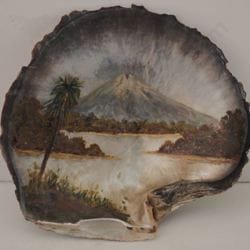
Mount Egmont with Lake
By: John Philemon Backhouse (1845-1908)
Oil on Sea Shell - 13cm x 14cm
Valued $2,000-$3,000
Offers invited over $1,500
Contact: Henry Newrick – (+64 ) 27 471 2242

|
|