
Founded by Max Farndale 1947 - 2018
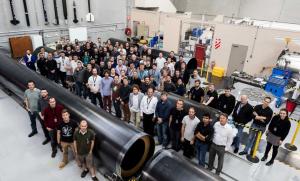
RocketLab are looking for summer interns to join their New Zealand team from November 2017 - February 2018!
Exciting opportunities are available in the following teams:
Analysis - Guidance & Navigation - Production & Manufacturing - Avionics - Software - Propulsion and the Launch Range.
If you are a third or fourth year engineering student who is innovative, intelligent and completely enthusiastic about aerospace, then this is your chance to spend the summer learning from the best and contributing towards making space accessible to all.
View Positions Here . . . Please note the positions shown are published on the RocketLab webside and may not necessarily be intership related
| An MSCNewsWire release || September 8, 2017 |||
Foreign Minister Gerry Brownlee will today travel to Samoa to join Pacific Leaders at the 48th annual Pacific Islands Forum, on behalf of Prime Minister Bill English.
“The Forum is an opportunity for Pacific Leaders to make decisions on the most important issues that we face as a region,” Mr Brownlee says.
“As a Pacific nation, New Zealand is committed to working with our closest neighbours where development assistance remains a priority.
“The Pacific is facing a range of regional challenges that no one country can tackle alone.
“The Forum is our opportunity, as a region, to find solutions to those challenges.
“I am looking forward to meeting with Pacific Leaders to discuss important issues from security to trade and from climate change to fisheries management.
“New Zealand and Samoa have a unique relationship based on our Treaty of Friendship, and I am looking forward to attending the Forum under Prime Minister Tuilaepa’s chairmanship,” Mr Brownlee says.
| A Beehive release || September 7, 2017 ||
 NZ boosts support for Pacific aviation security
Battery storage could be key to an emission-free NZ
NZTE probes wood fibre supply concerns for proposed $180M Chinese plant in Kawerau
New institute opens to help HR professionals boost productivity
Europcar to launch fleet of fully electric rental cars


Aluminium from end-of-life cars to be recycled into new Jaguar Land Rover vehicles£2 million project cuts waste and helps reduce carbon emissionsExtends existing scheme to recycle scrap aluminium from manufacturing processRecycling uses up to 95 per cent less energy than primary aluminium production
Jaguar Land Rover, the UK’s largest vehicle manufacturer, is expanding the use of recycled aluminium in its car bodies to cut waste and reduce carbon emissions.
The £2 million project, called REALITY, has found a way to enable the closed-loop recycling of aluminium from end-of-life vehicles back into high-performance product forms for new vehicle body manufacture in the UK by Jaguar Land Rover.
REALITY builds on the REALCAR project allowing tens of thousands of tonnes of aluminium generated in the manufacturing process to be recycled and reused as a closed-loop. Aluminium from other sources, including end-of-life vehicles, can now be graded and ‘born again’ in the manufacture of new cars.
This unique ‘closed-loop’ automotive recycling system helps to further develop the circular economy model to deliver both financial and environmental benefits.
REALCAR began as a partnership between Jaguar Land Rover, Innovate UK, Novelis, Norton Aluminium, Stadco, Brunel University London, Zyomax and Innoval Technology. The original project and subsequent work with suppliers enabled Jaguar Land Rover to reclaim more than 75,000 tonnes of aluminium scrap and re-use it in the aluminium production process in 2016/17.
Implementing closed-loop aluminium recycling has involved cutting-edge chemistry, new infrastructure and investment of more than £13 million. It is driving a new culture that treats waste material as a high-value commodity. Quality will remain paramount, and the project has evaluated aluminium grades at chemistry and microstructure level to increase tolerance to recycling.
The project, part-funded by Innovate UK, has involved more than 10 press shops (Jaguar Land Rover and external suppliers) with aluminium being remelted by Novelis.
Simon Edmonds, Director of Manufacturing and Materials at Innovate UK, said: “Innovate UK is proud of our support for the REALCAR programme, and this exciting latest stage of the project, REALITY, is another excellent example of collaboration between large and small businesses in the supply chain, supporting them to scale up and become more productive. These projects have been a model in terms of professional delivery of complex research and development.”
Work continues to will refine the process of turning aluminium from ‘end-of-life’ cars into new vehicles. The REALITY project will continue to deliver significant sustainability benefits, with aluminium recycling requiring up to 95 per cent less energy than primary aluminium production. Innovate UK awarded a grant of £1.3 million to the project in 2016 as part of its Manufacturing and Materials Round One funding competition.
The new project will consider advanced sorting technologies and evaluate the next generation aluminium alloys for greater recyclability. Innovations in the sorting and separating technologies applied to automotive end-of-life waste streams will also help other sectors, including packaging and construction. Resource recovery specialist Axion has joined the project to develop the sorting technologies for recovery of a high grade recycled aluminium. The project partners are Jaguar Land Rover, Axion Recycling, Innovate UK, Novelis, Norton Aluminium, Brunel University London, WMG University of Warwick and Innoval Technology.
REALITY supports material stewardship as part of the Aluminium Stewardship Initiative (ASI) Performance Standard, to actively encourage the most effective recycling approaches for aluminium. Jaguar Land Rover is an ASI member (https://aluminium-stewardship.org/).
For more information on how the REALITY project is an evolution from the REALCAR project, visit: https://youtu.be/2493lsmnCHM
Notes
Jaguar Land Rover will invest £4 billion annually to extend its model range and manufacturing footprintThe World Car of The Year, the Jaguar F-Pace, contributed to the resurgence of the Jaguar brand which saw an 83% increase in sales year on yearOver the past six years, Jaguar Land Rover has doubled sales and employment, more than tripled turnover, and invested more than £15 billion in new product creation and capital expenditureJaguar Land Rover is one of the UK’s largest exporters and generates around 80% of its revenue from exports
| A LiveNews release || September 7, 2017 |||


Trade Minister Todd McClay says the Government has agreed a negotiating mandate to upgrade the China Free Trade Agreement that will deliver thousands of jobs and be worth billions to our economy.
“China is a significant trading partner. Our FTA with China has helped New Zealand companies stay in business during the GFC and keeps Kiwis in jobs,” Mr McClay says.
“We currently have $24 billion of two-way trade with this large economy and impressive growth in education, tourism and goods exports.”
“Trade means jobs - we know 8500 jobs are created in New Zealand from every billion dollars of exports.”
“Upgrading the China FTA will increase trade and deliver more jobs in every region and every city of the country."
Mr McClay says the upgrade priorities for the Bill English-led Government include a better deal for dairy, forestry and wood processing exporters, new rules to enhance online and digital trade and better measures to deal with non-tariff barriers.
"We want to free up access and continue to level the playing field for kiwi exporters," Mr McClay says.
“We have set a joint target of $30b of two-way trade with China by 2020.”
“The upgrade will make it easier for us to hit this significant target. We are committed to delivering for New Zealanders.”
The adoption of this mandate follows MFAT-led consultation and engagement with the public and business. MFAT continues to welcome feedback on the China FTA upgrade via its website.
| A Beehive release || September 7, 2017 |||

Compac has announced the development of new technology to overcome the traditional issues associated with grading and sorting cherries.
End View is the new cherry grading technology that utilizes learnings from Compac’s Spectrim platform to improve outcomes for cherry-specific produce lines. End View will be available as a modular upgrade for existing customers, and as part of Compac’s cherry inspection solution InVision 7-View.
Due to their size and shape, cherries can be difficult to properly grade using existing cameras and technology. However, End View utilizes new cameras and software to detect and grade nose and stem defects such as rain cracks and mildew, while keeping current production speeds.
Embracing innovative technology has become more important for cherry growers as newly planted trees continue to come into production, pressuring existing plant capacities. With changing weather patterns growers are also trying to reduce the impact of unseasonal rain events, which are the main contributor to previously undetectable nose cracks.
Compac CEO Mike Riley said the importance of sorting cherries accurately is imperative in protecting batches from spoilage and providing high-quality exportable products for international consumers.
“One bad cherry can ruin a box. Our customers rely on our technology to maintain the quality of their product and protect their reputation and brand.
“We’re always striving to be on the cutting edge of grading and sorting technology development. As the fresh produce and agriculture sector continues to evolve, keeping up with demand and expectation will be key.”
The new End View solution also utilizes Compac’s latest artificial intelligence (AI) and machine learning capabilities. SmartMapTM and SmartSkinTM AI provides improved defect detection and categorization, and ease of use.
Recently, Compac partnered with Pure Pac in New Zealand’s South Island to outfit the operation with the most advanced, gentle and food safe best-of-breed sorting solution including the End View technology. As the company plans to begin exporting its premium product internationally in 2017/2018, accurate sizing and grading, including detection of stem and nose defects were important parts of Compac’s proposal.
The End View prototype was tested in New Zealand, America and Canada. Director of Panmure Orchards in New Zealand saw immediate benefits from the technology. “In terms of End Views which include improved optics and software, the machine can now see the whole fruit allowing additional classification of fruit surface which improves the quality of pack. A secondary benefit is the increase in packhouse throughput on nose cracked batches whilst still maintaining the quality of the pack.”
Riley says Compac is dedicated to continual investment into cherries, directly improving performance and adding capabilities to advance yields and boost the quality of produce globally.
“We were receiving such strong global demand for a next generation cherry grading solution that we decided to accelerate our Inspection Systems roadmap to focus on this. We’re absolutely thrilled with the result and feedback from our development customers has been superb. We can’t wait to see this product in packhouses across the world.”
End View will officially be launched later this year at PMA Fresh Summit in New Orleans, with roll out to begin in 2018 across the globe.
| A Compac release || September 2017 |||
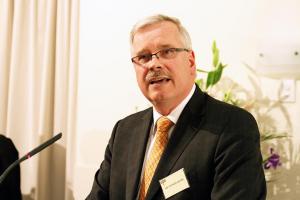
On the Rural News website Pam Tipa writes that Trade expert Stephen Jacobi warns that if we don’t get Trans Pacific Partnership (TPP) through, we will be seriously ‘squeezed’ in the Japanese market.
This will be particularly in beef, but also in a wide range of primary products, he says.
“The Europeans and the Australians now have free trade agreements and the Australians already have a very strong advantage over us in beef and the Europeans will have that too once their agreement is ratified,” Jacobi, the executive director of the NZ International Business Forum, told Rural News.
“The Japanese have just put a safeguard on beef exports of 50% so that will damage our trade even further. You are talking about over $70 million of business, so it is quite a lot.”
Over time Australia and the European Union will “steal a march on us,” he warns.
This is not only in beef; the dairy, horticulture, wine and wood sectors will also be exposed.
“The real gains in TPP for us came from Japan in the end and not from the United States, and it’s Japan we don’t have an FTA with -- the only country in Asia we don’t have one with now,” he says.
Jacobi says the National and the Labour Parties should reach a bipartisan consensus on how to roll out the current TPP process. Negotiations are at a “delicate” stage.
“This is too serious for NZ to just leave to domestic politics in my view. That’s why we like bipartisanship,” said Jacobi, “We have an opportunity potentially to conclude the Trans Pacific Partnership before the end of the year among the 11 remaining parties, excluding the United State which has pulled out.
“It would be a lot easier to conclude that agreement if it wasn’t open to renegotiation.”
Labour finance spokesman Grant Robertson has said NZ should hold out for a better Trans Pacific Partnership (TPP) deal that includes blocking offshore buyers from buying existing residential homes.
Jacobi says if we reopen negotiations, other countries will come up with different issues and “we will see a repeat of the eight years negotiation we just spent trying to get TPP right”.
“That’s the risk. Of course at this stage it is hard to say whether others will want to reopen negotiation. It is conceivable they might. It would be particularly damaging if the market aspects got reopened because that was a very delicately balanced exercise.
“For those reasons we would rather stay with TPP as it is at the moment. As you know, the risk for us is that if we don’t get TPP through we will be seriously squeezed in the Japanese market.”
“Calling for renegotiation is not a straightforward exercise and I don’t know that NZers would be very well served to be the ones calling for it.”
TPP has got to this stage against the odds, he says.
“Everyone assumed once the United States pulled out the others would dissipate and all credit to the Government and negotiators for keeping up this work.
“But the Japanese are key in this: they have put a lot of emphasis on this agreement for their own domestic restructuring so they clearly are not wanting to waste all that effort and that of course encourages other people to stay on board.”
| A Rural News release || September 7, 2017 |||

Palace of the Alhambra, Spain
By: Charles Nathaniel Worsley (1862-1923)
From the collection of Sir Heaton Rhodes
Oil on canvas - 118cm x 162cm
Valued $12,000 - $18,000
Offers invited over $9,000
Contact: Henry Newrick – (+64 ) 27 471 2242

Mount Egmont with Lake
By: John Philemon Backhouse (1845-1908)
Oil on Sea Shell - 13cm x 14cm
Valued $2,000-$3,000
Offers invited over $1,500
Contact: Henry Newrick – (+64 ) 27 471 2242

|
|