
Founded by Max Farndale 1947 - 2018
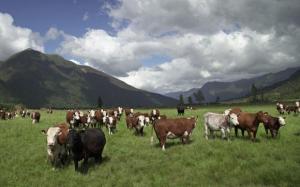
TOKYO -- Low-fat, high-protein beef from grass-fed New Zealand cattle is becoming increasingly popular in health-conscious Japan.
In a country known for gastronomic indulgence, not least its love of fatty, marbled wagyu beef, it may come as a bit of a surprise to see the burgeoning popularity of lean New Zealand meat.
But as demand for lean cuts rises from an increasingly health-conscious public, more and more grass-fed New Zealand beef has appeared on Japan's supermarket shelves.
In June, Co-opdeli Consumers' Co-operative Union switched from grain-fed Australian beef to meat from pasture-grazed New Zealand cattle for its home delivery service.
Livestock tends to be raised in a more environmentally sound manner in New Zealand than major beef-producing countries.
While the weather can be a bit dreary in the land of the long white cloud, abundant rainfall does make for rich and plentiful pastures. There are even farmers who specialize in grass for livestock feed, growing fiber-rich ryegrass and clover for its minerals.
Continue to read the full article here in the Nikkei Asian Review || September 6, 2017 |||
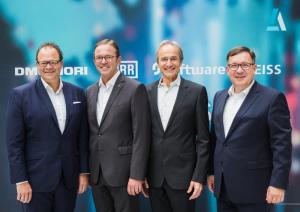
GERMANY: | An alliance of German manufacturing technology firms is setting out to establish a global platform for the Industrial Internet of Things (IIoT), with the launch of ADAptive Manufacturing Open Solutions (ADAMOS).
The group want to establish ADAMOS as a global standard for industry and to attract other machine builders to the initiative. The companies involved are machine tool builder DMG Mori, degreasing/cleaning specialist Dürr, metrology specialist Carl Zeiss, software expert Software AG and IT specialist ASM PT.
The open IIoT platform ADAMOS is non-proprietary and brings together the most up-to-date IT technology and industry knowledge. “It enables engineering companies to offer tried-and-tested solutions for digitally networked production to their customers with little effort. Machine tool builders, as well as their suppliers and customers will benefit from this as ADAMOS is a platform service that offers data autonomy and access to leading software solutions,” the official release says.
Says Christian Thönes, chief executive officer of DMG Mori AG: “Regarding digitisation the machine and plant building industry has to set its own standards and drive development. This can only work with strong partners. That is why we are offering an open network with ADAMOS together with leading machine building, production and software/IT know-how – from machine builders for machine builders, their suppliers and customers.”
Dürr AG’s CEO, Ralf W. Dieter adds: “As a machine builder, we know our customers’ requirements and know what is important. In the ADAMOS App Factory, we bring industry knowledge for intuitively operated applications together with the design of digital marketplaces. The ADAMOS App Factory is a cooperation between machine builders and software companies that is closely linked with the partners.”
Speaking for Software AG, Karl-Heinz Streibich, EO states: “Software AG’s technology leadership and digital expertise is based on a total investment of more than one billion euros. Our industry neutrality and global presence combined with the know-how of leading machine and plant builders worldwide form the foundation of ADAMOS.”
Thomas Spitzenpfeil, member of the executive board (CFO/CIO) of Carl Zeiss AG, offers: “With ADAMOS, strong partners are working together equally on pushing digital connectivity. Together we are developing technologies for the factory of the future. Companies that use the IIoT applications from ADAMOS, will be making use of innovative services and thus increase the efficiency, transparency, reliability and availability of their systems significantly.”
Günter Lauber, CEO of the SMT Solutions Segment of ASM PT, concudes: “The growing interconnectivity of production means that not only our customers, but also we ourselves have to change our thinking. We create the conditions for this at ASM PT with innovative solutions for various line and factory workflows for electronic manufacturing – whilst complying with the highest IT security standards. Through ADAMOS we are combining this knowledge with leading machine building, production and software know-how.”
ADAMOS GmbH and ADAMOS App Factory will launch world-wide on 1 October 2017.
Features of ADAMOS include:ADAMOS focuses on close cooperation and the exchange of know-how and reduces effort and cost by making centrally developed solutions and services available to all participants. As a driver of innovation, ADAMOS will constantly be developing new IIoT applications. There is no dependency on external software providers with ADAMOS. Machine building customers obtain machines and IIoT / software solutions from the same source and have sovereignty over their data. This secures the leading position of machine building companies in the digital era. ADAMOS offers a digital portfolio with applications specific to machine building as well as domain- and industry-specific applications. ADAMOS can be deployed internationally, can be quickly implemented and is available as a cloud or “on premise” solution via stationary servers. ADAMOS uses standard solutions and interfaces and is therefore operationally reliable. As a “white label” solution ADAMOS allows participating machine builders to have their own individual IIoT presence. This means that the partners use the central ADAMOS platform but the front-end the customer sees can be designed with the partners’ own ‘look & feel’.
The ADAMOS App Factory concentrates the technological know-how and the industry knowledge of the partners for fast and joint development of apps. More comprehensive applications for planning, predictive maintenance, machine cockpit/dashboarding and maintaining assistance will be made available in the cloud from the beginning of 2018.
ADAMOS GmbH is registered in Darmstadt and the launch companies are all equal partners. In addition, other machine and plant builders can take advantage of ADAMOS’s range of services as partners. Each partner markets the ADAMOS range independently. ADAMOS GmbH operates as a platform service and thus makes leading IIoT tools and functions available to all the platform users. Marketing of individual IIoT solutions is carried out by the participating partners.
| An MA Business Machinery release || SEptember 5, 2017 |||
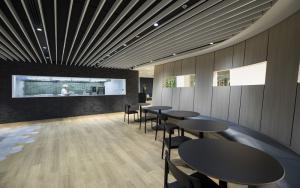
Auckland Airport | As part of its major upgrade of the international departure experience, Auckland Airport has opened a new $4 million, 185-seat lounge for international passengers, known as the “Strata Lounge”.
Richard Barker, Auckland Airport’s general manager retail and commercial, says, “the Strata Lounge is an exciting part of the upgrade of Auckland Airport’s international departure area – which creates a new and uniquely New Zealand departure experience.”
“We have already opened the first stages of our new and expanded security screening and processing area for all passengers, as well as part of the new stores for our two duty free operators. The rest of the international departure area upgrade – including a reconfigured landside farewell portal, a new retail hub and a new passenger lounge – will be unveiled over the coming 12 months.”
“Auckland Airport’s new Strata Lounge replaces our Emperor Lounge and provides a comfortable and relaxed space for travellers who do not belong to an airline lounge programme and 13 airlines that choose to use the lounge to accommodate their premium passengers prior to boarding.”
“Our new Strata Lounge means that no matter which international airline or class you are flying, before boarding your flight you can enjoy a modern lounge – with a fresh range of international food, beverages, work stations, shower facilities and a separate children’s space for families to use. In the future the lounge will also have sleeping pods and a beauty spa.”
International passengers can purchase entry into the Auckland Airport owned and operated Strata Lounge for $49 online or $55 on the door. The Strata Lounge also welcomes members of Diners Club International, DragonPass, Lounge Key and Priority Pass.
The Strata Lounge was designed by Ignite architects and constructed and fitted-out by Alaska.
| An AucklandAirport release with MSCNewsWire || September 6, 2017 |||
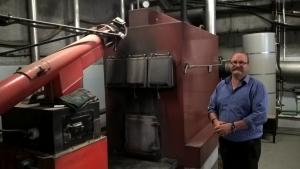
The Ara Timaru Campus is continuing to successfully reduce carbon emissions after converting the main heating system from coal to wood pellets. The campus is mitigating 248.04 tonnes of CO2 every year; that’s a possible 6,201 tonnes of CO2 emissions saved over the 25 year life of the boiler.
The move three years ago to a wood pellet boiler has several other benefits too, Facilities staff have reported.
Unlike coal, wood leaves no toxic ash behind. Formerly, two to three 40 litre drums a day of coal ash containing toxic heavy metals such as mercury and cadmium had to be sent to the landfill. Now, a smaller amount of ash that is produced by the wood pellets is so clean it can be used as garden fertilizer on the Timaru Campus gardens. It amounts to about 60 litres of ash a week.
Alongside the cleaner ash is cleaner air. The wood pellet fired boiler produces less smoke, which is not charged with toxic particles - and consequently the system no longer requires an air discharge consent. “It’s much cleaner for the guys, they are not breathing in sulphur gas, and now when you walk in there is lovely fragrance of pine,” Facilities Manager Timaru Roger Luscombe says.
All these benefits come with another bonus – the wood boiler requires less input from the Facilities team. The old coal boiler was high maintenance; it had to be tended three times a day and cleaned on the weekend. However the new wood boiler requires a clean of the tubes once a week and “a wee rake” first thing in the morning.
“The new wood boiler was an investment for the organisation and a very tangible commitment to more sustainable practice, but we are seeing the pay off. Yes we have the satisfaction of providing good leadership through our example, because reducing the country’s emissions is going to take effort from all of us, but we are also seeing all of these other benefits too,” Ara Sustainability Manager Shaun Bowler says.
The move to a wood pellet is in line with the Ara Sustainability Charter, which commits the institute to principles for action, such as sustainable operation and graduating students who are leaders in sustainability in their field.New initiatives such as the wood pellet boiler, which was introduced in 2013 by the former Aoraki Polytechnic, demonstrates the benefits of sustainable practice to students, staff and the local community.
Local industry is benefitting too. One more gain is that using wood pellets has supported local Timaru jobs. Supplier Starwood are now buying a second pellet mill to meet local demand.
Each year the Timaru wood pellet boiler is saving the Timaru Campus at Ara about 16% of total Scope 1 & 2 carbon emissions, which are the emissions from combustion of fossils fuels in operations owned by the organisation and emissions from purchased electricity or other energy sources.
Wood pellets are a win for both the institute and the community when all aspects are accounted for. Fuel for the wood pellet boiler costs $30,000 a year in pellets, as opposed to $18,000 spent on coal, however this is offset by savings related to the cleaner ash and air, reduced labour requirements and increased efficiency to heat 6,906sqm of campus buildings, as well as indirect but significant benefits, including community health improvements and other indirect gains as a result of a cleaner Timaru.
| An ARA release woith MSCNewsWire || September 6, 2017 |||
"The change to the constitution of Crown Irrigation Investments Limited (CIIL) to allow it to fund water storage projects that directly lead to environmental benefits is a very positive step and should be extended to recognise resilience and social benefits as well," says Infrastructure New Zealand, Chief Executive Stephen Selwood.
"To date, existing rules guiding the government's irrigation investment arm have placed a too narrow focus on direct economic benefits.
"This has resulted in disproportionate emphasis on maximising land use productivity and insufficient recognition of wider economic, social and environmental benefits.
"Widening the criteria to include the full scope of costs and benefits from irrigation is critical.
"Other benefits not currently adequately recognised include enhancing the resilience of rural areas in the face of climate change, supporting employment and improving the quality and amenity of freshwater resources.
"In the immediate term, this means wider economic and social benefits, including increased regional employment and improved freshwater swimming quality, will be better reflected in the reasons the public invests in irrigation infrastructure.
"We also know that irrigation is increasingly being used to improve environmental performance by recharging aquifers, guaranteeing minimum river flows and flushing systems.
"These benefits are of the utmost importance over the long term as rainfall patterns shift in response to climate change.
"Yet resilience is not currently a significant driver for irrigation investment, and even environmental factors are approached from the perspective of mitigating effects rather than improving environmental performance.
"Assessing the full spectrum of costs and benefits over the long term is a core infrastructure activity and needs to be included in CIIL’s brief," Selwood says.
| An InfrastructureNZ release with MSCNewsWire || September 5, 2017 |||

The largest transition of combustion engines to pure electric shared vehicles in the Southern Hemisphere is set to get underway in Christchurch from November.
Canterbury organisations and residents will soon have access to a pool of 100 pure electric vehicles, only one of a few cities internationally to offer a 100 percent electric-powered car share service.
Kiwi fleet management company, Yoogo, known for its innovative approach to fleet management and leasing, was selected by the Christchurch City Council to implement the service.
Yoogo has been leading the way in its use of GPS data to monitor the efficiency of its fleet. This led the company to strategically develop a car-sharing model that also demonstrates its commitment to electric vehicles. As a result, the company is rebranding to reflect its two core business streams: Yoogo Fleet, which will maintain the business’ focus on fleet management and leasing; and, future focussed Yoogo, which is committed to growing the pure electric car-sharing market. The aim of both brands is to optimise New Zealand’s fleet.
Kirsten Corson, General Manager of Yoogo, says Yoogo’s pure electric car sharing model breaks down barriers around cost and charging infrastructure making pure electric vehicles accessible and affordable.
“The pure electric car-sharing platform is a smart and sustainable way to get around town for businesses and everyday Kiwis,” says Ms Corson. “Yoogo will deliver an experience that is easy, enjoyable and affordable. Cantabrians will pay for the time they use the car and Yoogo takes care of everything else. Users can simply book online and access vehicles via the Yoogo app or swipe card.”
In partnership with Council and its commitment to carbon emission reduction, this initiative is the result of both leading public and private sector organisations partnering over a shared vision for an efficient and sustainable transport solution.
The service will be available for Council, Ara Institute, Aurecon, Beca, Canterbury District Health Board, Chapman Tripp, Environment Canterbury, Meridian Energy, Tonkin and Taylor, Warren and Mahoney, and, Christchurch Airport, as well as for the general public.
Yoogo will initially launch 70 electric vehicles across three city hubs in late November with 30 additional vehicles to follow in February 2018 across ten locations in total.
Kevin Crutchley, Council’s Resource Efficiency Manager and project manager for this city-wide scheme, says “This new, innovative, 100 per cent battery electric transport service is an exciting development for Christchurch. New Zealand’s electricity is mostly generated from renewable energy so this electric vehicle offering will reduce our city’s carbon emissions. Also using a transport service with zero tail pipe emissions will improve air quality and have positive health benefits for the residents of Christchurch.”
Christchurch Airport Chief Executive Malcolm Johns says joining the Yoogo programme aligns with the airport’s active interest in energy management and migrating its vehicle fleet to fully electric.
Yoogo will open hubs at Christchurch Airport, West End and Art Gallery using an A to A model. All the other hubs will be open by the end of March and next year Yoogo will move to an A to B model which means a vehicle can be dropped off at a different Yoogo hub.
The initial hubs around the city will include the West End, Lichfield Street, The Crossing and Art Gallery car parks, Ara Institute, Canterbury University, Papanui and Fendalton Libraries, Lyttelton Community Centre and Christchurch Airport. Pure electric vehicles at these hubs will include Hyundai Ioniq and BMWi3 vehicles.
| An YooGo release For MSCNewsWire || September 6, 2017 |||
Five questions on a Middle East perspective
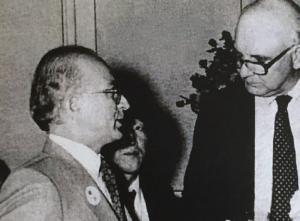
From MSCNewsWire's European Correspondent |Wednesday 6 September 2017 | Beirut-based Meguerditch Bouldoukian is an emeritus figure in banking in the Middle East and the EU. Mr Bouldoukian (pictured with Paul Volcker) now answers our five questions on New Zealand’s Middle East positioning …..
There is evidence of a belief here in a short Middle East memory. We have the defaulting on the old Development Finance obligations. Then we have the U-turn on the undertaking on live sheep exports to Saudi Arabia. Followed by compensation in the form of a covert stock-handling depot there. Then the matter of the New Zealand delegation to the UN Security Council as a further entreaty backing the anti Israel censure?
There will always be mistakes and false starts. Especially with evolving markets. You can take comfort in your wider picture. According to recent OECD reports New Zealand’s one of the robust economies on the globe since 2012 due to tourism, inward migration, construction. It has a sound fiscal position and low public debt and balanced budget. GDP $185 billion, growth rate of 3.9 %, per capita income $39,400 and internet usage 86 %. I am though rather worried by the Development Finance Corporation experience which you cite and which once again demonstrates the danger of a longer term operational involvement by a government in commercial banking. If this intervention is a sustained one, and not just implemented to cope with an emergency then a Pandora’s Box is put in place and which is bound to be opened at some stage down the line.
There is a belief that only very large scale organisations, ideally with government involvement, are the only ones that can trade with the Middle East ---and then get paid...
My advice here is for commercial interests in your country to steer very clear of Middle East states ruled by sultans, emirs, kings, and other despots of that ilk. Elsewhere you will find strong legal statutes to ensure against the kind of default you seem to be describing
All the NZ trading banks are owned in Australia. Do you see this as an advantage/disadvantage?
The major banks must encourage the outside world in coordination with the government to pump in Foreign Direct Investments. Local banks ultimately can only finance SMEs or SMIs. I am pleased that you asked this question because it has given me an opportunity to clear up a misconception, rather touching in its way, to the effect that the Australian trading banks are owned in Australia. They are in fact and to a substantial extent owned by UK and US banks, notably HSBC, J.P Morgan, and Citigroup among others. Is this an advantage? Probably. The reason is that the smaller the bank, the greater will be its reluctance to take on risk.
It is said that the Australian banks along with the Canadian banks are the world's best regulated?
Industry figures tell us that world’s best regulated banks are domiciled in order in:
The significance of this is that you do not have to worry about banks operating in New Zealand soundly regulated as they are by the Reserve Bank.
Do you see any benefit in New Zealand seeking to re-establish its own joint stock/ trading bank?
You have had the problem in your recent and longer term history of your own bank in this category getting into trouble and having to be rescued by the taxpayer, the government in other words. This in turn opens our Pandora’s Box which takes the form of the state, and for a number of reasons, being viewed as being responsible for the bank and even long after the emergency that caused it to be involved in the first place.
 Toll Group sinks into the red on rising costs under shadow of Kaikoura quake
Free trade tops exporters' election wishlist
AG Price land and buildings in Thames for sale
340 vacancies on offer to Southland jobseekers
Global Dairy Trade seeks European deal
NZ and Japan business leaders meet in support of TPP - NZIBF
Commission grants clearance for Essilor and Luxottica merger in NZ market
Exporters expect dollar to rise 10c against weakened greenback

Two Product choices - Only window cleaners approved for use on Solar Gard window film in New Zealand - Great opportunity for add on sales - Window Film product warranty still applies #Australia #NewZealand #WindowFilm #windows #Architecture #Environment #PeaceofMind #Home #Car #Business #Safety #Ceramic #Automotive #Ecolux #UltraViolet #SkinCancer #Protection #windowtint #frontwindshieldtint #cartint #windowtinting #tinting #mobilewindowtinting #professionaltint #TeamSolarGard #SolarGardANZ #SolarGard #SolarGardWindowFilm #SolarGardNZ #SpecialtyWindowFilms

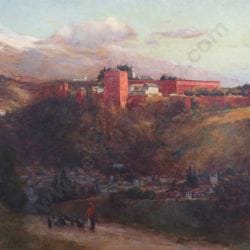
Palace of the Alhambra, Spain
By: Charles Nathaniel Worsley (1862-1923)
From the collection of Sir Heaton Rhodes
Oil on canvas - 118cm x 162cm
Valued $12,000 - $18,000
Offers invited over $9,000
Contact: Henry Newrick – (+64 ) 27 471 2242
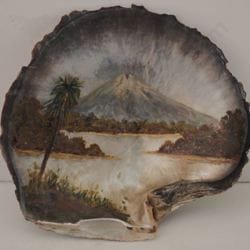
Mount Egmont with Lake
By: John Philemon Backhouse (1845-1908)
Oil on Sea Shell - 13cm x 14cm
Valued $2,000-$3,000
Offers invited over $1,500
Contact: Henry Newrick – (+64 ) 27 471 2242

|
|