
Founded by Max Farndale 1947 - 2018


Engineering software firm Aveva has agreed a multibillion-pound tie-up with the software arm of France’s Schneider Electric.
The deal, which comes after two failed merger attempts in the past two years, will create an industrial software giant with combined revenues of around £658 million and earnings of some £146 million.
The merger will be structured as a so-called reverse takeover, with Schneider folding its software business into Aveva’s operations in return for a controlling 60% stake in the enlarged group. But Aveva will keep its headquarters in Cambridge and remain listed on the London Stock Exchange.
Philip Aiken, chairman of Aveva, said: “The transaction will be transformational to Aveva, creating a global leader in industrial software, which will be able to better compete on a global scale.” He added: “Aveva will significantly expand its scale and product portfolio, increase its capabilities in the owner operator market, diversify its end user markets and increase its geographic exposure to the North American market, in line with our strategic goals.”
It comes after the pair first began merger talks in July 2015, but those discussions broke down after Schneider was unable to separate its software assets, while a further attempt a year later also collapsed. Under the terms of the latest deal, Schneider will pay £550 million cash in almost identical terms to the previous talks.
Aveva was founded 50 years ago after being spun out of Cambridge University. It provides engineering software to owners, operators and engineering contractors across the power, oil and gas, marine and paper and pulp sectors. The group employs more than 1,700 people across 30 countries and has a customer base of more than 4,000.
Schneider’s software arm has a global footprint spanning North America, Europe, the Middle East, Asia Pacific and Latin America and has around 2,700 employees worldwide. The deal is expected to complete around the end of the year.
| A The YorkshirePost release || September 5, 2017 |||
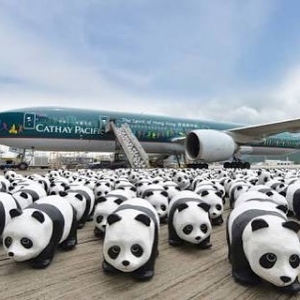
Europe with Cathay Pacific. Fantastic Fare Offerings – Amsterdam from $1395 return Milan from $1369 return and Rome from $1395 return. Hurry – sale ends 25 Sep 17. Call us on 0800110108 or email This email address is being protected from spambots. You need JavaScript enabled to view it. But be quick!!! @cathaypacific #cathaypacific #greatfares #greatairline #airline #sale #europe #rome #amsterdam #milan
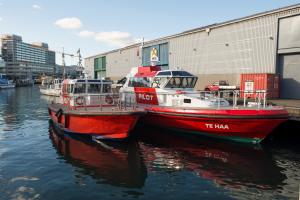
A New Zealand-made pilot vessel has arrived at CentrePort, bringing world-leading capabilities to help future shipping navigate Wellington’s harbour.
The vessel is named Te Haa, meaning ‘the breath’. The name is a reference to the breath exchanged between people when they touch noses in a hongi, which is analogous to the way the pilot vessel will meet visiting ships.
Yesterday Te Haa was welcomed into Wellington by Taranaki Whānui ki Te Upoko o Te Ika, who advised on the naming of the vessel.
Te Haa is a jet powered boat able to operate safely in adverse weather conditions far out in the Cook Strait. It has a maximum speed of 32 knots, and will provide significant time and fuel efficiencies as it delivers pilots to ships visiting Wellington.
CentrePort’s Chief Executive, Derek Nind, is pleased the Port decided to build the ship in New Zealand.
“It’s fantastic that Kiwi expertise came together to produce this vessel. The jets came from HamiltonJet in Christchurch, the Scania engines were supplied by South Pacific Diesel Systems in Porirua, the electronics were supplied and fitted by ENL in Nelson, and it was all put together at Q-West Boat Builders in Whanganui,” said Derek Nind.
“Te Haa will help us accommodate future growth and larger ships in Wellington Harbour.
“The vessel will provide significant health and safety benefits to our pilots and launch crews, since it has been designed to provide a safe platform in adverse weather.
“She will enable central New Zealand businesses to connect with international markets, and provide a new level of safety, speed and efficiency.”
Colin Mitchell, General Manager at Q-West was pleased to win the project through a competitive international tender process.
“We were extremely proud to be selected, and of the men and women that have produced this quality craft.
“CentrePort now have one of the most high-tech pilot vessels in New Zealand, and we look forward to continuing our long-standing relationship with them in the future,” said Colin Mitchell.
CentrePort is a returning customer for Q-West, which built its current vessel, the quarter-century old Tarakena. Tarakena is still in service, and will return to Q-West for a refurbishment before becoming CentrePort’s backup pilot vessel.
| A Centreport release || September 2017 |||
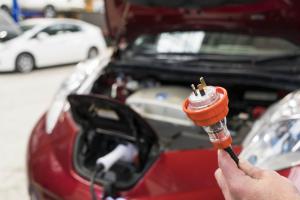
Investment in a new learning tool for Automotive Trades students at Ara shows the Institute is anticipating and adapting to new and emerging technology in the field. Students training as Electrical and Mechanical Automotive Engineers in Canterbury now have access to a hybrid car, exposing them to the swift technological developments in the industry.
Partly powered by an internal combustion engine, partly by electric motors, hybrid cars require less petrol than traditional motor vehicles. As such, these environmentally, and economically, friendly cars are becoming an increasingly common sustainable transport alternative.
While the current Automotive courses on offer at Ara focus predominantly on traditional motor vehicles, tutor David McBlain supports the Institute’s move to put students in the drivers’ seat of new, green technology. “As a college we’ve obviously got to adapt and keep up with the latest technology so that the students can actually see what is available and how the technology is actually developing for the future.”
McBlain as the proud owner of a full electric vehicle, has experienced the benefits first hand. His Toyata Prius runs entirely on electric charge so rising petrol prices don’t present a problem. Rather than pay for fuel, he plugs his car into charge each night. “My car is a short range vehicle and will do 120-130km on a single charge. I commute 100kms a day, so it’s enough for me to get in and out to work.”
Many may think that the high tech systems inside hybrid and electric vehicles would result in more complications than traditional petrol powered cars, however he disputes this. “When you look at the technology involved in an electric vehicle and under the bonnet, there is actually far less componentry to go wrong. There’s no gear box, it’s just a final drive. Engine losses are minimal. Acceleration is much superior. For me it’s a win-win. You’re losing less money, you’ve got less things to go wrong with it, and the performance is superseding standard cars already.”
McBlain, stresses the importance of equipping students for the rapidly developing market which they will enter into as graduates. “The technology is here now and it’s only a matter of time over the next couple of years, for the electric vehicles to become more prevalent in New Zealand and Australia. They’re coming now so the future mechanics need to be trained and ready.”
Ara is committed to leading in sustainability across the institute. Guided by the Sustainability Charter, Ara is embedding more sustainable practice and reviewing curriculum to reflect the latest sustainable best practice across all industries.
| An ARA release || September 4, 2017 |||

“Globalization has changed, but in its earlier form, it was principally about opening up the possibilities of economic specialization, economies of scale, and economies of scope.”By Anand Swaminathan for The Politic
Dr. Alan Bollard serves as the Executive Director of Asia-Pacific Economic Cooperation (APEC), which promotes regional trade, economic growth, and sustainability. As Executive Director, Dr. Bollard presides over economic programs that are mandated by APEC’s leaders and ministers. Before his work with APEC, Dr. Bollard served as Secretary to the New Zealand Treasury from 1998 to 2002 and then Governor of the Reserve Bank of New Zealand from 2002 to 2012. He holds a Ph.D. in Economics from the University of Auckland.
The Politic: Can you describe the function of APEC and how it has developed over the years?
Alan Bollard: APEC is an organization that is promoting regional economic integration around the Asia Pacific region. It has 21 member economies, over almost the entire Pacific coastline. This includes big economies like the U.S., Japan, Russia, China, and a lot of smaller ones. Altogether, APEC’s member economies make up half the world’s GDP, and it is the largest organization of its sort in the world.
APEC came about around the end of the Cold War. It was the vision of a number of ministers around the Pacific Rim who realized that, if we could open up the barriers to trade and investment between economies, there was potential for very strong international economic growth.
Can you describe what you think are the benefits of international free trade and, more generally, the benefits of globalization?
Globalization has changed, but in its earlier form, it was principally about opening up the possibilities of economic specialization, economies of scale, and economies of scope. It used the theories of comparative advantage that had been well-established in economics for the last two hundred years, saying it is most efficient if production takes place in countries that have a comparative advantage. Typically, that used to mean that from WWII onwards, a lot of sophisticated production would happen in sophisticated economies like the United States. Whereas, some of the East Asian economies would provide a place for cheaper, lower-skilled assembly.
Over time, this has changed considerably and quite quickly around the Asia-Pacific. Trade has become very integrated, there has been a big growth in value chains. Highly integrated trade and supply chains have brought a lot of benefits to consumers. When we look at who is actually producing, we do see a switch where more developed Western economies have moved quickly out of manufacturing into services. The developing countries have taken over manufacturing.
This has had a distinct effect on the Asia-Pacific region. In APEC countries, at least half a billion people have come out of poverty and into middle-income in the last quarter of a century. Once they are in middle-income, these countries can generate their own growth and grow in more sophisticated ways. For example, these countries no longer have to simply rely on North American consumption or Chinese consumption.
We are very clear that a growth of trade has led to an improvement in living standards, broadly. When you look at how those benefits have been distributed within countries, it does become more complicated. Some groups have gained, and some groups have lost. That’s really where domestic social policies should come into play because they should be identifying the losing groups and helping them re-skill.
Responses to free trade differ throughout the world. Free trade has recently come under fierce scrutiny and criticism from people of all political orientations in the Western world. People have argued that trade has helped to demolish manufacturing in the West and enrich so-called elites at the expense of everyday workers. Do you think this criticism is justified and that there are real drawbacks to trade?
Sometimes people make this criticism about trade, and other times they make this criticism about globalization. Often times, there is an amalgam of things that they are reacting to, that are different from trade. These include migration, the growth of environmental problems, growth in foreign investment, an increase in automation, and a growth in trade. Some of these things are interrelated, but quite often we’re finding that complaints about globalization are not about free trade but about automation.
As to the popular concerns about this, some of it is simply harking back to the past that never existed. There seems to be a view in some European countries and, which certainly came up in the U.S. election, that these countries had a huge, solid manufacturing background and that they have lost that. We have to remember that, in the United States, less than ten percent of jobs are in manufacturing.
Even after World War II, less than third of jobs were in manufacturing. Where do people work? In services. But you would never believe that from the media teaching. Generally speaking, these manufacturing sectors are not nearly as important as most people seem to think. The Financial Times has a term for this, called “factory fetish.” Politicians love factories, but actually, most of them long ago departed the developed world. Jobs in the services sector have taken their place.
Why do you think there is so much of a fixation on manufacturing? Why do politicians consistently have this “factory fetish?”
Some of it is history. The United States’ major contribution to early economics was mass production—Ford factories and onwards. Right through to WWII these were very important.
But really after WWII, Japan took leadership of mass production and it moved around the world.
Factories are also physical things that you can locate and look at. They are very concentrated in terms of employment. That means if you have a factory closure, that event is highly visible. From a communications point of view, it is much easier to communicate about factories. Generally, the story about factories has been about closures rather than openings. Politically, factories are much more attractive from a labor and union point of view. Beyond that, I think some of it is illusionary.
Moving away from the Western world, how would you describe the current state of trade in the Asia-Pacific region? How are attitudes towards trade and globalization within the region?
There was a very positive view of trade and investment because the benefits were very visible right up until the global financial crisis. As a very rough formula for the previous twenty years, we broadly had eight percent average annual trade growth, leading to roughly four percent average annual economic growth, leading to roughly two percent annual GDP per capita growth. This meant people were almost twice as rich as their parents’ generation, which is very strong delivery for the region.
Now, in that period since the global financial crisis, trade slowed down very considerably. This didn’t happen all at once, because China was going through a commodities boom. But then we saw a slowing in trade, a slowing in growth, and a slowing in productivity growth.
Would you say that the positive attitudes towards trade are reflective of the general population in Asia-Pacific? Or do we hear these positive reviews mostly from higher-up and elite members of these nations?
It depends very much where you’re talking about. I’m in Singapore—Singapore is a trading hub and everyone knows that trade is very important. In a large economy like the United States, many people can feel insulated from these regional trade trends. In the Asia-Pacific region, generally there is a feeling that we can see the benefits of what trade has brought. But we do understand that things are changing, and that we have to communicate better to the wider population.
Also, there is a reasonable argument that, in the past, we’ve been convinced that trade and globalization are benefiting countries but we haven’t worried too much about the distribution of benefits within a country. But, there is the argument that with higher levels of globalization, we do need social policies that will stand alongside that. That includes labor market policies, health policies, social protection policies, and above all, skill and reskilling opportunities. What we think most directly impacts jobs is much more automation.
How important has automation been in displacing manufacturing jobs? How will automation continue to shape the future of work?
We can’t be absolutely definitive about these questions because we haven’t been that good about forecasting technological change and its impacts on the economy. Most economic studies find that when you look directly for determinants of job loss, you find that two-thirds might be due to automation. So clearly, automation is having a big impact. It has had a large impact on manufacturing jobs. But the way that automation is going now, it’s actually impacting services much more and that’s where we should be looking to in the future. In the past, automation used to be applied to things that involved heavy lifting and mechanical repetition. But now, it’s being applied to things that involve intelligence and learning and different systems.
What is the future of trade and globalization, given the advent of the Trump administration and protectionist sentiment throughout the Western world?
Quite apart from the growth of protectionist thinking, it did look like we might have seen the growth in regional supply chains in the Asia-Pacific slowing down. Now, I’m not saying that the regional supply chains were slowing down, but that the growth of regional supply chains was slowing down. It looked like they had exploited a lot of the advantages of the economies of specialization. In addition, there has been one other very big economic development in the ten years since the global financial crisis, and that’s the energy revolution.
The other big development will be the development of services trade. Services trade is not that developed in the Asia-Pacific region, but it is starting to be. That happens not only from moving goods across the region in ships, but also from moving data across the region on the Internet. It depends much more on things like telecommunications, roaming data charges, digital movements, cybersecurity, and those sorts of things. Already, data movements have increased fifty times over the past decade, according to McKinsey.
It was reported that there was an APEC trade ministers’ meeting in late May, the first since the election of Trump. If you are able, can you describe the discussions during this meeting? How do other members of APEC feel about the Trump presidency?
Yes, we were doing a couple of things there. We were all pretty interested to hear from the new United States trade minister Trade Representative Robert Lighthizer. He had only just been appointed a few days previous to that meeting. We wanted to hear a lot more detail about the new U.S. administration, what it proposes on the trade and globalization side. But we need to hear a lot more detail about what that means, what their concerns are. We did hear some of that from the U.S. Trade Representative. He talked about trade deficits, possible bilateral developments, and a number of multilateral areas.
We’re looking for what we think is best practice around the region. APEC is quite a good organization, both for the U.S. and other member economies, because it is voluntary. It is not like a WTO, or a TPP, or a RCEP, which are legally binding. We are not. We are just a test kitchen. We try things out, we incubate new ideas. So, we’re a place where it’s quite easy to try things out, and if you don’t like them, then you don’t have to be part of them.
Certainly, the U.S. wants to see services trade continue and grow. They’re very focused on digital economy and that kind of commerce. But also, to be realistic, they made it clear that they will be focusing on NAFTA renegotiation. And we’ll watch how that goes.
I know the annual APEC Leader’s Summit will be held in November, and Vice President Pence has indicated that Trump will be attending. What are your expectations for that meeting, and what do you expect Trump to say?
It will be quite a big and important event. We expect to get all the leaders of twenty-one economies and that includes the very big economies. Many of them will have met in other fora by then, and particularly at the G20 Leaders Meeting in Hamburg, Germany. What they do in APEC meetings is that they review all the work I nominated and give directions for the year ahead. What we do is follow the directions of 21 economy leaders. I imagine they’ll be looking at how we communicate the benefits and costs of globalization in all of this. It’s helpful that it’s a few months away, because I think we’ll have more clarity in quite a few of the details.
What advice would you give to college students who want to learn more about international trade and the global economy?
Well, students are very lucky today. They’ve got massive opportunities compared to what used to be the case. They’re operating in an international world. Just within APEC, we have something like one million student movements, cross-border movements going on. I think there are great opportunities available, and my advice is to take advantage of them. There are great opportunities for being and remaining mobile in the world. There are many chances to help preserve many of the hard-won benefits of internationalization because, until the 1980s, it simply wasn’t like that. You simply couldn’t study and work across borders in the way that you can today.
This interview has been edited for concision and clarity.
World changing Kiwi innovations finalists have been named for the big annual New Zealand Innovation Awards.
The finalists represent game-changing innovation from every corner of the country, with new ventures, products and services from a broad range of industries and business disciplines, the New Zealand Innovation Council’s founder and chief executive Louise Webster says.
“They all demonstrate in their own way that Kiwi innovation has come a long way with a vibrant and active innovation in the business community.
“Included in the finalists are an exciting range of entries such as quiet drones, solar-powered cow collars, smart trampolines, Te Reo Maori smartphones and ethical corporate workwear. Spoilt for choice with this year’s entries – these are truly world changing innovations.
“The seventh annual innovation award winners will be named at the awards evening in Auckland on October 19. The awards night is now established as New Zealand’s most iconic innovation event. It’s great to have seen the innovation ecosystem grow and develop over this time and simply humbling to talk to so many fantastic business innovators.
“Since the awards began we have seen a shift away from businesses developing new products and services for the New Zealand market to a strong focus on export markets with many businesses going global from day one,” she says.
Bayer New Zealand managing director Derek Bartlett says Bayer are committed to helping Kiwi companies be the best that they can be.
“We have innovation at the heart of everything we do and take pride in supporting such a great initiative to celebrate and profile innovation across New Zealand,” he says.
Last year, ARANZ Medical won the Bayer Supreme New Zealand Innovation prize at the annual New Zealand Innovation awards. ARANZ Medical’s advanced scanning technology, silhouette, measures wound healing and ensures the right treatment is being used to promote faster healing and more accurate diagnosis.
The 2017 New Zealand Innovation Awards finalists are:
INNOVATION IN AGRIBUSINESS & ENVIRONMENT - Sponsored by Bayer NZ● Alliance Group - The Omega Lamb Project● Halter● Levno - Sensor and Data Technology● Marine Flex - Elastic Mooring● SPATnz (Shellfish Production and Technology New Zealand) - Next Generation Shellfish● Spring Sheep Milk Co. - New Zealand's Gentlest Milk● Squawk Squad INNOVATION IN DESIGN & ENGINEERING - Sponsored by James & Wells● ARANZ Geo - Leapfrog 3D Geological Modelling Software● Dotterel Technologies● Fisher & Paykel Healthcare - Optiflow Junior 2● Onguard Group - Seismic Systems● Rocket Lab● SolarBright - DATAeye● Springfree Trampoline - Smart Trampoline● Tectonus - Resilient Slip Friction Joint INNOVATION IN EDUCATION, TRAINING & DEVELOPMENT - Sponsored by Chartered Accountants Australia and New Zealand● CORE Education - iNVENTIONATOR● Crimson Education● EdPotential● Fulton Hogan - Virtual Reality Training● Kami● Linewize - Classwize● Massey University Wellington - The Design+Democracy Project● Osnova - Amy INNOVATION IN FINANCIAL, PROFESSIONAL & PUBLIC SERVICES - Sponsored by Equifax● Cream● Department of Internal Affairs - SmartStart● FluentIQ - Test Center● McCarthyFinch● Simplicity● Simply Payroll● StockX - A Smarter Exchange INNOVATION IN HEALTH & SCIENCE - Sponsored by Chorus● Avalia Immunotherapies - Synthetic Vaccines● BFW Innovations - The Original Mattress Elevator● CoLiberate - Nourish Your Mind● Fisher & Paykel Healthcare - Optiflow Junior 2● FlexiMap● MARS Bioimaging● Myovolt - Wearable Vibration Therapy● Precision Driven Health INNOVATION IN FOOD & BEVERAGE - Sponsored by Plant & Food Research● Alliance Group - The Omega Lamb Project● Anteater - Premium Edible Insects● Fix & Fogg - World’s Best Peanut Butter● Fonterra Co-operative Group - Protein Ingredient (MPC4867)● Green Spot Technologies● Imake - The Grainfather INNOVATION IN TECHNOLOGY SOLUTIONS - Sponsored by Jade Software Corporation● Air New Zealand - Customer Innovation Programme● ARANZ Geo - Leapfrog 3D Geological Modelling Software● Corvecto - Virtual Reality Training Solutions● fulcrum - The fulcrum HUB● Moxion● Onguard Group - Seismic Systems● The Social Club● Vector - Glen Innes Substation● WaterOutlook INNOVATION SYSTEMS & PERFORMANCE IMPROVEMENT - Sponsored by Westpac NZ & the NZ Government● Fonterra Co-operative Group - Vitamin D Measurement● Forsite● Halter● High Performance Sport New Zealand (HPSNZ) - Innovation Programme● Revisia - Industrial 3D Innovation● Soar Printing - Evolution through Innovation● Vigilance - Financial Risk Management● Waitemata District Health Board - Leapfrog Programme INNOVATION IN MEDIA, MARKETING & COMMUNICATIONS - Sponsored by StopPress● 2degrees - Data Hunt● AttitudeLive● Corvecto - Virtual Reality Training Solutions● Fire and Emergency New Zealand - Escape My House● Fisher & Paykel Healthcare - Optiflow Junior - Therapy Growth and Product Preference● Shuttlerock● Spring Sheep Milk Co. - New Zealand's Gentlest Milk● Workhere New Zealand - LookSee Wellington● Zavy INNOVATION IN SUSTAINABILITY & RENEWABLE ENERGY - Sponsored by NZ Innovation Council● EcobagsNZ - No to Plastic Bags, yes to Compostable● ecostore● Green Spot Technologies● Little Yellow Bird - Ethically Made Corporate Workwear● Marine Flex - Elastic Mooring● Organic Initiative (Oi)● solarcity New Zealand - solarZero energy service● Yealands Wine Group - Harnessing the power of the sun INNOVATION IN TOURISM & ENTERTAINMENT - Sponsored by Idealog● GeoZone● Haka Tourism Group - An Innovative Business Model● Modern Maori Quartet● Off The Beaten Track● Pop-up Globe Auckland● Sonnar Interactive - Audio Games● Tourism Holdings (THL) - Mighway● Wherewolf INNOVATION IN MAORI DEVELOPMENT - Sponsored by KPMG● Hiakai● Huawei New Zealand - Te Reo Maori Smartphone● Metia Interactive - Takaro● Plink Software - Tipu Te Reo Maori● Punarau Media - Pipi Ma EXPORT INNOVATION OF THE YEAR - Sponsored by New Zealand Trade & Enterprise (NZTE)● Alliance Group - The Omega Lamb Project● ARANZ Geo - Leapfrog 3D Geological Modelling Software● Fisher & Paykel Healthcare - Optiflow Junior 2● fulcrum - The fulcrum HUB● Moxion● Onguard Group - Seismic Systems● Shuttlerock● Timely EXCELLENCE IN SOCIAL INNOVATION - Sponsored by Sovereign● AttitudeLive - Attitude● Fire and Emergency New Zealand - Escape My House● Organic Initiative (Oi)● Plink Software - Tipu Te Reo Maori● Te Whare Hukahuka - Growing Maori Social Enterprise● Te Whare Hukahuka - Ka Eke Poutama● Massey University Wellington - The Design+Democracy Project● The Taranaki Retreat INNOVATION EXCELLENCE IN RESEARCH● Alliance Group - The Omega Lamb Project● Avalia Immunotherapies - Synthetic Vaccines● Dotterel Technologies● Halter● Myovolt - Wearable Vibration Therapy● mango teQ - REYEDR HUD● Sonnar Interactive - Audio Games START-UP INNOVATION OF THE YEAR● Anteater - Premium Edible Insects● Burnsafe NZ - Disposal of Landmines & Unexploded Ordnance● Firstcheck● Hiakai● Mevo - Electric Vehicles On Demand● Moxion● Previously Unavailable - Toothcrush● SolarBright - DATAeye EMERGING NEW ZEALAND INNOVATION - Sponsored by Regus● Cream● Kami● Marine Flex - Elastic Mooring● MARS Bioimaging● Simply Payroll● StockX - A Smarter Exchange● WaterOutlook● Zavy DISRUPTIVE & BREAKTHROUGH INNOVATION - Sponsored by Westpac NZ and the NZ Government● ARANZ Geo - Leapfrog 3D Geological Modelling Software● Avalia Immunotherapies - Synthetic Vaccines● Fisher & Paykel Healthcare - Optiflow Junior 2● Flick Electric Co.● Halter● MARS Bioimaging● Moxion● Rocket Lab● SolarBright - DATAeye YOUNG NEW ZEALAND INNOVATOR - Sponsored by MOTAT● Erik Zydervelt - Mevo● Henry Lane - Corvecto● Jarek Beksa - Sonnar Interactive● Jody Burrell, Bop Murdock, Sarah Tuck - CoLiberate● Samantha Jones - Little Yellow Bird● Shay Wright - Te Whare Hukahuka MOST INSPIRING INDIVIDUAL - Sponsored by 3M● Asantha Wijeyeratne (Peter) - Simply Payroll● Helen Robinson - Organic Initiative● Katie Hinsen - Blue Collar Post Collective● Peter Beck - Rocket Lab BAYER SUPREME NEW ZEALAND INNOVATION - Sponsored by Bayer New ZealandWinner to be announced on the night. THE PEOPLE’S CHOICE AWARD - Sponsored by RadioLIVE● All finalists - public voting open from September 12 via www.innovationawards.org.nz
| A New Zealand Innovation Council release with MakeLemonade || September 4, 2017 |||

Palace of the Alhambra, Spain
By: Charles Nathaniel Worsley (1862-1923)
From the collection of Sir Heaton Rhodes
Oil on canvas - 118cm x 162cm
Valued $12,000 - $18,000
Offers invited over $9,000
Contact: Henry Newrick – (+64 ) 27 471 2242
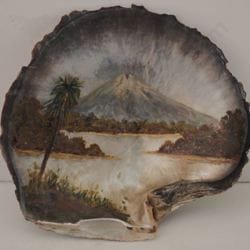
Mount Egmont with Lake
By: John Philemon Backhouse (1845-1908)
Oil on Sea Shell - 13cm x 14cm
Valued $2,000-$3,000
Offers invited over $1,500
Contact: Henry Newrick – (+64 ) 27 471 2242

|
|