
Founded by Max Farndale 1947 - 2018
Yesterday’s release of Treasury’s Pre-Election Economic and Fiscal Update (PREFU) provides a fairly sobering forecast of our ability to grow wealth in and for New Zealand, say the New Zealand Manufacturers and Exporters Association.
NZMEA Chief Executive, Dieter Adam says, “We have to face the reality of our lack of economic development in New Zealand. And now is the right time to challenge New Zealand’s leading parties to tell us what they are going to do to push our economy towards a more prosperous future for everyone.”
“For the next four years (2018 to 2021) Treasury forecasts a decline in the rate of absolute GDP growth in 2020 and 2021, with a similar decline in the export growth rate, down to just over 2% in 2020 and 2021. By then we’ll be four years away from the current Government’s goal of growing the share of exports to GDP to 40%, and further away from reaching that goal than ever.
“These observations sit alongside our own, and Statistics New Zealand’s data on exports of elaborately transformed goods, which have been in decline for the past 18 months or so.
“Treasury’s forecasts for the increase in GDP, as modest as they may be, are still based largely on a growth of labour inputs due to immigration for 2018. After that, miraculously, labour productivity will take over as the main driver of GDP growth. When it comes to explaining what this expectation is based on, given that for the last three years, for example, we saw virtually no productivity growth in our economy, the report remains silent, but states that “productivity growth may be slower than assumed if labour inputs grow more strongly than expected” - meaning if the forecast drop in immigration numbers doesn’t eventuate.
“So, what have we actually got here? An economy projected to grow at modest rates overall, especially in the second half of the outlook period (2020 to 2021), and growth rates for Real GDP per capita, the real measure of wealth creation, of 1.2% and 1.0% in the same period. And all of that based on a miraculous increase in labour productivity from around zero currently to between 1.5% and 1.8% from 2019 onwards.
“We suggest it is time we have a serious debate on how we can sustainably improve our ability to grow wealth in this country. Growing wealth, so we have more money to pay for a better health system, better education, and other public services. You can’t do that if most of the growth in your economy comes from immigration, or when many people’s perception of increased wealth comes from rising asset prices fuelled by ever-increasing private debt.
“Growth in wealth comes from growing the output per hour worked – and that, as the late Sir Paul Callaghan kept reminding us, will only happen if we achieve growth in those sectors of our economy that produce and export high-value products and services. Our manufacturers, together with other sectors of our productive economy, stand ready to contribute. It’s about time the major political parties did their bit by making this a key focus of their efforts” says Dieter.
| An NZMEA release || August 24, 2017 |||
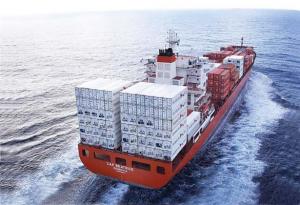
Silver Fern Farms has launched a large-scale China chilled pilot with the first sea-freight container shipment of chilled beef as well as multiple air-freight orders of beef and lamb set for customers across China.
The pilot is part of a six-month trial negotiated by the government to test chilled red meat access into the China market. While small-volume air-freight product has been sent into market, it is understood that this is the first sea-freight container to test the market says Silver Fern Farms GM Sales Grant Howie.
"It is important that during this trial period we test the market’s protocols and supply chain for chilled meat at sea-ports as well as via air-freight," Mr Howie says.
"With chilled product in China we need to test the process at scale which is why we have worked with one of our customers to take a full 20ft container of chilled product."
The first sea-freight container leaves New Zealand this week and is due to arrive into China in early September.
"Our relationship with Shanghai Maling has helped facilitate this sea-freight order. We are working with one of Shanghai Maling’s subsidiaries who will distribute Silver Fern Farms chilled beef to a number of its supermarkets in and around Shanghai.
"The cuts they are taking are important. They are primarily secondary cuts of prime Beef - cuts that would otherwise have been sold frozen at lower prices. They have the capability to position these traditional Chinese cuts at a premium in supermarkets."
Silver Fern Farms is New Zealand’s largest meat exporter to China, having achieved $316m of sales to the region in 2016. All of the product entered the market in frozen form.
Silver Fern Farms is also testing protocols for small-scale air-freight orders of beef into key food service distributors who service high-end restaurants and hotels in Shanghai, Guangzhou and Shenzhen and an airfreight order for lamb cuts into a major multi-national high-end supermarket chain.
"For the past 2 years we have been busy developing the premium food service market with our Eating Quality (EQ) Graded Silver Fern Farms Reserve Beef as a frozen product. Our Reserve and Angus Beef frozen programmes are aged for 21 days back in New Zealand before being shipped frozen. Now that we have the ability to ship chilled, that ageing can now occur as it is shipped to China."
"This is a complex large scale chilled pilot to test a variety of market entry options as well as a range of products. We have two air-freight orders destined for our food service customers in Shanghai. They have ordered our value added Silver Fern Farms Reserve Beef, and our food service chilled prime beef product in primary and secondary cut form. They are taking steak cuts, our Silver Fern Farms Reserve oyster blade and rump caps."
"We have also partnered with a major multi-national high-end supermarket chain for an order of lamb cuts, including premium lamb racks. We look forward to further orders at scale so we can test sea-freight container orders once the new season lamb production comes on in coming months."
| A SilverFern Farms release || August 23, 2017 |||

Procedure is killing Party’s election hopes
Eminem’s copyright legal proceedings centred on the rapper’s lawyers claiming that the National Party had heisted riffs of the warbler’s Lose Yourself album for its 2014 general election jingle.
The unlikely proceedings conducted in a Wellington courtroom are remembered for sweetening global network talk shows.
Presenters in the United States especially discovered humour in the rendering of the word Eminem due to the squished vowel sounds of their New Zealand counterparts.
The chuckling involved in the parodies attendant on the New Zealand broadcasting patois along with the bizarre courtroom episode we can see now obscured a much more serious intention and in the view of many, a much more dangerous one.
The National Party was determined, even if rather belatedly, as per the disputed song, to lose its old self, slough off its wrinkled skin, and hop disco-style into the age of hip.
This Eminem-style background “music” to the campaign was the pointer to a much deeper strategy designed to attract the very large slice of the electorate both young and old who identify themselves with the contemporary culture represented by rap.
Former premier John Key’s campaign to change the New Zealand flag can now be seen as part of this trendy re-imaging campaign.
The flag replacement scheme was remarkable in that it failed to obtain any traction at all in the media, usually always on for a dig at the established order, and then it collapsed through the absence of any popular momentum at all.
The appeasing of the fashionable Greens by the U-turn on live sheep shipments has left the government with an obviously festering sore as it seeks to compensate double-crossed Middle East interests by building there for free a processing depot for which there is no budget, simply because the construction was and is unofficial.
External affairs allocations are still being combed to pay for it.
A weight of evidence points to the involvement behind this of foreign image consultants.
This explains why the change-the-flag scheme ran alongside the 100th anniversary of the Gallipoli landings and thus of Anzac.
Foreign consultants would not have been aware of the significance of this milestone in the short history of the nation, and especially of the way in which it transcends ideological boundaries.
Similarly with the anti-Israel complicit vote in the dying days of New Zealand’s last tour of duty as a temporary member of the United Nations Security Council.
Foreign advisers would not have been aware of the size of the evangelist-fundamentalist following in New Zealand, traditionally National Party adherents, and the bloc’s sensitivity about anything to do with the holy land.
A further clue to external progressivist influence is the money that the National Government, note government and not the Party, started doling out to the Clinton Foundation at a time when the Clintons were doggedly campaigning in Hillary’s bid for the presidency.
As was seen subsequently the involvement by foreign governments in United States federal and even state elections is prohibited by law. This applies specifically to the financing of individual candidates.
Again a suspicion remains of an external influence, a re-imaging one, behind these donations to the Clinton Foundation, estimated by the Taxpayers Union, to amount to between nine and 10 million dollars, or the equivalent of the annual income tax paid by 899 workers on the average wage.
The unseen advisors had no doubt whatsoever that the Clinton dynasty would resume, and that the hand-outs would be regarded ecstatically here by the very progressives that the National Party now strives so ardently, and so awkwardly, to draw to its side.
| From the This email address is being protected from spambots. You need JavaScript enabled to view it. || Thursday 24 August 2017 |||
A slightly softer growth forecast is the main feature of largely unchanged Pre-election Fiscal Update compared to the Budget forecasts three months ago, Finance Minister Steven Joyce says.
“The softer growth New Zealand has experienced in the six months to March flows through to a lower starting point in the 2017/2018 year,” Mr Joyce says.
“The net effect is that growth is slightly lower through the forecast period – averaging 3.0 per cent over the next four years rather than the 3.1 per cent predicted in the Budget.
“The other notable change is that Treasury expects the labour market to be tighter over the next four years, with lower unemployment and stronger nominal and real wage growth.
“Treasury forecasts unemployment to drop to 4.3 per cent by June 2020 and for the average annual wage to increase from $58,900 at March 2017 to $65,700 by 2021, a $1300 per annum improvement on the Budget forecast.”
Other changes to the forecasts include:
Most other elements of the forecast remain very similar to budget predictions, with nominal GDP, migration levels and budget surpluses largely unchanged, although the timing of budget surpluses has changed.
“The Budget surplus is expected to be $2.1 billion higher in the year just finished,” Mr Joyce says. “However Treasury expects the lower growth forecast to result in surpluses that are $1.8 billion lower over the next four years. The net effect is about even.
“The Government’s strong fiscal management means that New Zealand is one of the few OECD countries to be posting fiscal surpluses. This hard-won position is underpinning the Government’s strong economic plan which is delivering jobs and steady real wage growth for New Zealanders.”
The large infrastructure spend committed to in Budget 2017 means that residual cash remains broadly in balance until the 2019/20 financial year.
“There is limited room for any additional expenditure beyond what is already proposed in these forecasts until the 2020 financial year when there is expected to be a $1.7 billion cash surplus. Anything significant in the meantime would involve more borrowing or raising additional tax revenues,” Mr Joyce says.
The PREFU forecasts include the following budget spending commitments:
• $7 billion in additional operating expenditure over four years in Budget
2017 which commenced on 1 July 2017.
• $1.7 billion per annum ($6.8 billion over four years) operating
allowance to be allocated for Budget 2018, increasing by 2 per cent
each subsequent budget.
• $32.5 billion in total capital infrastructure investment between 1 July
2018 and 30 June 2021.
• $6.5 billion over four years ($2 billion per annum in out years) for the
Government’s Family Incomes package commencing on 1 April 2018.
“Government annual operating expenditure in these forecasts increases from $77 billion to $90 billion over the next four years, which is sufficient for significant ongoing improvement in the provision of public services,” Mr Joyce says.
| SA Beehive release || August 23, 2017 |||
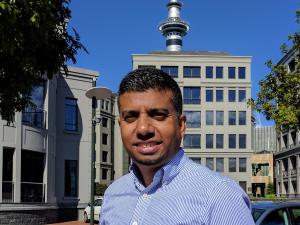
New Zealand farmers and companies are starting to use Internet of Things (IoT) sensors, data analytics and automation to decrease impact on New Zealand rivers, a leading national tech expert says.
In countries, right across the world the IoT devices are being used to help clean up water, New Zealand IoT Alliance executive director Kriv Naicker says.
Irrigation is by far the largest use of water in New Zealand, making up 65.9 percent of water use between 2013 and 2014, the Ministry for the Environment says.
Places like Israel and California have had to learn how to manage their farms and use of water really well as they don’t have much of it available, Naicker says.
“In New Zealand, we have plenty of water so we haven’t paid as much attention to the impact of farming until recently. There is now a push to make all New Zealand’s waters and rivers swimmable again.
“Earlier this year the government set a new target to have 90 per cent of New Zealand's lakes and rivers reach swimmable water quality standards by 2040. Currently just 72 per cent meet the standard.
“New Zealand can quickly learn from other nations and use sensors to monitor water quality, water levels, nutrient flows and other metrics, analytics to quickly understand what is happening where on the farm and automation and robotics to adjust delivery of nutrients and water to reduce impact on waterways.”
Using soil moisture sensors, analytics and water automation systems, Californian avocado growers have been able to reduce water usage by 75 percent.
A water sensor that will allow people to check the health of waterways has recently been tested on the Manawatu River near Palmerston North. The sensor will allow communities to check the health and safety of their local waterways.
Naicker says the advantages of the ability to remotely track, IoT monitor and then report on the condition of a herd of cows or flock of sheep or quality of water introduces huge efficiencies for the modern farmer.
“They can be alerted to various scenarios in advance and save both time and money by not having to patrol and survey, using satellite technology to receive various information in a proactive fashion.”
“Some good examples of companies providing sensors for the quality of lakes and rivers includes Riverwatch Water Tester in the Wairarapa, Waterforce in Canterbury and KotahiNet in Wellington.
In addition, Spark, Vodafone, and Thinxtra and Kordia are rolling out IoT water management solutions,” he says.
For further information contact New Zealand IoT Alliance executive director Kriv Naicker on 021 8486367 or Make Lemonade NZ editor-in-chief Kip Brook on 025 030188.
| A MakeLemonade release || August 24, 2017 |||
 F&P Healthcare lowers guidance on strong NZD, plans to expand manufacturing
Online payment service Stripe launches in NZ
Time to pull our collective heads out of the sand - NZMEA
Slightly softer growth expected in PREFU
New technologies helping clean up NZ’s waterways
Lack of women in leadership 'constraining'
Auckland Airport working on transport solutions as traffic shows no sign of easing

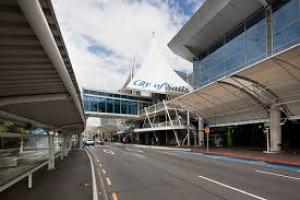
Auckland Airport has today announced its financial results for the 12 months ended 30 June 2017.
Sir Henry van der Heyden, Auckland Airport’s chair, says, “The 2017 financial year was another strong year of growth right across our business with the company continuing to focus on upgrading its airport infrastructure, growing and supporting tourism and providing the best possible customer experience during a time of significant change.”
“To help accommodate the ongoing increase in passengers and aircraft, we continued to spend more than $1 million every working day on our core airport infrastructure. There are now 44 aeronautical projects underway across the airport each in excess of $1 million and we plan to invest around $2 billion in aeronautical capital expenditure by the 2022 financial year. During the 2017 financial year, we progressed the upgrade of our international departure area and the extension of Pier B of the international terminal to provide two more aircraft gates and expanded departure lounges. We also further developed our airfield including upgrading existing and building new remote aircraft stands.”
“We have continued to sustainably grow travel markets to increase our air connectivity – which is essential for a city and country reliant on tourism and trade for its economic prosperity. We have also maintained our support for the New Zealand tourism industry, especially the operators who provide our international visitors with high-quality experiences. We also joined with other industry leaders to encourage the Government to develop new and innovative ways to upgrade tourism infrastructure.”
“Auckland Airport remained focused on its customers during the 2017 financial year, ensuring their journeys through the airport are fast and efficient and they have a range of options when parking, shopping or staying here. Improving travel times and flows around the airport precinct has been a top priority for the company in the 2017 financial year and we also continued to advocate to central and local government the need for better public transport services and state highway access to and from the airport.”
“We fast-tracked a number of planned roading and transport improvements on our own network to improve traffic flows, including upgrading the Puhinui Road roundabout, upgrading the traffic light phasing and lane configurations at the airport’s George Bolt Memorial Drive and Tom Pearce Drive intersection, and updating the lane configurations at the airport’s George Bolt Memorial Drive and Laurence Stevens Drive roundabout. We also announced, in June 2017, the details of four new transport projects as part of our longer-term plan to improve travel around the airport over the next three years.”
“Late in the 2017 financial year we announced our new aeronautical prices for the next five financial years – the result of a year-long consultation process with airlines on investment plans, operations and pricing. The outcome of that consultation process, in real terms, sees average annual international passenger charges reducing by 1.7% per annum and domestic passenger charges increasing by just 0.8% per annum over the next five years. We also confirmed that a runway land charge of $1.19 (excluding GST) per passenger will likely be introduced from the start of the 2021 financial year once certain operational and construction triggers are met.”
“Together, our modest price changes for the 2018–2022 financial years and our $2 billion infrastructure investment plan will deliver significant benefits for passengers. The new pricing and capital expenditure programme also balances the needs of passengers, the airport community, the tourism industry, our investors and the airlines – ensuring Auckland Airport has the infrastructure it needs to continue connecting Auckland with New Zealand and New Zealand with the world.”
“The 2017 financial year also saw Auckland Airport continue to focus on a wide range of activities to improve educational, employment and environmental outcomes at the airport, in our local communities and across the Auckland region. Ara, our airport jobs and skills hub, continues to deliver real benefits, providing more than 1,300 training opportunities and placing 190 people into jobs – 82% of whom were South Aucklanders.”
In the year to 30 June 2017 the total number of passengers using Auckland Airport increased by 10.2% to 19 million. Domestic passengers were up 8.9% to 8.6 million, international passengers (excluding transit passengers) were up 11% to 9.7 million and international transit passengers were up 16.8% to 0.7 million.
Total revenue was up 9.7% to $629.3 million, while operating expenses were up 8.8% to $156.2 million. Earnings before interest expense, taxation, depreciation, fair value adjustments and investments in associates (EBITDAFI) increased 9.9% to $473.1 million.
The total share of the underlying profit from associates was $14.9 million for the 2017 financial year, up 29.6%. The underlying profit share from Queenstown Airport was up 57.9% to $3 million and the share from the Novotel hotel, in which Auckland Airport increased its shareholding to 40% in February 2017, was up 58.8% to $2.7 million. The underlying profit share from North Queensland Airports was up 16.5% to $9.2 million.
Total profit after tax was up 26.9% to $332.9 million, while underlying profit after tax was up 16.5% to $247.8 million. As a result, underlying earnings per share is up 16.2% to 20.8 cents. Auckland Airport’s final dividend for the 2017 financial year is up 16.7% to 10.5 cents per share, delivering a total dividend of 20.5 cents, an increase of 17.1% compared with the 2016 financial year. The final dividend will be imputed at the company tax rate of 28% and will be paid on 20 October 2017 to shareholders who are on the register at the close of business on 6 October 2017. Auckland Airport’s performance in the 2017 financial year means the five-year average annual shareholder return is 26.3%.
“In the 2017 financial year we undertook a review of our 24.55% investment in North Queensland Airports (NQA). We believe NQA is a highly attractive asset and a great investment with a strong growth strategy and a new and highly capable management team. However, our review has confirmed that while NQA is a quality asset, it is not integral to our current business strategy.”
“During the 2017 financial year, the Board elected to reinstate our dividend reinvestment plan to provide funding flexibility to support our investment in new infrastructure and growth opportunities. The dividend reinvestment plan will again be in place for the 2017 financial year final dividend, enabling shareholders to elect to purchase Auckland Airport shares at a 2.5% discount to market price, instead of receiving the dividend as cash.”
“We expect underlying profit after tax (excluding any fair value changes and other one-off items) for the 2018 financial year to be between $248 million and $257 million. This guidance would deliver underlying earnings per share growth of up to 3.7% compared with the 2017 financial year and reflects the impact of our new aeronautical prices commencing in the 2018 financial year.”
“As always, this guidance is subject to any material adverse events, significant one-off expenses, non-cash fair value changes to property, and deterioration as a result of global market conditions or other unforeseeable circumstances,” concludes Sir Henry.
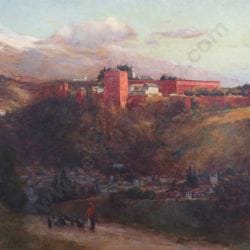
Palace of the Alhambra, Spain
By: Charles Nathaniel Worsley (1862-1923)
From the collection of Sir Heaton Rhodes
Oil on canvas - 118cm x 162cm
Valued $12,000 - $18,000
Offers invited over $9,000
Contact: Henry Newrick – (+64 ) 27 471 2242
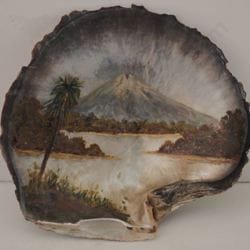
Mount Egmont with Lake
By: John Philemon Backhouse (1845-1908)
Oil on Sea Shell - 13cm x 14cm
Valued $2,000-$3,000
Offers invited over $1,500
Contact: Henry Newrick – (+64 ) 27 471 2242

|
|