
Founded by Max Farndale 1947 - 2018
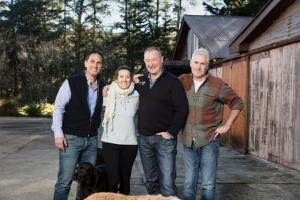
Two prominent New Zealand wineries have been acquired by a newly-established fine wine company co-founded by the man who launched Craggy Range and a US-based wildlife conservationist.
Pyramid Valley Vineyards in Waikari, North Canterbury, and Lowburn Ferry Wines, Central Otago, have both become the first purchases of Aotearoa New Zealand Fine Wine Estates Limited Partnership (ANZFWE) – a new venture between Brian Sheth, sole director of US-based Sangreal Wines LLC, and Steve Smith MW, sole director of LandbaseWineNZ Ltd.
Mr Sheth is an investor and wildlife conservationist from Austin, Texas, while Steve Smith, is well-known for having led the development of Craggy Range, based in Hawkes Bay and Martinborough, having co-founded the brand with owner Terry Peabody in 1998.
Pyramid Valley Wines is one of the frontrunners of New Zealand’s growing biodynamic movement, founded by Claudia Weersing and her husband Mike in 2000. Their 2.2 hectare biodynamic vineyard is planted with four separate blocks of Pinot Noir and Chardonnay, with the aim of replicating the Burgundian model, which produces four wines; Earth Smoke Pinot Noir, Angel Flower Pinot Noir, Lion’s Tooth Chardonnay and Field of Fire Chardonnay.
It is a further sign of the growing confidence in the winemaking region of North Canterbury, which encompasses the Waipara and Waitaki Valley, located on the south island north of Christchurch. The region accounts for just 1,419 hectares of vineyards and is home to dozens of boutique producers who together produce just 3% of New Zealand’s annual production.
Lowburn Ferry meanwhile, based in Central Otago, was founded by Roger and Jean Gibson in 2000 with a focus on Pinot Noir. Jean holds a degree in Horticultural Science while Roger, who holds a Masters degree in Applied Science, also works part-time as a tutor in the viticulture/horticulture department of the Otago Polytechnic, specialising in soils and plant science. The couple’s wines are made under the direction of chief winemaker Peter Bartle.
“We are delighted that the Gibsons will remain living on this great Central Otago Pinot Noir vineyard as we create new vineyards and establish a winery on the property and have access to Roger’s science and natural ecology background on our estates,” said Smith.
ANZFWE has also secured the purchase of a small piece of land in the Gimblett Gravels Wine Growing District in Hawke’s Bay.
Leading ANZFWE as its chief executive will be Michael Henley, who has spent the past five years as CEO of Hawke’s Bay winery Trinity Hill.
“It will simply be fantastic to have Mike on board as a partner and to work alongside him again following the almost 10 years we spent together at Craggy Range,” added Smith.
The sale of the two wineries are subject to the approval of the New Zealand Government’s Overseas Investment Office, with each business continuing to operate under the direction of their existing owners until this process is completed.
| A The DrinksBusiness release || August 16, 2017 |||



New Zealand is seeing a substantial increase in demand from the older ageing population for fitness, exercise and personal trainers, according to ExerciseNZ chief executive Richard Beddie.
He says they now know not only that exercise is needed as people we age, but also why this is the case. There are many providers catering for the ageing market, something that was rare 15 years ago.
Waikato University health and behaviour doctoral candidate Wendy Sweet says today’s ageing population, especially in the developed world, have many advantages over previous generations – not least access to research into ways to stave off age-related conditions.
Beddie says Baby Boomers who have not yet retired are in an excellent position to take advantage of significant positive benefits of exercise as well as increase both their life expectancy and their enjoyment of their later years. Living longer is not enough anymore. We know people want to live better and longer, by being active now.
“We believe the key message should be regardless of age, start now. Because even people who are already in the older age demographic, starting now will have huge benefits, and the corollary of that is the earlier the better. People should think of exercise as their body’s retirement savings system - the sooner people start, and the more they do, the better they will be.
“The key thing in starting now is do so in manageable micro-steps. In many cases finding an activity that the person enjoys is key, be it dancing, tai chi, yoga, Pilates or going to the gym. While there is a lot of information and guidelines about how much activity to do, in the short term the focus should be on forming a habit of being active - and using this to build towards long-term regular exercise.”
Beddie says hundreds of Kiwi personal trainers, gyms and fitness facilities are seeing a surge in older people seeking to get fitter. New Zealand’s best trainers and gyms will be vying for honours at the Exercise NZ awards 2017 in Auckland on November 25.
“ExerciseNZ is excited that there has never been so much interest in how Kiwis are ageing. With the last of the Baby Boomers heading into retirement over the next decade, they are not only the next generation of older people but they will be the fittest ever in our country’s history,” Beddie says.
| A Make Lemonade release || August 16, 2017 |||

In the mercilessly competitive world of five-star hotels, even legends have to fight to stay in the game among the upper echelon of the hospitality industry’s glittering options for sophisticated travellers.
The peerless Raffles, the grandest of dames among colonial-era hotels in Asia, this week is checking in with the renovation doctor for a nip/tuck to revitalise the dowager of Singapore. Every 130-year-old should look so good, but looking good for its age is not of interest to the hotel; as always, it has to look/feel/be not just good but spectacular.
It is not with a little trepidation that guests may wonder what the new Raffles will be like, having admired the current Raffles for so long and loving it just as it is. Knowing Raffles, though, the management will get everything not just right, but perfect. The hotel’s powers that be are fully aware that retaining the intangible spirit and heritage of Raffles is of paramount importance. After all, the hotel has undergone renovations before and always emerged as more alluring a destination because of them.
Continue to the full article written by Robert La Bua || August 14, 2017 |||
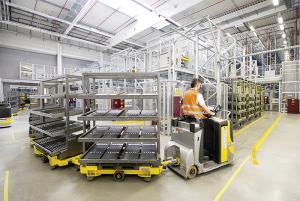
It appears Japanese factories, companies are looking beyond the IOT and or IOE; aiming to connect a variety of assets, e.g., machines, data, technologies, people, and organizations, as well as the existing industries and digital technologies, thereby bringing about the creation of new added value and the solutions to societal problems, bringing “Connected Industries” to fruition.
Industrial sensors,data and communications are becoming the core topic among factories, companies that foresee themselves in advanced industrial automation. IOT, smart solutions are at surge for individual customer; where as for factories it seems the challenges are more especially getting the machines to communicate in safer environment.
No wonder Japan introduced “Just in time Manufacturing” , Kaizen ,TQM, TQC concepts in the past; In response to fierce international competition resulting from increased globalization, as well as labor shortages and a reduced number of skilled workers due to falling birthrates and aging populations, the companies in Japan have come up with new concept called as “Flexible Factory Partner Alliance” .
The formation of this alliance or this concept is pretty simple and straightforward, utilizing advanced automation technologies of ICT in manufacturing to improve productivity and to tackle to seamless communications among machines, factories , plants in an secured wireless network.
Japanese companies always stressed upon ‘visualization’ in production equipment and production status is the stepping stone to moving forward for improving productivity, and as product development cycles have shortened in recent years, there has been a demand for greater flexibility in the configuration of production facilities equipment and in modifying the production line construction. As a means of achieving greater flexibility, there are rising expectations for wireless communications among machines, different plants and factories.
A major issue in wireless communications in factories where various wireless systems coexist is communication instability due to interference between wireless systems and the impact that has on equipment operation. There had previously been few efforts, however, to resolve this sort of wireless communication issues in manufacturing facilities; To find solutions Alliance of 7 companies in Japan have been formed .
OMRON, ATR, Sanritz, NICT, NEC, Fujitsu, and Murata Machinery have been conducting trials of wireless communications and evaluating the wireless environment in factories. These companies and organizations have at academic conferences and other venues broadly proposed coordination control technology that would enable stability in communications. This would work by controlling independent wireless systems for each piece of equipment, with specific use cases in actual manufacturing facilities.
These companies have come together to form the Flexible Factory Partner Alliance to promote the formulation of standards for coordination control technology. This will thereby ensure stable communications in an environment where various wireless systems coexist, as well as promote their use and further accelerate the adoption of wireless systems in manufacturing facilities.
Through the initiatives of this alliance, the partners will work to meet expectations for a new industrial revolution 4.0; 5.0; accompanying the spread of the use of IoT in manufacturing facilities. Sensors, Data and Communication in safer Wireless communications in manufacturing factories that are expected to accelerate wireless-connected devices to increase productivity, and disseminate the standards.
Few companies were working on trial specifications; last month the first set of 7 companies announced the first alliance . OMRON Corporation, Advanced Telecommunications Research Institute International (ATR), Sanritz Automation Co., Ltd., National Institute of Information and Communications Technology (NICT), NEC Corporation, Fujitsu Limited, and Murata Machinery, Ltd., while Professor Andreas Dengel of the German Research Center for Artificial Intelligence (DFKI)) is appointed as Chairperson.
Experts say "Based on the traditional concepts safe manufacturing concepts; Japanese companies aims at IoE (Internet of Everything)" that connects people as well as machines and things; smart factory is one main part where people /humans take leading role.The use and communication of on-site data, ideas of people seamlessly are important.The data utilization evolves and impacts equipment and factory facilities, Many companies are working towards a thorough process Specifically, Connecting objects (connecting), Connect information (visualize), Improve (Collect and analyze information, create value) and Expanding the scope (sharing data).
Although the Implementation and utilization of IoT in many Japanese factories has been existing for many years now ; or being started, it is merely an extension of the traditional Kaizen effort for the purpose of "productivity improvement" to the last step of product manufacturing.
Few of the Japanese factories feel that to understand the magnitude of change that can be brought by connecting machines, factories and various things in manufacturing plant and to understand the ROI for the given product , line and market these things can not be taken only at the manufacturing site.
While Private companies are working at group factories alliances program; Recently, Japan Ministry for Economy, Trade and Industry [METI] proposed a Policy Concept Titled “Connected Industries” as a Goal that Japanese Industries Should Aim for an ideal approach that Japanese industries should strive for.
As one of the efforts for promoting the Connected Industries policy concept, a goal to create value through connecting a variety of industries,last month the Ministry of Economy, Trade and Industry (METI) held the first symposium for this policy concept, bringing together approximately 600 stakeholders.
It appears Japanese factories, companies are looking beyond the IOT and or IOE; aiming to connect a variety of assets, e.g., machines, data, technologies, people, and organizations, as well as the existing industries and digital technologies, thereby bringing about the creation of new added value and the solutions to societal problems, bringing “Connected Industries” to fruition. To this end, the Japanese government is advancing a wide variety of policy initiatives in cooperation with private sector parties.
| A Manufacturing Tomorrow release || August 16, 2017 |||

Palace of the Alhambra, Spain
By: Charles Nathaniel Worsley (1862-1923)
From the collection of Sir Heaton Rhodes
Oil on canvas - 118cm x 162cm
Valued $12,000 - $18,000
Offers invited over $9,000
Contact: Henry Newrick – (+64 ) 27 471 2242
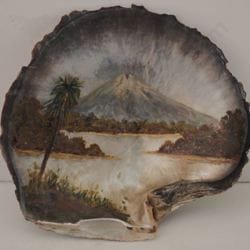
Mount Egmont with Lake
By: John Philemon Backhouse (1845-1908)
Oil on Sea Shell - 13cm x 14cm
Valued $2,000-$3,000
Offers invited over $1,500
Contact: Henry Newrick – (+64 ) 27 471 2242

|
|