
Founded by Max Farndale 1947 - 2018
From Azure stack and Microsoft 365 to renewed vertical focus and the ways technology is helping do real good in our world, Microsoft Inspire 2017, held in Washington DC last week, offered up an action packed week for Kiwi channel partners.
The release of the Microsoft Azure stack was a key announcement at Inspire – and it caught the eyes of many Kiwi partners.
Keith Archibald, Revera head of innovation, dubbed it ‘the most exciting development’ at the event.
“We’re really looking forward to strapping on this more powerful booster rocket to our already in-market Apollo programme,” Archibald says.
Revera has been involved in the Azure Stack early adopter programme from day one, and Archibald says the company sees Azure Stack as a key platform for its customers.
“Normally you can’t have your cake and eat it too, but with what we’re building with Apollo powered by Azure Stack our customers will get the best of both worlds: all the leading technology from the Azure Cloud, but the option to choose to have some or all of the features deployed in-country for compliance reasons, or simply because they want to bolt them on to existing applications with low latency,” he says.
“The opportunity to provide further Azure consistent goodness in-country and help boost the launch of our customers NZ inc. digital journey is really exciting.”
Mark Atherton, DXC Technology account general manager for NZ Cloud, also highlighted the Azure stack announcement as ‘hugely exciting’.
“We always need to remember that the client is why we are here, and the Azure stack opportunity in New Zealand is to bring another piece of the hybrid puzzle to help us solution the best outcomes for our clients,” Atherton says.
“Combined with the Sydney instance of Azure public, extending this into New Zealand through the stack and being able to then help clients execute a transformation strategy to the best fitting solution is really exciting.
“IT has moved on from a commodity shootout, and embracing clients journeys and ensuring you are best placed to help is key.”
Datacom too, is excited about the Azure stack announcement, with chief executive Greg Davidson, noting “It enables customers to immediately take advantage of public cloud functionality without the real barriers of complex migration, concern about compliance and latency.”
He says the Azure stack forms an ‘important addition’ to Datacom’s hybrid cloud ecosystem.
“We are thrilled to be well down track of planning deployment for early adopters.”
The new go-to-market combination for Office 365, Skype for Business and other workplace and collaboration tools into what will be labelled Microsoft 365, is also a winner for Datacom.
“We have a separately branded digitally marketed software-as-a-service offering for small business launching very soon across the geographies in which we operate, including New Zealand,” Davidson says.
“For larger organisations, we think the Microsoft 365 offering should enable easier implementations and integration of these core services in multi-location multi-country situations.”
Going vertical, going real world
A renewed focus on verticals also won the thumbs up from Kiwi partners.
Ratnakar Garikipati, LeapThought Group chief executive, says while the renewed focus was ‘formalised’ at Inspire ‘we have been witnessing this change first hand form Microsoft’s leadership for the past year – the co-sell initiatives that have been set in motion in South East Asia and other markets specifically over the past year are an example of this.
“We walk away from this conference with new revenue lines that we’ve identified, more streamlined GTM plans for different markets, and greater understanding of areas where our products and offerings can be more tightly integrated to unlock greater potential that is in store,” Garikipati says.
Brady Cox, Provoke Solutions country manager, says the vertical focus was one of two significant organisational changes made by Microsoft demonstrate their commitment to further align both customer and the partner community.
“Their new focus on six key industry verticals reflects the demand we see to truly understand our customers and build tailored, outcome based solutions,” Cox says.
“Aligning both the account and technical teams to then specialise against these verticals means that there will be even more useful presales resources to support the partner community.
“Further to this, they have created a channel manager role, which is the walk of the "partner first" talk we continue to hear.
Grant Houseman, Sable37 New Zealand general manager, says the recent industry alignment of the Microsoft partner organisation is a ‘massive’ driver for Sable37’s growth.
“Sable37 have built leading industry teams for several years. Microsoft's focus on Retail , Public Sector and Manufacturing align perfectly with our go to market models,” Houseman says.
He dubbed the way Microsoft solutions are being built by partners globally to solve important global problems as ‘inspiring’ saying he was ‘blown away’ by the stories at some of the Inspire keynotes – ‘particularly how tens of thousands of HIV deaths in Africa are prevented through solutions that have been imagined on the Microsoft platform’.
“Sable37 New Zealand is very excited about our future , our close partnership with Microsoft New Zealand and most important of all - the significant problems we can solve together,” Houseman says.
Real-world uses were a feature of this year’s conference, notes Kristy Brown, Fusion5 CRX New Zealand general manager.
Brown says not only could attendees see real world uses , but the real differences being made thorugh technology.
“From 3D printed prosthetics at an affordable price to specialist eye surgery being performed by non-specialist surgeons guided through the process by experts, in countries where these procedures simply wouldn't have been possible - it's an incredible time to be involved in the technology sector,” she says.
Tom Fuyala, 11Ants chief executive, says the bulk of the changes signalled by Microsoft were looked on very positively by 11Ants, with Fuyala noting that the continued alignment around industry verticals as well as continued efforts to further align sellers around ISVs should be helpful in further putting the full weight of the Microsoft machine behind companies like 11Ants.
“If properly executed, this will prove net positive for specialist ISVs in New Zealand and indeed around the globe,” Fuyala says.
Microsoft - reimagined
Says John Harrop, Softsource sales director: “Washington DC Inspire is Microsoft reimagined, to me this week has been more about Microsoft's renewed focus and drive then product or technical.
“Sure the products are developing but the story is really that Microsoft are changing the way they go to market, four motions for delivery and six market segments for focus, a 4.5T opportunity and a new Microsoft open for business attitude.”
Anne Hall, ITagree chief executive, says “One Commercial Partner and ‘Build with, Go to Market with, and Sell with’ is exciting for us. It gives a clear focus on the commercial growth aspects and on customer and customer outcomes.
“For a New Zealand based company and ecosystem enabler like ITagree, this focus supports our worldwide delivery,” she says.
Meanwhile, Simon Scott, Acquire director summed the event – or at least day two – more poetically: “I'm high in the stratosphere floating on clouds of overlay apps and services built to support Azure and the collective thunder storm that is Microsoft.
“There are brainiacs flapping their wings, confusing my eyes and dazzling my ear drums. This place is exciting with opportunity and collaborative spin.
“I get the urgent feeling that we need to be better and just go faster to keep up with the tide. I've got new ideas and concepts to rationalise and explore. It's great.”
| A ChannelLifeNZ release || July 18, 2017 |||
The Taxpayers’ Union can reveal that over $7 million of taxpayer money has been spent on the power bills of 94 of New Zealand’s largest companies since July 2014. The Energy Efficiency and Conservation Authority’s (EECA) ‘large energy users programme’ provides funding to businesses, in an attempt to encourage them to reduce energy use. Of this $7 million, more than $1 million has been wasted on 'initiatives' which haven't recorded any energy savings to date. Taxpayers’ Union Researcher, Matthew Rhodes says, “Taxpayer money doesn’t need to be spent telling the country’s largest power users to save power. All of these companies pay millions for power, and have every interest as it is to lower their energy use.” “If the EECA don’t think that the corporations at the big end of town aren’t looking at how electricity costs can be saved, they are delusional. Most of these corporates are buying electricity off the spot market or have hedging arrangements. They are anything but unsophisticated consumers requiring the help from bureaucrats.” “This whole regime is a little bit of a rort. Electricity users are levied so that officials can tell people to use less power, meanwhile, people rightly scratch their heads about why electricity is so expensive.”
"We asked how much money has been recovered from companies where taxpayers' money has been thrown at projects where the promised energy savings cannot yet be demonstrated, and it appears that not a single dollar has been recovered." “At best, it’s a waste of money and pointless, at worst, it is corporate welfare in an environmental jacket, paid for by kiwis who have to pay more to turn on their heater.” A response to the Official Information Act request shows:
More information can be obtained on EECA’s website: https://www.eecabusiness.govt.nz/funding-and-support/support-for-large-energy-users/
The relevant information released to the Taxpayers' Union under the OIA is available at: http://www.taxpayers.org.nz/corporate_power_bill_welfare
| A Taxpayers Union release || July 18, 2017 |||

SANY Group, China's top construction machinery manufacturer, has made remarkable progress in Asia-Pacific region since entering the local markets in 2007. After establishing its branch office in Sydney, SANY continues to make substantial efforts to develop business in Australia.
SANY's vast range of products have participated in major projects in the Australian market. In Aug 2015, three 300 ton SANY crawler cranes were delivered to the Wheatstone LNG project in Ashburton North, Western Australia. As one of Australia's largest resource developments, it is expected to produce 8.9 million tonnes per annum (MTPA) of LNG that will power 1.8 million local homes with electricity.
In addition to super projects, SANY compact and medium excavators have been widely used in urban construction, agricultural and landscaping applications across Australia. After proving its unrivaled performance and reliability, SANY excavators have won the favor of Australian mainstream market of construction machinery.
Following the booming e-commerce business, SANY launched the mini excavator online sales in Australia and New Zealand in mid-May, which has attracted considerable attention of the local customers. When they visited SANY's manufacturing facilities in China, they were all impressed by the exceptional efficiency and value-adding features of the excavators.
"I have heard of SANY in Australia before. This time I examined its products in detail and found that they are very good quality machines," said Mr. Buckley.
In recent years, sticking to the "going out" strategy, SANY has made proactive efforts to expand in the global markets. Its overseas performance is growing by 20% each year, registering about 43% of the company's total revenue. Furthermore, SANY has entered new business sectors, such as wind energy, prefabrication and internet of things, boosting SANY's growth around the world.
About SANYSANY Group (SANY) is a leading global heavy machinery manufacturer with plants in the US, Germany, Brazil and India, and business covering over 100 countries and regions worldwide. The company has been recognized as one of the most innovative and successful companies in the world, and its concrete machinery is ranked No. 1 globally.
For more information, please visit: www.sanyglobal.com, or follow SANY Group on Facebook and YouTube.
| A SANY release || July 18, 2017 |||

Emirates and flydubai have unveiled an extensive partnership which will see the two Dubai-based airlines join forces to offer customers unmatched travel options.
Both airlines will continue to be managed independently, but will leverage each other’s network to scale up their operations and accelerate growth.
The innovative partnership goes beyond code-sharing and includes integrated network collaboration with coordinated scheduling. The new model will give flydubai customers seamless connectivity to Emirates’ worldwide destinations spanning six continents. For Emirates’ customers, it opens up flydubai’s robust regional network.
The two airlines will also further develop their hub at Dubai International, aligning their systems and operations to ensure a seamless travel experience through the ultra-modern airport; currently the world’s busiest for international passengers.
HH Sheikh Ahmed bin Saeed Al Maktoum, Chairman and Chief Executive of Emirates Group and Chairman of flydubai, said: "This is an exciting and significant development for Emirates, flydubai, and Dubai aviation. Both airlines have grown independently and successfully over the years, and this new partnership will unlock the immense value that the complementary models of both companies can bring to consumers, each airline, and to Dubai.”
Emirates, which flies A380s four times daily from New Zealand to Dubai and beyond, today has a wide-body fleet of 259 aircraft, flying to 157 destinations (including 16 cargo-only points). flydubai operates 58 New-Generation Boeing 737 aircraft to 95 destinations. The current combined network comprises 216 unique destination points.
The partnership is working to optimise the networks and schedules of both airlines, to open up new city-pair connections offering consumers greater choice. Additionally, this will help both airlines feed more traffic into each other’s complementary networks. By 2022, the combined network of Emirates and flydubai is expected to reach 240 destinations, served by a combined fleet of 380 aircraft.
The Emirates and flydubai teams are working together on a number of initiatives spanning commercial, network planning, airport operations, customer journey, and frequent flyer programmes alignment.
The partnership will be rolled out over the coming months, with the first enhanced code-sharing arrangements starting in the last quarter of 2017. Further details will be communicated as they become available.
Fully owned by the Investment Corporation of Dubai (ICD), both Emirates and flydubai are operated independently and under separate management teams.
About flydubai
Since launching its operations in 2009, flydubai has:
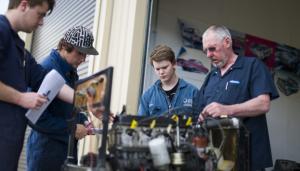
Otago Polytechnic is investing in Central Otago’s educational future with a new Trades Hub and student accommodation for its Central campus.
Construction will begin once consents are obtained on the new 600 square metre trades building at Bannockburn Road. It will house Automotive and Carpentry programmes, classrooms, offices and a common room. There will also be a platform for the construction of a four-bedroom house that the students will build. This is stage one of the proposed campus redevelopment project, which is a move from the current location to a new facility on Otago Polytechnic’s Bannockburn Road site.
Head of Central Otago Campus, Alex Huffadine, says the polytechnic is very excited about bringing a Trades Hub to Central Otago.
“There’s a real skills shortage in the trades industry. By offering trades-based training here at Central campus, we really hope to solve that problem with well qualified graduates and, at the same time, help our students into a fantastic career,” he says.
He adds that Otago Polytechnic’s two new trades qualifications (the New Zealand Certificate in Construction Trade Skills (Level 3) (Carpentry) and the New Zealand Certificate in Automotive Engineering (Level 3)) will both be taught from the Trades Hub which is expected to be finished by the end of term one in 2018.
With a shortage of accommodation in Cromwell, Otago Polytechnic has also committed to building self-contained student accommodation at its Molyneux Avenue site. Stage one of the accommodation will include four houses with up to five bedrooms per house.
Mr Huffadine says accommodation is an important part of Otago Polytechnic’s growth in the region.
“We hope accommodation onsite removes the barrier of rental shortages in Cromwell. This offers a safe and easy option for our students.”
The first phase of student accommodation will be available for students studying in 2018.
The construction of both builds is currently out for tender.
Read more about studying at Otago Polytechnic's Central Campus.
Read about this in the Otago Daily Times.
The Taxpayers' Union can reveal that another $2.4 million has been paid by the NZ Aid programme to the controversial 'Clinton Health Initiative', a subsidiary of the Clinton Foundation, which President Bill Clinton and his daughter Chelsea Clinton sits on the board of.
The payment of $2,352,869 NZD was paid in May and revealed in a response to a Taxpayers' Union Official Information Act request to Foreign Affairs Minister Gerry Brownlee. Mr Brownlee's response has been uploaded to www.taxpayers.org.nz/2017_clinton_payment
Jordan Williams, Executive Director of the Taxpayers' Union, says "Back in January, the Australian Government cut all ties with the very fund our Government is still pumping millions of taxpayers' money into. Mr Brownlee can say all he likes about the money apparently doing work in Africa, but no one really believes that a charity run by Chelsea Clinton is the best way to deliver that."
"Of real concern is Gerry Brownlee's claim that the Clinton Health Initiative is independent and not a subsidiary of the Clinton Foundation. That is simply not true. We've gone back to the Minister pointing out the Initiative's public filings showing that the Clinton Foundation has full control, including appointing the board - which includes President Bill Clinton and daughter Chelsea Clinton. Under international accounting standards, the power to appoint the board is determinative of that organisation being a 'subsidiary'."
"The Minister is either misleading the public in claiming the fund is not a subsidiary of the Clinton Foundation, or his advisors are incompetent. If it is the latter, it seems $9.1 million of our money has been handed out on a false premise. From a taxpayer perspective, it's not clear which of those is worse."
"In addition to the constitutional objections to NZ Aid giving money to a foreign politician's foundation, if the Clinton Foundation was so effective at delivering aid outcomes, why have our Aussie neighbours pulled out?"
"If this was a charity run by President Donald Trump and daughter Ivanka Trump, then we have no doubt we would not be funding it. So why are we funding the Clintons?"
Notes:
In the letter to the Taxpayers' Union, Foreign Affairs Minister Gerry Brownlee claims that the Clinton Health Initiative is not a subsidiary of the Clinton Foundation. This is wrong.
The Initiative’s “1023” Form – Application for recognition of Exemption under section 501 (c)(3) of the Internal Revenue Code shows that the Foundation has full rights of appointment of the members board of the Initiative. As these non-profit groups do not have equity allocation (shareholders) the definition of subsidiary and groups (to the extent that the Initiative must be included in the Foundation’s group or consolidated financial statements) depend on the ability of the Foundation to exercise control over the Initiative. There can be no greater way to do this than the rights to appoint members of the board.
Because the Clinton Foundation has the power to appoint the Board of the Initiative:
The letter from the Minister, and the Taxpayers' Union's response are available at: www.taxpayers.org.nz/2017_clinton_payment.
| A taxpayers Union release || July 18, 2017 |||
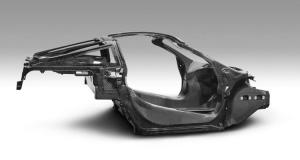
During a McLaren press conference at the 2017 Goodwood Festival of Speed in the U.K., Chief Financial Officer Paul Buddin said the company’s new plant in Sheffield, England, building McLaren’s next-generation carbon-fiber tubs will have an annual capacity of 10,000 monocoque chassis by the end of 2019.
That number caught the ear of a number of automotive news outlets, including CarBuzz and Car and Driver, especially since McLaren had also claimed its target goal was to build 5,000 cars annually by the end of the decade. The discrepancy between 5,000 cars and 10,000 monocoque chassis, both outlets reported, is a result of McLaren’s desire to make room for any future sales expansion.
“It would be very short-sighted to limit ourselves to 5,000 cars,” McLaren CEO Mike Flewitt explained.
Flewitt also hinted that McLaren is considering using the Sheffield plant to build carbon fiber monocoque chassis for other car manufacturers looking to build limited-run performance cars.
“We won’t do it until we’re fully up and running ourselves, but it is something that we are considering as an obvious expansion.”
One of the innovations that will make this possible is the increase of automation. Back in March, new broke that McLaren aims to completely automate the carbon fiber production process its uses to create the lightweight “tubs” around which it builds its supercars. To do so, McLaren ended its contract with Austria’s Carbo Tech and moved the work to Sheffield. The production process at Carbo Tech, which also made the body for VW’s XL1 eco-car, is only 20 percent automated. McLaren wants to push that to 100 percent, allowing the British automaker to increase production to 20 to 25 cars a day, up from 15 now. The plant produces McLaren’s 720S supercars, the first of which has already rolled off the production line.
| A Composites Manufacturing release || July 17, 2017 |||
A large improvement in New Zealand’s net foreign liabilities as a share of GDP since 2009 makes the economy less vulnerable to shocks, Deputy Governor Geoff Bascand said in a speech today. “New Zealand’s net foreign liabilities – what we owe to the rest of the world, broadly speaking – reached nearly 85 percent of GDP at the start of 2009 but now they are down to 58.5 percent of GDP, their lowest level since the late-1980s,” Mr Bascand said. “New Zealand has become less reliant on offshore funding over the past decade, and the maturity of bank borrowing has lengthened, reducing the risks from a potential funding shock,” he said. The liquidity policy introduced by the Reserve Bank in 2010 has contributed to this improvement. The decline in New Zealand’s net foreign liabilities (NFL) partly reflects low global interest rates that have reduced the interest payments on our overseas debt, and high equity prices that have boosted the value of our overseas assets. More significantly, a better balance between national saving and investment during the current economic expansion has helped contain the current account deficit and lowered the ratio of net foreign liabilities to GDP. “Although some of the macroeconomic factors that have driven the improvement in our NFL position are potentially more transient or fortuitous than others, the higher domestic saving and financing of investment augurs well for the durability of the current growth phase.” However, Mr Bascand warned that New Zealand’s net foreign liabilities as a share of GDP is still relatively high internationally, especially given our exposure to commodity exports that can be subject to large price swings. “Significant uncertainty remains regarding household behaviour and the contribution of the sector to New Zealand’s saving-investment gap, and the extent that banks as intermediaries might increase their reliance on offshore funding. “Borrowing from the rest of the world isn’t automatically ‘bad’. It can be a good thing if it leads to productive investment that enhances our economic performance and leads to high per-capita incomes over time, but debt-fuelled consumption is less sustainable. “Much of the investment undertaken by the household sector is in the form of new house builds and renovations to existing homes. If housing demands cannot be met by increased household sector or domestic saving more broadly, it will be reflected in a deterioration in our NFL position.” Mr Bascand said that banks have recently begun to compete more aggressively for deposits and tighten lending standards, which should help alleviate offshore funding pressures and prevent a significant increase in NFL. “Relying on non-residents to fund investment makes the financial system vulnerable to changes in the availability or cost of that funding. That vulnerability may be exposed in times of acute financial stress, with financial institutions’ access to funding cut off or available only at much higher interest rates. “As always, the Bank will be monitoring these developments closely. We welcome the improvement in New Zealand’s net foreign liabilities since the GFC, but do not see it is a reason to become complacent,” Mr Bascand said. More information:· Speech: New Zealand’s net foreign liabilities: What lies beneath, and ahead?· Audio: listen to the excerpts of the speech on Soundcloud
| A RBNZ release || July 17, 2017 |||
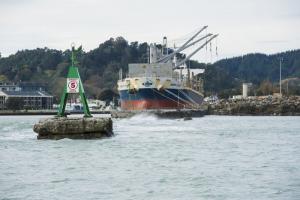
Despite a wave phenomenon that kept ships from the harbour for a week Eastland Port and log marshaling and stevedoring companies ISO and C3 shattered monthly log throughput records this June.
A total of 287,349 tonnes of wood was loaded onto 14 log vessels as they berthed one after the other at wharf 8.
Eastland Port manager Andrew Gaddum says shifting that amount of wood is testament to the reliability and professionalism of ISO and C3 staff.
“Both ISO and C3 have worked hard to increase their ship load rates, and while we still collectively have work to do in this area, the huge volume exported during the month is testament to their hard work and focus.
“The fact that there were no significant safety issues identified or reported during that extremely busy month is also exceedingly pleasing.”
“When ships are alongside a port, it’s costing the exporters money, so these guys are the ones that through their skilfulness and shear hard work, can get the ship turned around and off to market as quickly as possible”
ISO employs around 110 people and C3 employs around 70.
Mr Gaddum says June’s throughput figures are the highest the port has achieved since Eastland Port, part of Eastland Group, was formed 14 years ago.
“We saw an 83 percent occupancy of wharf 8. With 14 ships docking during the month, and each one taking one to three days to load, we are getting closer to maximum capacity.”
The figures are all the more impressive because between June 12 and June 19 we couldn’t dock any ships due to infra-gravity waves rolling into the harbour, says Mr Gaddum.
“Long waves or infra-gravity waves cause problems in harbours around the world. These waves can’t be seen as they are usually masked by the sea and swell waves. But they can energise a moored ship and cause excessive movement and surging against the mooring lines.”
“When the time between wave peaks becomes extended we have issues in our port with ships becoming difficult to manage alongside the wharf, meaning we have to hold ships at the anchorage until the surge event passes.”
Mr Gaddum says the combined length of wharf 8 and wharf 7 is 360m. Eastland Port can currently accommodate vessels 200m long but with the greater volumes of wood forecast to arrive over the next 15 years, Eastland Port needs the capacity to berth two 200m ships simultaneously at wharf 8 and wharf 7.
“Within our port we don’t have enough wharf frontage to berth two 200m vessels at once. We need to extend wharf 8 by about 80 metres to get both ships in safely and we need to do it now.”
Gisborne Chamber of Commerce CEO Terry Sheldrake last week took part in a special Eastland Port onsite tour giving port staff a chance to share twin berth development plans with iwi, business groups, and members of the public.
Mr Sheldrake says standing at the southern end of the port gave him a chance to fully appreciate the port’s need to grow its capacity.
“It gave me, and other Chamber members who attended a real insight into what’s needed for the logging industry to continue to flourish for this city. I encourage other groups invited on the tour to take advantage of this unique opportunity and look behind the scenes.
| An Eastland Port release || July 17, 2017 |||
MIL OSI – Some of New Zealand’s largest businesses are lagging behind their international counterparts in their levels of corporate social responsibility (CSR) according to new data.
The research which measured CSR performance across more than 17,000 businesses globally found New Zealand companies ranked just 33 out of 36 countries across the CSR criteria of community, employees, governance and environment.
New Zealand general manager of GSK Anna Stove says Kiwi companies are potentially missing opportunities from a growing, ethically conscious market, and at the same time have an obligation to support social causes beyond their immediate interest in short-term profits.
“Increasingly, CSR information is used by customers, suppliers, employees and investors to make socially responsible decisions about who to buy from, transact with, work with and invest in.
“It is becoming essential for businesses to extend the traditional measurement of their financial outcomes to include a degree of their social impact as an indicator of performance – in other words, create a double bottom line,” she says.
Stove says organisations can’t commit to sustainable social investment unless they are profitable.
“While business scale helps provide the resources required for major ethical initiatives, it is the development of an organisational mindset that is the real prerequisite we need to effect change,” she says.
Stove says CSR has now evolved to become a key consideration for prospective employees and this trend is being driven by a demographic shift in the employment market.
“Millennials are expected to make up half of the global workforce by 2020 – and this generation more than others, is seeking a social conscience in the companies they work for.
“Ten years ago, a job candidate would talk about their interest in the products the business sells during an interview, while today the focus is on a company’s work in the community – this marks a major shift in one of the primary drivers of employment decisions,” she says.
Stove says that more research is needed to determine why New Zealand ranked below other markets in the latest study.
“While there could be a number of methodological reasons why NZ companies performed at this level that are difficult to identify, the results are a timely reminder for our organisations to assess their investment in CSR.
“If our corporate efforts don’t support our approach to marketing New Zealand’s identity, we will start to see an erosion of our nation’s brand equity. That’s something that will affect our tourism market but also other key parts of our economy like the agricultural sector which seek a premium for our food products,” she says.
She says it’s important to ensure that when an organisation develops their double bottom line strategy that the chosen causes align with the company’s values.
“Locally we are investing in the health and wellbeing of Kiwi children is important to us, which is why we invest in children’s charities, including suicide prevention which has seen us fund Youthline’s support line for two decades, as well as KidsCan and Save the Children working to address child poverty,
Stove says GSK’s global partnership with Save the Children combines scientific expertise and resource with the charity’s on-the-ground knowledge and the organisations aim to save the lives of 1 million children in some of the world’s poorest countries.
“Choosing the right charities to align with is a critical part of getting buy-in from your team and stakeholders. The first step is to conduct due diligence on the organisation, then look at making a long term social investment.
“The aim should be to develop a true partnership which is sustainable as charities may struggle if a supporting partner providing a significant annual donation drops out,” she says.
Stove believes at the same time, contributions must go beyond the financial.
“For employees to feel connected to the company’s social efforts it’s important for them to have direct contact with the charity which can be achieved by giving staff time off to support the organisation,
“Developing a connection with socially positive projects helps employees come to work with a sense of purpose,” she says.
Notes:
Data for the study was sourced through CSRHub, the world’s largest sustainability business intelligence database. Across the 17033 countries and 133 countries included in the analysis, only those markets with data from more than 25 companies were included in this study. This included 39 New Zealand listed companies.
| A NewsLive release || July 16, 2017 |||

Palace of the Alhambra, Spain
By: Charles Nathaniel Worsley (1862-1923)
From the collection of Sir Heaton Rhodes
Oil on canvas - 118cm x 162cm
Valued $12,000 - $18,000
Offers invited over $9,000
Contact: Henry Newrick – (+64 ) 27 471 2242
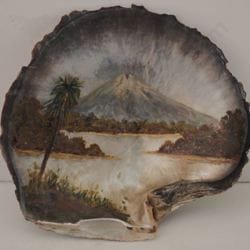
Mount Egmont with Lake
By: John Philemon Backhouse (1845-1908)
Oil on Sea Shell - 13cm x 14cm
Valued $2,000-$3,000
Offers invited over $1,500
Contact: Henry Newrick – (+64 ) 27 471 2242

|
|