
Founded by Max Farndale 1947 - 2018
New regulations gazetted today will help revolutionise the way New Zealand’s commercial fisheries are managed and monitored, says Primary Industries Minister Nathan Guy.
The regulations require the use of geospatial position reporting (GPR), e-logbooks, and cameras across the commercial fishing industry and are being rolled out from 1 October this year.
“Digital monitoring is going to revolutionise the way we make fisheries management decisions, and help ensure that we are protecting the sustainability of New Zealand’s fisheries. It will give us arguably the most transparent and accountable commercial fishery anywhere in the world,” says Mr Guy.
“This new technology will provide more accurate and up-to-date information allowing us to make quicker and better-informed management decisions.”
Digital monitoring replaces the paper-based catch and effort reporting system for commercial fishing, which was too inefficient. Fishers will be required to provide more detailed information in their reporting and all data will be integrated by MPI so that what is reported can be compared to the GPR data and camera footage.
“The reality of the industry has too often meant that what happens at sea has been out of sight. We expect this new system will act as a significant deterrent to illegal activity, as the information it captures can and will be used by MPI for prosecutions when the rules are broken.”
The first two stages of digital monitoring – GPR and catch reporting via new e-logbooks – will be brought in from 1 October this year, with cameras phased in to each fishery from 1 October 2018.
Trawl vessels 28 metres and over will be using the GPR and e-logbooks from 1 October, representing over 70 percent of the commercial catch volume. All other operators will have a 6 month period to install the new systems.
“This is the biggest change to the commercial fishing industry since the introduction of the Quota Management System, and I have instructed MPI to support the industry to achieve full implementation and compliance over a six-month period.
“By 1 April 2018 all fishing permit holders will be required to be fully compliant with the GPR and e-logbook systems.”
Digital monitoring is part of the Future of our Fisheries programme, which is strengthening the fisheries management system and making it fit-for-the future. The programme also includes ongoing policy work to help ensure sustainable fisheries.
This year’s Budget included a boost of $30.5 million in funding over the next four years to support these improvements.
More information on this new system and the Future of our Fisheries programme is available at www.mpi.govt.nz/futureofourfisheries.
| A Beehive release || July 13, 2017 |||

Foiling Monos for Next America’s Cup?
______________________________________________
 Southland company eyes export expansion
NZ welcomes visit from UK Foreign Secretary
NZ manufacturing activity slows in June as firms reduce hiring
George Bennett shines on steepest Tour de France test
Catherine Beard: Forget scaremongering, trade is important
Commercial fishers to phase in digital monitoring

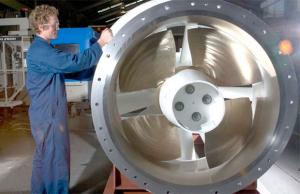
HydroWorks Limited (“HydroWorks” or “Company”), a Christchurch based hydro engineering company, is pleased to announce that it has successfully commissioned five mini-hydro energy recovery systems (“Climate Defenders”) for the Melbourne Water Department (“Melbourne Water”).
The plants are located within Melbourne Water’s existing urban water supply network and have been designed to recover the excess energy present in the flowing water, convert it to electricity and export it into the Melbourne electricity network. The excess energy is a by-product of the height differences between Melbourne’s main water storage reservoirs and Melbourne’s inner suburb reservoirs and was “wasted” to the environment. HydroWorks plants trap and use that energy and give it back to the community. The Climate Defenders are located at Mt Waverley, Dandenong North, Wantirna, Boronia reservoirs and Cardinia Creek pumping station.
HydroWorks’ is committed to the principles of environmental sustainability and supports initiatives by clients to make use of energy sources that would otherwise be wasted. HydroWorks Climate Defenders are an exemplification of this commitment, harnessing energy for the community from within the community.
Climate Defenders are designed and assembled by HydroWorks using their own high-efficiency mini-hydro turbines (designed and manufactured in New Zealand) along with equipment from internationally-accredited suppliers. Each of the … Read More »
| A Bourse Communications release || July 13, 2017 |||
The Reserve Bank of New Zealand and the Ministry of Business, Innovation and Employment have started a public consultation on the implications for New Zealand of foreign margin requirements for over-the-counter derivatives. New Zealand has no margin requirements in over-the-counter derivatives, but several banks registered to operate in New Zealand will likely have to comply with margin rules being implemented in foreign jurisdictions. Margins is collateral exchanged by derivative market participants in order to protect against the risk posed by credit exposures and to reduce the risks of financial market contagion if a derivative contract counter-party defaults. Some features in New Zealand laws that cover statutory management and creditor priorities could impede the prompt and free availability of margin provided by New Zealand banks, potentially impairing banks’ access to derivative products and markets they use for funding and hedging. Addressing the issue can help to protect and promote the soundness, efficiency and global integration of New Zealand’s financial sector. The consultation identifies specific impediments in New Zealand insolvency laws and proposes a number of targeted legislative amendments to address them. The consultation seeks stakeholder’s views on the scope of the issues identified, and the adequacy and effect of the amendments proposed. The consultation closes on Thursday 24th August. Consultation paper: NZ Response to Foreign Margin Requirements for OTC Derivatives
| A RBNZ release || July 13, 2017 |||
Science and Innovation Minister Paul Goldsmith today announced a new Regional Research Institute based in Greymouth that will use innovative research and manufacturing techniques to unlock the potential of New Zealand’s minerals resources.
The New Zealand Institute for Minerals to Materials Research led by industry organisation Minerals West Coast Trust, is the third successful proposal under the Government’s initiative to establish new Regional Research Institutes.
“Mining is and will continue to be an important part of the West Coast’s economy, its history, and its DNA,” Mr Goldsmith says.
“The new institute’s strategic vision is to reposition this traditional sector using innovation to convert minerals into higher-value products which will begin a new chapter in the history of the West Coast.”
The Government will provide funding of $11 million over four years for the new institute. With additional funding from industry, it will operate as a private, independently governed organisation.
The institute will explore three research areas initially, including purifying rare earth elements for use in magnets and lasers, extracting tungsten from gold mining waste and developing a carbon foam pilot plant.
“This research has the potential for significant commercial outcomes and economic benefits for the West Coast region including jobs, new infrastructure and export revenue,” Mr Goldsmith says.
“The institute will bring together players from the minerals and materials sectors, an economic development agency, Ngāi Tahu, and research organisations. All of which demonstrates a strong, cohesive collaboration with significant support from the wider community and iwi.
“I look forward to seeing the institute get started and what innovations it can produce for the benefit of the Coast,” Mr Goldsmith says.
The announcement of the new institute through the Regional Research Institute initiative comes as the West Coast launches its Tai Poutini West Coast Economic Development Action Plan. The West Coast was included in the Government’s Regional Growth Programme in November 2015. The programme aims to increase jobs, income and investment in regional New Zealand. More information can be found on the MBIE website, HERE.
| A Beehive release || July 13, 2017 |||
The latest New Zealand Manufacturers and Exporters Association (NZMEA) Survey of Business Conditions, completed during June 2017, shows total sales in May 2017 decreased 2.34% (year on year export sales decreased by 5.68% with domestic sales increasing by 10.99%) on May 2016.
In the 3 months to May, export sales decreased an average of 14.4%, and domestic sales increased 7.1% on average.
The NZMEA survey sample this month covered NZ$251m in annualised sales, with an export content of 77%.
Net confidence fell to 25, down from 40 in April.
The current performance index (a combination of profitability and cash flow) is at 98.7, up from 97.7 last month, the change index (capacity utilisation, staff levels, orders and inventories) was at 100, up from 98 in the last survey, and the forecast index (investment, sales, profitability and staff) is at 104.2, down on the last result of 105.7. Anything over 100 indicates expansion.
Constraints reported were 60% markets and 40% skilled staff.
A net 10% reported productivity improvements in May.
Staff numbers decreased 2.28% year on year in May.
Supervisors, tradespersons and managers, reported a moderate shortage, while professional/scientists and operators/labourers showed a minor shortage.
“This month’s domestic sales improved on April’s results, showing growth of 10.8% on May 2017. Despite the negative result seen last month, domestic sales have experienced a largely positive growth trend in the last year. In the three months to May, there was an average monthly growth of 7.1% on the same months last year.” Said NZMEA Chief Executive Dieter Adam.
“Export sales, on the other hand, experienced another month of decline, -5.7% on May 2016, reinforcing the general negative trend felt over the last year. In the three months to May, average monthly sales decreased 14.4% on the same months last year.
“Export sales results were also reflected in the recent Overseas Merchandise Trade numbers from stats New Zealand. For example in May, both mechanical machinery and equipment and electrical machinery and equipment experienced decreases in export sales values on May 2016.
“Finding skilled staff has become a larger issue for manufacturers in May, with the skilled staff constraint having the highest value since February 2008, at 44%. It was commented by respondents that tradespeople are of particular need – a sentiment that was shared by a number of companies at a recent NZMEA event with the Prime Minister.
“Industry and Government need to work together to improve our education system and industry training to start to address these skill shortages that hold Kiwi manufacturers back. This can be done – there are a number of examples around the world of such skill shortages being address effectively, such as Germany.” Said Dieter.
For analysis tables and graphs, click here.
| An NZMEA release || July 13, 2017 |||

After a long tour of duty the National government again demonstrates erratic and quirky behaviour
Trans Tasman commentator Spiro Zavos observed that toward the end of one of their long periods of time in power that successive National governments become erratic, sometimes eccentrically so. They would, proclaimed the maven, succumb to a type of long distance fatigue and start to weave across their own political road. Here are a trio of notable and quite recent examples…..
Example 1. The John Key Knighthood.
Purpose of the ennoblement: To demonstrate that the National Party appreciated upon his retirement the shrewd and personable leader who had led them to their triumphs, and indirectly, remind its aspirational followers what he had done for them.
Where it went wrong: The K looked like part of Mr Key’s severance package. It was bestowed far too soon, almost immediately after his departure. Also the immediate bestowing looked as if Mr Key wanted it now, rather than waiting for just a few more months. But at which time the Party might not be in a position to give it to him because it was out of power and thus out of the patronage business.
What should have happened: The party should have leaked the notion that their former boss deserved the K. But in the event had turned it down. The leak would then have encompassed the very groups that the Nationals wish to draw into their fold. The leak should have let it be known that the former Premier believed that there were others who deserved the K much more, especially those in let us say education, health, climate, foreign aid, and race relations.
This omission was a major boner and the National marketing apparatus is still unaware that it was pulled in the first place.
Mr Key could then, a few months later, and having correctly foreseen the National win, and indirectly plugged some of the sectors it badly needs to win it, and after suitable expressions of the very, very deepest state of being humbled,, have safely collected his K in the New Year.
If the National spin apparatus has failed to see the contradictory nature of all this, it will, of course, have been identified by New Zealand First’s Winston Peters and sometime very soon will be used as a bargaining chip.
Unintended impression: That Mr Key is uncertain that his party will win the imminent general election
Example 2. The Southland Clutha candidate affair
Purpose of the selection: To demonstrate an uncompromising faith in youth, in this case in their early 20s.
Where it went wrong: The candidate selected had little real life experience especially in the matter of handling local committees and their procedures, particularly important in an electorate so remote from Wellington headquarters
What should have happened: There were plenty of seasoned candidates to choose from in this ultra safe seat who would have contributed to National’s enduring appeal which is centred on experience.
Unintended impression: Revealed an obvious and as it turned out foolish grab at the youth look. Also that the National Party’s once vaunted control over its rural electorates is slipping
Example 3. Premier John Key’s Campaign to change the New Zealand flag.
Purpose of the campaign: To demonstrate that the National Party was sensitive and caring about nationhood and renewal and thus sought a country-wide sharing consensus in devising a new emblem to express this caring, sharing etc…
Where it went wrong: The change-the-flag campaign ran parallel with the commemoration of the centenary of Gallipoli and the Anzac era.
What should have happened: The National government having re-scheduled the flag changing referendum play until before or ideally after the Gallipoli and Anzac centenary should have stated a practical and coherent reason behind what still appears a bizarre event that did not conform to any of its stated policies.
In practical terms it remains a mystery why nobody stressed the mooted change being a solution to the problem many have in telling the difference between the New Zealand flag and the Australian version which at a glance look identical.
Unintended impression: That the National government was prepared to ride roughshod over its backbone patriot support in order to pander to the ephemeral whims of the anti-monarchist, middle class guilt transfer crowd.
| From the This email address is being protected from spambots. You need JavaScript enabled to view it. || Thursday 13 July 2017 |||
Today The Fletcher School at Tufts University in Boston released their latest Digital Evolution Index which, again, puts New Zealand as a standout nation. The report identifies New Zealand as among the digital elites characterised by high levels of digital development and a fast rate of digital evolution.
"I am delighted to see that New Zealand is, for the second time, at the top of the world when it comes to the outstanding progress we have achieved in providing government services to our citizens via digital platforms.
“The Digital Evolution Index reflects the hard work we’ve been doing over the past few years on government’s digital transformation, and in creating an enabling environment that fosters innovation and active collaboration between agencies and the private sector to provide better public and private services for New Zealanders.
“Our appetite for innovation has resulted in digital solutions that benefit people from all walks of life. It raises the bar for providing New Zealanders with services – both from government and the private sector – that are available digitally and on demand," says Minister for Internal Affairs Peter Dunne.
The report also reinforces New Zealand’s position as a digital leader. Along with other D5 nations the United Kingdom, Estonia and Israel, New Zealand has been named in the report’s “digital entrepôt” standout group.
This group is described as ‘among the best positioned to compete by establishing a self-reinforcing ecosystem, fostering smart societies of the future, attracting global investments and talent, creating a demonstration effect for the rest of the world as to what the future might look like, and exporting their digital innovations around the world’.
“It’s great to know that our efforts to deliver better public services through digital transformation are being acknowledged as among the best in the world by esteemed international bodies and researchers.
“We’ve made great progress in our digital journey by making it easier for New Zealanders to access services when and where they need it, but we must not rest on our laurels.
“We must continue to innovate and harness the power of digital solutions to build on our gains and deliver even better services to New Zealanders," Mr Dunne said.
The Fletcher School at Tufts University latest Digital Evolution Index report can be found here: https://sites.tufts.edu/digitalplanet/files/2017/05/Digital_Planet_2017_FINAL.pdf
Peter Dunne -Internal Affairs
| A Beehive release || July 13, 2017 |||

Palace of the Alhambra, Spain
By: Charles Nathaniel Worsley (1862-1923)
From the collection of Sir Heaton Rhodes
Oil on canvas - 118cm x 162cm
Valued $12,000 - $18,000
Offers invited over $9,000
Contact: Henry Newrick – (+64 ) 27 471 2242
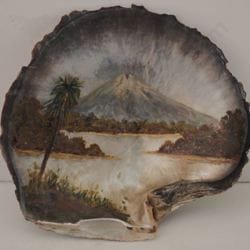
Mount Egmont with Lake
By: John Philemon Backhouse (1845-1908)
Oil on Sea Shell - 13cm x 14cm
Valued $2,000-$3,000
Offers invited over $1,500
Contact: Henry Newrick – (+64 ) 27 471 2242

|
|