
Founded by Max Farndale 1947 - 2018

Auckland Airport announces new aeronautical prices for next five years and $1.8 billion infrastructure investment to support the continued growth of New Zealand travel and tourism
· Strong growth – passengers up 26% since early 2014 and the number of international airlines up 61% in past 22 months
· Strong investment – currently investing $1 million in aeronautical infrastructure every working day. Now announcing a $1.8 billion aeronautical capital expenditure programme for the next five years
· Reasonable prices - in real terms, over the next five years average annual international passenger charges will reduce by 1.7% and domestic passenger charges will increase by 0.8%. A runway land charge of $1.19 (excluding GST) per passenger from the start of the 2021 financial year once construction of the second runway is confirmed
“In the 50 years since Auckland Airport opened, how New Zealanders travel and where we travel to has changed significantly. At the same time Auckland’s airport has evolved and grown from only several hundred thousand passengers in 1966 to over 18.7 million this year,” says Auckland Airport Chief Executive, Adrian Littlewood.
“Much of that growth has happened in only the last few years, with our passengers growing 26% since early 2014. At the same time the number of international airlines has grown significantly, with a 61% increase in only the last 22 months.”
“This passenger and airline growth has helped to fuel New Zealand’s recent tourism boom and bring real economic growth to our cities and regions. It has also helped to make travel much more affordable and provided more travel options for Kiwis.”
“At Auckland Airport, we are responding to that growth by currently investing over $1 million in aeronautical infrastructure every working day. To continue the transformation of our airport, today we are announcing a plan to invest around $1.8 billion in aeronautical infrastructure by 2022.”
“Today’s announcement is the result of a 17-month consultation with airlines and the airport community on the form and function of our future aeronautical infrastructure. It is also the result of a parallel year-long consultation process with airlines on investment plans, operations and pricing.”
Some of the key infrastructure projects planned for delivery at Auckland Airport between 2018 and 2022, include:
· expanding and upgrading the international departure experience;
· providing three more contact gates for international aircraft, such as the A380 and B787;
· building a new domestic jet terminal joined onto the existing international terminal;
· improving the international arrival experience by expanding the border processing area and public arrivals space;
· upgrading the international check-in area; and
· investments in public transport, roading and walking projects.
“As a result of this significant investment in infrastructure over the next five years, there will be better and faster passenger journeys through and around our airport. The experience within the terminals will be more intuitive and relaxing, and transferring between domestic jet and international flights will be faster and more efficient.”
“Setting aeronautical prices for a five-year period is a complex process involving a range of specific charges. We believe that the prices we have announced today balance different views and are in the best interests of travellers and New Zealand.”
“For the next five years, in real terms, our average international passenger charges will reduce by 1.7% each year and domestic passenger charges will only increase by 0.8% per annum. Given the scale of the planned investment this is a great outcome for travellers.”
“We believe Aucklanders and New Zealanders recognise the need for long-term planning and development of critical aviation infrastructure. In the next five years, we will take significant steps on the path to opening our second runway which we currently expect to be required in 2028. We will also be working hard with Airways New Zealand and the airlines to increase the capacity and productivity of our existing runway and will also be designing and securing the required planning permissions. Based on an opening date of 2028 we expect earthworks to start around 2020 or 2021. If the construction of the second runway is confirmed, we will introduce a runway land charge of $1.19 (excluding GST) per passenger at that time.”
“Auckland Airport’s new prices for the 2018–2022 financial years will target a return on investment of 6.99%. In setting our new prices we are conscious of the needs of our customers as well as our regulatory and investor responsibilities and the formal Commerce Commission review which now occurs as a matter of process. We believe our new prices are fair and reasonable given the significant investment we are making in long-term infrastructure, and our charges remain only a small fraction of the overall cost of travel. The average domestic charge will be well below average for Australasian airports and our international charge will continue to be middle of the pack compared with other airports around the world served from Auckland Airport.”
“As we continue to build the airport of the future over the next five years, it is critical that all the agencies and organisations operating at Auckland Airport cooperate to ensure customers continue to have a great experience while development takes place. As part of our aeronautical pricing consultation, the airlines and Auckland Airport have also agreed to work together on looking for ways to continuously lift service standards and on managing the ongoing planning and delivery of infrastructure.”
“Our five-year pricing and infrastructure plan announced today balances the needs of passengers, the airport community, the tourism industry, our investors and the airlines. Implementation of Auckland Airport’s 30-year vision is now well underway – providing thousands of jobs and driving economic growth. It will ensure that the airport continues to connect Auckland with New Zealand and New Zealand with the world,” concludes Mr Littlewood.
| An Auckland Airport release || June 8, 2017 |||

US to share more tax information about multinationals with New Zealand
Inland Revenue will receive more information about US multinationals operating in New Zealand following the signing of a new bilateral arrangement with the US Internal Revenue Service to share country-by-country reports.
Revenue Minister Judith Collins says this is great news as it means Inland Revenue will have better information about how multinationals allocate profits from their operations here.
“This will further enhance Inland Revenue’s risk assessment processes to make sure that the right amount of tax is being paid,” she says.
The arrangement will see country-by-country reports exchanged between the two countries on an annual basis starting from 2018.
Inland Revenue will reciprocate by sharing information on New Zealand-based multinationals with the IRS.
“The exchange of country-by-country reports is a key part of the OECD’s work on base erosion and profit shifting so I’m pleased to see we’ve been one of the first to sign a bilateral arrangement with the US,” Ms Collins says.
| A Beehive release || June 7, 2017 |||

 Apple squelches commitment critics with new iMacs
New computing platform to power NZ research
New Ambassador to Brazil named
 KiwiRail's board sided with diesel engines over electric last year for a number of reasons including customer retention in the face of temporary line closures for electricification.
 Ingram Micro NZ adds Beyerdynamics to ProAV range
Reliable steel supply key in construction boom
Kiwi/Aussie parity could be back on cards
The government's principal means of evaluating the success of Callaghan Innovation, the agency tasked with accelerating the commercialisation of innovation, is how much businesses are spending on research and development, Science and Innovation Minister Paul Goldsmith told Parliament's education and science select committee. So far, it's falling short of its target.
This year's budget included a $373 million increase in spending for science and innovation in a bid to help diversify the economy support more jobs and higher wages, including a $74.6 million boost for Callaghan Innovation R&D grants.
In response to questions from Labour's research and innovation spokeswoman Megan Woods about the lack of specific success measures for Callaghan, Goldsmith said: "One of the simpler measures of progress is the overall spending by businesses on R&D and we are seeing that go decisively upwards."
He noted that investments in R&D often take years to come to fruition and it can be difficult to “pin down exactly what the payback is.” Still, the government has a “suite of measures” regarding outcomes and objectives, Goldsmith said.
The government's aim has been to “find a way to encourage companies to invest,” he said adding there has been a 29 percent increase over the past two years in business investment in R&D. Among businesses supported by Callaghan, there has been a 46 percent increase.
The overall spend, however, remains light. New Zealand still lags behind its peers with recent government data showing total R&D investment as a proportion of gross domestic product increased to 1.3 percent in 2016 from 1.2 percent in 2014. The OECD average is 2.4 percent. Business investment in R&D was 0.6 percent of GDP in 2016, well short of the government's goal to lift it to 1 percent.
"We are seeing a significant uptick. It's not as fast as we would like but we are on the way," said Goldsmith.
He also noted that while the government is en route to raising its spending on R&D to 0.8 percent of GDP, there is no timeframe to hit that target.
"We are making progress towards that ... it is difficult when you have a GDP galloping forward to the extent that we have in this country," he said in response to questions. "We will meet the target when circumstances allow."
(BusinessDesk receives assistance from Callaghan Innovation to cover the commercialisation of innovation)
| A Business Desk release || June 7, 2017 |||
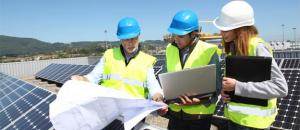
The Engineering e2e programme achieving its goal of 500+ engineering graduates per year by 2017 a year early will be welcome news for industry, says Minister of Tertiary Education, Skills and Employment Paul Goldsmith.
“It’s very pleasing to see all the hard work by Engineering e2e, Futureintech, tertiary institutions, engineering professional organisations and others has really paid off,” Mr Goldsmith says.
The Tertiary Education Commission (TEC) has confirmed 511 graduates from priority engineering courses in 2016, a full year ahead of schedule, for a total of 2,151 graduates in 2016. Set up by the Government in 2014, the Engineering – Education to Employment (e2e) initiative promotes engineering as a career to students.
“Engineering e2e’s successful public awareness campaign has already lifted the profile of engineering from 10th to 3rd place in potential student’s career considerations.
“More than 500 additional graduates each year is a step in the right direction though we still have quite a bit of work to do to address the balance of graduates across Diploma of Engineering (Level 6), Bachelor of Engineering Technology (Level 7) and Bachelor of Engineering (Hons) (Level 8) qualifications.
“Our big challenge, supported by employer feedback, is growing enrolments at institutes of technology, which specialise in level 6 and 7 qualifications,” Mr Goldsmith says.
“So I am pleased to see Engineering e2e is working closely with the ITP sector, and with engineering professional bodies to really focus on employer engagement to grow the pipeline of work-ready engineers.”
Engineering e2e has recently signed a Memorandum of Understanding with the Institute of Public Works Engineering Australasia (IPWEA) and IPWEA is collaborating with e2e on its sponsored degrees pilot programme which is being funded by the TEC.
Sponsored degrees would enable both on-the-job training and the completion of a Level 7 qualification in engineering, like the Bachelor of Engineering (Technology), and are particularly relevant for rapidly changing, high-tech industries.
“Engineers help build the infrastructure that makes up our modern world. New Zealand needs more engineers to meet the growing demand for construction and infrastructure, and this Government is focussed on meeting those challenges into the future,” says Mr Goldsmith.
| A Beehive release || June 7, 2017 |||
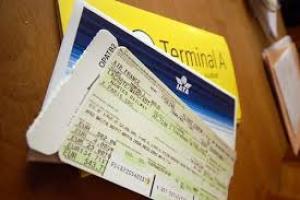
Although Kiwi trade phones have been ringing hot in the wake of the diplomatic brouhaha in the Gulf and London terror attacks, travel from New Zealand is unlikely to be ruffled by the two world events.
The Maldives, Yemen, Libya, Bahrain, Egypt, Saudi Arabia and the United Arab Emirates (UAE) have cut diplomatic ties with Qatar Airways, effectively suspending all Qatari planes to the seven Middle East countries. The crisis came at the time Europe was reeling by a terrorism attack in central London, which took the lives of seven people.
The House of Travel and Flight Centre say a flood of customers have been asking how the events will impact on travel. However, at this stage, it is unlikely to make an impact. Qatar, which entered the Kiwi market in Februay, says its flights to and from Auckland will not be disrupted by the crisis.
Accordingly, House of Travel commercial director Brent Thomas says the company has adopted a wait-and-see attitude ‘It is unknown at this stage how far the situation will go and what it will mean. It is too early to say what impact it will have if any on travellers going to Doha and further into Europe.’
Flight Centre says it is unlikely travellers from New Zealand will be affected by the announcement. It will be business as usual for those flying Qatar Airways to Doha and on to Europe unless they were calling in on one of the seven countries laying down the ban.
It also advises the company will monitor the situation, and its travel experts across the country will be kept informed of updates.
Meanwhile, House of Travel and Flight Centre say they are not aware of cancellations being made following the attack in London. And it appears hardy Kiwi travellers will continue to travel to the UK and Europe during the high season. ‘At this stage bookings are still coming in since this attack as well as the one in Manchester earlier this month,’ says Thomas.
‘If this is not followed up quickly by more acts of terror, we expect bookings to remain in their normal pattern.’
Nonetheless, House of Travel is keeping an eye on the situation, mindful that England is holding its Business as usual for Kiwi trade in spite of turmoil on the international stage snap election tomorrow. He advises travellers to keep an eye on government travel website Safe Travel and to stay vigilant. ‘Kiwis are resilient so I don’t think at this stage it will impact. It seems more an isolated incident and so bookings will continue as normal.’
Flight Centre says it has about 5000 customers in the UK and a couple of thousand are due to travel over the next week.
The UK and Europe is a top destination for our customers at Flight Centre and the last couple of years have seen this consistently increase year on year. This year has so far been no exception and we don’t anticipate this will change,’ a statement from the company states.
| A TravelMemo release || June 7, 2017 |||
A record number of entries to the Reserve Bank’s Monetary Policy Challenge resulted in tough competition with six schools selected for the national final.
The annual competition attracted entries from 53 secondary schools from across New Zealand to step into the shoes of a Reserve Bank economist.
Four Auckland schools – Macleans College, Takapuna Grammar, Kristin School and Auckland International College were named as finalists, along with James Hargest College, Invercargill and St Patrick's College (Kilbirnie), Wellington. Kristin School is the only school from the 2017 finalists to have previously won the title.
The competition is designed to increase students’ understanding of monetary policy by working as a team to assess economic conditions and make a prediction for the Official Cash Rate (OCR) decision. The competition is open to Year 12 and 13 Secondary School students and can also contribute towards NCEA achievement standards.
Reserve Bank economists, who judged the entries, were impressed with the quality of the presentations and the way the schools interpreted the current economic environment.
“We were looking for teams that understood Monetary Policy, could communicate this well and answer questions to apply their knowledge,” Judges Amy Rice and Amber Watson said.
“Students did well analysing issues that are of current interest to the Bank, such as the effect of migration and the drivers of consumption.”
The finalists will travel to the Bank in Wellington for the National finals on 5 July to give an oral presentation and compete for the title of Challenge winner and the winning team will be invited back to the Reserve Bank on 10 August 2017 to attend the Monetary Policy Statement media conference.
MPC website: http://www.rbnz.govt.nz/challenge/
| A RBNZ release || June 7, 2017 |||
Steel & Tube Holdings is facing 29 court charges of making false and misleading representations about its steel mesh product SE62.
The Commerce Commission filed the charges in the Auckland District Court under the Fair Trading Act, relating to conduct between March 1, 2012, and April 6, 2016, the Wellington-based regulator said in a statement. Steel & Tube has been cooperating with the commission throughout the investigation and is working with the regulator to reach an appropriate resolution of the charges, the Lower Hutt-based company said in a statement to the stock exchange.
The regulator started its investigation in August 2015 after a complaint was laid about the steel mesh, which is used in housing and driveway construction, not meeting the standards required in New Zealand. The commission signed enforceable undertakings in late April 2016 with Steel & Tube that the company would only sell SE62 500E grade steel mesh that passed specific independent testing. The undertakings were also imposed on other companies.
The commission said today that the charges allege Steel & Tube made misleading representations on their batch tags, batch test certificates, advertising collateral and website that SE62 was 500E grade steel, when it was not. The charges also allege that false and misleading representations were made by Steel & Tube that SE62 steel mesh had been independently tested and certified, when it had not. This included using the logo of an independent testing laboratory on SE62 test certificates when the product had not been tested by the laboratory.
Charges were also filed earlier this year against Timber King Ltd and NZ Steel Distributor Ltd in relation to false and misleading representations about 500E steel mesh. These companies have entered guilty pleas and will be sentenced in court in August. The commission said it expects to lay charges against one other company, and investigations continue into an additional company.
Steel & Tube has admitted selling “many thousands of sheets” of earthquake reinforcing mesh incorrectly labelled as being independently certified after it used the logo of accredited independent testing laboratory Holmes Solutions on its steel mesh for four years despite it not having carried out the tests. Steel & Tube’s in-house laboratory, which is not independently accredited by national accreditation body IANZ, had been used to test the mesh.
Steel & Tube said today it continues to stand behind its products, and noted that since April 2016 all of its seismic mesh has been tested externally by accredited laboratories.
The commission has previously said that misrepresenting a product as complying with the standard when it doesn't is a breach of the act for which companies can be fined up to $600,000 per offence.
Shares in Steel & Tube last traded at $2.52, and have gained 45 percent over the past year.
| A Businessdesk release || June 7, 2017 |||
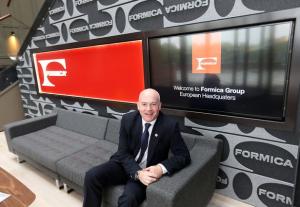
The New Zealand owners of Formica Group Europe, Fletcher Building, have pledged to plough £40m into the UK sites over the next three years, radically transforming and upgrading its production facilities and offices in a move to drive up its UK market share.
Formica has been a major employer in the North East’s manufacturing sector for more than 70 years, making laminate products for the residential and commercial sectors at its sites in North Shields and Newton Aycliffe, County Durham.
Peter Rush, president of Formica Group Europe, revealed full details of the investment plans for the first time at a special open day at the Coast Road site, bringing together industry leaders, politicians and directors as the firm cemented its commitment to the North East.
The investment is being made in three phases, the first of which has seen the relocation of around 100 office staff from Cobalt to the Coast Road base, which will now serve as the European headquarters – a decision backed by the New Zealand parent company after the Brexit vote last June.
Mr Rush outlined other significant spending plans which will bring new machinery and upgrades for existing machinery, which could potentially create new jobs. There are plans to centralise manufacturing activities under one roof in the west factory, located behind the east building, and new products are also being introduced in a bid to grab a greater market share.
Mr Rush said: “In 2015 Formica took a big deep breath and said: ‘What are we going to do with Formica Europe?’.
“If you look back at its performance over the previous five years, it was one of those moments when you either invest and get behind the business, or you might need to find another option.
“They took the view that we’ll get behind the business, put a new leadership business in place, get behind the business and come up with a strategic plan and based on that plan give this a real good go, which is exactly where we are today.
“Flectcher Building has been a fantastic parent company. They are thousands of miles away and they are allowing us to spend £40m over the next three years, and that’s a huge amount.| A ChronicleLive release || June 6, 2017 |||
Finance Minister Steven Joyce and incoming Acting Reserve Bank Governor Grant Spencer today signed a renewed Policy Targets Agreement (PTA), which sets out specific targets for maintaining price stability.
The Policy Targets Agreement takes effect on 27 September 2017, after Reserve Bank Governor Graeme Wheeler completes his term on 26 September 2017.
It will apply from 27 September 2017 until 26 March 2018.
There is no change from the existing agreement which requires the Reserve Bank to keep future CPI inflation outcomes between 1 per cent and 3 per cent on average over the medium term, with a focus on keeping future average inflation near the 2 percent target midpoint.
The renewed PTA will provide continuity, consistency and stability for the monetary policy target over the election period and during the period of appointment of a new Governor.
Read the renewed Policy Targets Agreement
| A RBNZ release || June 7, 2017 |||

Palace of the Alhambra, Spain
By: Charles Nathaniel Worsley (1862-1923)
From the collection of Sir Heaton Rhodes
Oil on canvas - 118cm x 162cm
Valued $12,000 - $18,000
Offers invited over $9,000
Contact: Henry Newrick – (+64 ) 27 471 2242
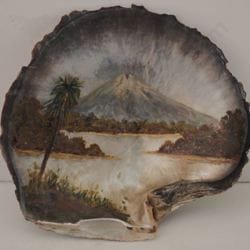
Mount Egmont with Lake
By: John Philemon Backhouse (1845-1908)
Oil on Sea Shell - 13cm x 14cm
Valued $2,000-$3,000
Offers invited over $1,500
Contact: Henry Newrick – (+64 ) 27 471 2242

|
|