
Founded by Max Farndale 1947 - 2018
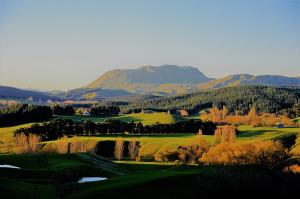
The lives of rural New Zealanders are at risk every day because of poor connectivity and inequitable health services, a rural health leader says.
Dr Martin London, chair of the Rural Health Alliance of Aotearoa New Zealand (RHAANZ), says government needs to help remove barriers so rural people’s health be considered just as important as those who live in cities.
RHAANZ has 47 national member organisations encompassing rural health providers, agribusiness groups, universities, rural community groups and local government. This week it held a series of national rural conferences and meetings in Wellington.
Later, London met Health Minister Jonathan Coleman outlining RHAANZ’s priorities for improving health services in rural areas: rural wellbeing, rural connectivity, rural research and policy, rural health services and the rural health workforce.
“We reminded him that with at least 600,000 people living in rural regions, effectively New Zealand’s second largest city, we are an important constituency from an economic and political perspective.
“Overseas evidence links health and wellbeing to economic productivity. Intuitively this will apply in NZ so it is an imperative rural people receive their fair share of publicly funded health services and have equitable access to health services.
“We asked him to reinstate rural proofing across all government departments and we want to fast track a new definition of rurality as it pertains to health services in New Zealand. These are two of the most important ways we can hold policy makers to account for equitable health outcomes for rural people.
“Mobile blackspots remain a serious issue across rural New Zealand, especially in case of emergencies. Poor broadband connectivity is a barrier to education and the slow pace of UFB and RBI2 roll-outs are dampening progress, production and innovation,” London says.
The responses to major disasters such as last year’s Hurunui-Kaikoura-Marlborough earthquake show what can be done in an innovative way to bring services to rural areas. Much can be learned from these adverse events and needs to be carried over into business as usual. It’s just a pity it takes a major earthquake to do it.
“We also know there are simply unrealistic expectations placed on the rural health workforce especially in regard to emergency and after-hours services. Our rural health workforce is ageing, tired and burnt-out and we need better retention and recruitment. We need greater workforce flexibility, nurse practitioners and pharmacists for example, as a key way to improve access to health services for rural people.
“We also need to make our small towns liveable so that people want to come and to stay. If we can make our rural communities vibrant again many of our issues will be solved,” London says.
“We want a national virtual health care service for rural New Zealanders, bringing services closer to rural people and helping rural people to age in their own homes. The technology and expertise is there. We need, in an election year, evidence of the political will to see it happen.
“Agriculture and tourism are the powerhouses of our economy. Each year, more than two and a half million tourists visit rural New Zealand. In 2011-2012, $40 billion, or 19 percent of GDP, was generated directly or indirectly by the agri-food sector.
“The Government needs to work with our ideas on rural health and social services if it wants the sector to thrive,” London says.
“We will meet Minister Coleman again at the inaugural Health Hub at the annual Mystery Creek Fieldays in the Waikato next month.”
| A MakeLemonade release || May 28, 2017 |||

New Zealand’s horticulture industry has been valued at a record NZ$8.7bn, with more than NZ$5bn in exports
iwifruit and wine are leading New Zealand’s growing horticulture industry, with the country exporting a record NZ$5.1bn in produce in the year to June 2016.
Accounting for around 10 per cent of New Zealand’s merchandise export income, the record value is up 19 per cent on last year, according to the latest issue of Fresh Facts, published by Plant & Food Research.
Total fresh fruit exports increased 35 per cent to NZ$2.6bn, with kiwifruit exports up 42 per cent to NZ$1.7bn, apple exports up 23 per cent to NZ$692m. Blueberries and cherries saw increased of 50 per cent and 30 per cent, respectively, while avocado exports dropped to NZ$82.6m due to a smaller export volume.
Peter Landon-Lane, CEO of Plant & Food Research, said the value of New Zealand’s exports from horticulture has increased 50 per cent since 2010.
“The horticulture industry’s success is based on efficient production and supply systems, cultivars that meet global consumer requirements for novelty and taste, and strong branding of New Zealand products,” Landon-Lane said. “This focus on capturing value across the supply chain means we can continue to produce more and better food for ourselves and consumers around the world.”
New Zealand exported fruit, vegetables and flowers to more than 124 countries in 2016, compared to 117 countries in 2010, with Asia the leading market for New Zealand horticulture exports at NZ$1.9bn – more than twice the value of any other region.
The total horticulture industry is worth NZ$8.7bn, with New Zealanders spending NZ$1bn on fresh and processed fruit, and NZ$1.3bn on vegetables over the year.
“It’s exciting to see the horticulture industry is on track to meet its goal of NZ$10bn by 2020,” said Mike Chapman, CEO of Horticulture New Zealand. “Our keen understanding of the global consumer and the commitment to quality at every stage of the value chain means our produce commands a premium in the marketplace, and this is reflected in the outstanding growth of the industry.”
| A n Asia Fruit release | May 25, 2017 |||
The Reserve Bank and Financial Markets Authority have welcomed the release of a new code to promote good practice in the international foreign exchange market.
The new Global Code of Conduct for the Foreign Exchange Market was released in London by the Bank for International Settlements last night. It was developed by central banks and foreign exchange market participants from 16 international jurisdictions.
“The code of conduct applies to both those buying and selling foreign exchange and is a principles-based code rather than a rules-based code,” said Reserve Bank Deputy Governor Grant Spencer.
“It aims to create greater confidence in the foreign exchange market and ensure it is functioning in the interests of all market participants.
“To comply with the code, firms will have to take practical steps such as training their staff and putting in place enhanced policies and procedures. Certainly the Reserve Bank would be following the code of conduct in its foreign exchange dealings,” concluded Mr Spencer.
Garth Stanish, FMA Director of Capital Markets, encouraged industry participants to adopt the code.
“The code is relevant to all parts of the wholesale FX industry that fall within the FMA’s conduct regulation. We support its objectives, which include the promotion of a robust, fair, liquid, open, and appropriately transparent foreign exchange market.”
More information:Read the Global Code of Conduct for the Foreign Exchange Market
| A RBNZ release || may 26, 2017 |||

Synlait Milk (NZX: SML; ASX: SM1) has welcomed Antony Moess to the Senior Leadership Team as General Manager, Manufacturing.
With more than 20 years’ international experience in the dairy industry, Mr Moess has worked in a number of countries including New Zealand, South East Asia and the Middle East.
"Antony has held a number of senior roles throughout his career and we are looking look forward to utilising that experience in our Senior Leadership Team," says John Penno, Managing Director and CEO.
Most recently Mr Moess was based in Singapore as Fonterra Brand’s General Manager Operations and Supply Chain for Asia, Middle East and Africa.
He was responsible for the strategy and performance of manufacturing and supply chains across nine operating companies and in this role he implemented best practice manufacturing systems and processes across the region.
Prior to this he spent several years overseeing the manufacturing network strategy and operations excellence programs for 29 sites, nine of which were third party manufacturers.
"Antony has a real passion for leading manufacturing operations. His vast experience will add to our existing capability and his ability to focus on both his team and operational demands will be well received," said Dr Penno.
Mr Moess holds a Bachelor of Food Technology and a Post Graduate Diploma of Business and Administration from Massey University.
He will begin at Synlait in mid-July.
| A Synlait release || May 26, 2017 |||

On 25 May, Finance Minister Steven Joyce delivered the National-led Government’s ninth Budget.
This Budget delivers for New Zealanders because it comes from a Government that cares about people and knows how to get things done.
It shares the benefits of growth by improving public services and investing in the infrastructure needed for a growing country, reducing debt and lifting incomes.
New Zealand’s economy is performing solidly and annual growth is expected to average around 3 per cent over the next five years. We’re also on track for growing surpluses and falling debt.
That translates to more jobs and higher incomes and gives us a once-in-a-generation opportunity to raise living standards for all New Zealanders.

 MachineryMarket Latest Edition
Steel skeleton grabs the PM’s eyes
NZ seventh-worst on emissions of 41 nations
RBNZ and FMA welcome new foreign exchange market Global Code of Conduct
Ansell finds its condom division wasn't a good fit
NZME, Fairfax appealing Commerce Commission's decision to block merger
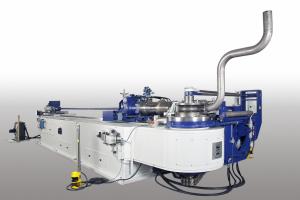
At the Oil & Gas Asia trade show, Schwarze-Robitec will present its high-quality tube and pipe bending machines for the offshore industry.
This long-established company from Germany places the efficiency and profitability of tube bending and pipe bending at the center of its trade show presence. In Hall 9, Booth 9077, the internationally very knowledgeable company experts will answer all questions on this subject.
Schwarze-Robitec is the world's leading producer of tube-bending machines and is a strong global player in the important Asian market.
For the second time, the company, which was founded in 1903, takes part in the largest trade fair for the oil and gas industry in Asia. At the Kuala Lumpur Convention Center in Malaysia, trade visitors at the Schwarze-Robitec booth will receive information on the "Made in Germany" special solutions, tailored to the complex needs of the offshore industry. Furthermore, the company will present the numerous advantages of bent tube systems compared to welded solutions at its booth in the "German Pavilion" of the trade fair. These advantages mean considerable time and cost savings that can be achieved during production. Due to the high-quality processing obtained with Schwarze-Robitec bending machines, the tubes and pipes also exhibit a particularly high wear resistance and dimensional stability.
Interested visitors receive detailed advice on all questions concerning tube and pipe bending processes for the oil and offshore industry. Schwarze-Robitec experts will be happy to assist you.
| A Schwarze-Robitec release || May 25, 2017 |||
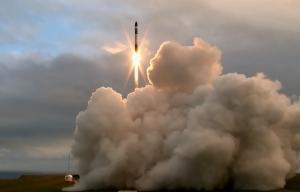
It was the day - Rocket Lab successfully makes it to space
Live: Election year Budget from Steven Joyce
Will today be the day for Rocket Lab launching?
Heavy fog blankets Auckland, flights cancelled
Trade balance beats market expectations
Day 2 of SouthMACH17 today - doors open 0900

Air New Zealand has today opened the doors to its new lounge at Palmerston North Airport.
Situated on the first floor of the terminal, the spacious new lounge offers seating for more than 100 guests, which is almost double the capacity of the previous space. It also offers views out onto the runway and a choice of seating areas from a business zone to quiet spaces and a café area with self-service food and drink stations.
Air New Zealand General Manager Customer Experience Anita Hawthorne says, “The new lounge has been designed to enhance the regional flying experience and we look forward to welcoming customers travelling out of Palmerston North to enjoy this new facility.”
The new Palmerston North lounge forms part of Air New Zealand’s four year $100 million programme to develop its network of lounges and follows the opening of lounges in Auckland, Sydney, Brisbane, Melbourne, Nadi, Wellington, Queenstown, Hamilton and Invercargill.
| An Air New Zealand release || May 24, 2017 |||
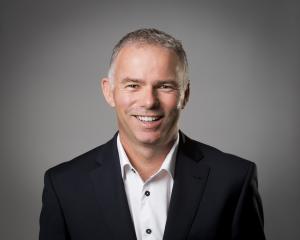
Artificial Intelligence or AI is fast being used to make people more efficient and it will touch every element of New Zealanders’ lives from better healthcare and education to faster service and more personalised products, tech leader Stu Christie says.
Like any emerging technology there is still a lot that Kiwis don't know about AI - both the opportunities and the risks, Christie says.
Having a nationally coordinated forum to share learnings and have discussions is critical to ensuring New Zealand gets the best outcome. The first ever New Zealand AI Forum will be launched in Wellington June 7. Christie will be the chair of the forum.
“The rapid development of AI technologies presents innumerable opportunities and challenges for New Zealand. The forum is being launched to aid the direction of government policy, build base capability relevant to a future-state economy and drive positive social and economic outcomes for all New Zealanders.
“The AI Forum is supported by NZTech and brings together users of technology, tech firms, academia and the government to help connect, promote and advance the AI ecosystem and to make New Zealand more prosperous.
“Our key purpose will be to actively contribute to the prosperity of New Zealand through advancing New Zealand’s AI awareness and capability. We want to identify strategic opportunities for economic growth. The forum is a member of the NZ Technology Alliance which is managed and supported by NZTech.
“NZTech enables an ecosystem of tech communities and helps members find ways of increasing their capabilities through access to talented staff, peer networking, experience sharing, exporting, working closely with the government on critical initiatives and working with many agencies here and overseas.
“For those who don’t know, AI is the capability of a machine to imitate intelligent human behaviour. More specifically, the development of computer systems able to perform tasks normally requiring human intelligence, such as visual perception, speech recognition, decision-making, and translation between languages.
“A great example of AI from a Kiwi company is the soundtrack company Booktrack co-founded by Paul Cameron. They have a large digital library of ambient sounds and music that is synchronised and overlaid into digital books.
“This library was laboriously built up by people over many years and at great cost, but now the application of AI technologies enables Booktrack to dramatically reduce the cost of its production - allowing them to address a number of market segments that were previously too expensive to serve.”
Christie says another arm of AI is cognitive computing which is the simulation of human thought processes in a computerised model.
“NZ's leading AI company Soul Machines is an outstanding example of world class cognitive computing. They really are the human interface of computing and have great application across a wide variety of industries.
“Other countries are building national strategies. We, like them, need to understand what our core competencies and competitive advantages are to be able to effectively operate in the future state new economy,” Christie says.
| An Make lemonade release || May 24,2017 |||
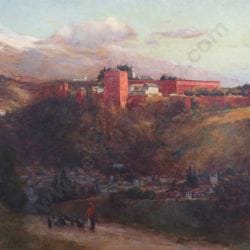
Palace of the Alhambra, Spain
By: Charles Nathaniel Worsley (1862-1923)
From the collection of Sir Heaton Rhodes
Oil on canvas - 118cm x 162cm
Valued $12,000 - $18,000
Offers invited over $9,000
Contact: Henry Newrick – (+64 ) 27 471 2242
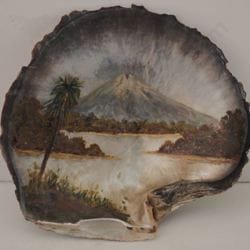
Mount Egmont with Lake
By: John Philemon Backhouse (1845-1908)
Oil on Sea Shell - 13cm x 14cm
Valued $2,000-$3,000
Offers invited over $1,500
Contact: Henry Newrick – (+64 ) 27 471 2242

|
|