
Founded by Max Farndale 1947 - 2018
Ha Noi, Viet Nam – Ministers and Vice Ministers from Australia, Brunei Darussalam, Canada, Chile, Japan, Mexico, New Zealand, Malaysia, Peru, Singapore and Viet Nam met today to discuss the Trans-Pacific Partnership (TPP) in the margins of the Asia-Pacific Economic Cooperation (APEC) Ministers Responsible for Trade.
The Ministers reaffirmed the balanced outcome and the strategic and economic significance of the TPP highlighting its principles and high standards as a way to promote regional economic integration, contribute positively to the economic growth prospects of its member countries, and create new opportunities for workers, families, farmers, businesses and consumers.
The Ministers agreed on the value of realising the TPP’s benefits and to that end, they agreed to launch a process to assess options to bring the comprehensive, high quality Agreement into force expeditiously, including how to facilitate membership for the original signatories.
The Ministers tasked their senior trade officials to engage to take forward the preparation of this assessment. Ministers asked for this work to be completed before they meet in the margins of the APEC Economic Leaders Meeting on 10-11 November 2017 in Da Nang, Vietnam.
The Ministers also underlined their vision for the TPP to expand to include other economies that can accept the high standards of the TPP.
These efforts would address our concern about protectionism, contribute to maintaining open markets, strengthening the rules-based international trading system, increasing world trade, and raising living standards.
| A Beehive release || May 21, 2017 |||
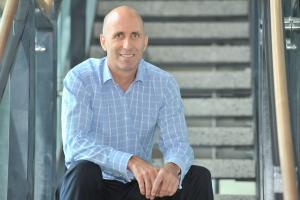
The build up to the 2019 Rugby World Cup presents a huge opportunity for any New Zealand tech firms considering the Japanese market as the passion for the All Blacks is huge in Japan, NZTech chief executive Graeme Muller says.
Muller has been in Japan this week on an economic and trade trip lead by Prime Minister Bill English.
Japan is a major trading partner with New Zealand with $6.4 billion traded between both countries last year. A large proportion of the $3.4 billion imported from Japan last year was technology, mainly consumer electronics.
"New Zealand is a trusted brand in Japan and the New Zealand government will be investing in and around the World Cup, which is closely followed by the Olympics, to help Kiwi businesses grow in Japan.
“The massive Japan market is often overlooked by many Kiwis looking past it to China. Japan is a huge, well organised and high wealth market that provides great returns for Kiwi companies that are prepared to take the long approach.
“Traditional firms like Fonterra, Zespri and ANZCO who have been operating in the Japanese market for decades continue to reap the rewards. Volumes may be lower but margins are much higher.
“Likewise, Kiwi tech firms operating in Japan like Shuttlerock and Fisher & Paykel Healthcare have taken a very long term view and continue to do well.
“Not known for technology, New Zealand’s biggest tech opportunity will probably come from agritech and partnerships with well entrenched traditional agri businesses like Fonterra and ANZCO who have deep relationships in the market.
“More and more Japanese tourists are coming to New Zealand and the best way to get Japanese businesses to understand our tech strengths will be to leverage this growing interest in New Zealand and bring them here to see our tech in action,” says Muller who arrives back in Auckland tomorrow morning.
Japan is New Zealand’s fourth largest goods export market worth $3 billion and Muller says he has enjoyed meeting Japanese tech leaders during the trip.
Technology is New Zealand’s third biggest and fastest growing industry and NZTech is the national voice of the Kiwi tech industry.
For further information contact NZTech chief executive Graeme Muller on 021 02520767 or Make Lemonade editor-in-chief Kip Brook on 0275 030188
| A MakeLemonade release || May 19, 2017 |||

Kaynemaile wins at NYCxDesign Awards for best Architectural Product
New Zealand company Kaynemaile has won Best Architectural Product at the NYCxDesign Awards announced today. Link to NYCxDesign Award finalists
Kayne Horsham, inventor of Kaynemaile, a revolutionary polycarbonate architectural mesh for building exteriors and interiors, accepted the award at New York’s Museum of Modern Art.
In 2007 Horsham patented an award-winning technology that creates interlocked seamless mesh rings without any joins or gaps. Horsham began experimenting with the mesh while working as an Artistic Director of Creatures, Armor and Weapons at Weta Workshop. He worked closely with director Peter Jackson for four years, fabricating the costumes of the Academy Award-winning The Lord of the Rings trilogy.
Kaynemaile is currently exhibiting in the centre of New York’s Times Square with a 4.25 metre high, 40 square metre walk-though “touch and see” installation called #WaveNewYork. The one million interlocking rings forming the installation were created using Kaynemaile’s liquid state manufacturing process at its Petone, Wellington design studio and factory.
“We’re honoured to be in the heart of New York bringing the freedom and joy embodied in our design to over a million New Yorkers and visitors from throughout America and the world in Times Square,” says Kayne. “New York and New Zealand are global centres of innovation and leaders in design. The NYCxDesign Award for Best Architectural Product perfectly supports our U.S. market entry.”
Kaynemaile reimagines 2000-year-old chainmail and has applied to a variety of architectural structures including large scale building and carpark wraps, shading for rain, wind and sun, airport security screens, hotel ceiling systems, university walkways, office partitions, lighting fixtures, and kinetic art installations. Kaynemaile has been installed worldwide by building owners, developers, transit authorities, corporate headquarters, and shopping centers.
Kaynemaile is made from the same material to manufacture F16 fighter jet cockpits, astronaut helmets, and aircraft windows. Stronger and lighter than glass, Kaynemaile reacts extremely well with lighting, making Times Square an ideal location.
#WaveNewYork has been designed by Kayne Horsham and American artist and MacArthur fellow Ned Kahn, who are also currently working on a dramatic art installation in a high profile location, to be unveiled this summer in New York.
“#WaveNewYork by Kaynemaile is a highly visible and vibrant focus of the Times Square Design Pavilion,” says Ilene Shaw, director and curator of NYCxDesign. “The material is beautiful, the installation design is playful and interactive, and the concept has pure innovation at its core. It’s an honor to have Kaynemaile at Design Pavilion 2017.”
About KaynemaileKaynemaile was founded in New Zealand by CEO and inventor of the mesh and liquid state manufacturing processes, Kayne Horsham. The Kaynemaile seamless mesh is based on a traditional European chainmail assembly but produced via the world’s first liquid state assembling process, able to form a 3D impact-absorbing structure made up of solid rings with no joins or seams, is 100% recyclable (cradle to cradle) and has an extraordinary strength-to-weight ratio. Its patented manufacturing process is an award winning technology used to create, divide and protect building interiors and exteriors around the world. www.kaynemaile.com Instagram @kaynemaile hashtag #wavenewyork
About NYCxDesign
NYCxDESIGN, New York City’s official citywide celebration of design will run from May 3-24, 2017. Spanning all disciplines of design, NYCxDesign creates a collaborative platform for cultural and commercial opportunities, elevates established and emerging design practices and increases awareness of and appreciation for design by all audiences. Hosted in New York City, NYCxDesign brings together all the disciplines of design, commerce, culture, education, and entertainment with a full, varied program, including exhibitions, installations, trade shows, talks, launches and open studios. 2016, the fourth year of the celebration, featured over 500 events across the five Boroughs of New York City and included topics from graphic design to architecture, technology and urban design to fashion and product design, interiors to landscape, furniture to design thinking, and more. The program is overseen by NYCEDC together with a Steering Committee comprised of leaders and leading institutions across most design disciplines. www.nycxdesign.com
| A Kaynemaile release || May 21, 2017 |||
 NZ log prices advance in 'humming' forestry sector, AgriHQ says
At 1:43pm today Kiwis finally stop working for the government
Company and director fined for incident that left a man a tetraplegic
Rocket Lab countdown: High winds delay launch
Fletcher Building snaps up roofing firm,
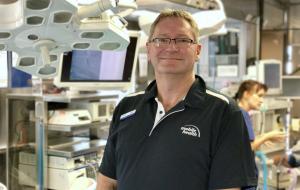
Portable operating theatres key for NZ hospitals
Tax cuts high on business wish list
Total lifetime tax bill for the average NZ household $1.48 million
Major leadership reshuffle at Linfox
Large blaze at steel factory in Otahuhu caused by car shredder
Wellington firm taking NZ products to United Arab Emirates, Qatar, Saudi Arabi

A range of New Zealand food and beverage (F&B) brands showcased their products Regent Singapore Hotel yesterday, as part of a strategy to gain a foothold in the regional market, allowing local chefs, buyers and other industry professionals to taste Kiwi treats such as wine and beer, honey, ice cream and lamb, and to interact with key producers.
About half of the 20 exhibitors at the trade show organised by New Zealand Trade and Enterprise featured young brands looking to expand into Singapore and the region. The remaining exhibitors, such as New Zealand Natural and Moa Brewing Company, are already established here.
Durello, which sells traditional Brazilian snacks, was set up in New Zealand three years ago.
Founder Marcelo Menoita told The Straits Times: "We are a brand with Brazilian flavour, New Zealand ingredients, mother's recipes.
"Singapore is an ideal location for expansion as it is an entry point to Asia, and it has high-end consumers who value quality products like we do."
The one-day event was held in conjunction with a panel discussion focusing on food sustainability and changing consumer demands in Singapore.
Said panellist Regina Moench-Pfanner, who founded sustainable food consultancy ibn360: "We need to tap research and development for sustainable food while putting ourselves in consumers' shoes.
"There is increasing international pressure for healthy, quality foods, and the food industry should look at how to turn this into opportunities."
Ms Hayley Horan, New Zealand's Trade Commissioner for Singapore, noted that her country is a leader in food safety and product traceability and a trusted supplier of high-quality products to Singapore.
Currently, Singapore is New Zealand's eighth-largest target country for food exports.
Most of the new brands that took part in the trade show are keen to champion sustainability, quality, safety and health. Some firms featured non-genetically modified products, animal welfare-centric business models and carbon-free manufacturing processes.
Mr Trent Brock, who owns New Zealand Kettle Korn, said: "Our popcorn is all natural. We use carefully selected, high-quality New Zealand-made ingredients.
"We are lab-certified gluten-, soy-, dairy- and peanut-free. Having quality and being allergy-friendly cost us a little more, but we plan to keep it that way."
Mr Brock plans to expand his business into Singapore within the next few months.
| A release from The Strait Times || May 19, 2017 |||
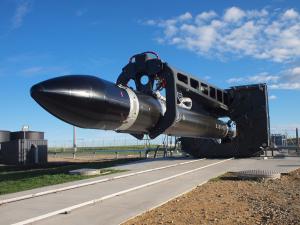
Rocket Lab today announces a new customer contract with Spaceflight, the launch services and mission management provider. Spaceflight has purchased an Electron rocket to increase the frequency of its dedicated rideshare missions.
Dedicated rideshare for smallsats is a launch where several payloads share the same vehicle to a specific destination. An an entirely carbon-composite vehicle, designed to carry payloads of 225kg to an elliptical orbit and up to 150kg to a nominal 500km sun synchronous low earth orbit, the Electron is ideal for dedicated rideshare missions. It is especially suited to those serving difficult-to-come-by launch destinations, such as mid-inclination orbits for remote sensing satellites.
Curt Blake, President of Spaceflight’s launch business, said, “There are numerous rideshare launches each year to Sun Synchronous Orbit, but getting to 45 to 60 degrees is hard to find, and can cost the equivalent of buying an entire rocket. We are thrilled to be working with Rocket Lab to enable our customers’ remote sensing missions that require high revisit time over North America, Europe, and the Middle East.”
Peter Beck, Rocket Lab CEO, added, “We are incredibly excited about the upcoming test launch of the Electron, which will take us one step closer towards the commercial phase of our program. We are delighted that Spaceflight has chosen to sign up as a customer ahead of testing, reflecting confidence in Electron and its ability to provide frequent launch opportunities to low Earth orbit.”
| A Rocket Lab release || May 18, 2017 |||
Balex Marine, the automatic boat loader maker, has been washed away after the high cost of manufacturing and slow sales saw the Tauranga-based company burn through the crowdfunded $330,000 it raised last October.
BDO's Kenneth Brown and Paul Manning were appointed liquidators of Balex and sister company Suelex on May 1 after events conspired to drain the companies coffers without an immediate lifeline. Balex raised $330,000 through 80 investments via equity crowdfunder Snowball Effect in October, just above its minimum target. However, Brown and Manning's first report says that was $700,000 below target, leaving it in a tight cash position until the end of March 2017 and prompting Balex's board to search for a new investor willing to inject between $2 million and $5 million.
The failure is the first by a company that's used Snowball's platform to raise funds, and while Snowball chief executive Simeon Burnett says it was surprising and disappointing how quickly liquidators were appointed after the capital raising, there were a number of "good reference points" such as the shareholdings of directors and management and the company's earlier funding rounds.
"Is there anything we would have done differently? Probably not," Burnett said. "Directors are responsible for the information they put out. The reference points were there and we got to the point of comfort and were clearly there for a number of investors as well."
Balex's local sales of its boat loader started in March 2016, six months later than scheduled due to design and manufacturing problems, and it later branched out into Australia, the UK and Europe and had planned to push into North Amerca this year.
Before hitting up the crowd, Balex had already raised $2.2 million since it was set up in 2013, with research, development and manufacturing needing "significant capital investment", the liquidators said. Its tight cash position got even worse through the tail end of last year with poor sales in New Zealand and Australia, the cancellation of a $180,000 order from a new Korean distributor, delays in European sales after the UK's vote to quit the European Union and limited opportunities to cut production costs in the foreseeable future.
The liquidators said Balex was spending about $100,000 a month, couldn't extend its funding line with Kiwibank and had no leads for a new investor by late January this year.
At that stage, the directors looked for a buyer of the business after seeking advice on the firm's financial position, and while there were a number of interested parties who got in touch, a deal hadn't been done by late April and the directors recommended a voluntary liquidation.
"The liquidators intend to advertise the business for sale and contact previously interested parties with the hope the business might sell and continue to market the product it has development," the report said. Due to the previous level of interest, the liquidators are hopeful a sale will be achieved."
BDO's Manning said the buyer interest had come from both domestic and international parties.
Balex's shareholders include managing director Paul Symes, Tauranga-based investor group Enterprise Angels, the New Zealand Venture Investment Fund's Seed Capital Investment Fund, and Auckland investors Ice Angels.
The liquidators didn't disclose the total amount owing or the value of group's assets. Balex had 28 creditors as at May 1. Suelex, which held the intellectual property, had two creditors. Of those, there were five secured creditors including Kiwibank. Callaghan Innovation had previously provided Balex a research grant and wasn't among the company's creditors.
| A Business Desk release || May 16, 2017 |||
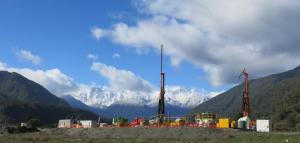
A collaboration by scientists who drilled nearly 900 metres into the South Island’s Alpine Fault has revealed surprisingly high temperatures and the potential for large geothermal resources in the area.
The site was drilled by a team of more than 100 scientists from 12 countries, who were working to understand how earthquakes occur on geological faults.
The team identified the Whataroa site as the best place in the world to understand what a fault looks, feels, and sounds like just before an earthquake occurs. The Alpine Fault is known to rupture in magnitude 8 earthquakes approximately every 300 years, plus or minus 90 years.
The results of the project, published today in prestigious international journal Nature, discuss the site’s geothermal gradient—a measure of how fast the temperature increases going deeper beneath the Earth's surface.
The project team discovered water at 630 metres depth that was hot enough to boil. Similar geothermal temperatures are normally found at depths greater than three kilometres.
Lead scientist Victoria University’s Professor Rupert Sutherland says the geothermal conditions discovered are extreme by global standards and comparable to those in major volcanic centres like Taupo—but there are no volcanoes in Westland.
“The geothermal environment is created by a combination of tectonic movement and groundwater flow. Slippage during earthquakes has uplifted hot rocks from about 30 kilometres deep, and the rocks are coming up so fast that they don't get a chance to cool properly.
“Earthquakes fracture the rocks so extensively that water is able to infiltrate deep beneath the mountains and heat becomes concentrated in upwelling geothermal fluids beneath valleys. River gravels that are flushed by abundant West Coast rain and snow dilute this geothermal activity before it reaches the surface.
"Nobody on our team, or any of the scientists who reviewed our plans, predicted that it would be so hot down there. This geothermal activity may sound alarming but it is a wonderful scientific finding that could be commercially very significant for New Zealand."
The discovery could transform the economy and resilience of Westland, and provide a significant and sustainable clean energy resource that could be developed using local people and equipment, says Warren Gilbertson, Chief Operating Officer of Development West Coast.
"The location of geothermal activity and its possible benefit and association to the dairy and tourism sectors provide real opportunities from an economic perspective.”
It is still too early to say just how big and how hot the geothermal resource might be, says Professor Sutherland, and additional exploration and drilling will be needed to assess the economic potential.
Novel technologies were used to gather the data, including precise temperature and seismic measurements that were made using lasers and a fibre-optic cable installed in the borehole. Ongoing work, supported by the Marsden Fund managed by the Royal Society of New Zealand and led by Professor Neil Broderick from the University of Auckland, aims to develop these technologies and use the existing borehole to monitor subtle changes and search for new earthquake-related phenomena over coming years.
Overall, the Deep Fault Drilling Project fell short of achieving all of its technical goals as the fractured and strongly-layered rocks and extremely hot temperatures provided engineering challenges.
However, many scientific measurements were made and the borehole continues to provide interesting data, says Victoria’s Professor John Townend, a co-leader of the project.
"In scientific research, unexpected is just another word for really interesting. The findings reinforce the need for the international science community to better understand conditions that prevail around earthquake-generating geological faults."
| A Victoria University of Wellington release || May 18, 2017 |||
Prime Minister Bill English and Japanese Prime Minister Shinzo Abe reiterated their commitment to the Trans-Pacific-Partnership (TPP) in a meeting in Tokyo today.
“Both New Zealand and Japan remain committed to seeing the TPP Agreement come into force, while at the same time ensuring there are opportunities for other economies to join,” Mr English says.
“The TPP remains valuable both economically and strategically for New Zealand. It will improve access for our exporters and lower tariffs around the Asia-Pacific.”
Mr English and Prime Minister Abe also discussed a number of key bilateral issues, and shared their concerns on regional and international issues including North Korea, and the threat of international terrorism.
“We value Japan’s views on these issues,” Mr English says. “Japan and New Zealand are close friends and have partnerships in a number of areas including trade and investment, science and technology and security and defence.
“Today we agreed that renewable energy and agriculture will be two areas which we will focus on in the next few years,” Mr English says.
“Sport will also feature with Japan set to host Rugby World Cup in 2019, the Olympics and Paralympic Games in 2020 and the World Masters’ Games in 2021.
“I was pleased to announce that the All Blacks will play a test in Japan in November 2018,” Mr English says.
Mr English was accompanied on his visit to Japan by Minister of Trade Todd McClay, and a delegation of senior business leaders.
Japan is New Zealand’s fifth largest trading partner, with two-way trade totalling over $7 billion, and the fifth largest source of foreign investment. Over 100,000 Japanese visit New Zealand each year, including nearly 10,000 students.
“My visit recognises the strength of our long-standing relationship, and the important role that Japan plays in our region,” says Mr English.
| A Beehive release || May 18, 2017 |||

Palace of the Alhambra, Spain
By: Charles Nathaniel Worsley (1862-1923)
From the collection of Sir Heaton Rhodes
Oil on canvas - 118cm x 162cm
Valued $12,000 - $18,000
Offers invited over $9,000
Contact: Henry Newrick – (+64 ) 27 471 2242
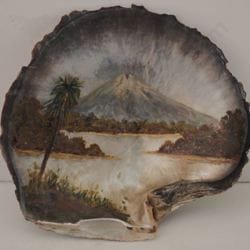
Mount Egmont with Lake
By: John Philemon Backhouse (1845-1908)
Oil on Sea Shell - 13cm x 14cm
Valued $2,000-$3,000
Offers invited over $1,500
Contact: Henry Newrick – (+64 ) 27 471 2242

|
|