
Founded by Max Farndale 1947 - 2018
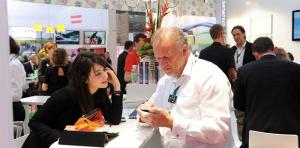
New Zealand was on display to crowds of nearly 9,000 buyers at IMEX, Europe's leading business and incentives trade show this week.
'New Zealand is trending as a business events destination because of our integrated approach and how easy we make it for international events to be held here. Our unique manaakitanga - which translates in to our unique hospitality of delegates, alongside new convention centre facilities being built in Auckland and Christchurch is gaining increasing international attention,' says Lisa Gardiner, Manager Business Events and Premium, Tourism New Zealand.
New Zealand took the stage in front of global media to showcase the ease of holding an event in Aotearoa and to reveal the latest images of the convention centres taking shape in Christchurch and Auckland.
'International event organisers who have held major conferences in New Zealand are spreading the word that our industry is unique in our collaborative way to deliver memorable events. This is an extremely valuable point of difference and really sets us apart as an attractive destination.'
New Zealand's joined up approach was demonstrated first hand with Tourism New Zealand, Christchurch Convention Centre and the New Zealand International Convention Centre jointly presenting at the press conference. A number of New Zealand partners also exhibited on the New Zealand stand.
'In a time when many countries around the world are building new business events facilities you've got to get people's attention and highlight the differentiating ways that make hosting a conference in New Zealand original and the smart choice for associations and conference organisers. The design of the two new centres really impressed and will be strong additions to our convention centre family network.'
Christchurch Convention Centre General Manager Rob McIntyre says the Centre will be a dream space for international event organisers, designed with a distinctive South Island flavour.
'The Convention Centre is surrounded by green spaces, parks and gardens fronting onto the river. Stories of the local Māori people and their land, trade and craft are interwoven through every aspect of the design.'
Callum Mallett, General Manager NZICC, says 'The NZICC has been designed by industry experts, delegates and architects to ensure that every detail meets the needs of our clients. With the capacity to hold events for up to 4,000 people, the NZICC will have built in world class technology and AV supported by a dedicated team to ensure we exceed expectations. The NIZCC is already seeing international demand, with 5 bookings for conferences that have never before been hosted in New Zealand. We are excited to be bringing these opportunities and being New Zealand's meeting place for the world.'
Is your IT team ready asks Cindy Waxer in CIO? These collaborative robots work alongside human employees, sending productivity sky-high. But IT teams must be prepared to take on complex programming, deal with connectivity issues and get used to sharing work space with 6-foot-tall machines.
At Creating Revolutions, an employee affectionately nicknamed "Manuel Noriega" assembles the tiny components of a customer service paging device. Unlike other employees of the startup, Manuel works for hours, day in and day out, without bathroom breaks or healthcare benefits.
Meet today's robot workforce. Manuel is a collaborative robot (or cobot) that's helping Creating Revolutions build electronic tabletop devices for the restaurant industry. The startup didn't always rely on a gunmetal grey robot arm to assemble its devices, which allow restaurant customers to text requests to busy wait staff. But faulty assembly was causing double-digit failure rates.
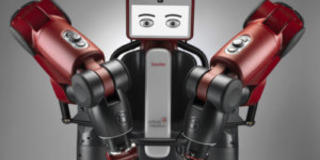
"The problem is you can't efficiently repeat a specific process the exact same over and over again as a human being," says Einar Rosenberg, CIO of Creating Revolutions.
With Manuel on the payroll, Creating Revolutions has reduced its product rejection rate to nearly zero. Changes to manufacturing processes can be made in real time for greater flexibility. And by cost-effectively increasing production rates, Creating Revolutions has managed to reduce its overhead by double digits. Employees initially bristled at the notion of sharing factory space with a cobot. But after assuring workers their jobs weren't in jeopardy, Rosenberg says everyone now views Manuel as "part of the team." In fact, the only thing separating Manuel from his human counterparts is a glass window pane.

Promo emails in middle of Mother of All Hacking Attacks
What was Spark thinking when on Sunday it released to its Xtra email subscribers a promo message from its entertainment operation Lightbox?
The emergency over the global WannaCry hack was sounded at 2030 hrs on the Friday just before. This should have conveyed the message to the entertainment subsidiary that this was most definitely not the time to start a mass promo over email –especially over your own circuits. And have given the unit plenty of time to intercept any such planned scheme. Several days, in fact.
But out the customised marketing email went out on Sunday......by which time the rest of the world was convulsed by the new intruder emergency which this time demanded pay-off for unfreezing users’ computer data.
The Lightbox marketing invitation was ironically entitled “Laugh, cry and escape this Mother’s Day.”
Many Xtra users are unaware that Lightbox is a Spark product.
The email greeted the Xtra customer by their first name and continued-
“This Mother’s Day make a cup of tea, grab the comfiest chair in the house and settle in for some entertaining television.
"Laugh and cry with other people’s families in Better Things, Life Unexpected, Outrageous Fortune and everyone’s favourite and colourful Modern Family.
Don’t forget the biscuits!”
Meanwhile MSC Newswire has received an explanation from Spark over our report of the scam email over Xtra demanding passwords that used in its subject line these words: “Dear Xtra Spark Email User “
Spark notes that the email address rogers.com is a Canadian telco –making very hard for spam filters to detect and block this. This is a very common attack vector for scam emails, because they are more likely to get past filters and into your inbox. Such emails “phishing” emails, because they are fishing for information and- the goal of this email is to get you to respond with personal or sensitive information so they can steal from you or defraud you.
“We have some information about how these work and what you can do on our website - http://www.spark.co.nz/help/internet-email/troubleshooting/what-is-phishing-spoofing-spam/”
Netsafe is also recommended : https://www.netsafe.org.nz/phishing/
MSC Newswire anticipates a response from Spark relating to how in the middle of the WannaCry emergency, a canvassing product email was allowed mass circulation over its own Xtra network.
| From the MSCNewsWire reporters' desk || Wednesday 17 May 2017 |||
KUALA LUMPUR (Nikkei Markets) -- Malaysia's Sime Darby, the world's largest palm oil producer by acreage, Tuesday announced the sale of its vehicle distribution business in Australia and New Zealand, yet another step as the conglomerate restructures its sprawling operations.
The buyers, Inchcape Australia and Rick Armstrong Motor Group in New Zealand, will take over the business that distributes Peugeot, Citroen and DS vehicles in the two countries effective June 1. Apart from the brands under French car maker Groupe PSA, Sime Darby Motors also represents other names ranging from Nissan to Ferrari in the two markets.
Sime Darby said in a statement that the decision to divest the Australasian distribution businesses was reached after "careful consideration" and was in line with its strategy to "focus on the expansion of its retail car and commercial truck footprints on both sides of the Tasman."
Sime Darby Motors is involved in the retail, distribution and assembly businesses and has a presence in 10 countries across the Asia Pacific. The company represents 30 brands, ranging from luxury names such as BMW and Rolls-Royce to mass-market marques such as Hyundai.
Analysts said Tuesday's deal would allow Sime Darby to sharpen its focus in the competitive automotive business. The unit's profit before tax slumped 25% in the 2015 fiscal year that ended June 30 and rose less than 6% in the most recent fiscal year.
Sime Darby wants "a more focused business strategy that they are working on rather than be exposed to every part" of the automotive market, said CIMB Investment Bank Analyst Ivy Ng.
The contribution to Sime Darby from the PSA business in Australia and New Zealand is "very minimal," said Chye Wen Fei, an analyst at Hong Leong Investment Bank. "For a big entity like Sime Darby, it doesn't quite make sense to pay so much attention to a smaller one."
The Malaysian conglomerate is in the midst of restructuring its operations that range from plantations to healthcare. That could lead to the creation of three separate listed entities housing its plantation, property, and trading and logistics businesses.
Before announcing the restructuring in January, the company sold some industrial assets in Australia and properties in Singapore, as well as part of its stake in property developer Eastern & Oriental last year.
Sime Darby's mainstay plantation business accounted for more than a quarter of its total revenue of over $10 billion in the fiscal year 2016 while property development made up 7%. Those two businesses could be listed by the end of 2017 or in early 2018.
Shares of Sime Darby ended flat at 9.33 ringgit ($2.16) on Tuesday, in line with the benchmark FTSE Bursa Malaysia KLCI.
--Jason Ng and Alexander Winifred
--Nikkei Markets is a real-time financial news service for South East Asia's markets published by Nikkei NewsRise Asia Pte Ltd, a Nikkei and NewsRise joint venture company. Nikkei Markets provides wide companies coverage in the region, including the Nikkei's Asia300 companies.
| A Nikkei Asian Review release || May 16, 2017 |||
Ξ Fairton plant to close as Silver Fern downsizes capacity to keep pace with falling sheep numbers
Ξ Fonterra reopens Malaysia dairy plant after $7 million upgrade
Ξ Company to close factory doors for new focus
Ξ More students looking to apprenticeships as placements increase
Ξ Phil Goff coy about privatisation of Ports of Auckland
Ξ Thermo Fisher Extends Binge With $5.2 Billion Patheon Deal
Ξ Dunedin tech company Timely has been named emerging company of the year in the NZ Hi-Tech Awards.
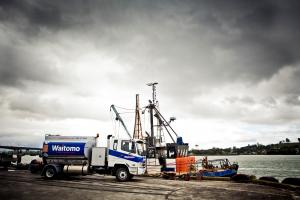
Independent fuel supplier, Waitomo, is taking a big leap forward for New Zealand’s petroleum industry by installing Vapour Recovery technology at its new Fuel Stop on the Bombay Hills, due to open on 29th May.
Vapour Recovery is still in its infancy in New Zealand – only a small handful of fuel sites currently feature this technology at the dispenser nozzle.
Waitomo is a 100% Kiwi-owned and operated company and has invested in the best technology available to help look after the environment and reduce emissions when dispensing petrol.
Managing Director Jimmy Ormsby says Waitomo is always looking for innovative solutions to problems customers face.
“We have already installed Vapour Recovery for our tankers at Fuel Stops so when they deliver fuel, the petrol vapour is returned to the tanker instead of escaping out of the vents and into the atmosphere,” Ormsby explains. “So it was logical for us to take that next step and install Vapour Recovery at the dispenser nozzle as well.
“While you’re dispensing fuel into your tank, the vapour is recovered by a vacuum unit so there are no nasty fumes. It is then condensed and returned back into the Fuel Stop tanks. To be clear, this technology does not reduce the amount of petrol our customers are dispensing – it is simply capturing the vapour that would have escaped into the atmosphere or been inhaled.”
Ormsby says the technology represents a significant investment for Waitomo. “If we were not in business for the long haul then it probably wouldn’t stack up. But we believe it is the right thing to do. It’s good for our customers, good for the environment and good for our business.”
Waitomo’s new Fuel Stop at Bombay, just off the Southern Motorway, will feature petrol and diesel pumps under a canopy for light vehicles, and a separate area for heavy vehicles which will have access to high flow pumps and Go Clear (Diesel Emission Fluid). Both areas have plenty of space for manoeuvring.
As with all of Waitomo’s sites, prices will be competitive and company fuel cards are available.
“Opening our Bombay Fuel Stop is another significant milestone for us,” says Ormsby. “This gateway links the North Island’s three main areas of economic growth, namely Auckland, Waikato and the Bay of Plenty. We’re really proud to extend our Fuel Stop network even further and help raise our profile among the wider public.”
Waitomo will celebrate 70 years in business this June after being founded by Ormsby’s grandfather, Desmond, on the principles of honesty and integrity. The company’s motto is “Kiwis fueling Kiwis” and Waitomo now has 70 Fuel Stops and Service Stations across Northland, Auckland, Waikato, Bay of Plenty, Taranaki, Hawkes Bay and Manawatu-Whanganui.
Hunua MP Andrew Bayly will attend the grand opening on 29th May. He is a supporter of “responsible growth” and the new Vapour Recovery enabled site will support economic development within the region while minimising environmental damage.
Waitomo’s own fleet of mini-tankers will also benefit from the new Bombay development. “Our mini-tankers deliver bulk fuel to a wide range of industrial, commercial and private customers in the Bombay area. We’ll now be able to load them up at Bombay instead of the Wiri terminal, giving them a bit more range,” Ormsby says.
“It will also be another location that our large tankers can empty out before returning to Wiri.”
The new Bombay Fuel Stop is just one of several new developments Waitomo currently has underway. Work has now begun on a new Fuel Stop in Palmerston North and two new trucks from Dutch manufacturer DAF will soon join the company’s existing fleet of 25 Mitsubishi FUSOs to cater for growing customer demand.
| A Waitomo Petroleum/Chocolate Ink Communications release || May 16, 2017 |||
The Reserve Bank of New Zealand hosted the 22nd annual Executives' Meeting of East and Asia-Pacific (EMEAP) central banks in Auckland yesterday.
EMEAP is a co-operative forum of eleven central banks and monetary authorities in the East Asia and Pacific region comprising the Reserve Bank of Australia, the People’s Bank of China, the Hong Kong Monetary Authority, Bank Indonesia, the Bank of Japan, the Bank of Korea, Bank Negara Malaysia, the Reserve Bank of New Zealand, Bangko Sentral ng Pilipinas, the Monetary Authority of Singapore and the Bank of Thailand.
Governor Graeme Wheeler, who chaired the meeting, said governors exchanged views about recent global economic and policy developments. Discussion focused on the potential impact of global factors on EMEAP monetary policy, as well as recent supply-side developments in EMEAP economies. Governors welcomed the improving prospects for regional growth and noted that EMEAP financial markets have generally functioned well over the past year. Governors emphasised that communication among authorities in the EMEAP region and other parts of the world is especially important at a time when global uncertainty is heightened.
It is the second time the meeting of EMEAP Governors has been held in New Zealand, and follows a meeting of EMEAP Deputies in Auckland in April.
More information read the EMEAP media release
Primary Industries Minister Nathan Guy has welcomed the latest progress report of the Sustainable Dairying: Water Accord project, showing dairy farmers have now fenced off over 97 per cent of waterways.
“The Water Accord is a voluntary project led by the industry to improve farming practices and water quality. This Year Three update shows a range of targets have been achieved, including stock exclusion from 26,197 km of measured waterways which is the equivalent of Auckland to Chicago and back again,” says Mr Guy.
“99.4 per cent of regular stock crossing points on dairy farms now have bridges or culverts to protect local water quality, and over 10 million dollars has been spent on environmental stewardship and farmer support programmes.
“9,517 nutrient budgets were processed and nitrogen information provided to farmers, representing 83% of the industry.
“Dairy farmers deserve credit for the leadership they have shown in recent years. There has been a major reduction in pollution entering our lakes and rivers from dairy sheds, factories and town effluent systems.
“From the Government side, a huge amount of work has generated new rules, standards and monitoring which simply didn’t exist 10 years ago. This includes new regulations to keep livestock out of waterways to reduce E.coli and improve water quality.
“Achieving our goal of 90% swimmability by 2040 will be a long-term project. It will take decades because water quality issues have built up over decades and there is no quick fix.
“There are still challenges ahead but we are going to achieve it in a practical, realistic and sustainable way that doesn’t ruin our economy at the same time. This is a long term issue and we’re all in it together.”
The Sustainable Dairying: Water Accord was launched in July 2013 setting out the dairy industry’s commitment to New Zealand and improving water quality.
It includes a set of national good management practice benchmarks aimed at lifting environmental performance on dairy farms, along with commitments to targeted riparian planting plans, effluent management, comprehensive standards for new dairy farms and measures to improve the efficiency of water and nutrient use on farms.
It has been developed with the input of farmers, dairy companies, central Government, regional councils and the Federation of Māori Authorities.
| A Beehive release || May 16, 2017 |||
Māori Development Minister Te Ururoa Flavell has told Malaysian businesses they can rely on high quality, fresh and safe food and beverage products from Aotearoa New Zealand.
Speaking at a business matching event to introduce Malaysian businesses to Māori business leaders Mr Flavell says there is a huge untapped potential to work together in the food and beverage sector.
“It’s one we know well, because we have been growing and gathering kai in Aotearoa New Zealand for hundreds of years,” says Mr Flavell.
Mr Flavell, who is on his first Māori business and cultural mission to Malaysia this week, says the Māori business leaders in the delegation were in charge of major operations – with all already exporting successfully overseas, and looking to grow their business in South East Asia.
Representatives of Miraka Ltd, Kahungunu Asset Holding Company, Fonterra, Māori Kiwifruit Growers Forum, Zespri and Watson & Son Ltd are accompanying Mr Flavell on the mission.
“We are here to send a strong message that Māori food and beverage businesses want to be serious partners in the Malaysian market,” says Mr Flavell.
“We are trusted exporters of food products and we place a premium on taste and care for the way food is grown, gathered, packaged, marketed and distributed. We can provide integrity in supply chains and the cultural identity, origins and sustainability of our products.”
What set Māori business apart was its focus on culture, and the key principles that underpin how they do business, says Mr Flavell.
“We measure success not just against financial results but also social, environmental and cultural objectives,” says Mr Flavell.
“When we think of investment we look to those who have gone before us and those yet to be born – we have the long-term game in mind. For us, developing export markets means going to the place we want to sell our products, meeting our partners face to face or as we say ‘kanohi ki te kanohi’.”
Also at the business matching event were five young New Zealand food and business entrepreneurs who are visiting to facilitate trade and build connections between business in New Zealand and South East Asia.
The ASEAN Young Business Leaders Initiative and has been timed to coincide with the Māori business and cultural mission.
| A Beehive release || May 16, 2017 |||
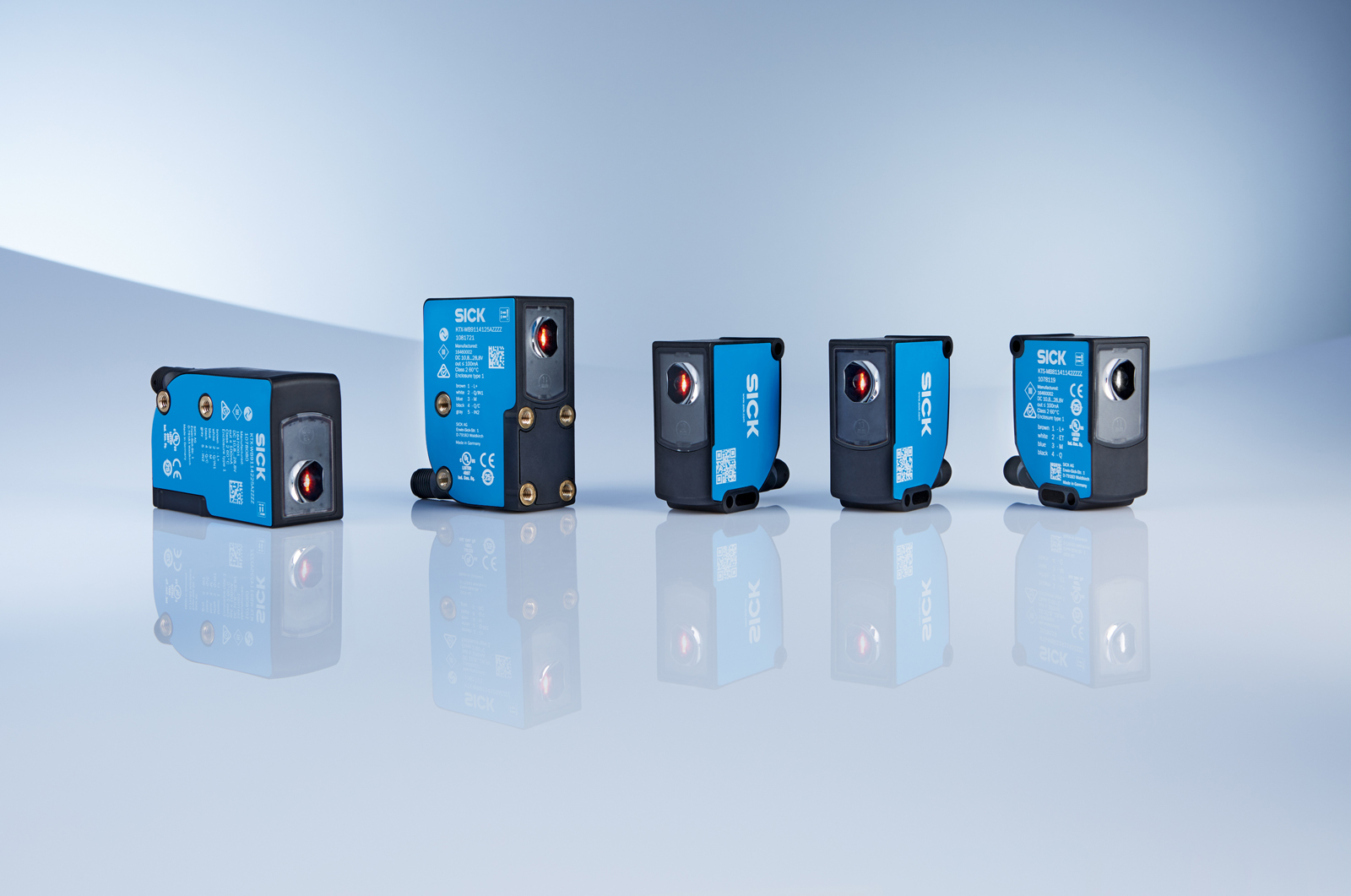
With its KTS and KTX product families, SICK is presenting new, powerful contrast sensors from a forward-looking, innovative platform. The patented TwinEye technology for improved contrast detection and sensing distance tolerance (+- 5 mm), the specially developed three-color LED with its high-precision, color-mixed light spot, and the jitter that has been minimized to a level never before seen, coupled with absolute high-speed switching frequencies, open up a world of new possibilities when it comes to detecting contrasts and – for the first time in a sensor – colors too.
IO-Link and additional integrated functions such as recipe management ensure maximum versatility, while the innovative, multifunctional 7-segment display guarantees simple yet customized sensor setup, operation, and visualization.
Familiar applications such as the detection of print marks or the control of industrial labeling processes benefit from even greater process stability and performance. The sensors detect high-gloss materials and complex contrasts, even on heavily jittering materials. The integrated color mode also enables reliable detection of even the most minor contrast differences and color features.
More applications, more flexibility
The KTX product family offers compatibility without compromise: Both the hole pattern for mounting the sensors and the electrical connectivity facilitate a 1:1 migration from the SICK product families that are already proven and widespread on the market to the new technology platform. In its space-saving compact housing, the KTS meets all requirements of modern machine concepts. The KTS contrast sensors come in “CORE” and “PRIME” configurations; these offer different levels of functionality, enabling a variety of different automation needs to be met individually and cost-effectively. The even more finely granular grayscale resolution of the KTS and KTX, the integrated color mode, and the large number of other technical innovations in both product families are setting a new standard in the market for contrast sensor technology – and opening up additional areas of application at the same time, such as the detection of wafers, the management of reel changes, or quality control.
SICK is one of the world’s leading producers of sensors and sensor solutions for industrial applications. Founded in 1946 by Dr.-Ing. e. h. Erwin Sick, the company with headquarters in Waldkirch im Breisgau near Freiburg ranks among the technological market leaders. With more than 50 subsidiaries and equity investments as well as numerous agencies, SICK maintains a presence around the globe. In the fiscal year 2016, SICK had more than 8,000 employees worldwide and achieved Group sales of just under EUR 1.4 billion.
| A SICK release || May 16, 2017 |||
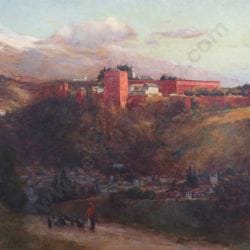
Palace of the Alhambra, Spain
By: Charles Nathaniel Worsley (1862-1923)
From the collection of Sir Heaton Rhodes
Oil on canvas - 118cm x 162cm
Valued $12,000 - $18,000
Offers invited over $9,000
Contact: Henry Newrick – (+64 ) 27 471 2242
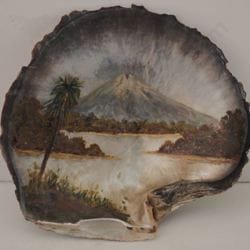
Mount Egmont with Lake
By: John Philemon Backhouse (1845-1908)
Oil on Sea Shell - 13cm x 14cm
Valued $2,000-$3,000
Offers invited over $1,500
Contact: Henry Newrick – (+64 ) 27 471 2242

|
|