
Founded by Max Farndale 1947 - 2018
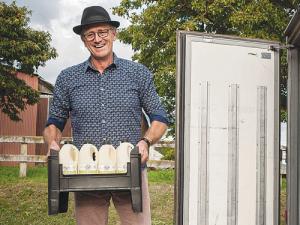
John Vosper’s family farm Cleavedale in Matamata went organic in 2003 and two years ago launched the Jersey Girl Organics brand; now the bottled milk is sold North Island-wide and fresh milk is available from two vending machines in Tauranga and Mount Maunganui.
The business won the outstanding producer dairy primary award at the recent Outstanding NZ Food Producer Awards.
Vosper told Dairy News the win affirms “we are on the right track; we are pleased to win award”.
He sees a growing demand for organics in New Zealand.
“Customers are increasingly concerned about where their food is coming from and how it is produced. Organic certification gives them assurance about environmental impacts and the way food is produced.”
Vosper says the farm went organic “as it fitted our farming philosophy and we hoped to increase returns”.
“Our milk is pasteurised to eliminate bugs; it is not homogenised. In the vending machine the milk is kept cold, dark and stirred.
“Jersey Girl milk is audited to strict organic standards. You can be sure the milk is free of antibiotic, herbicide and pesticide residues.”
The farm runs a herd of 250 pedigree Jersey cows, producing about 800,000L; surplus milk is sold to Fonterra.
On the system 2 farm the Jerseys graze on organic pasture, supplemented with hay, silage and maize cut from local paddocks.
A support block was used to graze replacements and produce silage. Vosper says after a series of dry summers the farm started growing maize for silage, giving more options for feed.
“Maize paddocks are planted in permanent pasture consisting of a diverse species mix. After a few years of decreasing pasture production we now have a fertiliser policy of maintaining nutrient levels in the soil and spend above-average amounts on fertiliser.”
The farm calves about 200 cows in spring and 50 in autumn; usually about 55 heifer replacements are reared.
Cows are milked in a 20-bail rotary.
Vosper says animal health is challenging at times as any animal that has a prohibited treatment has to leave the farm. “In future we will be placing more emphasis on animal health traits in sire selection.
“Last October we did four weeks of Jersey semen followed by eight weeks of using short gestation sires. Our empty rate was 10%.”
The Vosper family has been farming on Cleavedale farm for five generations.
Vosper says the family loves organic dairying.
“We love the land we live on and the animals that share it with us; we take pride in producing a top quality milk in a way that honours natural processes.
“Organic production methods require committment and energy. There are no shortcuts, no artificial fertiliser, no production line fast tracking, no modifications.”
| A Dairy News release || May 10, 2017 |||
ABU DHABI - Shaikh Abdullah Bin Zayed Al Nahyan, Minister of Foreign Affairs and International Cooperation, has held a telephone conversation with Gerry Brownlee, Minister of Foreign Affairs of New Zealand, congratulating him on his appointment.
During the telephone conversation, Shaikh Abdullah expressed his happiness as New Zealand announced that it joined the list of countries that have signalled their participation in Expo 2020 Dubai. Shaikh Abdullah and Brownlee also discussed joint cooperation relations between the UAE and New Zealand and means of boosting them.
| A Gulf News release || May 09, 2017 |||
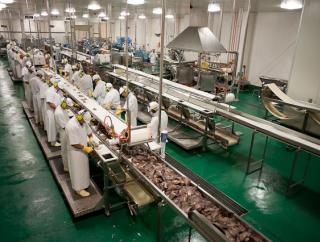
Ξ Talley's plan for Motueka factory waste discharge backed by council staff
Ξ NZ tech sector attracts record offshore investment in year to March
Ξ Opportunity to boost Vietnam trade: McClay
Ξ Abdullah Bin Zayed welcomes New Zealand’s participation in Expo 2020 Dubai
Ξ Bradley Sawden appointed New Zealand’s next Ambassador to Iraq
New Ambassador to Iraq announced
Foreign Affairs Minister Gerry Brownlee has today named Bradley Sawden as New Zealand’s next Ambassador to Iraq.
New Zealand established an Embassy in Baghdad in 2015 to support New Zealand and Australia’s joint ‘Building Partner Capacity’ mission.
“This mission has trained over 20,000 Iraqi police and army personnel who are on the frontlines of the fight against Daesh,” Mr Brownlee says.
“Mr Sawden will be charged with supporting New Zealand’s non-combat training mission to Iraq and assessing how we can continue to support and build relations with the Iraqi government.
“In addition to leading New Zealand’s engagement with the Iraq government and providing diplomatic support to the training mission, our Embassy will also be responsible for maintaining relations with the United Nations Assistance Mission for Iraq,” Mr Brownlee says.
Mr Sawden has been involved in national and international security issues across the defence and security sector of the New Zealand government.
His most recent posting was in New York as Counsellor at the New Zealand Permanent Mission to the United Nations during New Zealand’s tenure as a member of the United Nations Security Council.
| A Beehive release || May 09, 2017 |||

The Taxpayers’ Union is slamming this afternoon’s announcement by Science and Innovation Minister Paul Goldsmith of an additional $74.6 million in Budget 2017 for Callaghan Innovation’s corporate welfare “Growth Grants”.
“There is nothing scarier than a Government in surplus and a politician's willingness to waste money on corporate welfare," says Taxpayers’ Union Executive Director, Jordan Williams.
"Instead of delivering tax relief, it appears the Government’s priority is ‘Goldsmith Grants’ and more Callaghan corporate welfare.”
"Rather than hire an army of bureaucrats to pick winners with R&D grants, the Government should scrap its $1.36 billion dollar corporate welfare regime and use that money to cut company tax from 28 to 22.5 percent. That way, the many businesses, and not the few, could afford to get ahead."
Jim Rose's most recent report on corporate welfare, Welfare Bums: Adding up the cost of corporate welfare in the 2016 Budget is available at www.taxpayers.org.nz/welfare_bums.
Key facts on corporate welfare (based on Budget 2016 figures):
| A Taxpayers Union release || May 10, 2017

Economic Development Minister Simon Bridges and Science and Innovation Minister Paul Goldsmith have launched a new edition of an investment guide into New Zealand’s fast growing technology sector.
The Investor Guide to the New Zealand Technology Sector showcases the breadth and variety of technology companies in New Zealand.
“The tech sector is New Zealand’s third largest exporting sector, contributing $16 billion to GDP and it is growing fast,” says Mr Bridges. “It presents multiple opportunities for New Zealand and international investors.
“New Zealand technology is gaining recognition internationally along with our innovative and can-do culture, and the fact that we are ranked first in the world for ease of doing business by the World Bank Group is a huge drawcard for investors.
“High profile successes like Vend, Xero, Fisher and Paykel Healthcare and Vista Group are leading the way. But, a growing number of early stage companies like Soul Machines and 8i, are attracting significant international attention for their cutting edge technologies in artificial intelligence and virtual reality.
“One of the top priorities of the Government’s Business Growth Agenda is to ensure that these businesses are supported and enabled to grow and compete with the world’s leading technology innovators,” says Mr Bridges.
The Government is also planning to meet the needs of this growing sector through investment in innovation, and building the skills needed in the sector.
“The Government is working hard to develop New Zealand as a hub for high-value, research and development intensive businesses,” says Mr Goldsmith.
“The recent 29 per cent increase in businesses investment in research and development reported by Statistics New Zealand is largely driven by technology businesses, and shows that our efforts are delivering results”.
“To support this growth we’re developing pathways for young New Zealanders to enter the tech sector. This includes the TechHub in Schools, and FutureInTech initiatives which aim to engage young people and get them interested in a career in tech,” says Mr Goldsmith.
“Alongside these skills and employment initiatives the Digital Technology Skills Forum, is bringing together industry associations with government agencies to identify opportunities to develop the skills that the sector will need in order to continue its rapid growth,” says Mr Bridges. “It’s a sign of a sector that is in good health, and planning to meet its future needs.”
The Investor Guide is produced by the Technology Investment Network (TIN) in collaboration with the Ministry of Business Innovation and Employment (MBIE). It is freely available online.
A copy of the guide is available at http://www.mbie.govt.nz/about/whats-happening/news/2016/new-guide-to-drive-investment-in-tech-sector.
| A Beehive release || May 09, 2017 |||
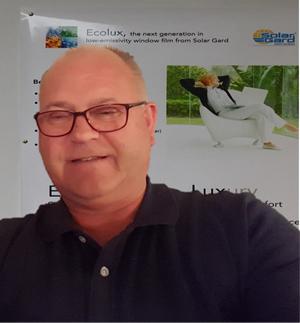
Solar Gard Exterior Window Film Dramatically Transforms Medical Buildings
All-glass reflective exteriors have been the hallmark of the four-story medical office buildings since their construction in the mid-1980s. Over the years, however, the glazing had started to fail and the window mullions had seriously deteriorated.
With the installation of a Solar Gard external window film, that premium ascetic look has been returned as well as providing solar protection benefits.
Your building can also benefit from having Solar Gard Window film.
For more information you can reach me at This email address is being protected from spambots. You need JavaScript enabled to view it. or Ph: 09 441 0040
The International Monetary Fund (IMF) has declared New Zealand’s banking system to be resilient, but nevertheless recommended ways to improve the strength of the country’s financial sector and the regulatory framework.
In releasing the findings from its Financial Sector Assessment Programme (FSAP) overnight, the IMF said that the banking system is well-placed to manage risks and vulnerabilities associated with current developments in the housing sector, the high level of household debt, and low dairy prices. The FSAP included a range of ‘stress tests’ of the large New Zealand banks.
The report states that New Zealand has a good institutional framework for macroprudential policy and that LVR restrictions have generated financial stability benefits, although it could be strengthened further. They also recognise a number of important positive features about the Reserve Bank’s supervisory framework, including the strong Trans-Tasman relationships.
Recommendations for improvements include increasing the intensity of supervision for both the banking and insurance sectors, within the Reserve Bank’s “three-pillar” approach to prudential regulation that is based on self, market and regulatory discipline.
The IMF has endorsed the Reserve Bank’s current legislative proposal to improve the regulation and oversight of financial market infrastructures, as well as the importance of reviewing the bank capital framework.
The Reserve Bank is considering the FSAP findings and recommendations in its areas of responsibility and the degree to which these might further its statutory purpose of promoting a sound and efficient financial system.
A forthcoming article in the Reserve Bank Bulletin will explain the 2016 FSAP process and its findings and recommendations in more detail.
More information:· Financial Sector Assessment Programme· IMF Financial System Stability Assessment· Minister of Finance’s media statement· Financial Markets Authority media statement· IMF web page
| A RBNZ release || May 09, 2017 ||
Ξ Crunch time approaches for Ruataniwha water storage scheme
Ξ Fletchers Easysteel supplies information to NZ authority
Ξ New Zealand winegrowers plant deep roots in Canadian market
Ξ IMF releases New Zealand FSAP findings and recommendations
Ξ Manuka Health unveils $3.5 million Wairarapa Apiculture Centre
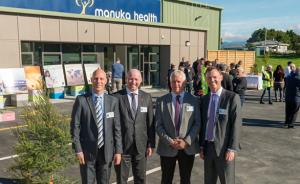
Manuka Health has officially opened its expanded national apiculture business after a $3.5million build that will significantly expand the organisation’s export capacity.
Joining CEO John Kippenberger, the Minister for Food Safety Hon David Bennett opened the Manuka Health Wairarapa Apiculture Centre in an event attended by MP for the Wairarapa, Alastair Scott; Mayor John Booth of Carterton District Council; Chief Executive of Carterton District Council, Jane Davis; industry and government representatives; neighbours; beekeeper partners; site design and build companies; and Manuka Health staff.
At the event Minister Bennett planted the last of 2,000 native plants that complete the build; a symbolic Manuka tree representing the future of the industry.
Manuka Health CEO John Kippenberger says investment in the Centre’s expansion is an important milestone in the company’s growth, ongoing product quality and traceability assurance, and its commitment to the Wairarapa community.
“Manuka Health is proud to invest in the region and play our part in the local and national beekeeping sector. The Wairarapa Apiculture Centre employs 27 people during peak season with the Centre’s expected growth in processing capacity seeing up to 15 more employees join over the next two years.
“The Centre plays a crucial role in providing a secure and efficient passage for our products. It’s a hub for the extraction and collection of honey from more than 20,000 hives that will come in for processing from Northland, Waikato, Taranaki and Wairarapa during the next season. The Centre ensures our consumers in cities such as Frankfurt, Beijing, San Francisco and London can have absolute confidence that the product they are buying has been treated with care and under strictly controlled conditions right from the hive.
“The capital investment in the Centre’s build facilitates a substantial expansion in honey extraction capability. This is another step in our journey to help New Zealand meet its $1.2bn target of honey sales by 2028,” says Mr Kippenberger.
The Wairarapa Apiculture Centre collects and extracts honey from honey frames. Honey boxes from around the North Island are sent to the Centre for honey extraction and drum storage during the November to March harvest each year. The drums are then freighted to Manuka Health in Te Awamutu for testing and packaging.
The Wairarapa Apiculture Centre expansion follows Manuka Health’s opening of a new $10 million manufacturing facility in Te Awamutu, a largescale integrated facility of operations, testing, quality and distribution.
| A Manuka Health release || May 09, 2017 |||

Palace of the Alhambra, Spain
By: Charles Nathaniel Worsley (1862-1923)
From the collection of Sir Heaton Rhodes
Oil on canvas - 118cm x 162cm
Valued $12,000 - $18,000
Offers invited over $9,000
Contact: Henry Newrick – (+64 ) 27 471 2242
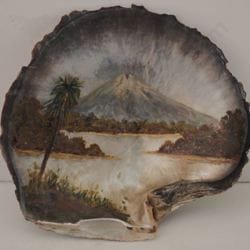
Mount Egmont with Lake
By: John Philemon Backhouse (1845-1908)
Oil on Sea Shell - 13cm x 14cm
Valued $2,000-$3,000
Offers invited over $1,500
Contact: Henry Newrick – (+64 ) 27 471 2242

|
|