
Founded by Max Farndale 1947 - 2018

Emirates has today introduced a range of sizzling fares for travel from New Zealand in time to enjoy the Europe summer across a range of 39 destinations.
The latest offers include flights directly into and out of favourite sea and river cruise connection points as well as rail links. And New Zealand travellers can also choose to enter Europe or the UK through one gateway and return from another point on the extensive Emirates network.
“We recognise that many travellers, especially those visiting friends and relatives, are not always in a position to make their bookings early, and these fares for travel into the peak northern summer months will be good news for a wide range of people,” said Emirates’ New Zealand regional manager, Chris Lethbridge.
“They will also very much suit the premium leisure market, which commonly books later.”
Emirates has five daily A380 double-decker services out of New Zealand to Dubai and beyond - one from Christchurch and four from Auckland, including a non-stop service to Dubai.
“The Dubai hub provides great connections onwards to Europe, with Emirates’ flights reaching most destinations only six or seven hours later.”
From Auckland, Economy Class return fares include Paris from $1,729, Rome from $1,759, Frankfurt from $1,779, London and Manchester from $1,809, Birmingham from $1,909; Dublin from $1,869. Business Class return fares start at just $6,919 to Rome, $6,949 to London, and $6,999 to Paris, among others.
From Christchurch, Economy Class return fares include Amsterdam and Bologna from $1,929; Paris and Frankfurt from $1,979; London from $2,049, and Copenhagen from $1,989, among others. Business Class return fares start at $7,409 to Amsterdam, $7,509 to Frankfurt and $7,529 to London.
All fares are inclusive of taxes. Terms and conditions and various travel dates apply. For bookings or more details visit emirates.com/nz, your local travel agent, or contact Emirates on 0508 EMIRATES (0508 364 728).
| An Emirates release || April 17, 2017 |||
Trade Minister Todd McClay travels to Malaysia today for high-level talks with Malaysian Trade Minister Mustapa Mohamed and to mark 60 years of successful bilateral relations between the two countries.
Mr McClay will also speak about trade and investment opportunities in New Zealand at a business forum in front of 150 of Malaysia’s top executives and investors.
“We have made a lot of progress in 60 years, particularly since a free trade agreement (FTA) was signed between our two countries in 2010,” Mr McClay says.
“Malaysia is now our 10th largest two-way trading partner and in 2016 we exported more than a billion dollars of goods and services to them.
”Malaysia is also a big investor around the world and I will be talking to key business people about opportunities for greater two-way investment, including in New Zealand’s booming tourism, hotel and hospitality sectors.”
Malaysia is a founding member of the Association of Southeast Asian Nations (ASEAN) who are forecast by 2050 to consume three times more dairy and double the amount of fruit and meat than they consumed in 2007.
“The Asia-Pacific is the fastest growing region in the world and this presents a huge number of opportunities for our farmers, growers, exporters and our wider economy,” Mr McClay says.
“In January our FTA saw tariffs eliminated from 99.5 per cent of New Zealand’s exports to Malaysia. So we are very well placed to increase our trade and investment with this lucrative market.”
| A Beehive release || April 17, 2017 |||
The Reserve Bank today released a new edition of its popular guide to managing the risks involved in saving and investing.
‘Upside, downside: A guide to risk for savers and investors’ was commissioned by the Reserve Bank and written by investment commentator Mary Holm for ordinary New Zealanders.
Since original publication in 2012 the guide has received two significant revisions to take account of changing KiwiSaver rules and other developments.
“I’m delighted to be able to bring this book up to date for 2017 and beyond, and hope the updated version proves as useful for a wide range of New Zealanders as its predecessors,” Mary Holm said.
‘Upside, Downside: a guide to risk for savers and investors’ is available free of charge, only as a downloadable PDF from the Reserve Bank website.
More information: Upside, Downside: a guide to risk for savers and investors (PDF 1.3MB)
| A RBNZ release || April 13, 2017 |||

Ξ Rise in Aluminium Prices Could Prompt Increases in Exports from China
Ξ Control risks as soon as they are identified
Ξ Augmented Reality Is Helping Factory Workers Become More Productive
Ξ McClay in talks to promote trade and investment with Malaysia
Ξ New edition of ‘Upside downside: a guide to risk for savers and investors’

We use linked employer-employee data from 2004–2012, combined with individual qualifications data from 1994–2012, to study how graduates with different skills fare in the labour market in the six years after studying.
We find that graduates experience improvements in earnings, and that they systematically move between jobs, industries and locations in a pattern that is consistent with their securing better job matches, particularly for high level STEM graduates.
We then estimate joint production function and wage equations to see how the skill composition of a firm’s employees correlates with productivity, and compare this with how the skill composition correlates with its wage bill.
Our results suggest that degree graduates make a growing positive contribution to production in the six years after graduation, with associated wage growth.
There is variation in relative productivity and wages across groups of graduates that differ by field of study and level of qualification.
Productivity and the Allocation of Skills (2 MB)
Productivity and the Allocation of Skill Executive Summary (1.2 MB)
| A Motu economic research release || April 13, 2017 |||

BNZ parent National Australia Bank is major force in introducing Islamic banking
Rugbyman Sonny Williams made it clear that he was no longer going to prance around pitches attired in kit promoting usury.
Rugby officials instantly kicked for touch. They heaped upon themselves sackcloth and ashes.
All Black branding sponsor Bank of New Zealand kept quiet.
It might have been viewed though as another publicity opportunity.
BNZ parent National Australia Bank is a major force in opening up Australasia to Islamic investors from the Gulf and Southeast Asia that seek to adhere to religious principles such as bans on interest and gambling.
If the BNZ had applied islamic banking principles in taking a share of ownership in the assets in which it had invested its clients’ money, it might still be owned in New Zealand.
Instead it charged interest on its loans. This was reinforced by seeking to impose penalties when the borrowers failed to pay their interest.
Interest and penalties are both taboo under islamic financing.
Islamic banking turns on joint risk-sharing as opposed to risk-transfer, which islamics describe as usury.
Islamic mortgages centre on the bank taking the responsibility of purchasing a property and then re-selling it to the buyer. This arrangement enables the buyer to repay the bank in installments in which process the bank receives also its profit.
This arrangement is designed to ensure that the bank takes its share of the risk, in this case owning the building, and recovering its profit, the installment payments, while shouldering its continued share of the risk.
The point being that at no stage is interest (usury) levied.
Nobody gets paid for renting out money. Islamic banking embraces risk-sharing as opposed to risk-transfer.
Islamic banking principles though continue to underpin Occidental merchant banking in which the bank takes on the risk of a venture by taking on ownership.
Money as money must not be used to make more money.
So why did islamic financing become sidelined by the Western model which centres on the diametric opposite practice of using money to make money via the charging of interest?
The problem was that the degree of concensus required to arrive at a common valuation of the asset to be financed and thus the proportion of risk involved began to become increasingly cumbersome in the face of the standardised model developed in the Occident.
In Europe charging a cut and dried level of interest regardless of the success of the asset or otherwise became so much easier to implement.
Curiously, the other two Abrahamist/book religions, Judaism and Christianity, have at one stage or another shaken from their shoes the dust of usury and tested instead the risk-balancing islamic system..
But the standardisation of administration and thus the efficiency inherent in the Western technique in the end compensated for its own drawback in which the advantages are seen to be weighted in favour of the lender, the bank.
It is said that Williams was converted in the French port of Toulon nearly 10 years ago while he was a local team member.
Toulon’s cathedral was once a mosque.
Pressure will now be being brought onto the athlete to lead by example.
The issue has so far been viewed exclusively in moral and/or sports gear outfitting terms.
It should also be seen, as perhaps Williams intends, as the start of a wider evaluation of islamic finance.
One such source of interest might be from those who have enlisted in class actions against banks over the bank infliction on them of penalties.
Islamic finance principals hold that penalties may not be levied.
Instead failures to perform to the original agreement require that donations be made to charities – and not to the bank.
| From The MSCNewsWire reporters' desk || Friday 14 April 2017 |||

Most people’s encounters with CNC machining happen either before factory installation—in advertisements or at tradeshows—or afterward, when the machine is already up and running.
Unless you take part in an installation personally, you don’t often get the opportunity to see all the intermediate steps: prepping the factory floor, unloading the machine, bringing it into the facility and getting it in place.
Fortunately, Norwegian drone manufacturer, GRIFF Aviation recently released a video documenting the company’s receipt and installation of a Mazak Integrex i-400 multi-tasking machine.
The Integrex i-400 combines the capabilities of a turning center and 5-axis machining center with the aim of enabling part production in a single setup. It weighs over 20 tons, which made the installation a challenge, to say the least.
According to GRIFF Aviation, using the Integrex i-400 will enable the company to produce a complete set of drone parts in 48 hours.
For more information, visit the websites for Mazak and GRIFF Aviation.
| An engineering.com release || April 12, 2017 |||
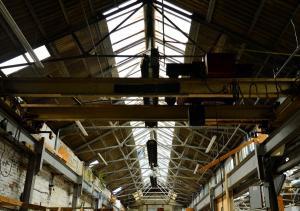
Renting turned out to be as dangerous for production engineers as for families.
The putting into financial play in the late 1980s of the nation’s castings, forgings and machining engineers had the effect of stripping out their ownership of their own sites and thus leaving them prey to the real estate sector and its exorbitant demands.
New Zealand’s short lease regime and even shorter rent review periods effectively threw the nation’s medium to heavy production engineers into the hands of the non-productive property sector.
This bitter harvest coincided with the disappearance from New Zealand of its merchant banking capability. There is no merchant finance capability now in the accepted risk participation-ownership sense.
The fact that the engineers had been stripped of their site ownership meant that they had to turn now to the Australian commercial banks with their reluctance to lend on anything that was not backed by clear land title.
This did not become immediately obvious, however, partly because the tariff protection abolition that accompanied this boom-bust era took time to dismantle.
There was some good news too from Europe.
The events surrounding the fall of the Berlin Wall meant that Eastern Europe was identified as an important new market. Backed by the government, notably in the form of assistance from the New Zealand embassy in Moscow several engineering bi lateral trade deals were exploited within the old iron curtain.
Immediately after this there began the intensive trade with China.
This now allowed production engineers to start abandoning their sites, which they now did not own anyway, and focus on their design and brand work in New Zealand while farming out their production to Asia.
It was now though as the end of import restrictions began to finally melt away under accelerating globalisation that the remaining production engineers on leases began to feel the chill winds of change.
For the long established production engineers, the ones that had gone through the 80s property and credit bubble, and in the process had lost title to their yards and premises what had once been asset now became a big liability
Heavy engineers were historically positioned near to rail and ports and thus their now leased sites became attractive to the premium residential and leisure sector.
Which is what the property rotators had gambled on in the first place.
Another problem was and is that the once-forecast inland container depots never materialised in sufficient bulk to take the pressure off port land, the land that the engineers now leased and which became increasingly prone to lease rent hikes.
The engineer now became the industrial version of a fashionable restaurant. If they did badly- then they did badly. Should they do well- then their landlord was in for their share of the bounty, knowing too that if the tenant quit that there would be plenty of service sector takers for the site.
The point being that the speculators apportioned no value to the gantries, rolling beds, and other such fixtures other than scrap value
It is in borrowing though that the leased land problem is most evident for engineers. They cannot borrow on improved value. Machine tools of any value will be leased anyway, probably from UDC which, incidentally this year was sold to Chinese interests.
The tenancy position is not so critical for assemblers and process engineers who sell finished goods into retail with its accelerated turnover and thus returns based on measurable cash flow from consumers.
But for the heavy project engineering sector with its ever-extending payment times and attendant payment uncertainties the failure to possess the title to their own premises increasingly proved fatal.
Some lease booby trap fuses were longer than others. But in the end the results were the same. The sites leased out on a service sector rent level could no longer sustain their original purpose of production.
A curious difference between the New World and the Old World is that leasing and renting has never been accepted as an economic proposition in the new world.
We can see now that this applies as much to the industrial sector as it does to the residential sector.
This systematic undercutting of the nation’s productive capacity was widely applauded at the time by management theoreticians whose slogan was that production engineers among others should “stick to their knitting.”
In the event, and as we can now see, the loss of title to their own works meant that the engineers now became involved instead in the complex world of leases.
Especially and willy-nilly they found themselves in the sphere of the property management company with its attendant contract that ensures that whichever side wins or loses the possessor of the contract always comes out the winner.
| From the This email address is being protected from spambots. You need JavaScript enabled to view it. || Wednesday 12 April 2017 |||
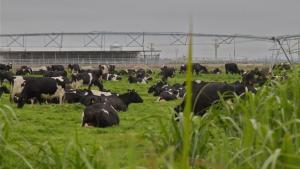
The Prime Minister's chief scientist, Sir Peter Gluckman, has highlighted harsh realities about the state of New Zealand's fresh water in a new report released today.
The report urges politicians to address freshwater issues, which he says are clearly linked to intensive farming and urbanisation.
It found clear evidence the freshwater estate was under pressure in terms of both water quality and quantity. There was a link between farming and declining water quality in pastoral areas, and contamination of urban waterways by expanding cities.
Professor Sir Peter Gluckman says farming intensification has contributed to water quality issues.
You can read the full report here | April 12, 2017 |||

Palace of the Alhambra, Spain
By: Charles Nathaniel Worsley (1862-1923)
From the collection of Sir Heaton Rhodes
Oil on canvas - 118cm x 162cm
Valued $12,000 - $18,000
Offers invited over $9,000
Contact: Henry Newrick – (+64 ) 27 471 2242
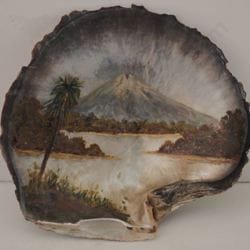
Mount Egmont with Lake
By: John Philemon Backhouse (1845-1908)
Oil on Sea Shell - 13cm x 14cm
Valued $2,000-$3,000
Offers invited over $1,500
Contact: Henry Newrick – (+64 ) 27 471 2242

|
|