
Founded by Max Farndale 1947 - 2018
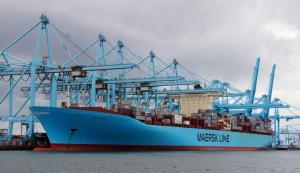
The European Commission has cleared under the EU Merger Regulation the proposed acquisition of container liner shipping company Hamburg Südamerikanische Dampfschifffahrts-Gesellschaft KG (HSDG) of Germany by Maersk Line A/S of Denmark, subject to conditions.
Both Maersk Line and HSDG are active worldwide in container liner shipping. The clearance is conditional upon the withdrawal of HSDG from five consortia on trade routes connecting (i) Northern Europe and Central America/Caribbean, (ii) Northern Europe and West Coast South America, (iii) Northern Europe and Middle East, (iv) the Mediterranean and West Coast South America and (v) the Mediterranean and East Coast South America. On these routes, the merged entity would have faced insufficient competition after the transaction.
Commissioner Margrethe Vestager, in charge of competition policy, said: “Competitive shipping services are essential for European companies and for the EU’s economy as a whole. The commitments offered by Maersk Line and HSDG will maintain a healthy level of competition to the benefit of the very many EU companies that depend on these container shipping services.”
The Commission’s competition concerns
The proposed transaction would lead to the combination of two leading container liner shipping companies. Maersk Line is the largest container shipping company, while HSDG is number nine worldwide. Like several other carriers, Maersk Line and HSDG offer their services on trade routes through cooperation agreements with other shipping companies. These are known as “consortia” or “alliances” and are based on vessel sharing agreements where members decide jointly on capacity setting, scheduling and ports of call, which are all important parameters of competition.
The Commission examined the effects of the merger on competition in this specific market for container liner shipping on seventeen trade routes connecting Europe with the Americas, Asia, the Middle-East, Africa and Australia/New Zealand.
The Commission found that the merger, as initially notified, would have created new links between the previously unconnected entities Maersk Line and five of the consortia HSDG belongs to (Eurosal 1/SAWC, Eurosal 2/SAWC, EPIC 2, CCWM/MEDANDES and MESA).
According to the Commission’s analysis, this would have resulted in anti-competitive effects on the corresponding five trade routes (Northern Europe and Central America/Caribbean; Northern Europe and West Coast South America; Northern Europe and Middle East; Mediterranean and West Coast South America; Mediterranean and East Coast South America). In particular, these links could have enabled the merged entity to influence key parameters of competition, such as capacity, for a very large proportion of those markets, to the detriment of their commercial customers and, ultimately, of consumers.
The proposed transaction would also create (a) limited links between Maersk Line and HSDG in the markets for short-sea shipping and “tramp services” (unscheduled, on demand shipping), as well as (b) limited links between the two companies’ activities in container liner shipping and the container terminals, harbour towage, freight forwarding, container manufacturing and inland transportation sectors where Maersk Line or other companies belonging to the Maersk Group are active.
However, in both areas, the Commission found no competition concerns, in particular because several other service providers are active in these markets.
The proposed commitments
In order to address the Commission’s competition concerns, Maersk offered to terminate the participation of HSDG in the five consortia (Eurosal 1/SAWC, Eurosal 2/SAWC, EPIC 2, CCWM/MEDANDES and MESA). This will entirely remove the problematic links between Maersk Line and HSDG’s consortia that would have been created by the transaction.
HSDG will continue to operate as part of the five consortia during the notice period to guarantee an orderly exit. However, a monitoring trustee will ensure that no anti-competitive information is shared between these five consortia and the merged entity during that notice period.
In view of the proposed remedies, the Commission concluded that the proposed transaction, as modified, would no longer raise competition concerns. The decision is conditional upon full compliance with the commitments.
Companies and products
HSDG operates 130 container vessels. HSDG markets its services through its global Hamburg Süd brand and its CCNI (Chile) and Aliança (Brazil) brands. HSDG is a member of several consortia and in particular:Trade route ConsortiumNorthern Europe to Central America / Caribbean Eurosal 1/SAWCNorthern Europe to West Coast South America Eurosal 2/SAWCNorthern Europe to Middle East EPIC 2Mediterranean to West Coast South America CCWM/MEDANDESMediterranean-East Coast South America MESA
Maersk Line operates 611 container vessels, 324 of which are chartered, and sells its container liner shipping services worldwide. It markets its services through the Maersk Line, Safmarine, SeaLand (Intra-Americas), MCC Transport (Intra-Asia) and SeaGo Line (Intra-Europe) brands. In addition, the Maersk Group also provides container terminal services, freight forwarding services, inland transportation, container manufacturing, and harbour towage services.
Merger control rules and procedures
The transaction was notified to the Commission on 20 February 2017.
The Commission has the duty to assess mergers and acquisitions involving companies with a turnover above certain thresholds (see Article 1 of the Merger Regulation) and to prevent concentrations that would significantly impede competition in the EEA or any substantial part of it.
The vast majority of notified mergers do not pose competition problems and are cleared after a routine review. From the moment a transaction is notified, the Commission generally has a total of 25 working days to decide whether to grant approval (Phase I) or to start an in-depth investigation (Phase II).
| A Marine Insight release || April 11, 2017 |||

Ξ Sorry Australia New Zealanders Prefer Pricier New Zealand Wines
Ξ Top scientist: Fixing freshwater issues an 'enormous challenge'
Ξ Hagley Building Products invest in new manufacturing facility in Christchurch
Ξ Scott strengthened by JBS deal
Ξ Quake creates new opportunities from loss for Ward farmer
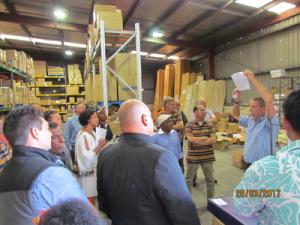
A visit to Auckland’s Contract Warehousing and Logistics Limited (CWL) in East Tamaki sparked a buzz of interest for the Pacific Trade Invest (PTI) Pacific Path to Market delegation.Rod Giles talks about the warehouse process to the visiting delegates of the PTI Pacific Path to Market Programme in Auckland.
Rod Giles, Founder owner of CWL Limited welcomed the 25-member delegation from eight Pacific Island countries to his business. The delegates were on the final day of the PTI Pacific Path to Market four-day programme that included the Pasifika Festival, a Gap Analysis work shop, site visits and Business to Business Speed Dating meetings. The programme provides a structured approach to understanding the New Zealand market.
The group visited CWL to learn more about warehousing and logistics. Mr Giles said demand for his warehousing had ramped up over the past 3-4 years with the rapid growth of online sales and New Zealand’s vibrant economy.
Mr Giles founded Contract Warehousing in 1978. He had a history in both warehousing which followed into freight before starting Contract Warehousing Ltd some 40 years ago. During this time he has been involved in training for industry and also operating in Australia with his company for a number of years and further developing his company to meet the ever increasing demands of online sales, both nationally and internationally.The beauty of third party warehousing is that businesses don’t necessarily require a shopfront or the capital commitment normally required to commence a business.
Prior to Christmas last year the business was processing 40 containers monthly, up from their usual 15 containers monthly at the same time last year. The success of the business comes from the driving passion of the sprightly 70-year old who starts his day at 6:30am and ends about 13 hours later at 7:30pm. It has seen him start a business in warehousing before others and create custom computer programmes after visits to Australia and England failed to find what he wanted. Facing the challenge however put him ahead of the curve and the competition.
And it’s not just about processing the orders and distributing the goods. Mr Giles says he cares about the success of his customers that translates to his own success.
The beauty of third party warehousing is that businesses don’t necessarily require a shopfront or the capital commitment normally required to commence a business. Instead it allows clients the benefits of experienced trained staff and systems in servicing their needs from day one in what Mr Giles described as “an effortless and seamless manner.”
In a nutshell, Contract Warehousing hires out the space for the goods, the orders are picked and packed by warehouse staff and delivered to the customer by courier.
The delegation’s company tour started with an introduction to the frontline team of about 6-8 office staff. They receive the orders, generate the invoices and forward the order to the warehouse where the goods are picked, checked, packed to meet the products requirement and then delivered by courier. The delegation then visited the very large busy warehouse located in a long building behind the office. The warehouse featured rows of floor to ceiling racking designed to accommodate the wide variety of products which total over 10,000 different items of boxed goods from kitchen equipment from the USA, to food from India, to wine bottles from small South American and books sold to the USA.
Throughout the visit Mr Giles repeatedly stressed the importance of keeping a very efficient electronic system and maintaining the traceability of products. From the receipt of the order through to the picking and packing in the warehouse to the date and time of delivery by courier. The operation relied on accurate units of measure, correct product codes and shipping details, a great team of dedicated staff and an in-depth knowledge of freight, insurances and the associated shipping laws. The traceability meant a stock report could be generated and emailed to clients daily.
It’s a straight-forward process Mr Giles suggests, “What’s required in warehousing is you deliver the right product, in the right condition to the right customer at the right time. For this to happen day in and day out the systems must be in place and the staff fully understand and follow the requirements to make this happen,” he said.
However, he also related a sobering story of client’s failed business after they switched to a DIY Warehouse and Distribution option rather than using the specialist warehousing and logistics company. Mr Giles added “It has to be understood that the best marketing in the world fails if the service to deliver every day does not back up the marketing and this is too often taken for granted.”
For the delegates on the Pacific Path to Market programme, third party warehousing was a revelation and provided a clearer understanding of some of the options available when exporting into the New Zealand market.
For more information contact Joe Fuavao, PTI Trade Development Manager on This email address is being protected from spambots. You need JavaScript enabled to view it.
| A Pacific Trade Invest (PTI) release || April 11, 2017 |||
New Zealand contract manufacturer Alaron has undertaken a multi-million-dollar expansion and renovation project at its Nelson site, with the firm hopeful of growth for its customers in South East Asia after China sales began to go “off the boil” due to regulatory uncertainty.
Continue here to read full article | April 11, 2017 |||
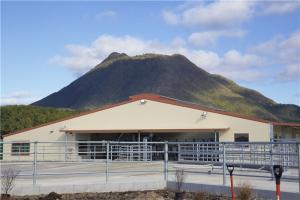
A new Maori-owned new dairy factory is being planned for the Kawerau region, modelled on the first Maori dairy company Miraka, near Taupo.
The new plant, to make milk powder, will use geothermal power owned by Putauaki Trust, one of the Maori trusts in the project. Miraka has just such a deal with one of its geothermal power-owning partner trusts.
Maori leader Tiaki Hunia, a leader in the development, is chairman of the Putauaki Trust which has dairy farms around Te Teko and Kawerau. One of the farms, Himiona, named after his late father, was a finalist in the Ahuwhenua Trophy for the top Maori dairy farm in 2014.
Hunia is a solicitor and is the general manager, trusts, for Te Tumu Paeroa. He is also deputy Māori trustee and a director of trusts, companies and iwi authorities. He is a member of the Institute of Directors and the New Zealand Law Society and is highly regarded in Maoridom and the agribusiness sector.
Continue to full article on DairyNews \\\ April 11, 2017 |||

Inquirers back off one step short of the Supercat Issuers
The arrival of Erin Brokovich (pictured) in Christchurch and her call for those at the wrong end of insurance compensation to “speak up” about the injustice of it all is a further reminder of the obscure role in the earthquake aftermath of the global re-insurers.
Among the most powerful forces force in reinsurance is Berkshire Hathaway. It is considered within the industry to be the leader in supercats which is the category of reinsurance involved in major disasters such as the Christchurch earthquake.
Berkshire Hathaway sells sell policies that insurance and reinsurance companies purchase in order to limit their losses when mega-catastrophes strike.
The company is therefore the major reinsurer of reinsurers.
Though Mr Buffett in New Zealand is frequently the subject of admiring, some might say, adulatory, media coverage the matter of his involvement in these supercats is ignored out of either ignorance or out of fear. Or both.
The matter has similarly been too complex for politicians to contemplate at least openly.
Hurricanes and earthquakes are the two primary factors in the probabilities of supercats.
It is said that Mr Buffett’s supercat exposure can weather at any given time the eventuality of the calculable risk of up to four such eventualities.
Supercat insurance shares with the rest of the insurance sector one quite literally priceless advantage. Payments are received prior to the issue of the policy. In other words, cash up front.
This payment-in-advance gives the industry its cash float which in the case of the supercat sector is immense.
Therefore the following questions need to be asked:-
1. Who are the Christchurch reinsurers?
2. Who reinsures them?
3. Are the ultimate reinsurers solvent?
4. If so why are they not compensating the Christchurch home owners?
Instead the various debates have circled around the role of the primary insurers, the known insurers.
Erin Brokovich, formerly a California legal clerk, and the centrepiece of the eponymous film that starred Julia Roberts is roving ambassador for an Australian-based legal compensation practice.
As an environmental advocate she transcends the routine geomantic abstract preoccupation with global warming/carbon levels and by her presence fixes it upon the unpleasantness of ordinary people in the face of ambitions of big business.
Can Miss Brokovich now force into the light the identities of the entity or entities that hold the supercats over Christchurch and who decline to pay out on them?
| FRom The MSCNewsWire reporters' desk || Tuesday 11 April 2017 |||
Customs Minister Nicky Wagner today welcomed the completion of a key trade system.
Trade Single Window, which is a major component of the Joint Border Management System programme by Customs and the Ministry for Primary Industries (MPI), is an e-commerce platform that enables importers and exporters to meet all border requirements in one place.
“Trade Single Window first launched in 2013 and last month hit a major milestone with its five-millionth transaction. The final elements successfully rolled out over the weekend, meaning the system is now complete,” Ms Wagner says.
“This is the culmination of an incredible amount of hard work by both Customs and MPI. The completed system features four new lodgement types that will further streamline the border clearance process for goods and craft.”
The new lodgements will be available gradually over the coming months.
“Trade Single Window also incorporates the World Customs Organization’s latest data model (WCO3), which will allow border agencies to collect better data for risk assessments,” Ms Wagner says.
“Ongoing support from the wider import/export industry has been crucial in developing a system that works well not only for Customs and MPI, but for industry too.”
| A Beehive release || April 10, 2017 |||
The BusinessNZ Energy Council (BEC) today released the second in its series of reports on energy scenarios to 2050. This report looks at the contribution the energy and transport sectors can make to emission reductions (BEC 2050: A deep dive into the New Zealand energy and transport sector emissions).
"The challenge of meeting our Paris Agreement target of a 30 percent reduction in emissions from 2005 levels by 2030 lies ahead of us," said BEC Chair Hon David Caygill.
"In taking our scenarios work to the next level we can now better understand both the scale of the challenges and the nature of the opportunities to reduce emissions.
"As a country we aspire to both high growth and emissions reductions to help us meet our Paris Agreement commitment. We also need to balance this with energy security and affordability.
"If we knew the future, reducing our energy and transport sector's emissions would be easy. But we don't. Our scenarios help us move beyond the usual practice of assembling disconnected technical possibilities to focus on what levers we have available to practically unlock our emissions reduction potential.
"Our two scenarios describe different ways the energy and transport sectors can contribute towards emissions reduction. But the scenarios are more than just storylines. They also show how different assumptions about the future – for example, economic and population growth, and the price of carbon - affect how much reduction can be achieved, and which levers should be investigated further by policy makers.
"For the first time across the entire New Zealand energy and transport sectors, we now have modelling that reveals just how sensitive New Zealand's energy emissions are to the key uncertainties the sector is grappling with – technology, economic transformation, the pursuit of higher renewable energy levels and transport behaviour.
"With this work we can better understand the range of choices and trade-offs for the energy and transport sectors to meaningfully contribute towards New Zealand's emission reduction target.
| A BusinessNZ Energy Council release || April 10, 2017 |||

Palace of the Alhambra, Spain
By: Charles Nathaniel Worsley (1862-1923)
From the collection of Sir Heaton Rhodes
Oil on canvas - 118cm x 162cm
Valued $12,000 - $18,000
Offers invited over $9,000
Contact: Henry Newrick – (+64 ) 27 471 2242
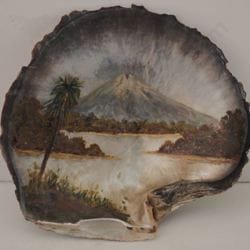
Mount Egmont with Lake
By: John Philemon Backhouse (1845-1908)
Oil on Sea Shell - 13cm x 14cm
Valued $2,000-$3,000
Offers invited over $1,500
Contact: Henry Newrick – (+64 ) 27 471 2242

|
|