Founded by Max Farndale 1947 - 2018
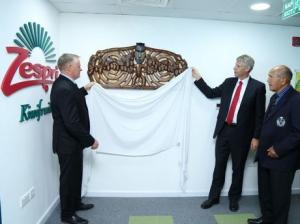
Zespri officially opened its Middle East office in Dubai earlier this week to manage its growing sales and marketing programmes in this region and other developing markets.
Zespri Chief Executive Lain Jager said at the event that Zespri was growing its presence across the Middle East, India and Africa and the new office would support this growth.
“More consumers in the UAE and these regions are enjoying the great taste of premium quality, healthy Zespri Kiwifruit, with sales set to increase by more than 50 percent over the next five years to over 4 million trays of New Zealand fruit and over 2 million trays of global supply (Northern Hemisphere) fruit.
“Zespri’s gold variety SunGold has proved particularly popular with consumers in the Middle East who enjoy its sweet, juicy taste and powerful health properties. Our team in-market is working hard to expand distribution across the region to introduce more consumers to our premium quality fruit and get more of them to buy Zespri Kiwifruit each week,” says Mr Jager.
Zespri’s aim is to grow overall kiwifruit consumption around the world and increase kiwifruit’s share of the global fruitbowl from a fraction of a percent, and building new markets like the Middle East, India and the United States is a key part of this.
A Maori cultural delegation led by kaumatua Kihi Ngatai officially opened and blessed the new office, installing a traditional Maori whakairo (carving) in the office. The carving is named Te Hau Marama which translates to the Wind of Understanding and embraces traditional architecture of the region which takes advantage of desert winds to keep a comfortable breeze for its inhabitants. The carving is made of kauri, traditionally used for pare (lintels) over doorways in wharenui (tribal meeting houses) in New Zealand which provided a boundary between the physical world outside and the spiritual world inside the wharenui.
It is made by James Tapiata who has made several other carvings for Zespri offices in New Zealand and around the world.
| A Zespri release | March 29, 2017 |||
More subdued growth, due to persistent spare capacity in the global economy following the global financial crisis, has been a key feature of the current New Zealand business cycle.
This is a key take-out from a review of the current business cycle, published today in the Reserve Bank Bulletin. Listen to the Behind The Bank Bulletin
The article summarises developments in the New Zealand economy since 2008 through the lens of monetary policy.
The article identifies five key phases: the global financial crisis of 2008-09; ‘green shoots’ recovery (mid-2009 to mid-2010); domestic caution and global uncertainty (mid-2010 to late 2012); commodity boom and construction upswing (early 2013 to mid-2014); and persistently low inflation (mid-2014 to present day).
Despite extremely accommodative monetary policy settings, growth in major advanced economies has proved to be slower than in past expansions. Growth in New Zealand has also been more subdued than in past business cycles, in large part due to weakness and uncertainty abroad. Against this international and domestic backdrop, consumer price inflation in New Zealand has been low.
A follow-up Bulletin article — due to be released in the coming weeks — will present some of the key features of the business cycle and the insights for monetary policy that have emerged or been reinforced.
| A RBNZ release | March 29, 2017 |||

Computer services and machinery manufacturing firms led the way in an almost 30 percent lift in business spending on research and development (R&D) in 2016, Stats NZ said today. Businesses spent $1.6 billion on R&D in 2016, up $356 million (29 percent) from 2014.
The computer services sector had the biggest dollar-value increase in R&D within the business sector, up $125 million (40 percent) to $436 million in 2016. Computer services firms include New Zealand businesses providing services such as producing and distributing software, and web design.
The second-largest increase in business-related R&D spending was for machinery and equipment manufacturing, up $105 million (37 percent) to $392 million in 2016. These firms include high-tech manufacturing firms developing new products and services for sale in New Zealand or overseas.
Total spending on R&D by businesses, government, and higher education was $3.2 billion in 2016, up $531 million (20 percent) from 2014. R&D in the higher education (university) sector lifted and government R&D had a modest rise, but the bulk of the overall increase was from business spending.
“R&D spending is about investing in New Zealand’s future. It paves the way for new and better products or more efficient ways of doing things, although the process can take years,” business performance senior manager Daria Kwon said.
“While higher R&D spending is a key driver of economic growth according to some studies, it is not a guarantee that a business will be more creative or profitable.”
All services sector groups spent more on R&D in 2016 than in 2014, with an overall $203 million (32 percent) increase to $835 million. In the higher education sector, universities' R&D spending was up $143 million (18 percent) from 2014 to $960 million in 2016.
Graph, Research and development expenditure, by sector, 2008 to 2016.
Data and analysis
Research and Development Survey: 2016 – for more data and analysis
| A STATSNZ release | March 29,2017 |||

With a new year comes an inevitable update of your CAD package, and that always begs the question, should I keep my license or upgrade? Well, with Autodesk Inventor and the company’s new subscription-based plan, that decision has likely been made for you, and now it’s time to reap the benefits.
Inventor 2018 has been on the market since last week, and for those looking for the latest features in their CAD tools, here’s what you can expect from the latest version of Autodesk’s flagship mechanic design package.
MBE Tools Demanded, MBE Tools Delivered
Demand and model-based engineering (MBE) as a standard CAD paradigm is increasing throughout the design world. Not only are big-time movers and shakers like the DoD insisting that fluency with MBE be a prerequisite for any contractor, the ever-tightening integration between design, prototyping and manufacturing is making MBE coin of the realm.
To give users the tools they’ll need to meet this new design focus, Inventor comes equipped for model-based design (MBD) tools that make it easy to annotate models with tolerance information, critical dimensions and manufacturing notes so that a project can move from modeling to CMM and CAM in a flash. In addition, Inventor users can output 3D PDF files so that design information can be effectively communicated to manufacturers off-site.
Interoperability Expanded
Designers today have to deal with a number of variables when building a product. One of the most consistent of those variables is that a team will likely be interacting with a number of third-party vendors and, most likely, a few different CAD file formats.
In the past, having to juggle multiple file formats made collaboration with third-party products awkward and time consuming, but in Inventor 2018, the software supports a number of different file flavors and formats, making it easy to leverage the design work that’s already been done by others so that workflows are streamlined.
Customer-Driven Enhancements Round out 2018
Aside from MBD and interoperability enhancements, the Inventor engineering team has tapped its deep user base to implement over 50 Inventor Idea requests into 2018. Whether it’s improvements to such essential features as “Chamfer,” “Extrude” or “Hole” commands, Inventor’s refinement is reaching a level that’s difficult to match by other CAD programs. But modeling features aren’t the only aspects of the software that have seen improvements thanks to user input. In Inventor 2018, the “Measure” tool has been simplified and improved to make it easier to use, and bill of materials (BOM) and parts list sort orders have been made easier to organize based on user input commands.
For more information about Inventor 2018, visit CADPROSystems
| An engineering.com release - visit site for images & videos | March 28, 2017 |||
To many in New Zealand, the Oceanian state looks like an isolated outpost with economic powerhouses far, far away in another hemisphere. [Special coverage]
It's at the end of a trail that snakes through Southeast Asia before a three-hour flight from Australia lands you in one of its handful of international airports.
Small wonder that the China-proposed Belt and Road Initiative, a massive economic and trade project for common development and prosperity in countries along its routes in Europe, Africa and Asia, is little talked about here.
However, New Zealanders are now starting to realize that while their country might be a terminal on the Initiative's 21st Century Maritime Silk Road, it won't be left out, surely after signing on Tuesday an agreement on the Initiative with China.
CLEAR OPPORTUNITY
The initiation of a business network by important figures including president of the ruling National Party Peter Goodfellow and National legislator, China-born scholar turned politician Yang Jian, coincided with an official visit here by Chinese Premier Li Keqiang starting Sunday.
The Oceania Silk Road Network (OSRN) is being forged by New Zealand business interests, headed by William Zhao, director and CEO of the China-owned Yashili New Zealand Dairy Company.
"There's a group of us exploring setting up this mechanism and it's in an environment where there's a growing interest among organizations focused on China to explore ways that New Zealand can engage more in China's very important initiative," said Martin Thomson, head of New Zealand-China Trade Association and one of the four OSRN initiators.
The OSRN will be in link with China's think tanks and industrial alliances to seek opportunities for Belt and Road Initiative projects.
"It's a recognition among those interested in China that collectively we need to learn a bit more about how we can engage in relation to it," Thomson told Xinhua by phone.
"There's clearly opportunity for us to do that and the starting point is for people to engage and start thinking about how" he said.
Thomson also sees the Initiative as facilitating infrastructure development in New Zealand, while serving markets in the region.
"New Zealand's a trading country. We sell a lot of products offshore and the opportunity to open up markets with greater infrastructure in regions that we don't currently sell a lot to is a great opportunity," he said.
Others are keen to interpret signals Li gave in regard to New Zealand's inclusion in the Belt and Road Initiative during his visit this week.
"There's a range of ways in which New Zealand companies could participate," said Stephen Jacobi, acting executive director of New Zealand-China Council.
"For example, we could supply goods or services into construction projects into Eurasia, the countries around China that they're targeting for infrastructure development," Jacobi told Xinhua by phone.
Another sector to tap potential would be how goods and services move along the Initiative's routes.
"This is an area where New Zealand has an expertise around trade facilitation, around supply chain integrity and optimization," he said.
BRAINSTORMING NEEDED
Meanwhile, China-born legislator Raymond Huo believed the Belt and Road Initiative can help solve the problem of infrastructure development facing many developed nations.
"There is a dilemma. New Zealand, Australia and other developed countries including the U.S. and Canada are all facing the same problem," Huo told Xinhua.
"We haven't done much upgrading, so we need money, we need capital, and we need the construction capacity. China has both," he said.
Huo said he first realized the potential of Belt and Road Initiative when he attended two high-level conferences in China, and he believed New Zealand should seize the opportunities it offers.
Along with other experts on China and leading business people, he has established a think tank and foundation on the Initiative.
The think tank aims to tackle issues including a possibly prevailing protectionist trend around the world, and public perceptions of and attitudes towards global trade, among others.
The foundation is expected to focus on financing, joining in efforts by such institutions as the Asian Infrastructure Investment Bank and Silk Road Fund to work for infrastructure projects.
"We need a think tank to get involved in brainstorming to find a way to benefit the New Zealand economy," including an infrastructure upgrade, Huo, the think tank's co-chair, said in a telephone interview.
Huo believed the think tank will also help New Zealanders to better understand the Belt and Road Initiative as well as the Chinese people and culture.
It has already established links with China's National Development and Reform Commission, construction companies and private equity firms to seek opportunities.
In addition, it plans to convene a high-level conference on New Zealand-based Initiative projects after the New Zealand general elections to be held in September.
"We will bring together and coordinate a network of business leaders and organizations across the board to develop effective, efficient and environmentally sustainable economy while maintaining peace and harmony in our region," said Huo.
Simon Draper, executive director of Asia-New Zealand Foundation, described the Belt and Road Initiative as "organic".
"It's going to develop over time," he said. "It seems to me that it's potentially a train coming down the track and we have to understand it better."
Trade Minister Todd McClay said the Initiative itself is to endure the test of time while stressing that New Zealand saw itself as a partner of China in its implementation.
"You could almost suggest that the road starts in New Zealand, but we'll be looking for ways to enhance our relationship through this substantial and worthwhile initiative," McClay said.
"It's an ongoing conversation we're having and I don't think it's about just what we might think today. The Initiative itself is to endure the test of time and it's about enhancing opportunities for citizens of those countries through growth and a stronger economy," he said.
| A release from Out of The Silk Road | March 28, 2017 |||

Energetic, enthusiastic, motivating, thought provoking, enjoyable – who’d have thought all these were comments from delegates attending a building-industry conference!
PrefabNZ is a hub for innovative construction. Whether you are looking to build a home, are working within the industry or are just interested in the latest building solutions – this is the place to be.
PrefabNZ CoLab 2017 – held at AUT on March 21st was sold out quickly, and it was not hard to see why. This year’s keynote speakers from around the globe delivered a spectacular array of knowledge and relevant content that held the audience of 170 delegates captive from start to finish. I didn’t see a single yawn.
Helena Lidelow (University of Lulea / Lindbäcks, Sweden) delivered the keynote and quickly gained the attention of her audience by delivering some stark industry facts regarding waste operations on building projects. Just 20% of the time is considered “Direct Work” compared with 35% “Pure Waste” and 45% “Indirect Work”. Talking with some delegates after the keynote, these facts had clearly done their work and the “off-site manufacture” message had firmly taken root! Helena’s presentation went on to compare prefab to the automotive industry and how different the two industries are – but to learn these lessons and understand the industry more, you’ll need to get yourself along to the next events. (http://www.prefabnz.com/Events)
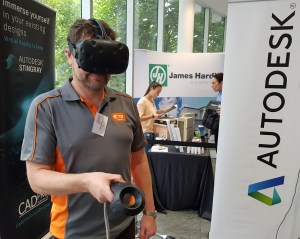 This year, CADPRO Systems provided a 15-minute talk on how people see the world in different ways. Not everyone can read a drawing and yet we still present incredibly technical diagrams to clients and expect them to engage with a project. During the short talk, we introduced virtual reality (VR) and how it brings the only “full scale” immersive experience to potential clients and stakeholders – regardless of their technical ability. Our VR rig in the exhibition area was in constant use by delegates and exhibitors throughout the day. As usual, it was fascinating to see people become so quickly and emotionally connected to a simple model, and their understanding of the potential uses for the technology was inspiring.
| A CADPRO Systems release | Wednesday 22 March 2017 |||
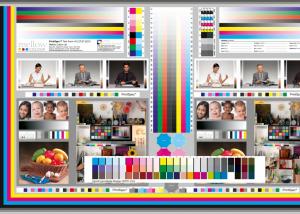
Colour Graphic Services is offering free ‘colour health checks’ for offset, digital and wide-format printers at PacPrint in May.
Printers can print the free test forme to the best of their ability on the device of their choice and bring it to CGS’s stand B62 at PacPrint, where ‘Colour Doctor’ David Crowther will analyse and provide feedback on their colour performance. “The test provides printers with a report and detailed information about where their colour quality is at on the device they printed it on. We’re measuring it against the ISO standard for print, which is the basis for colour quality, so they can see how close they are and we can advise what they should do,” Crowther said.
The health check will be performed using ISO 13655-compatible Techkon spectrophotometers, and compared against the ISO 12647 colour standard using Mellow Colour software. The program will provide a detailed report within seconds, identifying colour issues and suggesting remedies.
Printers interested in the health check can obtain the forme by emailing This email address is being protected from spambots. You need JavaScript enabled to view it.. “The file we send in advance is big, around 200MB, so either high bandwidth or a file sending service such as DropBox or SendStuffNow can be used. It’s a PDF so can easily be put into the workflow and printed out,” Crowther said.
A CGS press release says taking advantage of the free service at PacPrint could provide a saving of hundreds of dollars, as the same process in a metro area would cost between $495 and $995 to produce, measure and report on the test forme.
| A CGS release | March 27, 2017 |||
With its complex rules, fine print and lengthy processes, it’s little wonder that the $NZD1.85 trillion dollar insurance industry has a terrible reputation for trust and customer service. In a recent global survey from accounting firm E&Y, consumers ranked insurance below banks, car manufacturers, online shopping sites and supermarkets for trustworthiness.
A newcomer to the field, Auckland based Digital Squad hopes to reverse that reputation by using Artificial Intelligence (AI) - more specifically technology and behavioral science to create a faster and more transparent service.
The start-up, a collaboration of behavioural economist, Shane Chand, and AI and cryptography specialist, Anvesh Katuri, set out to create algorithms that make it easy and quick to sign up and approve claims – in minutes rather than days.
"AI-SURE will use Machine learning to eventually handle the entire claims process – from triage, through fraud mitigation and down to the actual payment by wire.A big challenge for AI-SURE will come when it faces a flurry of claims from a major natural disaster such as the Christchurch quakes" Shane said.
"Whilst till in testing phrase and far from deployment, the software is looking very promising so far" he added.
U.S based venture capitalist and billionaire Mark Cuban predicted recently that the world's first trillionaires will actually be entrepreneurs working with artificial intelligence.
| A PRWire release | March 28, 2017 |||
Pioneer Construction, formerly known as Canterbury Rebuilders, have been awarded a two-year exclusive contract to build portable cabins for Just Cabins in the South Island.
Following a thorough selection process, Fenton Peterken, owner andFranchisor of Just Cabins, said that Pioneer Construction was thecompany that most closely matched the requirements of Just Cabinsin terms of experience and outlook.
“Although we had several high quality applications from the Christchurch area, Pioneer Construction demonstrated their passion and experience from the outset. We work with a number of partners across the country and we are especially pleased to start this new partnership – two growing New Zealand businesses providing customers with high quality products and service.”
Jarrod Chappell and Mathew Douthett, owners of Pioneer Construction, were equally delighted with the new partnership, saying, “We already have so much experience in building new homes, maintenance work and of course, Earthquake Repairs, so we are looking forward to adding experience of building mobile cabins to our portfolio. We are delighted with the opportunity to work with the Just Cabins team.”
| A PRNZ release | March 25, 2017 |||

Palace of the Alhambra, Spain
By: Charles Nathaniel Worsley (1862-1923)
From the collection of Sir Heaton Rhodes
Oil on canvas - 118cm x 162cm
Valued $12,000 - $18,000
Offers invited over $9,000
Contact: Henry Newrick – (+64 ) 27 471 2242
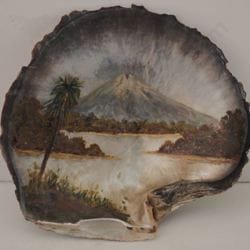
Mount Egmont with Lake
By: John Philemon Backhouse (1845-1908)
Oil on Sea Shell - 13cm x 14cm
Valued $2,000-$3,000
Offers invited over $1,500
Contact: Henry Newrick – (+64 ) 27 471 2242

|
|