
Founded by Max Farndale 1947 - 2018

Prime Minister Bill English has today launched New Zealand’s updated trade strategy, Trade Agenda 2030, and reiterated the Government’s commitment to free trade.
The Prime Minister has also announced the Government’s ambitious goal of having free trade agreements cover 90 per cent of New Zealand’s goods exports by 2030, up from 53 per cent today, as well as investing $91.3 million over four years through Budget 2017 to help achieve this.
“New Zealand is succeeding and New Zealanders are getting ahead. Wages and employment opportunities are rising, we’re investing in infrastructure like schools and roads and the Government’s books are back in order,” Mr English says.
“A big reason for that is the Government’s consistent agenda of economic reform, and our collective determination to open up more opportunities for trade with the world.”
Mr English says trade is vital to New Zealand’s economic success and while our existing trade agreements have raised our standard of living, our ability to forge new and better ones will play a big part in determining whether our success is sustainable.
“It’s important that we remain an open and outward-facing country focused on creating and embracing trading opportunities, and Trade Agenda 2030 outlines our plan for achieving that.
“It will see us seek to forge new trade agreements, maximise the benefits of existing ones, focus more on tackling non-tariff barriers, put more emphasis on services, investment and digital trade issues, and work even more closely with our exporters to help them create and succeed in new markets.”
The Trade Agenda 2030 package includes:
The new funding is $80.3 million in operating funding over four years and $11 million in capital.
“As a Government, we are working hard to help create opportunities for our exporters to compete successfully on the world stage. And we are incredibly proud to see New Zealanders succeed internationally.
“There is so much to gain from advances in free trade, in terms of jobs and higher incomes for New Zealanders.
“I am committed to seeing those gains, and on behalf of all New Zealanders this Government will continue working to achieve them.”
More information can be found at www.mfat.govt.nz/tradeagenda2030
| A Beehive release | March 24, 2017 |||
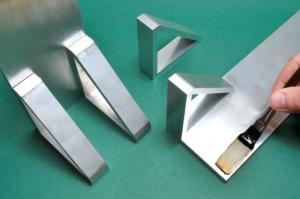
Mechanical fastening has long been the standard method of keeping manufacturing assemblies together, but adhesive bonding has seen a rise in popularity as an alternative technique.
Mechanical fastening with screws and rivets, welding or soldering and brazing are effective, yet insufficiently distribute load stress, which compromises structural strength. Additionally, they present a risk of galvanic corrosion and can add weight to a product.
Proponents of structural bonding with adhesives tout advantages in weight, greater structural strength and minimization of galvanic corrosion as primary benefits of using bonding agents such as epoxy resins versus traditional mechanical fastening.
Additional benefits of adhesive bonding include:
Despite these benefits, engineers need to carefully plan and execute the application of adhesive bonding – it’s not like a piece of tape you can just tear off and reapply.
It’s important to be mindful of joint designs, performance properties of the adhesive, surface preparation requirements, curing requirements and polymer chemistry options.
Whether you need an epoxy resin, hot melt, contact sprays or other chemistries will depend on your application. It’s important to work closely with your adhesive supplier to clearly define how you can meet your application requirements.
> > > Select herre to read this engineering.com article in full | March 24,2017 |||
Today, the Productivity Commission published its final report on the Tertiary Sector. At the same time, the OECD Environmental Performance Review of New Zealand strongly highlighted the need for a fundamental change in our approach to building wealth sustainably in this country. The need to create an effective education system that can provide much needed skills to facilitate growth and innovation in high-value activities, such as manufacturing, connect these reports, say the New Zealand Manufacturers and Exporters Association (NZMEA).
“The OECD report clearly shows that with New Zealand having the second-highest level of greenhouse gas emissions per GDP unit in the OECD, a continued emphasis on increasing primary production and tourism will not allow us to meet our international climate change obligations. We need to create wealth by growing our high-value industries. The biggest handbrake on growth there, however, are skills shortages that are crippling in some instances now and will only get worse with the rapid technology changes occurring in high-value manufacturing, for example.” said NZMEA Chief Executive Dieter Adam.
“One could have expected an 18-month review of our tertiary education system by the Productivity Commission to at least recognise, let alone address, the fact that we have a largely publicly funded tertiary education system that fails to deliver what New Zealand needs to grow its wealth as a nation. Unfortunately that is not the case – the Productivity Commission has widely missed the mark here in providing a response to skill shortages.
“Instead, we get a strong focus on the academic side of the tertiary sector and the suggestion that more free-market initiatives will enable to tertiary sector to meet its future challenges. As if we didn’t have enough problems currently maintaining quality in a sector where some barriers to entry are low and oversight can be patchy at best. The Commission’s report also aims to make the system even more student-focused, instead of offering suggestions for how to develop a well-functioning and efficient education system that balances the need to meet student desires with the overall needs of our economy to grow on a sustainable basis.
“A balanced system could be achieved, for example, in part by incentivising studies in areas that we know have current and future skill shortages. For example, the incentives offered by government to those taking up apprenticeships in priority trades and construction in 2013. At the same time, businesses also need to be supported to do their part in training and up-skilling their own workforce.
“The Productivity Commission’s report does have some positive suggestions, particularly the need to review and improve careers advice in schools, and expanding the idea of lifelong learning, helping people continue to gain new skills and adapt to changes over time. All in all, however, it substantially misses the opportunity to address one of the more important issues we are facing as a nation – how to equip future generations with the ability to find rewarding careers in an economy subject to strong winds of change.” said Dieter.
| An NZMEA release \ March 21, 2017 |||

A CADPRO Systems, HSM For Solidworks and SprintCNC story along with Haas New Zealand
Ξ Prime Minister Bill English to open new Red Stag super mill in Rotorua
Ξ Fletcher names Kernahan new CEO of troubled construction unit; Graham Darlow to retire
Ξ Official Cash Rate unchanged at 1.75 percent
Ξ While you were sleeping: Nike stock drops
Ξ Port Otago tug getting some TLC
Ξ NZ has a 'shocking rate' of workplace accidents
Ξ RocketLab are actively hiring for our engineering and business units
This email address is being protected from spambots. You need JavaScript enabled to view it.
New Zealand is missing a prime opportunity to combine its sustainable timber resources with an innovative manufacturing system to build faster and more efficiently.
Daryl Patterson, Head of Operational Excellence at Lend Lease Australia, states Cross Laminated Timber (CLT) is that missing link.
CLT is an engineered wood system made from several layers of dimensional lumber boards, stacked crossways and bonded together.
Speaking at the Wood Processors & Manufacturers Association of New Zealand (WPMA) and Property Council New Zealand Tall Timber Buildings seminar last week, Mr Patterson questioned why, given New Zealand’s ample timber resources, there is not greater use of CLT in our construction sector.
“New Zealand is fortunate as all manufactured timber is made here. In Australia, we import manufactured timber as we don’t have the large timber resources to supply the raw product.
“You also have the design talent, a market that accepts timber and local manufacturers who have invested heavily in the technology to deliver and supply CLT.”
Mr Patterson says he investigated CLT after seeing how 3D printing and robotic technology could be used to manufacture multi storey buildings.
“We had a design team look at this and the challenge was not the printer but the ink. We had to ask what will we make these buildings from. We needed a lightweight, strong, easy to manufacture, raw material.
“We looked at over 100 options and it kept coming back to timber: easy to construct, sustainable, durable and cost efficient.”
CLT provides the dimensional stability, strength and rigidity of alternative products at similar costs and can be digitally fabricated.
“This technology allows for mass customisation as the tools of design talk to the tools of production.
“We can now design and manufacture an entire apartment block in a warehouse, from a computer software program and robotics operated by one guy.”
Mr Patterson cites London’s Graphite Apartments as an example.
“We looked first at the 2008 construction of the Graphite Apartments, in London. This was social and affordable housing where CLT was being used in very economically tight circumstances. They had to make it work and reducing cost was the rationale for using CLT. They could build faster, cheaper and break the height record for timber buildings by 50 per cent.”
Mr Patterson believes the cost saving is partly due to the speed of construction and the ability to make the building water tight far earlier in the construction process than can be achieved with traditional materials.
Bringing that knowledge back to Australia, Lend Lease went on to build the Forté, Melbourne’s tallest timber building in 2013.
“What we found using CLT was, not only was it faster to build than a conventional building by 30 per cent, we also reduced truck movements to and from the site by 90 per cent.”
Mr Patterson says other benefits included a quieter construction site, a smaller construction crew and significant thermal properties. He adds the feedback from buyers was overwhelmingly positive.
“Buyers were not concerned about what the building was built out of. They just wanted a nice, modern home and we were able to deliver that on time, at a reasonable price using CLT.”
Mr Patterson also made reference to the recent, $150 million 5 King development in Brisbane, which is busting the scale for timber buildings at 52 meters high and features over 25,000 square meters of CLT.
“Brisbane is a tough market to sell commercial buildings in. We wanted to bring construction costs down to reduce rent and attract tenants.
“There is strong interest by investors in sustainable, well-designed, CLT constructed buildings as they are known to attract and retain tenants.
“These buildings offer a lower carbon footprint than other building materials and they are also great environments to work in.”
The implications for New Zealand, Mr Patterson argues, are huge.
“In Christchurch, you have 1000 new buildings constructed with steel and concrete. These products are being imported from other countries when New Zealand is growing and manufacturing even better buildings in timber frame.
“CLT has the durability, strength, stability, seismic resilience, thermal performance, fire resistance, moisture management and vapour diffusion, healthy indoor environment, and design flexibility. New Zealand should champion this system and become the world leader in CLT constructed buildings.”
| An NZLife release | March 23, 2017 |||

This is a story we have been wanting to tell Matthew Weakes from CADPRO Systems told MSCNewsWire. Our Gavin Bath (one of Technical Specialist based in CHCH) helped Phil (principal of Sprint Aero get some outstanding results.
In response, Phil has decided to kindly open his doors and fire up his BBQ on the 30th of March and invite people to come along and see what it’s all about.
It’s a great opportunity to network with your peers in the industry, as well as see HSMWorks for Solidworks cutting chips with their Haas UMC-750.
Space is limited and filling fast, so if you can make it, please register your interest on this page. We will get back to you and confirm your place by the end of this week, if not sooner.
Event details and registration
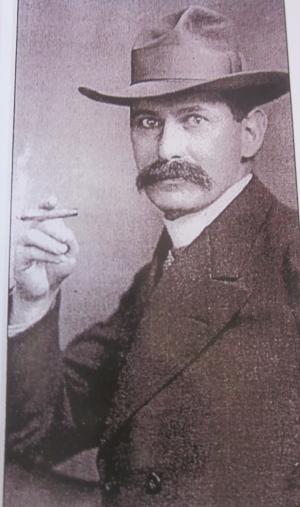
Statesman told his family to journey as far away from Germany as possible.
The New Zealand-born grandson of Ludwig Haas leader of the German Democratic Party in the 1920s and often described as the only politician who could have stopped World War 2 is assisting in a major biography of his ancestor.
The biography sponsored by the Commission for the History of Parliament and Political Parties is being published by Droste Verlag of Dusseldorf, a general interest publishing house.
Ludwig Haas (pictured above) died in 1930 while organising a broad based coalition to counter what he perceived would become the burgeoning and overwhelming rise of the National Socialists.
The politician’s early death was ascribed to the ravages of the front during the First World War in which he was decorated with the Iron Cross
With his last breath the dying politician instructed his son Karl “to put as much distance” as the son could “between you and Germany.”
Karl Haas took his father’s instructions literally, eventually arriving in New Zealand shortly before the outbreak of World War 2.
He began his career working in Auckland for wool brokers E. Lichtenstein. After finding his feet in his new country he then acquired a farm near Pahiatua in New Zealand’s North Island.
It was there, in this remote location, that the Haas family remained with Tony Haas, the grandson, being born toward the end of World War 2.
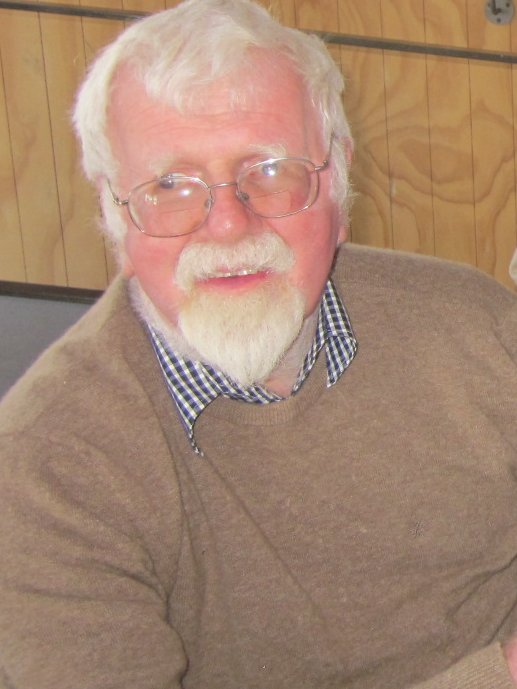
Tony Haas, (pictured, below) Ludwig’s grandson, is widely known in New Zealand for his work with Pacific Island communities and their economies.
In recent years has become acknowledged as one of Oceania’s public intellectuals. Two years ago Mr Haas’ own autobiography was published entitled Being Palangi: My Pacific Journey.
|| From This email address is being protected from spambots. You need JavaScript enabled to view it. | Thursday 23 March 2017 |||
Statement by Reserve Bank Governor Graeme Wheeler:
The Reserve Bank today left the Official Cash Rate (OCR) unchanged at 1.75 percent.
Macroeconomic indicators in advanced economies have been positive over the past two months. However, major challenges remain with on-going surplus capacity in the global economy and extensive geo-political uncertainty.
Global headline inflation has increased, partly due to a rise in commodity prices, although oil prices have fallen more recently. Core inflation has been low and stable. Monetary policy is expected to remain stimulatory, but less so going forward, particularly in the US.
The trade-weighted exchange rate has fallen 4 percent since February, partly in response to weaker dairy prices and reduced interest rate differentials. This is an encouraging move, but further depreciation is needed to achieve more balanced growth.
Quarterly GDP was weaker than expected in the December quarter, but some of this is considered to be due to temporary factors. The growth outlook remains positive, supported by on-going accommodative monetary policy, strong population growth, and high levels of household spending and construction activity. Dairy prices have been volatile in recent auctions and uncertainty remains around future outcomes.
House price inflation has moderated, and in part reflects loan-to-value ratio restrictions and tighter lending conditions. It is uncertain whether this moderation will be sustained given the continued imbalance between supply and demand.
Headline inflation has returned to the target band as past declines in oil prices dropped out of the annual calculation. Headline CPI will be variable over the next 12 months due to one-off effects from recent food and import price movements, but is expected to return to the midpoint of the target band over the medium term. Longer-term inflation expectations remain well-anchored at around 2 percent.
Monetary policy will remain accommodative for a considerable period. Numerous uncertainties remain, particularly in respect of the international outlook, and policy may need to adjust accordingly.
|| A RBNZ release | March 23, 2017 |||

This is a story we have been wanting to tell Matthew Weakes from CADPRO Systems told MSCNewsWire. Our Gavin Bath (one of Technical Specialist based in CHCH) helped Phil (principal of Sprint Aero get some outstanding results.
In response, Phil has decided to kindly open his doors and fire up his BBQ on the 30th of March and invite people to come along and see what it’s all about.
It’s a great opportunity to network with your peers in the industry, as well as see HSMWorks for Solidworks cutting chips with their Haas UMC-750.
Space is limited and filling fast, so if you can make it, please register your interest on this page. We will get back to you and confirm your place by the end of this week, if not sooner.
Event details and registration

Palace of the Alhambra, Spain
By: Charles Nathaniel Worsley (1862-1923)
From the collection of Sir Heaton Rhodes
Oil on canvas - 118cm x 162cm
Valued $12,000 - $18,000
Offers invited over $9,000
Contact: Henry Newrick – (+64 ) 27 471 2242

Mount Egmont with Lake
By: John Philemon Backhouse (1845-1908)
Oil on Sea Shell - 13cm x 14cm
Valued $2,000-$3,000
Offers invited over $1,500
Contact: Henry Newrick – (+64 ) 27 471 2242

|
|